

Beef, New Zealand, imported, variety meats and by-products, tripe uncooked, raw
Whole food · Beef Products

Photo: Wikipedia
This is raw, uncooked beef tripe, specifically the stomach lining from New Zealand cattle. It has a uniquely rubbery, spongy texture and a mild, slightly mineral flavor when raw, which transforms into a tender, chewy delicacy when slow-cooked. Nutritionally, it's a lean protein powerhouse with virtually no fat or carbohydrates.
Calorie split: 77% protein · 0% carbs · 23% fat
↓ Full nutrition💚 Why it's loved
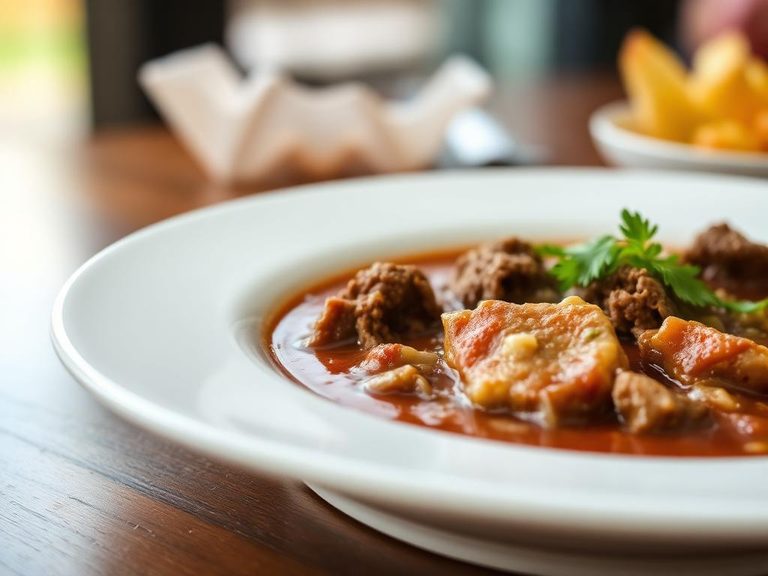
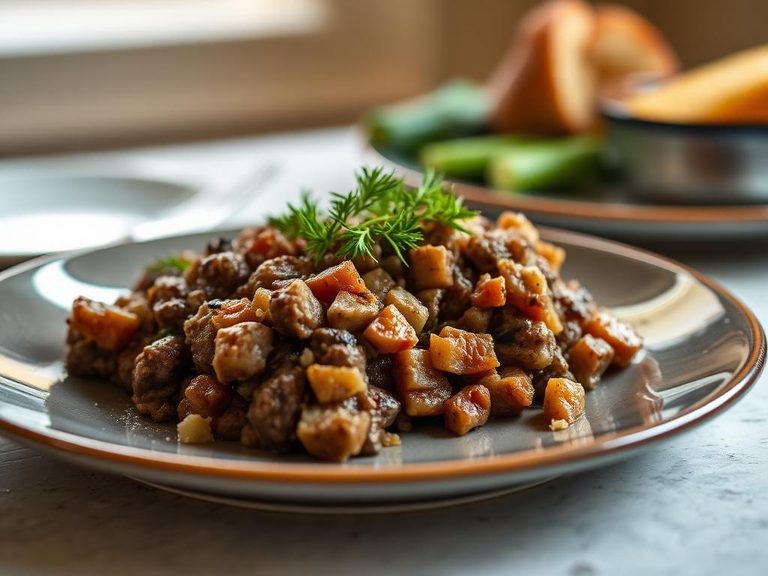
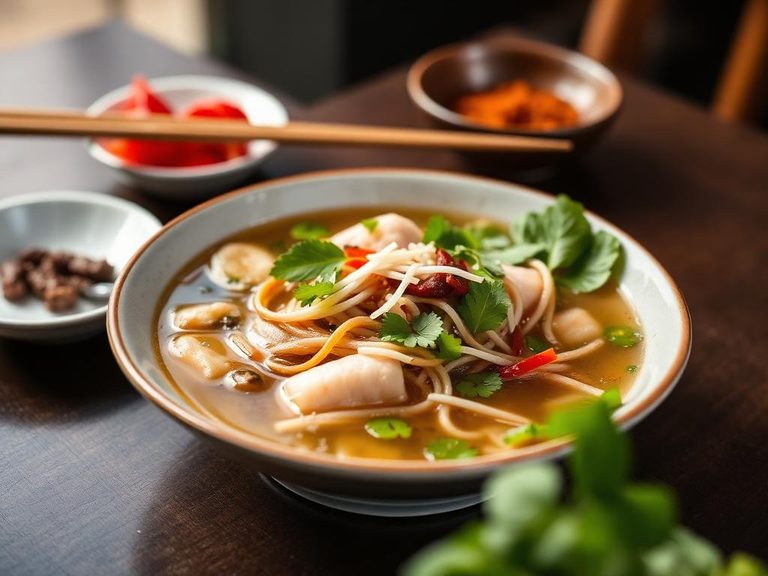
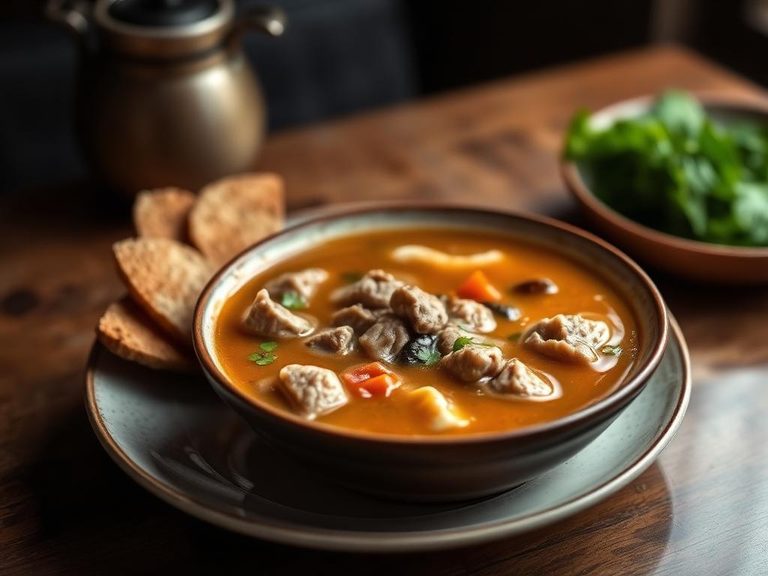
People love tripe for its incredible ability to absorb flavors from broths and seasonings, becoming a satisfying, textural centerpiece in soups and stews. Its cultural significance in dishes from Scottish haggis to Mexican menudo also makes it a beloved comfort food with deep roots.
⚠️ Watch-outs & how to enjoy it better
The primary downside is its strong, distinctive aroma and the extensive cleaning/preparation required for raw tripe, which can be off-putting. Its chewy texture may also be challenging for some. To counteract, purchase pre-cleaned or parboiled tripe, and always use slow, moist cooking methods like simmering or braising to achieve tenderness.
Key benefits
- Excellent source of high-quality protein for muscle maintenance.
- Very low in fat and contains zero carbohydrates or sugar.
- Rich in essential minerals like zinc and selenium.
- Contains collagen, which supports skin and joint health.
- A traditional, nose-to-tail ingredient that utilizes the whole animal.
🍽️ Popular dishes
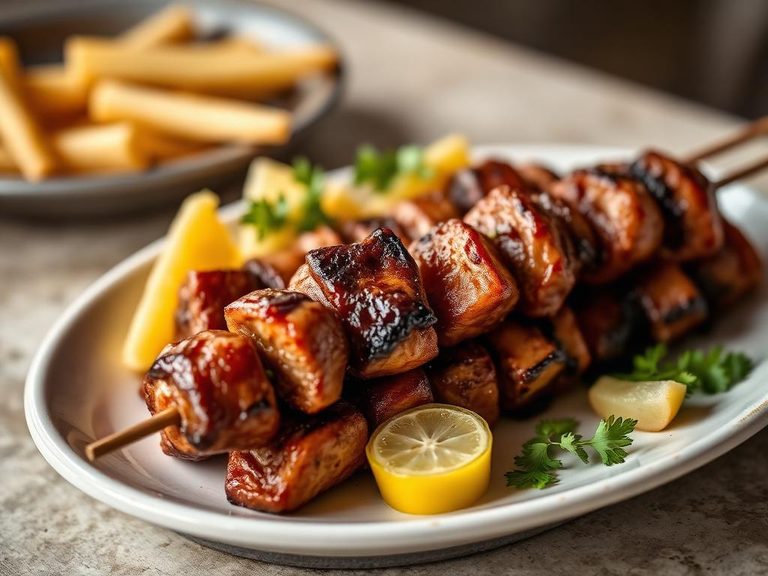
🌍 Where it's eaten
💡 Did you know?
A cow's stomach has four distinct compartments (rumen, reticulum, omasum, and abomasum), and 'tripe' most commonly refers to the wall of the first two, which are prized for their honeycomb texture.
Full nutrition (USDA data · scales with serving)
| Water | 82.2 g |
| Energy | 77.0 kcal |
| Energy | 323 kj |
| Protein | 14.9 g |
| Total lipid (fat) | 2.0 g |
| Ash | 1.1 g |
| Carbohydrate, by difference | 0.00 g |
| Fiber, total dietary | 0.00 g |
| Total Sugars | 0.00 g |
| Calcium, Ca | 112 mg |
| Iron, Fe | 4.4 mg |
| Magnesium, Mg | 19.0 mg |
| Phosphorus, P | 159 mg |
| Potassium, K | 217 mg |
| Sodium, Na | 81.0 mg |
| Zinc, Zn | 1.7 mg |
| Copper, Cu | 0.09 mg |
| Manganese, Mn | 4.1 mg |
| Selenium, Se | 3.1 ug |
| Vitamin C, total ascorbic acid | 0.00 mg |
| Thiamin | 0.05 mg |
| Riboflavin | 0.19 mg |
| Niacin | 7.9 mg |
| Pantothenic acid | 0.74 mg |
| Vitamin B-6 | 0.04 mg |
| Vitamin B-12 | 7.1 ug |
| Vitamin B-12, added | 0.00 ug |
| Vitamin A, RAE | 6.0 ug |
| Retinol | 6.0 ug |
| Carotene, beta | 0.00 ug |
| Carotene, alpha | 0.00 ug |
| Cryptoxanthin, beta | 0.00 ug |
| Vitamin A, IU | 20.0 iu |
| Lycopene | 0.00 ug |
| Lutein + zeaxanthin | 0.00 ug |
| Vitamin E (alpha-tocopherol) | 0.45 mg |
| Vitamin E, added | 0.00 mg |
| Vitamin D (D2 + D3), International Units | 8.0 iu |
| Vitamin D (D2 + D3) | 0.20 ug |
| Vitamin D3 (cholecalciferol) | 0.20 ug |
| Alcohol, ethyl | 0.00 g |
| Caffeine | 0.00 mg |
| Theobromine | 0.00 mg |
Fat & fatty acid profile (per 100g)
| Fatty acids, total saturated | 1.0 g |
| SFA 4:0 | 0.00 g |
| SFA 6:0 | 0.00 g |
| SFA 8:0 | 0.00 g |
| SFA 10:0 | 0.00 g |
| SFA 12:0 | 0.00 g |
| SFA 14:0 | 0.05 g |
| SFA 16:0 | 0.45 g |
| SFA 17:0 | 0.06 g |
| SFA 18:0 | 0.45 g |
| SFA 20:0 | 0.01 g |
| SFA 22:0 | 0.01 g |
| SFA 24:0 | 0.00 g |
| Fatty acids, total monounsaturated | 0.77 g |
| MUFA 14:1 | 0.01 g |
| MUFA 15:1 | 0.00 g |
| MUFA 16:1 | 0.06 g |
| MUFA 16:1 c | 0.04 g |
| MUFA 17:1 | 0.00 g |
| MUFA 18:1 | 0.70 g |
| MUFA 18:1 c | 0.62 g |
| MUFA 20:1 | 0.00 g |
| MUFA 22:1 | 0.00 g |
| MUFA 22:1 c | 0.00 g |
| MUFA 24:1 c | 0.00 g |
| Fatty acids, total polyunsaturated | 0.17 g |
| PUFA 18:2 | 0.07 g |
| PUFA 18:2 n-6 c,c | 0.06 g |
| PUFA 18:2 CLAs | 0.01 g |
| PUFA 18:3 | 0.02 g |
| PUFA 18:3 n-3 c,c,c (ALA) | 0.02 g |
| PUFA 18:3 n-6 c,c,c | 0.00 g |
| PUFA 18:4 | 0.00 g |
| PUFA 20:2 n-6 c,c | 0.00 g |
| PUFA 20:3 | 0.01 g |
| PUFA 20:3 n-3 | 0.00 g |
| PUFA 20:3 n-6 | 0.01 g |
| PUFA 20:4 | 0.03 g |
| PUFA 20:4 n-6 | 0.03 g |
| PUFA 20:5 n-3 (EPA) | 0.01 g |
| PUFA 22:5 n-3 (DPA) | 0.02 g |
| PUFA 22:6 n-3 (DHA) | 0.00 g |
| Fatty acids, total trans | 0.10 g |
| Fatty acids, total trans-monoenoic | 0.10 g |
| TFA 16:1 t | 0.02 g |
| TFA 18:1 t | 0.09 g |
| TFA 18:2 t,t | 0.00 g |
| Fatty acids, total trans-polyenoic | 0.00 g |
| Cholesterol | 117 mg |
Amino acid profile (per 100g)
| Tryptophan | 0.16 g |
| Threonine | 0.54 g |
| Isoleucine | 0.62 g |
| Leucine | 1.1 g |
| Lysine | 1.2 g |
| Methionine | 0.49 g |
| Phenylalanine | 0.58 g |
| Tyrosine | 0.50 g |
| Valine | 0.66 g |
| Arginine | 0.98 g |
| Histidine | 0.54 g |
| Alanine | 0.77 g |
| Glutamic acid | 2.1 g |
| Glycine | 0.81 g |
| Proline | 0.48 g |
| Serine | 0.52 g |
FAQ
What does raw beef tripe taste and feel like?
Raw, it has a mild, slightly offal-like taste and a very firm, rubbery texture. It must be thoroughly cooked (usually simmered for hours) to become tender and palatable.
How do you clean and prepare raw tripe?
Raw tripe requires meticulous cleaning. It's typically scrubbed, rinsed, and then blanched in boiling water with vinegar or lemon to remove impurities and odor before the main cooking process.
Is tripe nutritious?
Yes, it's a lean, high-protein food that's low in fat and carbs. It's also a good source of minerals like zinc and contains beneficial collagen.
Nutrient density (calculated · NRF9.3)
Nutrient Rich Foods index: beneficial nutrients (protein, fiber, vitamins, minerals) minus saturated fat, added sugar & sodium, per 100 kcal.
NRF9.3 index — Fulgoni, Keast & Drewnowski, 2009. Computed from USDA nutrients.
Weight-loss friendliness (composite index)
Energy density 0.77 kcal/g · 77% calories from protein · 0.0 g fiber · 0.0 g sugar per 100 g.
Composite of energy density (Rolls et al., 1999), protein & fiber satiety, minus sugar. A calculated heuristic — ranks satiety-per-calorie, not a clinical measure.
Dietary load (calculated from USDA values)
Potential renal acid load. Positive = acid-forming, negative = alkaline-forming.
Sodium-to-potassium ratio: 0.37 (lower is better — aim for ≤ 1)
Sodium:potassium per WHO potassium guidance. Computed from USDA nutrients.