

Beef, New Zealand, imported, variety meats and by-products, tripe cooked, boiled
Whole food · Beef Products

Photo: Wikipedia
This is the cooked stomach lining of cattle, specifically from New Zealand beef, prepared by boiling. It offers a unique, honeycomb-like texture that is tender yet pleasantly chewy, with a mild, clean flavor that absorbs surrounding broths and seasonings. Nutritionally, it's a lean, high-protein powerhouse with virtually no carbohydrates or fat.
Calorie split: 74% protein · 0% carbs · 26% fat
↓ Full nutrition💚 Why it's loved
People love tripe for its remarkable ability to act as a flavor sponge, taking on the character of the broth or sauce it's cooked in. Its satisfying, toothsome texture is a prized culinary experience in many cultures, often associated with hearty, comforting stews and traditional celebrations.
⚠️ Watch-outs & how to enjoy it better
The primary downside is its strong, sometimes off-putting smell when raw or under-cleaned, which can deter newcomers. It requires thorough cleaning and long, slow cooking to become tender. Those with sensitive digestion should start with small portions, as the dense connective tissue can be heavy for some. Soaking in cold water with vinegar before cooking can help neutralize odors and tenderize the meat.
Key benefits
- Excellent source of complete protein for muscle maintenance.
- Very low in fat and carbohydrates.
- Rich in B vitamins, particularly B12, for energy metabolism.
- Contains minerals like zinc and selenium for immune function.
- Naturally low in sugar, making it suitable for low-carb diets.
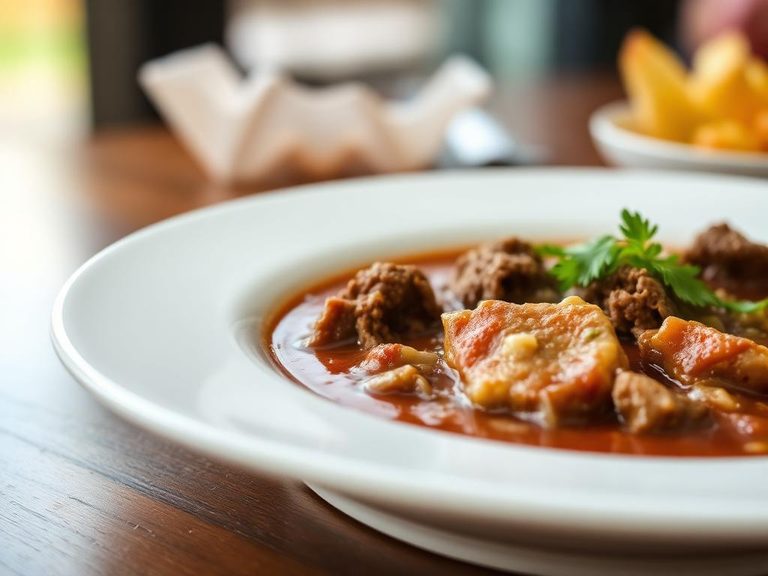
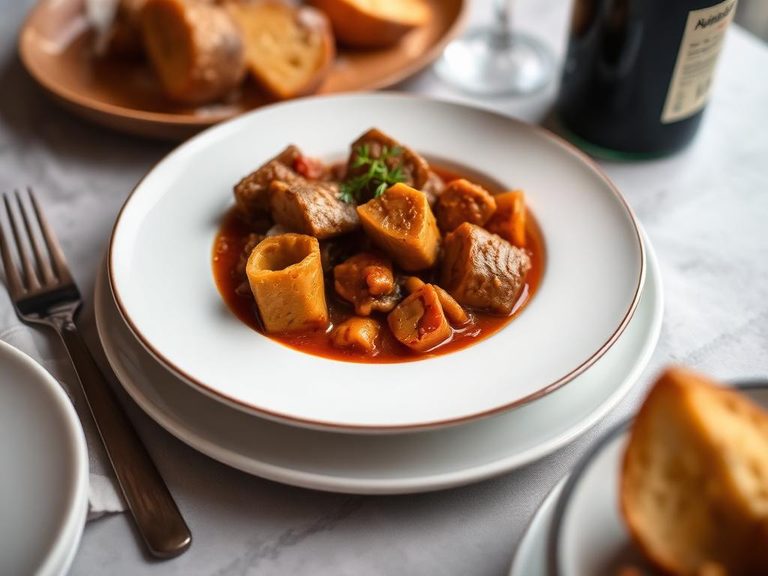
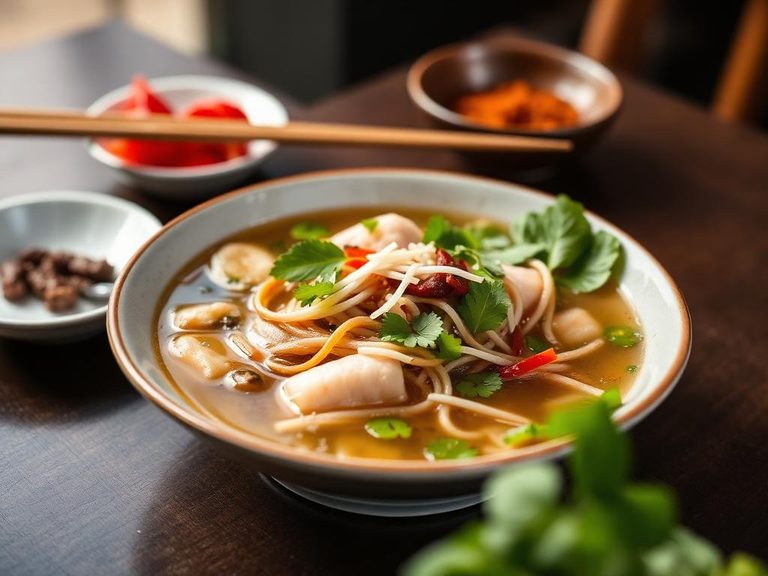
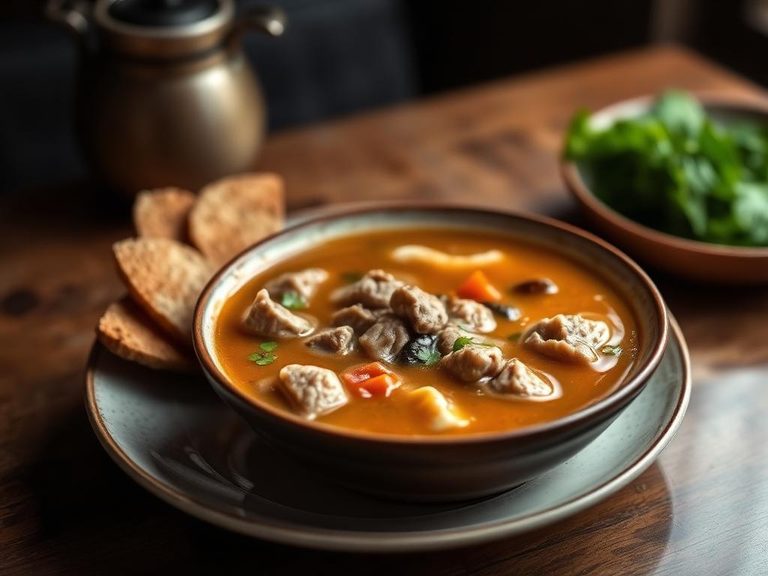
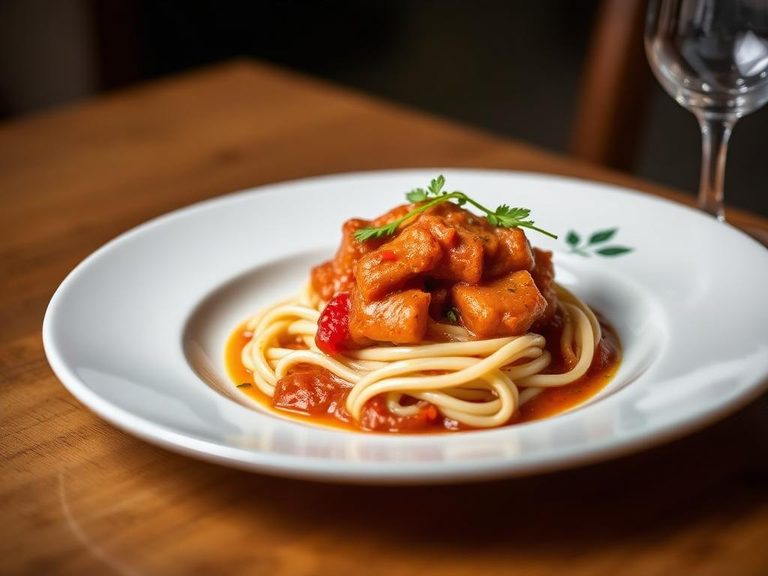
🍽️ Popular dishes
🌍 Where it's eaten
💡 Did you know?
The 'honeycomb' appearance of beef tripe comes from the second stomach compartment, the reticulum, and is so distinctive that it's often used as a natural culinary sponge for sauces.
Full nutrition (USDA data · scales with serving)
| Water | 77.7 g |
| Energy | 103 kcal |
| Energy | 430 kj |
| Protein | 19.0 g |
| Total lipid (fat) | 3.0 g |
| Ash | 0.89 g |
| Carbohydrate, by difference | 0.00 g |
| Fiber, total dietary | 0.00 g |
| Total Sugars | 0.00 g |
| Calcium, Ca | 158 mg |
| Iron, Fe | 3.7 mg |
| Magnesium, Mg | 24.0 mg |
| Phosphorus, P | 168 mg |
| Potassium, K | 102 mg |
| Sodium, Na | 40.0 mg |
| Zinc, Zn | 2.4 mg |
| Copper, Cu | 0.11 mg |
| Manganese, Mn | 6.1 mg |
| Selenium, Se | 4.3 ug |
| Vitamin C, total ascorbic acid | 0.00 mg |
| Thiamin | 0.02 mg |
| Riboflavin | 0.10 mg |
| Niacin | 2.6 mg |
| Pantothenic acid | 0.23 mg |
| Vitamin B-6 | 0.01 mg |
| Vitamin B-12 | 2.3 ug |
| Vitamin B-12, added | 0.00 ug |
| Vitamin A, RAE | 6.0 ug |
| Retinol | 6.0 ug |
| Carotene, beta | 0.00 ug |
| Carotene, alpha | 0.00 ug |
| Cryptoxanthin, beta | 0.00 ug |
| Vitamin A, IU | 20.0 iu |
| Lycopene | 0.00 ug |
| Lutein + zeaxanthin | 0.00 ug |
| Vitamin E (alpha-tocopherol) | 0.51 mg |
| Vitamin E, added | 0.00 mg |
| Vitamin D (D2 + D3), International Units | 10.0 iu |
| Vitamin D (D2 + D3) | 0.30 ug |
| Vitamin D3 (cholecalciferol) | 0.30 ug |
| Alcohol, ethyl | 0.00 g |
| Caffeine | 0.00 mg |
| Theobromine | 0.00 mg |
Fat & fatty acid profile (per 100g)
| Fatty acids, total saturated | 0.92 g |
| SFA 4:0 | 0.00 g |
| SFA 6:0 | 0.00 g |
| SFA 8:0 | 0.00 g |
| SFA 10:0 | 0.00 g |
| SFA 12:0 | 0.00 g |
| SFA 14:0 | 0.04 g |
| SFA 16:0 | 0.41 g |
| SFA 17:0 | 0.05 g |
| SFA 18:0 | 0.41 g |
| SFA 20:0 | 0.01 g |
| SFA 22:0 | 0.00 g |
| SFA 24:0 | 0.00 g |
| Fatty acids, total monounsaturated | 0.72 g |
| MUFA 14:1 | 0.01 g |
| MUFA 15:1 | 0.00 g |
| MUFA 16:1 | 0.06 g |
| MUFA 16:1 c | 0.06 g |
| MUFA 17:1 | 0.00 g |
| MUFA 18:1 | 0.65 g |
| MUFA 18:1 c | 0.58 g |
| MUFA 20:1 | 0.00 g |
| MUFA 22:1 | 0.00 g |
| MUFA 22:1 c | 0.00 g |
| MUFA 24:1 c | 0.00 g |
| Fatty acids, total polyunsaturated | 0.16 g |
| PUFA 18:2 | 0.07 g |
| PUFA 18:2 n-6 c,c | 0.05 g |
| PUFA 18:2 CLAs | 0.02 g |
| PUFA 18:3 | 0.02 g |
| PUFA 18:3 n-3 c,c,c (ALA) | 0.02 g |
| PUFA 18:3 n-6 c,c,c | 0.00 g |
| PUFA 18:4 | 0.00 g |
| PUFA 20:2 n-6 c,c | 0.00 g |
| PUFA 20:3 | 0.01 g |
| PUFA 20:3 n-3 | 0.00 g |
| PUFA 20:3 n-6 | 0.01 g |
| PUFA 20:4 | 0.03 g |
| PUFA 20:4 n-6 | 0.03 g |
| PUFA 20:5 n-3 (EPA) | 0.01 g |
| PUFA 22:5 n-3 (DPA) | 0.02 g |
| PUFA 22:6 n-3 (DHA) | 0.00 g |
| Fatty acids, total trans | 0.07 g |
| Fatty acids, total trans-monoenoic | 0.07 g |
| TFA 16:1 t | 0.00 g |
| TFA 18:1 t | 0.07 g |
| TFA 18:2 t,t | 0.00 g |
| Fatty acids, total trans-polyenoic | 0.00 g |
| Cholesterol | 199 mg |
Amino acid profile (per 100g)
| Tryptophan | 0.20 g |
| Threonine | 0.69 g |
| Isoleucine | 0.79 g |
| Leucine | 1.4 g |
| Lysine | 1.5 g |
| Methionine | 0.63 g |
| Phenylalanine | 0.74 g |
| Tyrosine | 0.64 g |
| Valine | 0.84 g |
| Arginine | 1.3 g |
| Histidine | 0.68 g |
| Alanine | 0.99 g |
| Glutamic acid | 2.6 g |
| Glycine | 1.0 g |
| Proline | 0.61 g |
| Serine | 0.67 g |
FAQ
What exactly is tripe?
Tripe is the edible lining from the stomachs of ruminant animals, most commonly cattle. Beef tripe specifically comes from one of the four stomach chambers, with the 'honeycomb' variety being the most popular for cooking.
How do I get it tender?
Tripe requires long, slow cooking—typically 2-3 hours of simmering or braising—to break down its tough connective tissue. Pressure cooking can significantly reduce this time. It's almost always sold pre-cleaned and parboiled, but a thorough rinse is recommended.
Is it nutritious?
Yes, it's a very lean, high-protein food. A 100g serving provides about 19g of protein with less than 3g of fat and no carbs, making it excellent for high-protein, low-carb, or ketogenic diets.
Nutrient density (calculated · NRF9.3)
Nutrient Rich Foods index: beneficial nutrients (protein, fiber, vitamins, minerals) minus saturated fat, added sugar & sodium, per 100 kcal.
NRF9.3 index — Fulgoni, Keast & Drewnowski, 2009. Computed from USDA nutrients.
Weight-loss friendliness (composite index)
Energy density 1.03 kcal/g · 74% calories from protein · 0.0 g fiber · 0.0 g sugar per 100 g.
Composite of energy density (Rolls et al., 1999), protein & fiber satiety, minus sugar. A calculated heuristic — ranks satiety-per-calorie, not a clinical measure.
Dietary load (calculated from USDA values)
Potential renal acid load. Positive = acid-forming, negative = alkaline-forming.
Sodium-to-potassium ratio: 0.39 (lower is better — aim for ≤ 1)
Sodium:potassium per WHO potassium guidance. Computed from USDA nutrients.