

Beef, New Zealand, imported, rump centre, separable lean and fat, raw
Whole food · Beef Products
This is a lean, premium cut from the hindquarter of New Zealand grass-fed cattle, prized for its fine grain and deep, beefy flavor. The separable lean and fat offer a tender, yet satisfyingly firm texture when cooked properly, with a clean, mineral-rich taste. Nutritionally, it's a powerhouse of high-quality protein with a moderate, healthy fat content.
Calorie split: 60% protein · 0% carbs · 40% fat
↓ Full nutrition💚 Why it's loved
People love its robust, clean beef flavor that isn't overpowering, making it a versatile canvas for both simple grilling and complex marinades. Its consistent shape and lean-to-fat ratio make it a reliable, crowd-pleasing centerpiece for a hearty meal.
⚠️ Watch-outs & how to enjoy it better
The lean muscle can become tough and chewy if overcooked, which is a common pitfall. To counteract this, cook it quickly to medium-rare or use moist-heat methods like braising for tougher preparations. Those monitoring saturated fat intake should practice portion control, pairing it with fiber-rich vegetables to balance the meal.
Key benefits
- Excellent source of complete protein for muscle maintenance.
- Rich in bioavailable iron and zinc.
- Contains conjugated linoleic acid (CLA) from grass-fed sources.
- Provides B vitamins, especially B12, for energy metabolism.
- Naturally low in carbohydrates.
🍽️ Popular dishes
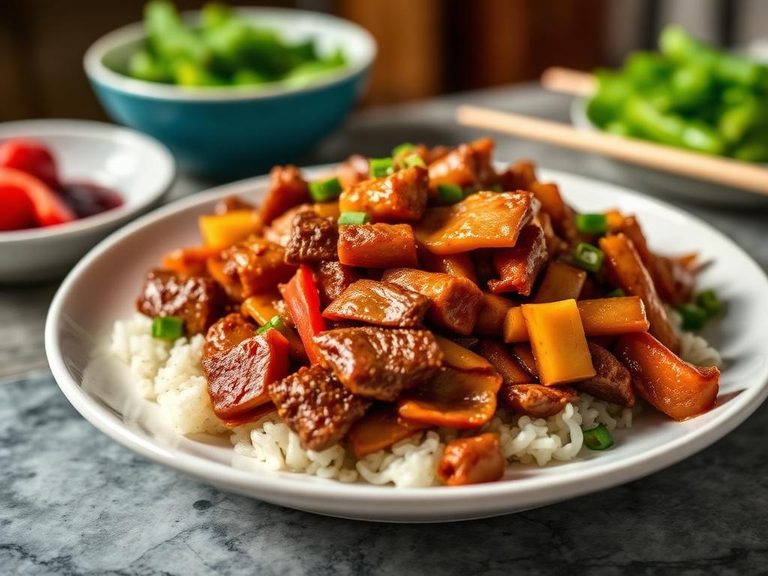
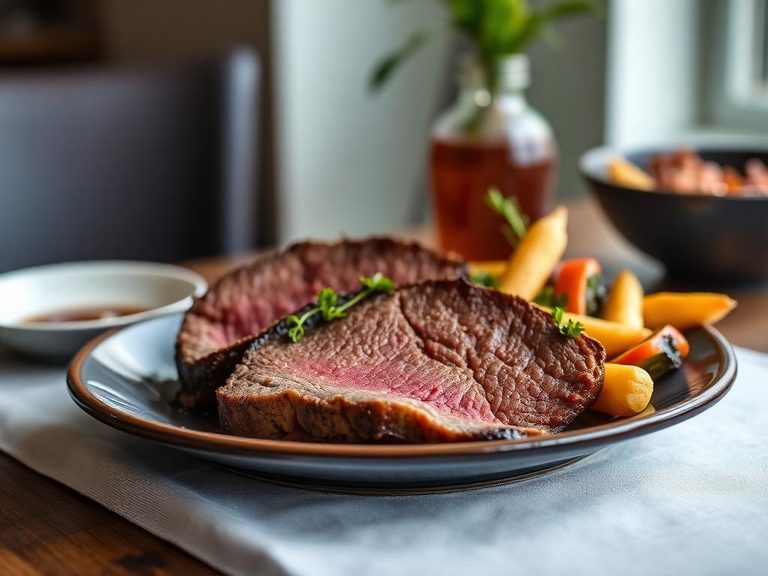
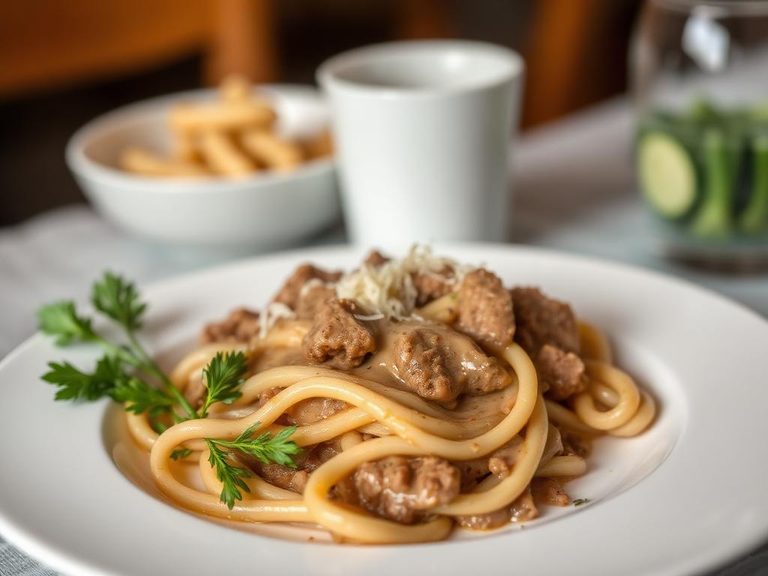
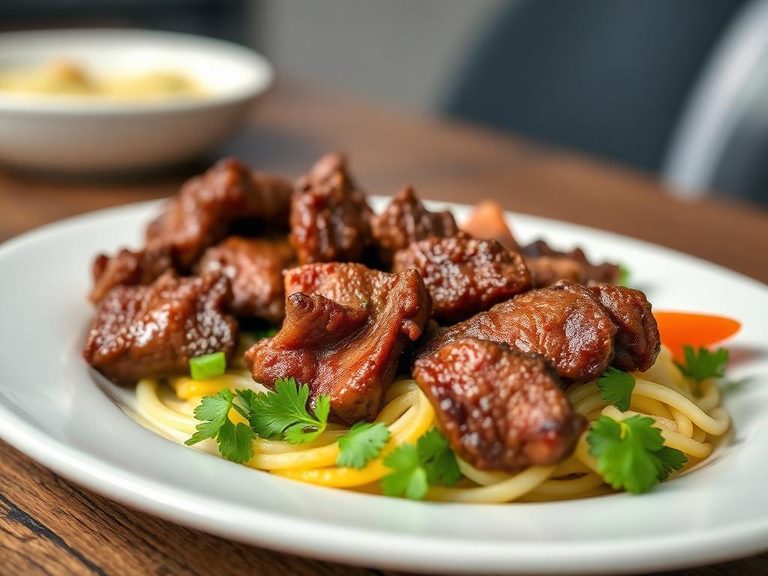
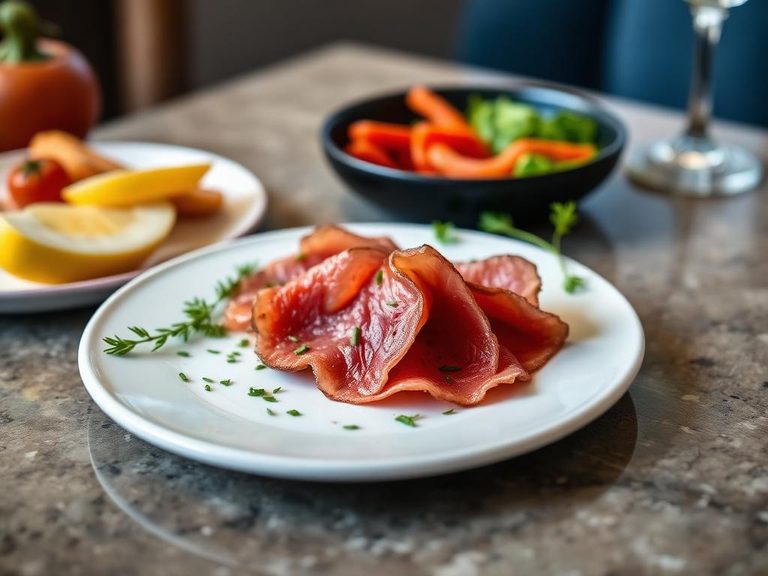
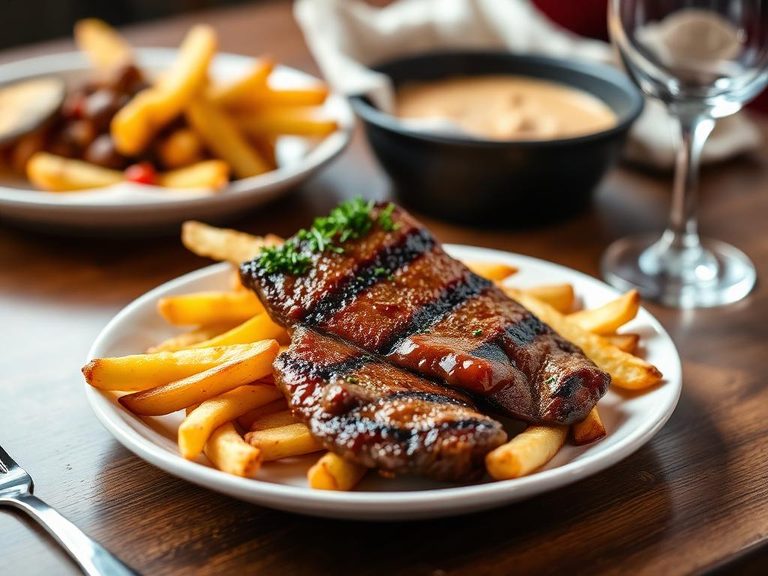
🌍 Where it's eaten
💡 Did you know?
New Zealand's strict biosecurity and grass-fed pastoral farming systems mean this beef is typically free from growth hormones and routine antibiotics, a key factor in its international reputation.
Full nutrition (USDA data · scales with serving)
| Water | 71.9 g |
| Energy | 145 kcal |
| Energy | 607 kj |
| Protein | 21.6 g |
| Total lipid (fat) | 6.5 g |
| Ash | 0.97 g |
| Carbohydrate, by difference | 0.00 g |
| Fiber, total dietary | 0.00 g |
| Total Sugars | 0.00 g |
| Calcium, Ca | 4.0 mg |
| Iron, Fe | 2.3 mg |
| Magnesium, Mg | 22.0 mg |
| Phosphorus, P | 190 mg |
| Potassium, K | 341 mg |
| Sodium, Na | 49.0 mg |
| Zinc, Zn | 3.4 mg |
| Copper, Cu | 0.11 mg |
| Manganese, Mn | 0.01 mg |
| Selenium, Se | 1.5 ug |
| Vitamin C, total ascorbic acid | 0.00 mg |
| Thiamin | 0.07 mg |
| Riboflavin | 0.12 mg |
| Niacin | 2.7 mg |
| Pantothenic acid | 0.58 mg |
| Vitamin B-6 | 0.27 mg |
| Vitamin B-12 | 2.1 ug |
| Vitamin B-12, added | 0.00 ug |
| Vitamin A, RAE | 7.0 ug |
| Retinol | 7.0 ug |
| Carotene, beta | 0.00 ug |
| Carotene, alpha | 0.00 ug |
| Cryptoxanthin, beta | 0.00 ug |
| Vitamin A, IU | 24.0 iu |
| Lycopene | 0.00 ug |
| Lutein + zeaxanthin | 0.00 ug |
| Vitamin E (alpha-tocopherol) | 0.31 mg |
| Vitamin E, added | 0.00 mg |
| Vitamin D (D2 + D3), International Units | 4.0 iu |
| Vitamin D (D2 + D3) | 0.10 ug |
| Vitamin D3 (cholecalciferol) | 0.10 ug |
| Alcohol, ethyl | 0.00 g |
| Caffeine | 0.00 mg |
| Theobromine | 0.00 mg |
Fat & fatty acid profile (per 100g)
| Fatty acids, total saturated | 2.2 g |
| SFA 4:0 | 0.00 g |
| SFA 6:0 | 0.00 g |
| SFA 8:0 | 0.00 g |
| SFA 10:0 | 0.00 g |
| SFA 12:0 | 0.00 g |
| SFA 14:0 | 0.10 g |
| SFA 16:0 | 1.2 g |
| SFA 17:0 | 0.09 g |
| SFA 18:0 | 0.82 g |
| SFA 20:0 | 0.01 g |
| SFA 22:0 | 0.00 g |
| SFA 24:0 | 0.00 g |
| Fatty acids, total monounsaturated | 2.2 g |
| MUFA 14:1 | 0.02 g |
| MUFA 15:1 | 0.00 g |
| MUFA 16:1 | 0.15 g |
| MUFA 16:1 c | 0.13 g |
| MUFA 17:1 | 0.00 g |
| MUFA 18:1 | 2.0 g |
| MUFA 18:1 c | 1.9 g |
| MUFA 20:1 | 0.01 g |
| MUFA 22:1 | 0.00 g |
| MUFA 22:1 c | 0.00 g |
| MUFA 24:1 c | 0.00 g |
| Fatty acids, total polyunsaturated | 0.30 g |
| PUFA 18:2 | 0.15 g |
| PUFA 18:2 n-6 c,c | 0.11 g |
| PUFA 18:2 CLAs | 0.04 g |
| PUFA 18:3 | 0.07 g |
| PUFA 18:3 n-3 c,c,c (ALA) | 0.07 g |
| PUFA 18:3 n-6 c,c,c | 0.00 g |
| PUFA 18:4 | 0.00 g |
| PUFA 20:2 n-6 c,c | 0.00 g |
| PUFA 20:3 | 0.01 g |
| PUFA 20:3 n-3 | 0.00 g |
| PUFA 20:3 n-6 | 0.01 g |
| PUFA 20:4 | 0.03 g |
| PUFA 20:4 n-6 | 0.03 g |
| PUFA 20:5 n-3 (EPA) | 0.02 g |
| PUFA 22:5 n-3 (DPA) | 0.02 g |
| PUFA 22:6 n-3 (DHA) | 0.00 g |
| Fatty acids, total trans | 0.15 g |
| Fatty acids, total trans-monoenoic | 0.15 g |
| TFA 16:1 t | 0.02 g |
| TFA 18:1 t | 0.13 g |
| TFA 18:2 t,t | 0.00 g |
| Fatty acids, total trans-polyenoic | 0.00 g |
| Cholesterol | 55.0 mg |
Amino acid profile (per 100g)
| Tryptophan | 0.23 g |
| Threonine | 0.78 g |
| Isoleucine | 0.90 g |
| Leucine | 1.6 g |
| Lysine | 1.7 g |
| Methionine | 0.71 g |
| Phenylalanine | 0.84 g |
| Tyrosine | 0.73 g |
| Valine | 0.96 g |
| Arginine | 1.4 g |
| Histidine | 0.78 g |
| Alanine | 1.1 g |
| Glutamic acid | 3.0 g |
| Glycine | 1.2 g |
| Proline | 0.69 g |
| Serine | 0.76 g |
FAQ
What's the best way to cook rump centre to keep it tender?
For steaks, high-heat grilling or pan-searing to medium-rare (135°F/57°C internal temp) is ideal. For roasts, sear first then roast at a moderate temperature. Always slice against the grain to shorten muscle fibers.
How does grass-fed beef nutrition differ from grain-fed?
Grass-fed beef, like this New Zealand cut, typically has a leaner profile, a more favorable fatty acid composition (higher in omega-3s and CLA), and often contains more antioxidants like vitamin E.
Can I use this cut for slow cooking?
While it's best for quick cooking, it can be used in stews or braises if cut into cubes. The key is to cook it low and slow in liquid to break down connective tissue, resulting in a tender, flavorful dish.
Nutrient density (calculated · NRF9.3)
Nutrient Rich Foods index: beneficial nutrients (protein, fiber, vitamins, minerals) minus saturated fat, added sugar & sodium, per 100 kcal.
NRF9.3 index — Fulgoni, Keast & Drewnowski, 2009. Computed from USDA nutrients.
Weight-loss friendliness (composite index)
Energy density 1.45 kcal/g · 60% calories from protein · 0.0 g fiber · 0.0 g sugar per 100 g.
Composite of energy density (Rolls et al., 1999), protein & fiber satiety, minus sugar. A calculated heuristic — ranks satiety-per-calorie, not a clinical measure.
Dietary load (calculated from USDA values)
Potential renal acid load. Positive = acid-forming, negative = alkaline-forming.
Sodium-to-potassium ratio: 0.14 (lower is better — aim for ≤ 1)
Sodium:potassium per WHO potassium guidance. Computed from USDA nutrients.