

Beef, New Zealand, imported, rump centre, separable lean and fat, cooked, fast fried
Whole food · Beef Products

Photo: Wikipedia
This is a lean cut from New Zealand beef, fast-fried to a tender, juicy finish with a rich, savory flavor and a satisfying, slightly firm texture. It's a protein powerhouse, delivering a massive 30g of protein per 100g with virtually no carbohydrates, making it a staple for high-protein, low-carb diets. The cooking method locks in moisture, highlighting the natural beefiness of the grass-fed meat.
Calorie split: 63% protein · 0% carbs · 37% fat
↓ Full nutrition💚 Why it's loved
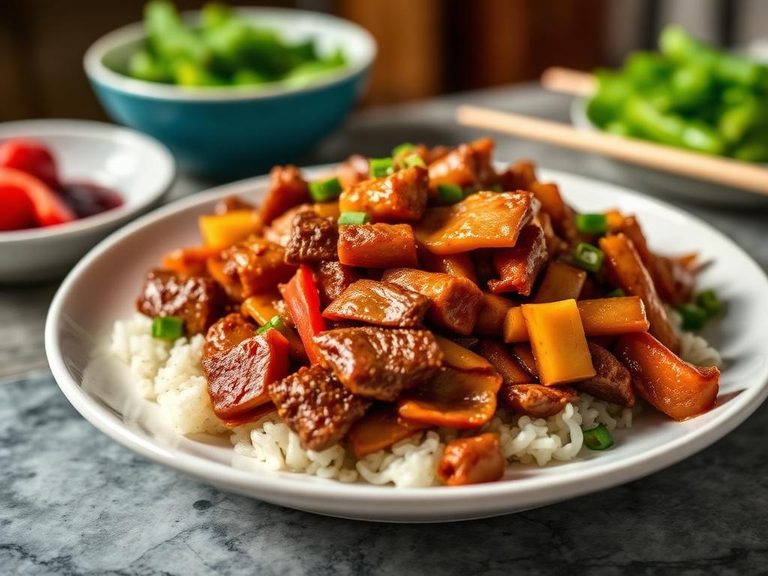
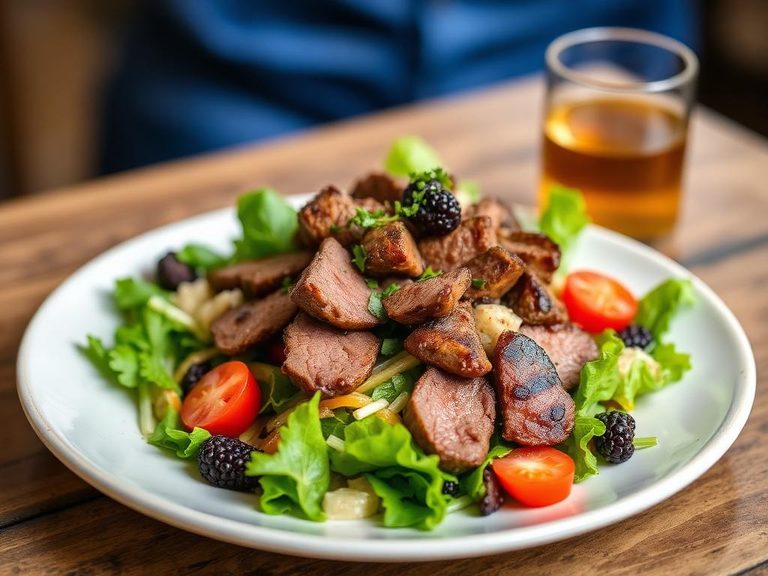
People love it for its robust, clean beef flavor and the satisfying contrast of a seared exterior with a tender interior. Its versatility makes it perfect for quick weeknight stir-fries, elegant steak salads, or simply sliced and served as a protein-rich main.
⚠️ Watch-outs & how to enjoy it better
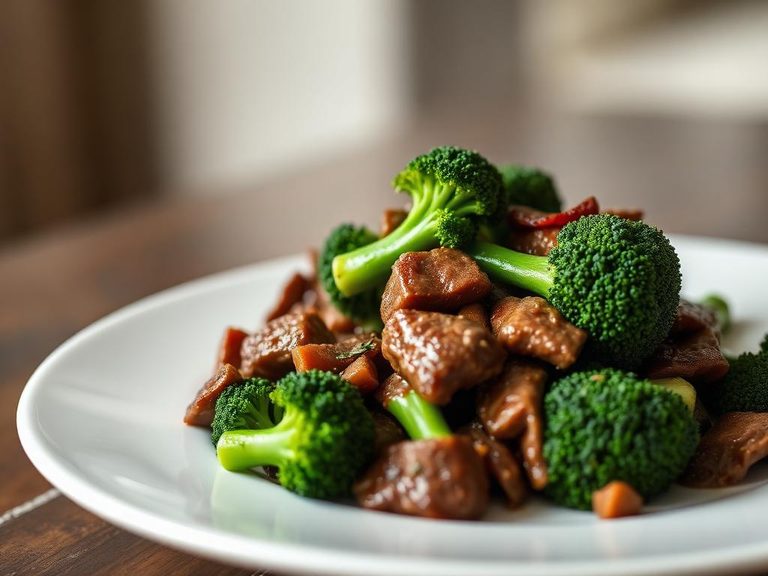
As a red meat, it should be consumed in moderation as part of a balanced diet. Those watching their saturated fat intake may opt for trimming any visible fat before cooking. To counteract this, pair it with plenty of fiber-rich vegetables like broccoli or spinach and use heart-healthy cooking oils like avocado or olive oil.
Key benefits
- Exceptionally high in complete protein for muscle maintenance and satiety.
- Very low in carbohydrates, suitable for ketogenic and low-carb diets.
- Source of essential nutrients like iron, zinc, and B vitamins (especially B12).
- Fast-frying is a quick cooking method that preserves tenderness.
- Grass-fed New Zealand beef often contains higher levels of omega-3 fatty acids.
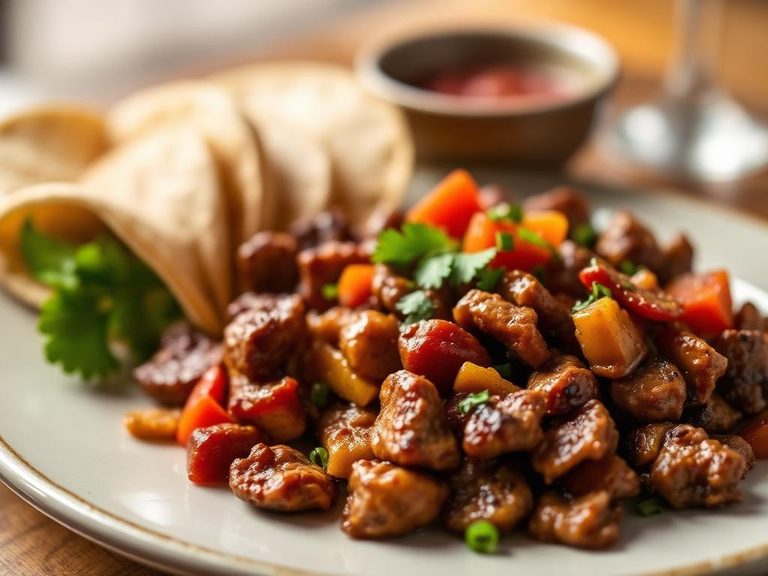
🍽️ Popular dishes

🌍 Where it's eaten
💡 Did you know?
The 'rump' is actually a single large muscle from the hindquarter of the cow, and its leanness and size make it ideal for quick, high-heat cooking methods that would tougher cuts.
Full nutrition (USDA data · scales with serving)
| Water | 61.5 g |
| Energy | 192 kcal |
| Energy | 802 kj |
| Protein | 30.0 g |
| Total lipid (fat) | 8.0 g |
| Ash | 1.4 g |
| Carbohydrate, by difference | 0.00 g |
| Fiber, total dietary | 0.00 g |
| Total Sugars | 0.00 g |
| Calcium, Ca | 5.0 mg |
| Iron, Fe | 3.0 mg |
| Magnesium, Mg | 29.0 mg |
| Phosphorus, P | 253 mg |
| Potassium, K | 425 mg |
| Sodium, Na | 55.0 mg |
| Zinc, Zn | 4.0 mg |
| Copper, Cu | 0.14 mg |
| Manganese, Mn | 0.01 mg |
| Selenium, Se | 1.9 ug |
| Vitamin C, total ascorbic acid | 0.00 mg |
| Thiamin | 0.08 mg |
| Riboflavin | 0.20 mg |
| Niacin | 3.9 mg |
| Pantothenic acid | 0.77 mg |
| Vitamin B-6 | 0.27 mg |
| Vitamin B-12 | 2.2 ug |
| Vitamin B-12, added | 0.00 ug |
| Vitamin A, RAE | 12.0 ug |
| Retinol | 12.0 ug |
| Carotene, beta | 0.00 ug |
| Carotene, alpha | 0.00 ug |
| Cryptoxanthin, beta | 0.00 ug |
| Vitamin A, IU | 38.0 iu |
| Lycopene | 0.00 ug |
| Lutein + zeaxanthin | 0.00 ug |
| Vitamin E (alpha-tocopherol) | 0.56 mg |
| Vitamin E, added | 0.00 mg |
| Vitamin D (D2 + D3), International Units | 7.0 iu |
| Vitamin D (D2 + D3) | 0.20 ug |
| Vitamin D3 (cholecalciferol) | 0.20 ug |
| Alcohol, ethyl | 0.00 g |
| Caffeine | 0.00 mg |
| Theobromine | 0.00 mg |
Fat & fatty acid profile (per 100g)
| Fatty acids, total saturated | 2.8 g |
| SFA 4:0 | 0.00 g |
| SFA 6:0 | 0.00 g |
| SFA 8:0 | 0.00 g |
| SFA 10:0 | 0.00 g |
| SFA 12:0 | 0.00 g |
| SFA 14:0 | 0.13 g |
| SFA 16:0 | 1.5 g |
| SFA 17:0 | 0.10 g |
| SFA 18:0 | 1.0 g |
| SFA 20:0 | 0.01 g |
| SFA 22:0 | 0.00 g |
| SFA 24:0 | 0.00 g |
| Fatty acids, total monounsaturated | 2.8 g |
| MUFA 14:1 | 0.03 g |
| MUFA 15:1 | 0.01 g |
| MUFA 16:1 | 0.20 g |
| MUFA 16:1 c | 0.17 g |
| MUFA 17:1 | 0.00 g |
| MUFA 18:1 | 2.5 g |
| MUFA 18:1 c | 2.4 g |
| MUFA 20:1 | 0.01 g |
| MUFA 22:1 | 0.00 g |
| MUFA 22:1 c | 0.00 g |
| MUFA 24:1 c | 0.00 g |
| Fatty acids, total polyunsaturated | 0.41 g |
| PUFA 18:2 | 0.19 g |
| PUFA 18:2 n-6 c,c | 0.14 g |
| PUFA 18:2 CLAs | 0.04 g |
| PUFA 18:3 | 0.09 g |
| PUFA 18:3 n-3 c,c,c (ALA) | 0.09 g |
| PUFA 18:3 n-6 c,c,c | 0.01 g |
| PUFA 18:4 | 0.00 g |
| PUFA 20:2 n-6 c,c | 0.00 g |
| PUFA 20:3 | 0.02 g |
| PUFA 20:3 n-3 | 0.00 g |
| PUFA 20:3 n-6 | 0.01 g |
| PUFA 20:4 | 0.04 g |
| PUFA 20:4 n-6 | 0.04 g |
| PUFA 20:5 n-3 (EPA) | 0.03 g |
| PUFA 22:5 n-3 (DPA) | 0.03 g |
| PUFA 22:6 n-3 (DHA) | 0.00 g |
| Fatty acids, total trans | 0.17 g |
| Fatty acids, total trans-monoenoic | 0.17 g |
| TFA 16:1 t | 0.03 g |
| TFA 18:1 t | 0.14 g |
| TFA 18:2 t,t | 0.00 g |
| Fatty acids, total trans-polyenoic | 0.00 g |
| Cholesterol | 78.0 mg |
Amino acid profile (per 100g)
| Tryptophan | 0.31 g |
| Threonine | 1.1 g |
| Isoleucine | 1.2 g |
| Leucine | 2.3 g |
| Lysine | 2.4 g |
| Methionine | 0.99 g |
| Phenylalanine | 1.2 g |
| Tyrosine | 1.0 g |
| Valine | 1.3 g |
| Arginine | 2.0 g |
| Histidine | 1.1 g |
| Alanine | 1.6 g |
| Glutamic acid | 4.2 g |
| Glycine | 1.6 g |
| Proline | 0.96 g |
| Serine | 1.1 g |
FAQ
How do I prevent this lean cut from becoming tough when frying?
The key is high heat and speed. Preheat your pan or wok until very hot, slice the beef against the grain into thin strips, and cook for just 1-2 minutes per side. Do not overcrowd the pan, and let the meat rest briefly after cooking.
Is this cut suitable for slow cooking or braising?
Generally, no. Its leanness means it lacks the connective tissue that breaks down during long, moist cooking. It's best suited for fast, dry-heat methods like stir-frying, grilling, or pan-searing.
What does 'separable lean and fat' mean on the label?
It means the nutritional values are calculated for the edible portion of the meat after the large, external fat cap has been removed, but includes the small amount of intramuscular fat within the lean muscle itself.
Nutrient density (calculated · NRF9.3)
Nutrient Rich Foods index: beneficial nutrients (protein, fiber, vitamins, minerals) minus saturated fat, added sugar & sodium, per 100 kcal.
NRF9.3 index — Fulgoni, Keast & Drewnowski, 2009. Computed from USDA nutrients.
Weight-loss friendliness (composite index)
Energy density 1.92 kcal/g · 63% calories from protein · 0.0 g fiber · 0.0 g sugar per 100 g.
Composite of energy density (Rolls et al., 1999), protein & fiber satiety, minus sugar. A calculated heuristic — ranks satiety-per-calorie, not a clinical measure.
Dietary load (calculated from USDA values)
Potential renal acid load. Positive = acid-forming, negative = alkaline-forming.
Sodium-to-potassium ratio: 0.13 (lower is better — aim for ≤ 1)
Sodium:potassium per WHO potassium guidance. Computed from USDA nutrients.