

Beef, New Zealand, imported, hind shin, separable lean and fat, cooked, braised
Whole food · Beef Products

Photo: Wikipedia
This is a robust cut of New Zealand beef from the hind shin, slow-braised until the collagen melts into gelatin, yielding a deeply savory, fork-tender texture with a rich, meaty flavor. Nutritionally, it's a powerhouse of protein with minimal carbohydrates, making it an excellent choice for those prioritizing lean muscle maintenance. The braising process concentrates its flavors, resulting in a satisfying, hearty bite.
Calorie split: 61% protein · 0% carbs · 39% fat
↓ Full nutrition💚 Why it's loved
People love it for its incredible depth of flavor and melt-in-your-mouth texture after slow cooking, which turns a tough cut into pure comfort food. Its versatility makes it a star in stews, curries, and braises across many culinary traditions.
⚠️ Watch-outs & how to enjoy it better
The cut is naturally high in connective tissue, which can be chewy if not cooked low-and-slow; rushing the process yields a tough result. It's also a red meat, so those monitoring saturated fat intake should practice portion control. To counteract, ensure proper braising technique and pair with fiber-rich vegetables like carrots or leafy greens.
Key benefits
- Excellent source of high-quality protein (29.82g per 100g)
- Very low in carbohydrates and sugar
- Contains essential minerals like iron and zinc from beef
- Braising breaks down tough connective tissue for easier digestion
- Good source of collagen-derived gelatin for joint and gut health
🍽️ Popular dishes
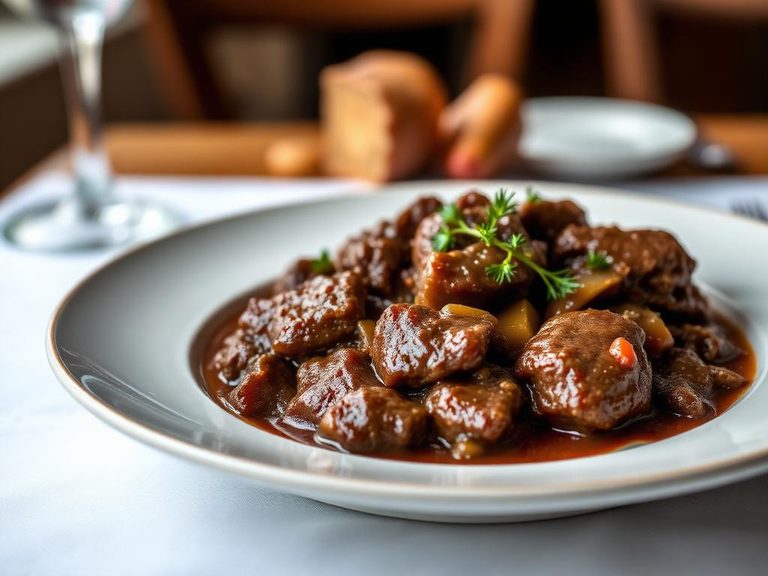

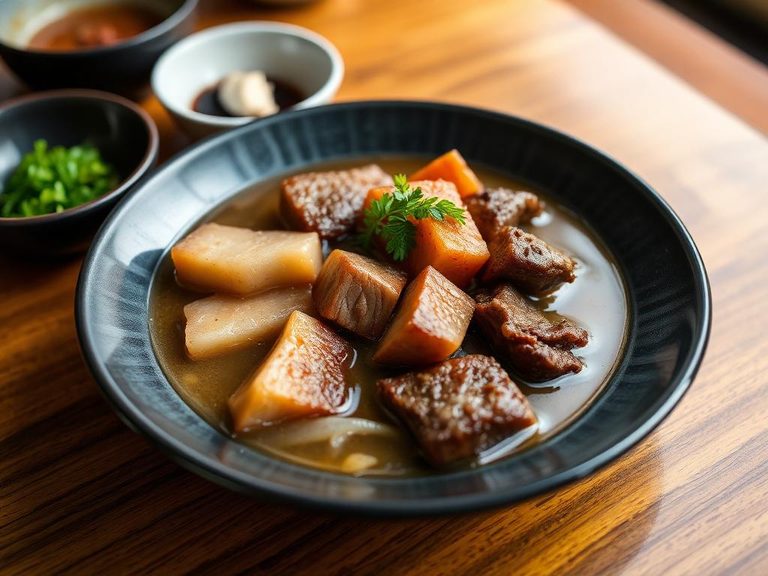
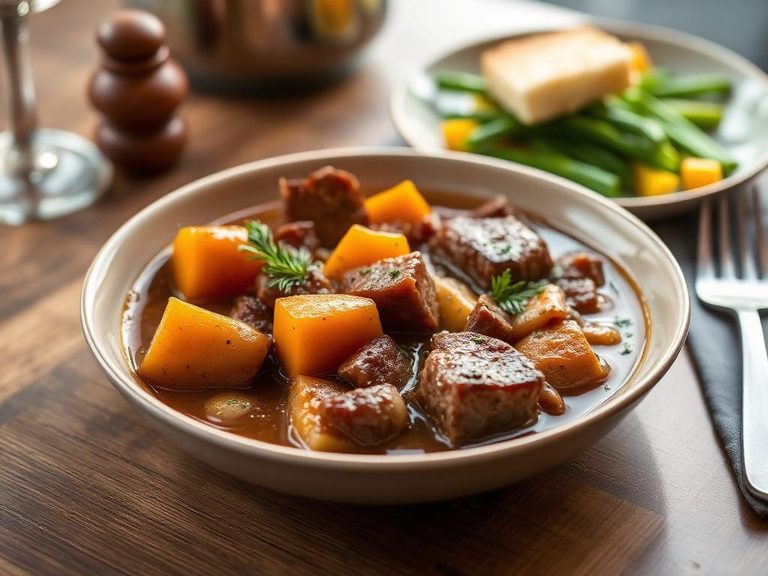
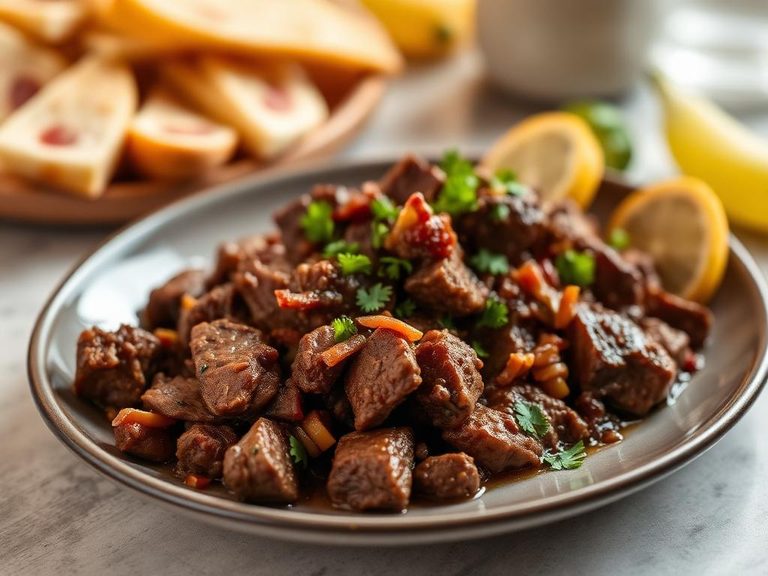
🌍 Where it's eaten
💡 Did you know?
The hind shin is a hard-working muscle, which is why it's packed with collagen that transforms into rich, silky gelatin during braising—the secret behind a perfect stew's luxurious mouthfeel.
Full nutrition (USDA data · scales with serving)
| Water | 61.9 g |
| Energy | 196 kcal |
| Energy | 820 kj |
| Protein | 29.8 g |
| Total lipid (fat) | 8.5 g |
| Ash | 1.5 g |
| Carbohydrate, by difference | 0.07 g |
| Fiber, total dietary | 0.00 g |
| Total Sugars | 0.00 g |
| Calcium, Ca | 7.0 mg |
| Iron, Fe | 2.6 mg |
| Magnesium, Mg | 19.0 mg |
| Phosphorus, P | 150 mg |
| Potassium, K | 211 mg |
| Sodium, Na | 43.0 mg |
| Zinc, Zn | 5.8 mg |
| Copper, Cu | 0.11 mg |
| Manganese, Mn | 0.01 mg |
| Selenium, Se | 2.1 ug |
| Vitamin C, total ascorbic acid | 0.00 mg |
| Thiamin | 0.02 mg |
| Riboflavin | 0.11 mg |
| Niacin | 2.6 mg |
| Pantothenic acid | 0.19 mg |
| Vitamin B-6 | 0.14 mg |
| Vitamin B-12 | 1.2 ug |
| Vitamin B-12, added | 0.00 ug |
| Vitamin A, RAE | 8.0 ug |
| Retinol | 8.0 ug |
| Carotene, beta | 0.00 ug |
| Carotene, alpha | 0.00 ug |
| Cryptoxanthin, beta | 0.00 ug |
| Vitamin A, IU | 25.0 iu |
| Lycopene | 0.00 ug |
| Lutein + zeaxanthin | 0.00 ug |
| Vitamin E (alpha-tocopherol) | 0.70 mg |
| Vitamin E, added | 0.00 mg |
| Vitamin D (D2 + D3), International Units | 8.0 iu |
| Vitamin D (D2 + D3) | 0.20 ug |
| Vitamin D3 (cholecalciferol) | 0.20 ug |
| Alcohol, ethyl | 0.00 g |
| Caffeine | 0.00 mg |
| Theobromine | 0.00 mg |
Fat & fatty acid profile (per 100g)
| Fatty acids, total saturated | 2.9 g |
| SFA 4:0 | 0.00 g |
| SFA 6:0 | 0.00 g |
| SFA 8:0 | 0.00 g |
| SFA 10:0 | 0.00 g |
| SFA 12:0 | 0.01 g |
| SFA 14:0 | 0.16 g |
| SFA 16:0 | 1.5 g |
| SFA 17:0 | 0.10 g |
| SFA 18:0 | 1.1 g |
| SFA 20:0 | 0.01 g |
| SFA 22:0 | 0.00 g |
| SFA 24:0 | 0.00 g |
| Fatty acids, total monounsaturated | 3.0 g |
| MUFA 14:1 | 0.04 g |
| MUFA 15:1 | 0.00 g |
| MUFA 16:1 | 0.24 g |
| MUFA 16:1 c | 0.22 g |
| MUFA 17:1 | 0.00 g |
| MUFA 18:1 | 2.7 g |
| MUFA 18:1 c | 2.5 g |
| MUFA 20:1 | 0.01 g |
| MUFA 22:1 | 0.00 g |
| MUFA 22:1 c | 0.00 g |
| MUFA 24:1 c | 0.00 g |
| Fatty acids, total polyunsaturated | 0.38 g |
| PUFA 18:2 | 0.17 g |
| PUFA 18:2 n-6 c,c | 0.11 g |
| PUFA 18:2 CLAs | 0.05 g |
| PUFA 18:3 | 0.08 g |
| PUFA 18:3 n-3 c,c,c (ALA) | 0.08 g |
| PUFA 18:3 n-6 c,c,c | 0.00 g |
| PUFA 18:4 | 0.00 g |
| PUFA 20:2 n-6 c,c | 0.00 g |
| PUFA 20:3 | 0.01 g |
| PUFA 20:3 n-3 | 0.00 g |
| PUFA 20:3 n-6 | 0.01 g |
| PUFA 20:4 | 0.04 g |
| PUFA 20:4 n-6 | 0.04 g |
| PUFA 20:5 n-3 (EPA) | 0.03 g |
| PUFA 22:5 n-3 (DPA) | 0.04 g |
| PUFA 22:6 n-3 (DHA) | 0.01 g |
| Fatty acids, total trans | 0.20 g |
| Fatty acids, total trans-monoenoic | 0.19 g |
| TFA 16:1 t | 0.02 g |
| TFA 18:1 t | 0.17 g |
| TFA 18:2 t,t | 0.00 g |
| Fatty acids, total trans-polyenoic | 0.00 g |
| Cholesterol | 88.0 mg |
Amino acid profile (per 100g)
| Tryptophan | 0.31 g |
| Threonine | 1.1 g |
| Isoleucine | 1.2 g |
| Leucine | 2.3 g |
| Lysine | 2.4 g |
| Methionine | 0.98 g |
| Phenylalanine | 1.2 g |
| Tyrosine | 1.0 g |
| Valine | 1.3 g |
| Arginine | 2.0 g |
| Histidine | 1.1 g |
| Alanine | 1.6 g |
| Glutamic acid | 4.2 g |
| Glycine | 1.6 g |
| Proline | 0.96 g |
| Serine | 1.0 g |
FAQ
How is 'hind shin' different from other beef cuts?
The hind shin comes from the lower leg of the cow, a well-exercised area rich in connective tissue (collagen). This makes it tough when cooked quickly but exceptionally tender and flavorful when braised slowly.
What does 'separable lean and fat' mean?
It indicates the nutritional data accounts for the meat (lean) and the attached fat that can be easily separated by hand. The braised product's fat content (8.5g/100g) reflects this mix.
Why is it imported from New Zealand?
New Zealand is renowned for its high-quality, grass-fed beef production. Importing this specific cut allows consumers to access its distinct flavor profile and nutritional benefits from a trusted source.
Nutrient density (calculated · NRF9.3)
Nutrient Rich Foods index: beneficial nutrients (protein, fiber, vitamins, minerals) minus saturated fat, added sugar & sodium, per 100 kcal.
NRF9.3 index — Fulgoni, Keast & Drewnowski, 2009. Computed from USDA nutrients.
Weight-loss friendliness (composite index)
Energy density 1.96 kcal/g · 61% calories from protein · 0.0 g fiber · 0.0 g sugar per 100 g.
Composite of energy density (Rolls et al., 1999), protein & fiber satiety, minus sugar. A calculated heuristic — ranks satiety-per-calorie, not a clinical measure.
Dietary load (calculated from USDA values)
Potential renal acid load. Positive = acid-forming, negative = alkaline-forming.
Sodium-to-potassium ratio: 0.20 (lower is better — aim for ≤ 1)
Sodium:potassium per WHO potassium guidance. Computed from USDA nutrients.