

Beef, New Zealand, imported, eye round, separable lean and fat, raw
Whole food · Beef Products

Photo: Wikipedia
This lean cut from New Zealand's grass-fed cattle is a deep ruby red, with a fine, uniform grain and a firm, dense texture. Its flavor is clean and subtly sweet, reflecting the animal's pasture-based diet, with minimal marbling. Nutritionally, it's a protein powerhouse, delivering nearly 20 grams of protein per 100 grams with very little fat.
Calorie split: 62% protein · 4% carbs · 34% fat
↓ Full nutrition💚 Why it's loved
People love it for its clean, beefy taste that doesn't overpower dishes, and its remarkable versatility—it takes well to marinades and shines in both quick-cooking and slow-braising preparations. In New Zealand and Australia, it's a staple for healthy home cooking, valued for its lean profile and connection to grass-fed farming.
⚠️ Watch-outs & how to enjoy it better
Its very low fat content means it can become dry and tough if overcooked, which is a common pitfall. To counteract this, use a meat thermometer to pull it at 130-135°F (54-57°C) for medium-rare, or slice it thinly against the grain for stir-fries. For those watching sodium intake, be mindful of seasoning blends or marinades, and opt for herbs, spices, and acidic components like citrus or vinegar for flavor.
Key benefits
- Excellent source of high-quality, complete protein for muscle maintenance.
- Very low in fat, particularly saturated fat compared to many other beef cuts.
- Rich in essential minerals like zinc and iron (heme iron, highly absorbable).
- Provides B vitamins, especially B12, crucial for nerve function and energy.
🍽️ Popular dishes
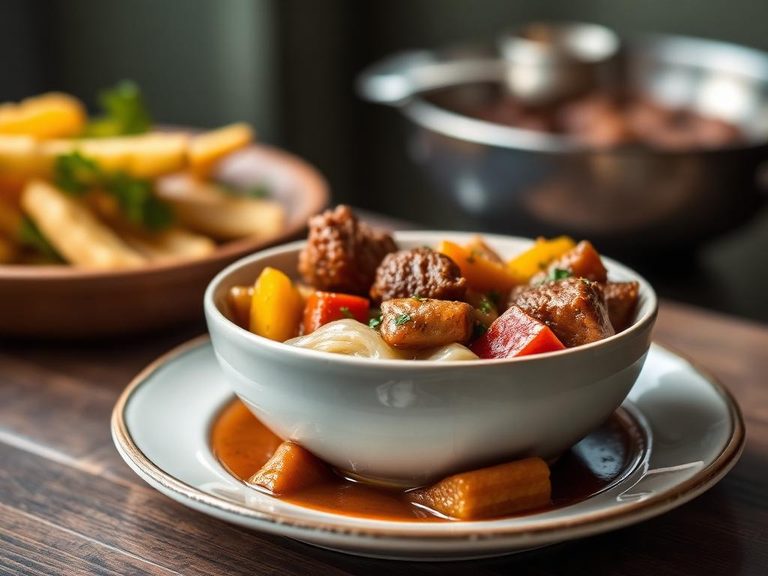
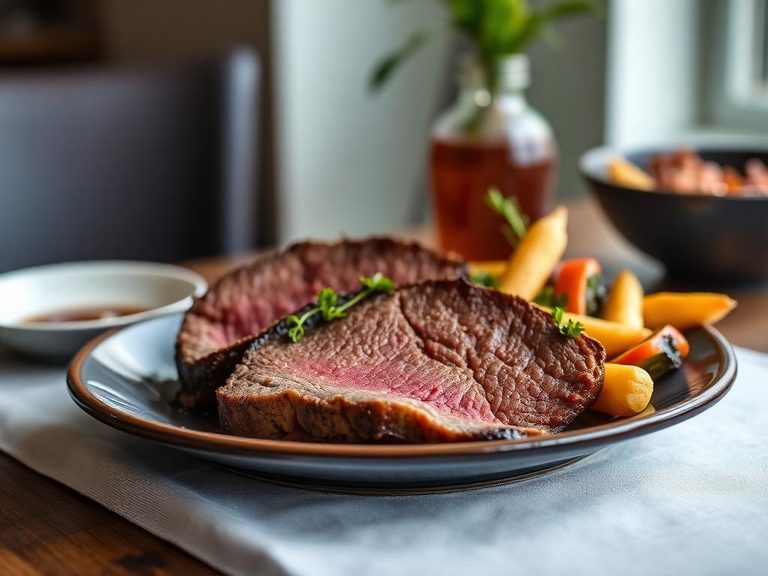

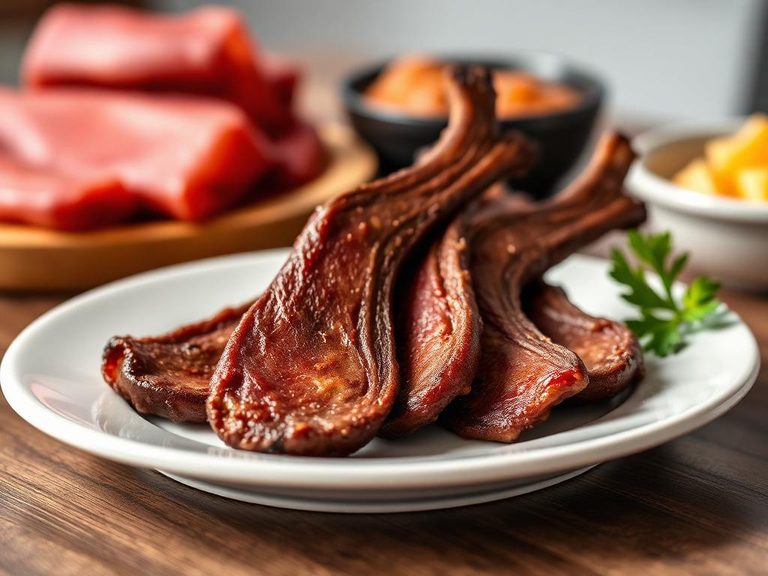

🌍 Where it's eaten
💡 Did you know?
New Zealand's eye round is often from cattle that are grass-fed for their entire lives, a practice that contributes to its distinct, slightly gamier flavor and a different fatty acid profile compared to grain-finished beef.
Full nutrition (USDA data · scales with serving)
| Water | 72.9 g |
| Energy | 129 kcal |
| Energy | 540 kj |
| Protein | 19.9 g |
| Total lipid (fat) | 4.9 g |
| Ash | 1.0 g |
| Carbohydrate, by difference | 1.3 g |
| Fiber, total dietary | 0.00 g |
| Total Sugars | 0.00 g |
| Calcium, Ca | 4.0 mg |
| Iron, Fe | 1.4 mg |
| Magnesium, Mg | 21.0 mg |
| Phosphorus, P | 189 mg |
| Potassium, K | 346 mg |
| Sodium, Na | 39.0 mg |
| Zinc, Zn | 2.7 mg |
| Copper, Cu | 0.05 mg |
| Manganese, Mn | 0.00 mg |
| Selenium, Se | 1.1 ug |
| Vitamin C, total ascorbic acid | 0.00 mg |
| Thiamin | 0.04 mg |
| Riboflavin | 0.07 mg |
| Niacin | 3.4 mg |
| Pantothenic acid | 0.26 mg |
| Vitamin B-6 | 0.32 mg |
| Vitamin B-12 | 1.1 ug |
| Vitamin B-12, added | 0.00 ug |
| Vitamin A, RAE | 7.0 ug |
| Retinol | 7.0 ug |
| Carotene, beta | 0.00 ug |
| Carotene, alpha | 0.00 ug |
| Cryptoxanthin, beta | 0.00 ug |
| Vitamin A, IU | 23.0 iu |
| Lycopene | 0.00 ug |
| Lutein + zeaxanthin | 0.00 ug |
| Vitamin E (alpha-tocopherol) | 0.45 mg |
| Vitamin E, added | 0.00 mg |
| Vitamin D (D2 + D3), International Units | 4.0 iu |
| Vitamin D (D2 + D3) | 0.10 ug |
| Vitamin D3 (cholecalciferol) | 0.10 ug |
| Alcohol, ethyl | 0.00 g |
| Caffeine | 0.00 mg |
| Theobromine | 0.00 mg |
Fat & fatty acid profile (per 100g)
| Fatty acids, total saturated | 1.6 g |
| SFA 4:0 | 0.00 g |
| SFA 6:0 | 0.00 g |
| SFA 8:0 | 0.00 g |
| SFA 10:0 | 0.00 g |
| SFA 12:0 | 0.00 g |
| SFA 14:0 | 0.09 g |
| SFA 16:0 | 0.86 g |
| SFA 17:0 | 0.05 g |
| SFA 18:0 | 0.56 g |
| SFA 20:0 | 0.00 g |
| SFA 22:0 | 0.00 g |
| SFA 24:0 | 0.00 g |
| Fatty acids, total monounsaturated | 1.5 g |
| MUFA 14:1 | 0.03 g |
| MUFA 15:1 | 0.00 g |
| MUFA 16:1 | 0.14 g |
| MUFA 16:1 c | 0.13 g |
| MUFA 17:1 | 0.00 g |
| MUFA 18:1 | 1.4 g |
| MUFA 18:1 c | 1.3 g |
| MUFA 20:1 | 0.00 g |
| MUFA 22:1 | 0.00 g |
| MUFA 22:1 c | 0.00 g |
| MUFA 24:1 c | 0.00 g |
| Fatty acids, total polyunsaturated | 0.23 g |
| PUFA 18:2 | 0.11 g |
| PUFA 18:2 n-6 c,c | 0.07 g |
| PUFA 18:2 CLAs | 0.04 g |
| PUFA 18:3 | 0.05 g |
| PUFA 18:3 n-3 c,c,c (ALA) | 0.04 g |
| PUFA 18:3 n-6 c,c,c | 0.00 g |
| PUFA 18:4 | 0.00 g |
| PUFA 20:2 n-6 c,c | 0.00 g |
| PUFA 20:3 | 0.01 g |
| PUFA 20:3 n-3 | 0.00 g |
| PUFA 20:3 n-6 | 0.01 g |
| PUFA 20:4 | 0.03 g |
| PUFA 20:4 n-6 | 0.03 g |
| PUFA 20:5 n-3 (EPA) | 0.02 g |
| PUFA 22:5 n-3 (DPA) | 0.02 g |
| PUFA 22:6 n-3 (DHA) | 0.00 g |
| Fatty acids, total trans | 0.10 g |
| Fatty acids, total trans-monoenoic | 0.10 g |
| TFA 16:1 t | 0.01 g |
| TFA 18:1 t | 0.09 g |
| TFA 18:2 t,t | 0.00 g |
| Fatty acids, total trans-polyenoic | 0.00 g |
| Cholesterol | 48.0 mg |
Amino acid profile (per 100g)
| Tryptophan | 0.21 g |
| Threonine | 0.72 g |
| Isoleucine | 0.83 g |
| Leucine | 1.5 g |
| Lysine | 1.6 g |
| Methionine | 0.65 g |
| Phenylalanine | 0.77 g |
| Tyrosine | 0.67 g |
| Valine | 0.88 g |
| Arginine | 1.3 g |
| Histidine | 0.72 g |
| Alanine | 1.0 g |
| Glutamic acid | 2.8 g |
| Glycine | 1.1 g |
| Proline | 0.64 g |
| Serine | 0.70 g |
FAQ
The key is to not overcook it. Use a meat thermometer and aim for an internal temperature of 130-135°F (54-57°C) for medium-rare. Let it rest for 5-10 minutes after cooking to allow juices to redistribute. For stews or braises, cook low and slow until fork-tender.
What's the difference between eye round and top round?
They are adjacent muscles from the same leg primal. The eye round is a single, very lean, oval-shaped muscle, making it ideal for uniform roasts. The top round is slightly larger, can have a bit more connective tissue, and is often used for steaks, jerky, or ground beef.
Is grass-fed beef really healthier?
Grass-fed beef, like most New Zealand beef, can have slightly higher levels of certain nutrients like omega-3 fatty acids and antioxidants (e.g., vitamin E) compared to grain-finished beef. However, the overall fat content and calorie difference is often modest. The primary health benefit of any lean cut is its high protein and low saturated fat.
Nutrient density (calculated · NRF9.3)
Nutrient Rich Foods index: beneficial nutrients (protein, fiber, vitamins, minerals) minus saturated fat, added sugar & sodium, per 100 kcal.
NRF9.3 index — Fulgoni, Keast & Drewnowski, 2009. Computed from USDA nutrients.
Weight-loss friendliness (composite index)
Energy density 1.29 kcal/g · 62% calories from protein · 0.0 g fiber · 0.0 g sugar per 100 g.
Composite of energy density (Rolls et al., 1999), protein & fiber satiety, minus sugar. A calculated heuristic — ranks satiety-per-calorie, not a clinical measure.
Dietary load (calculated from USDA values)
Potential renal acid load. Positive = acid-forming, negative = alkaline-forming.
Sodium-to-potassium ratio: 0.11 (lower is better — aim for ≤ 1)
Sodium:potassium per WHO potassium guidance. Computed from USDA nutrients.