

Beef, loin, top loin steak, boneless, lip-on, separable lean only, trimmed to 1/8" fat, choice, raw
Whole food · Beef Products
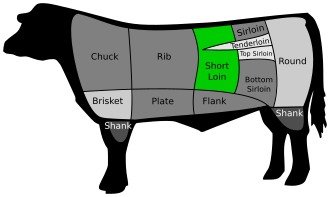
Photo: Wikipedia
This is a premium, lean cut from the upper loin of the beef, prized for its deep, beefy flavor and fine-grained, tender texture. Trimmed to a precise 1/8 inch of fat, it offers a clean, meat-forward taste with minimal marbling, making it a high-protein, low-carb staple. Its nutrition profile is dominated by protein (22.8g per 100g), with a moderate fat content (6.39g) and zero carbohydrates.
Calorie split: 61% protein · 0% carbs · 39% fat
↓ Full nutrition💚 Why it's loved
People love this cut for its robust, pure beef flavor that isn't masked by heavy fat, and its impressive versatility—it can be the star of a simple grilled steak or a refined component in a stir-fry. It represents a classic, no-nonsense steakhouse experience.
⚠️ Watch-outs & how to enjoy it better
The lean nature means it can become tough and dry if overcooked, requiring careful temperature control. For those monitoring saturated fat intake, it's important to note that while trimmed, it still contains animal fat. To counteract dryness, use a meat thermometer to pull it at 130-135°F (54-57°C) for medium-rare and let it rest thoroughly. To balance a meal, pair it with fiber-rich vegetables.
Key benefits
- Excellent source of complete, high-quality protein for muscle maintenance.
- Naturally very low in carbohydrates and sugars.
- Provides essential nutrients like iron, zinc, and B vitamins (especially B12).
- A versatile base for both quick-cooking and slow-cooking methods.
🍽️ Popular dishes
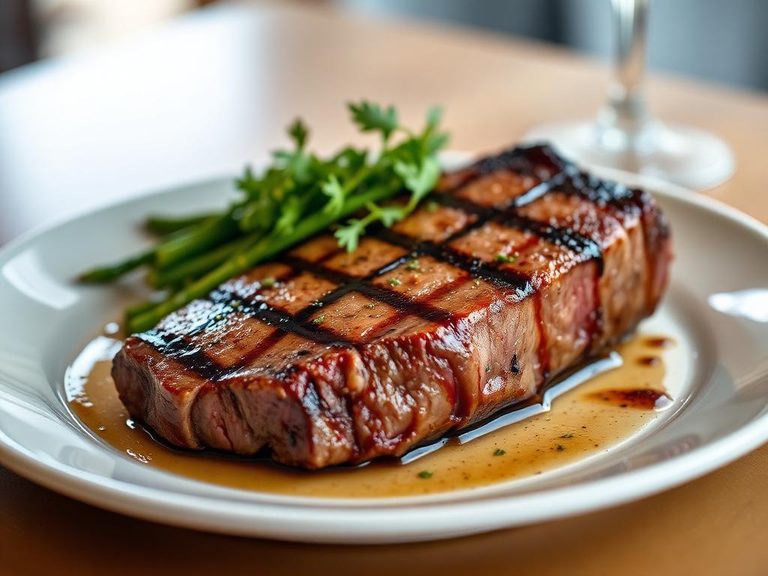
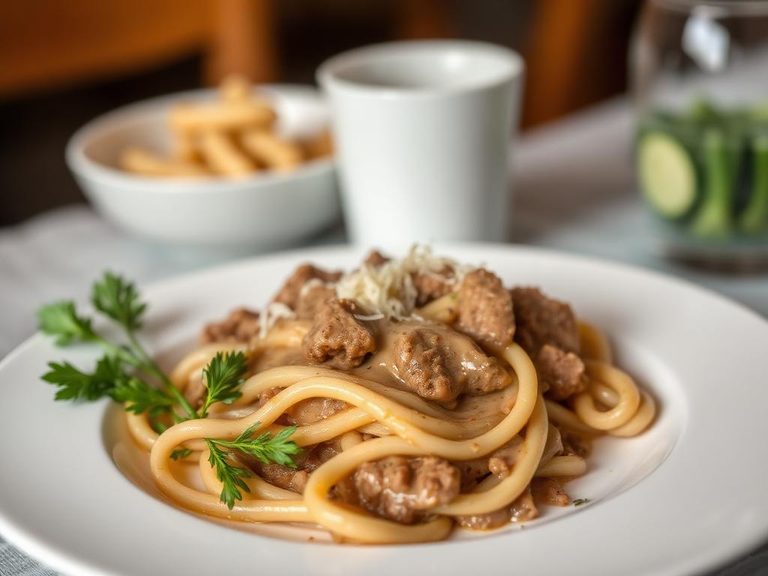
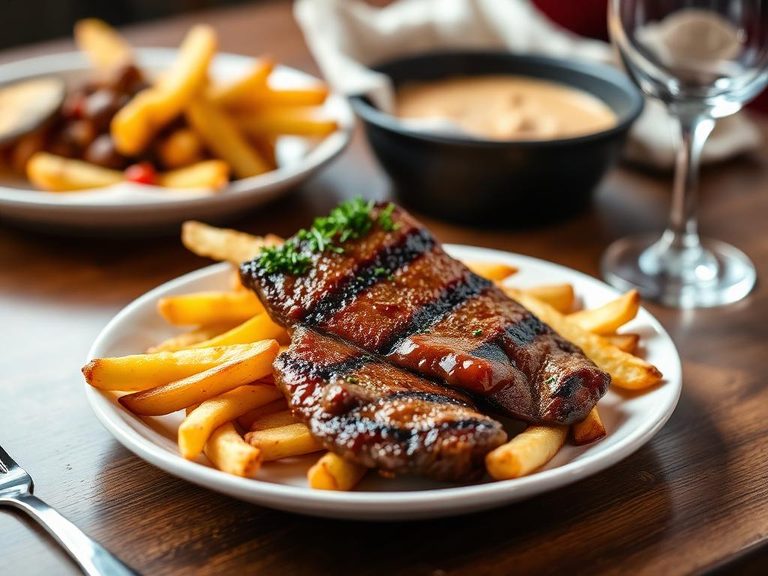
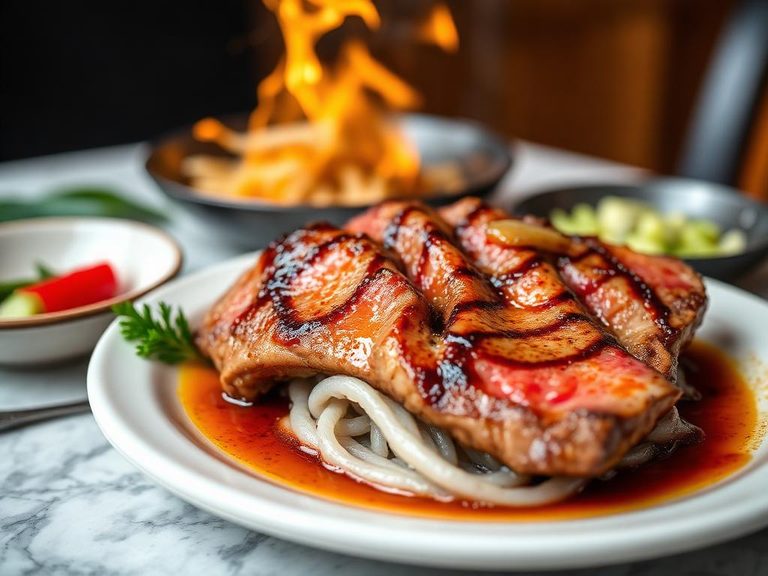
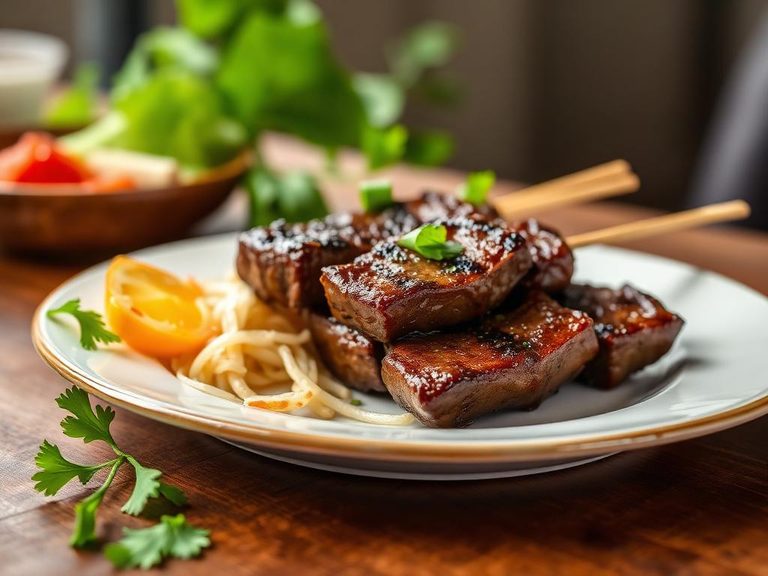
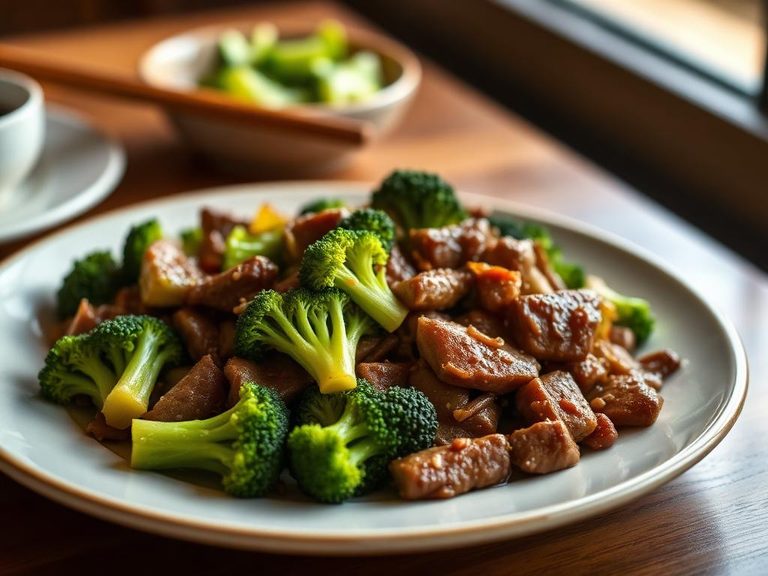
🌍 Where it's eaten
💡 Did you know?
The 'lip-on' designation refers to a thin layer of fat left on the outer edge of the steak, which is a signature of a traditional New York Strip and helps protect the lean meat from drying out during high-heat cooking.
Full nutrition (USDA data · scales with serving)
| Water | 69.9 g |
| Energy (Atwater General Factors) | 149 kcal |
| Energy (Atwater Specific Factors) | 155 kcal |
| Energy | 155 kcal |
| Energy | 648 kj |
| Protein | 22.8 g |
| Total lipid (fat) | 6.4 g |
| Total fat (NLEA) | 5.9 g |
| Ash | 1.0 g |
| Carbohydrate, by difference | 0.00 g |
| Calcium, Ca | 15.0 mg |
| Iron, Fe | 1.9 mg |
| Magnesium, Mg | 11.3 mg |
| Phosphorus, P | 206 mg |
| Potassium, K | 282 mg |
| Sodium, Na | 45.0 mg |
| Zinc, Zn | 3.8 mg |
| Copper, Cu | 0.04 mg |
| Manganese, Mn | 0.00 mg |
| Selenium, Se | 21.3 ug |
| Thiamin | 0.05 mg |
| Riboflavin | 0.20 mg |
| Niacin | 6.9 mg |
| Pantothenic acid | 0.36 mg |
| Vitamin B-6 | 0.57 mg |
| Choline, total | 56.3 mg |
| Choline, free | 0.70 mg |
| Choline, from phosphocholine | 44.0 mg |
| Choline, from phosphotidyl choline | 0.70 mg |
| Choline, from glycerophosphocholine | 5.7 mg |
| Choline, from sphingomyelin | 5.2 mg |
| Betaine | 10.0 mg |
| Vitamin B-12 | 1.7 ug |
| Vitamin E (alpha-tocopherol) | 0.25 mg |
| Tocopherol, beta | 0.00 mg |
| Tocopherol, gamma | 0.02 mg |
| Tocopherol, delta | 0.00 mg |
| Tocotrienol, alpha | 0.00 mg |
| Tocotrienol, beta | 0.00 mg |
| Tocotrienol, gamma | 0.00 mg |
| Tocotrienol, delta | 0.00 mg |
| Vitamin D (D2 + D3), International Units | 0.00 iu |
| Vitamin D (D2 + D3) | 0.00 ug |
| Vitamin D2 (ergocalciferol) | 0.00 ug |
| Vitamin D3 (cholecalciferol) | 0.00 ug |
| 25-hydroxycholecalciferol | 0.26 ug |
Fat & fatty acid profile (per 100g)
| Fatty acids, total saturated | 2.6 g |
| SFA 10:0 | 0.01 g |
| SFA 12:0 | 0.01 g |
| SFA 14:0 | 0.17 g |
| SFA 15:0 | 0.03 g |
| SFA 16:0 | 1.5 g |
| SFA 17:0 | 0.07 g |
| SFA 18:0 | 0.77 g |
| SFA 20:0 | 0.00 g |
| SFA 24:0 | 0.00 g |
| Fatty acids, total monounsaturated | 2.7 g |
| MUFA 14:1 c | 0.04 g |
| MUFA 16:1 c | 0.21 g |
| MUFA 17:1 | 0.05 g |
| MUFA 17:1 c | 0.05 g |
| MUFA 18:1 c | 2.4 g |
| MUFA 20:1 | 0.01 g |
| MUFA 20:1 c | 0.01 g |
| Fatty acids, total polyunsaturated | 0.36 g |
| PUFA 18:2 c | 0.28 g |
| PUFA 18:2 n-6 c,c | 0.26 g |
| PUFA 18:2 CLAs | 0.02 g |
| PUFA 18:3 c | 0.01 g |
| PUFA 18:3 n-3 c,c,c (ALA) | 0.01 g |
| PUFA 20:2 c | 0.00 g |
| PUFA 20:2 n-6 c,c | 0.00 g |
| PUFA 20:3 c | 0.01 g |
| PUFA 20:3 n-6 | 0.01 g |
| PUFA 20:4 | 0.05 g |
| PUFA 20:4c | 0.05 g |
| PUFA 20:5c | 0.00 g |
| PUFA 20:5 n-3 (EPA) | 0.00 g |
| PUFA 22:5 c | 0.01 g |
| PUFA 22:5 n-3 (DPA) | 0.01 g |
| PUFA 22:6 c | 0.00 g |
| PUFA 22:6 n-3 (DHA) | 0.00 g |
| Fatty acids, total trans | 0.31 g |
| Fatty acids, total trans-monoenoic | 0.28 g |
| TFA 16:1 t | 0.01 g |
| TFA 18:1 t | 0.26 g |
| Fatty acids, total trans-dienoic | 0.03 g |
| TFA 18:2 t not further defined | 0.03 g |
| Cholesterol | 58.0 mg |
Amino acid profile (per 100g)
Estimated from Beef, variety meats and by-products, mechanically separated beef, raw — USDA does not publish this profile for Beef.
| Tryptophan | 0.17 g |
| Threonine | 0.47 g |
| Isoleucine | 0.58 g |
| Leucine | 1.2 g |
| Lysine | 1.2 g |
| Methionine | 0.43 g |
| Cystine | 0.23 g |
| Phenylalanine | 0.64 g |
| Tyrosine | 0.38 g |
| Valine | 0.92 g |
| Arginine | 1.2 g |
| Histidine | 0.44 g |
| Alanine | 1.0 g |
| Aspartic acid | 1.3 g |
| Glutamic acid | 2.1 g |
| Glycine | 1.2 g |
| Proline | 0.92 g |
| Serine | 0.57 g |
FAQ
How is this different from a Ribeye?
This top loin cut is significantly leaner with less internal marbling (intramuscular fat) than a ribeye, which comes from a more worked, fattier section of the cow. This results in a firmer texture and a more straightforward beef flavor.
What's the best way to cook it to avoid toughness?
The key is high heat for a short time. Sear it in a very hot cast-iron skillet or on a grill to develop a crust, then finish to your desired doneness (medium-rare is ideal). Always let it rest for 5-10 minutes after cooking to allow juices to redistribute.
Is 'lip-on' the same as having a fat cap?
Yes, 'lip-on' means a narrow strip of the external fat layer (the 'lip') is left attached to the steak, which is a traditional characteristic of the New York Strip cut. It adds flavor during cooking.
Nutrient density (calculated · NRF9.3)
Nutrient Rich Foods index: beneficial nutrients (protein, fiber, vitamins, minerals) minus saturated fat, added sugar & sodium, per 100 kcal.
NRF9.3 index — Fulgoni, Keast & Drewnowski, 2009. Computed from USDA nutrients.
Weight-loss friendliness (composite index)
Energy density 1.55 kcal/g · 59% calories from protein · 0.0 g fiber · 0.0 g sugar per 100 g.
Composite of energy density (Rolls et al., 1999), protein & fiber satiety, minus sugar. A calculated heuristic — ranks satiety-per-calorie, not a clinical measure.
Dietary load (calculated from USDA values)
Potential renal acid load. Positive = acid-forming, negative = alkaline-forming.
Sodium-to-potassium ratio: 0.16 (lower is better — aim for ≤ 1)
Sodium:potassium per WHO potassium guidance. Computed from USDA nutrients.