

Asparagus, cooked, boiled, drained, with salt
Whole food · Vegetables and Vegetable Products
Boiled asparagus spears are tender-crisp, with a clean, earthy-sweet flavor and a satisfying snap. Nutritionally, they are a low-calorie powerhouse, delivering a solid dose of protein and fiber for minimal energy cost.
Calorie split: 34% protein · 59% carbs · 7% fat
↓ Full nutrition💚 Why it's loved
People adore its unique, savory-sweet flavor that feels both elegant and comforting. Its versatility shines from simple side dishes to complex pastas and salads.
⚠️ Watch-outs & how to enjoy it better
The high vitamin K content may be a concern for individuals on blood-thinning medications like warfarin, requiring consistent intake. To manage sodium, cook with minimal salt and season lightly at the table.
Key benefits
- Excellent source of dietary fiber for digestive health.
- High in protein for a non-starchy vegetable.
- Very low in calories and fat, supporting weight management.
- Contains naturally occurring folate and vitamins A, C, and K.
- Rich in antioxidants like glutathione.
🍽️ Popular dishes

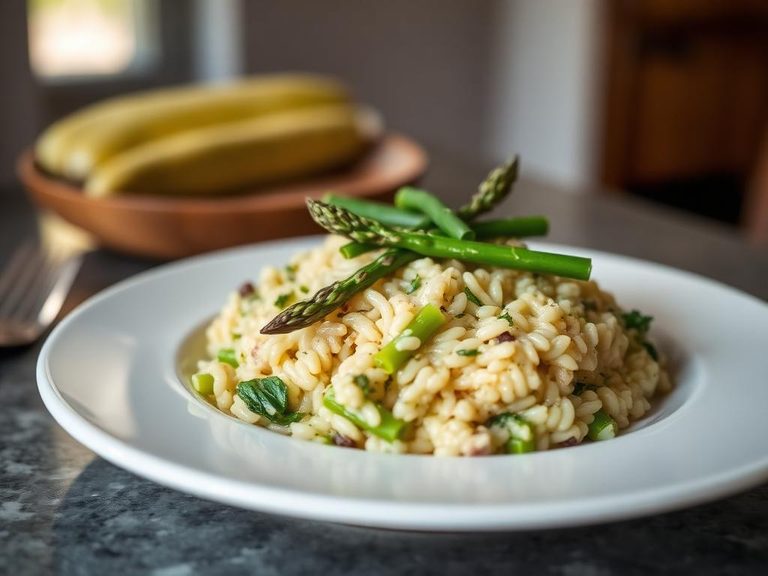
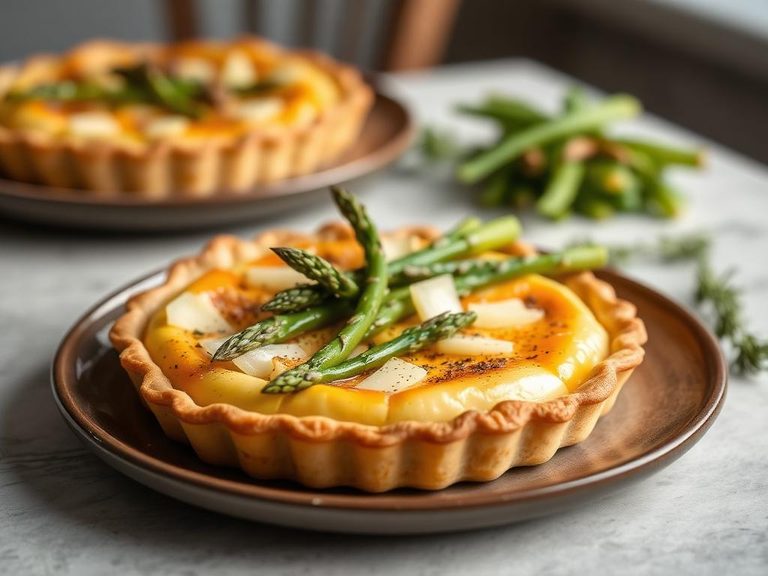
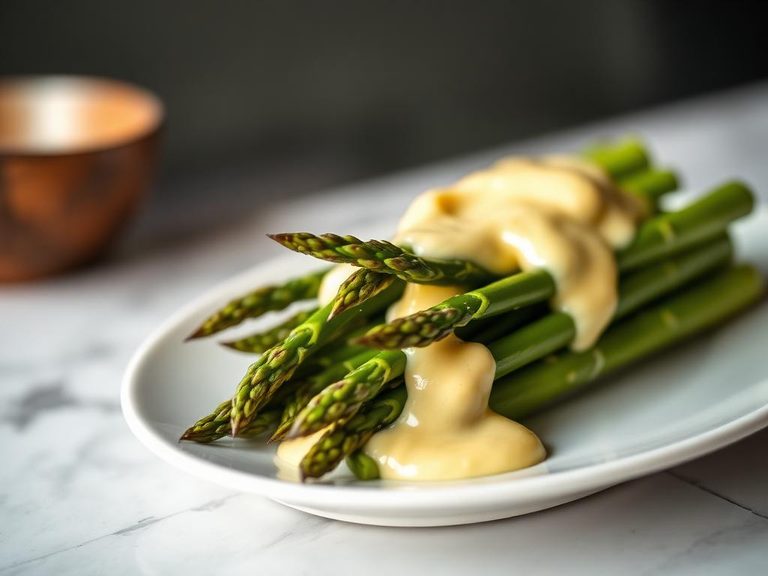


🌍 Where it's eaten
💡 Did you know?
A single asparagus spear can grow up to 10 inches in just 24 hours under ideal conditions, making it one of the fastest-growing vegetables.
Full nutrition (USDA data · scales with serving)
| Water | 92.6 g |
| Energy | 22.0 kcal |
| Energy | 94.0 kj |
| Protein | 2.4 g |
| Total lipid (fat) | 0.22 g |
| Ash | 0.63 g |
| Carbohydrate, by difference | 4.1 g |
| Fiber, total dietary | 2.0 g |
| Total Sugars | 1.3 g |
| Sucrose | 0.08 g |
| Glucose | 0.42 g |
| Fructose | 0.79 g |
| Lactose | 0.00 g |
| Maltose | 0.00 g |
| Galactose | 0.00 g |
| Starch | 0.00 g |
| Calcium, Ca | 23.0 mg |
| Iron, Fe | 0.91 mg |
| Magnesium, Mg | 14.0 mg |
| Phosphorus, P | 54.0 mg |
| Potassium, K | 224 mg |
| Sodium, Na | 240 mg |
| Zinc, Zn | 0.60 mg |
| Copper, Cu | 0.17 mg |
| Manganese, Mn | 0.15 mg |
| Selenium, Se | 6.1 ug |
| Fluoride, F | 21.9 ug |
| Vitamin C, total ascorbic acid | 7.7 mg |
| Thiamin | 0.16 mg |
| Riboflavin | 0.14 mg |
| Niacin | 1.1 mg |
| Pantothenic acid | 0.23 mg |
| Vitamin B-6 | 0.08 mg |
| Folate, total | 149 ug |
| Folic acid | 0.00 ug |
| Folate, food | 149 ug |
| Folate, DFE | 149 ug |
| Choline, total | 26.1 mg |
| Betaine | 0.90 mg |
| Vitamin B-12 | 0.00 ug |
| Vitamin B-12, added | 0.00 ug |
| Vitamin A, RAE | 50.0 ug |
| Retinol | 0.00 ug |
| Carotene, beta | 604 ug |
| Carotene, alpha | 0.00 ug |
| Cryptoxanthin, beta | 0.00 ug |
| Vitamin A, IU | 1006 iu |
| Lycopene | 30.0 ug |
| Lutein + zeaxanthin | 771 ug |
| Vitamin E (alpha-tocopherol) | 1.5 mg |
| Vitamin E, added | 0.00 mg |
| Vitamin D (D2 + D3), International Units | 0.00 iu |
| Vitamin D (D2 + D3) | 0.00 ug |
| Vitamin K (phylloquinone) | 50.6 ug |
| Vitamin K (Dihydrophylloquinone) | 0.00 ug |
| Alcohol, ethyl | 0.00 g |
| Caffeine | 0.00 mg |
| Theobromine | 0.00 mg |
Fat & fatty acid profile (per 100g)
| Fatty acids, total saturated | 0.05 g |
| SFA 4:0 | 0.00 g |
| SFA 6:0 | 0.00 g |
| SFA 8:0 | 0.00 g |
| SFA 10:0 | 0.00 g |
| SFA 12:0 | 0.00 g |
| SFA 14:0 | 0.00 g |
| SFA 15:0 | 0.00 g |
| SFA 16:0 | 0.05 g |
| SFA 17:0 | 0.00 g |
| SFA 18:0 | 0.00 g |
| SFA 20:0 | 0.00 g |
| SFA 22:0 | 0.00 g |
| SFA 24:0 | 0.00 g |
| Fatty acids, total monounsaturated | 0.00 g |
| MUFA 14:1 | 0.00 g |
| MUFA 15:1 | 0.00 g |
| MUFA 16:1 | 0.00 g |
| MUFA 17:1 | 0.00 g |
| MUFA 18:1 | 0.00 g |
| MUFA 20:1 | 0.00 g |
| MUFA 22:1 | 0.00 g |
| Fatty acids, total polyunsaturated | 0.10 g |
| PUFA 18:2 | 0.08 g |
| PUFA 18:3 | 0.03 g |
| PUFA 18:4 | 0.00 g |
| PUFA 20:2 n-6 c,c | 0.00 g |
| PUFA 20:3 | 0.00 g |
| PUFA 20:4 | 0.00 g |
| PUFA 20:5 n-3 (EPA) | 0.00 g |
| PUFA 22:5 n-3 (DPA) | 0.00 g |
| PUFA 22:6 n-3 (DHA) | 0.00 g |
| Fatty acids, total trans | 0.00 g |
| Cholesterol | 0.00 mg |
Amino acid profile (per 100g)
| Tryptophan | 0.03 g |
| Threonine | 0.09 g |
| Isoleucine | 0.08 g |
| Leucine | 0.14 g |
| Lysine | 0.11 g |
| Methionine | 0.03 g |
| Cystine | 0.03 g |
| Phenylalanine | 0.08 g |
| Tyrosine | 0.06 g |
| Valine | 0.13 g |
| Arginine | 0.10 g |
| Histidine | 0.05 g |
| Alanine | 0.13 g |
| Aspartic acid | 0.56 g |
| Glutamic acid | 0.26 g |
| Glycine | 0.10 g |
| Proline | 0.08 g |
| Serine | 0.12 g |
FAQ
How do I prevent mushy asparagus?
Cook in a single layer in rapidly boiling salted water for just 2-4 minutes, depending on thickness, then immediately transfer to an ice bath to stop the cooking process.
Why does asparagus make my urine smell?
This is caused by the breakdown of asparagusic acid into sulfur-containing compounds, which is a harmless genetic trait affecting only some people.
Is the white part of the stalk edible?
Yes, but it can be tough and woody. It's best to snap or cut off the lower, fibrous ends before cooking.
Nutrient density (calculated · NRF9.3)
Nutrient Rich Foods index: beneficial nutrients (protein, fiber, vitamins, minerals) minus saturated fat, added sugar & sodium, per 100 kcal.
NRF9.3 index — Fulgoni, Keast & Drewnowski, 2009. Computed from USDA nutrients.
Weight-loss friendliness (composite index)
Energy density 0.22 kcal/g · 44% calories from protein · 2.0 g fiber · 1.3 g sugar per 100 g.
Composite of energy density (Rolls et al., 1999), protein & fiber satiety, minus sugar. A calculated heuristic — ranks satiety-per-calorie, not a clinical measure.
Dietary load (calculated from USDA values)
Potential renal acid load. Positive = acid-forming, negative = alkaline-forming.
Sodium-to-potassium ratio: 1.07 (lower is better — aim for ≤ 1)
Sodium:potassium per WHO potassium guidance. Computed from USDA nutrients.