DOMINO'S 14" Cheese Pizza, Crunchy Thin Crust
Whole food · Fast Foods

Photo: Wikipedia
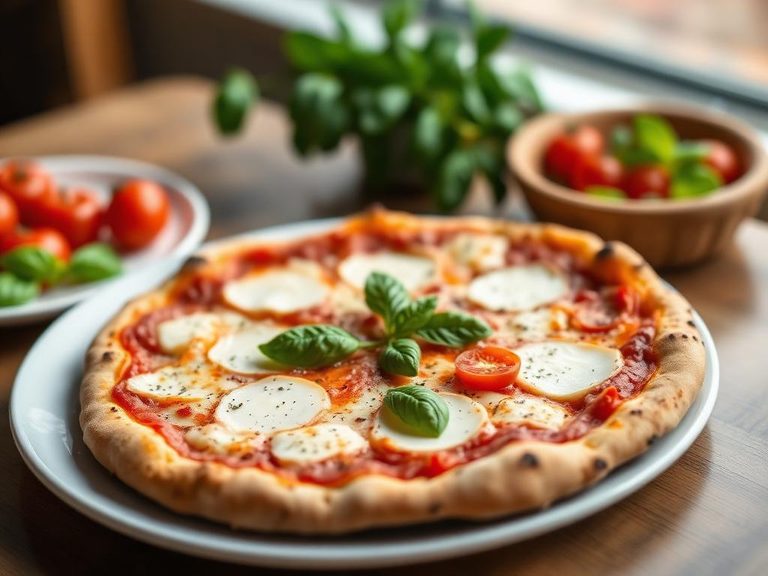
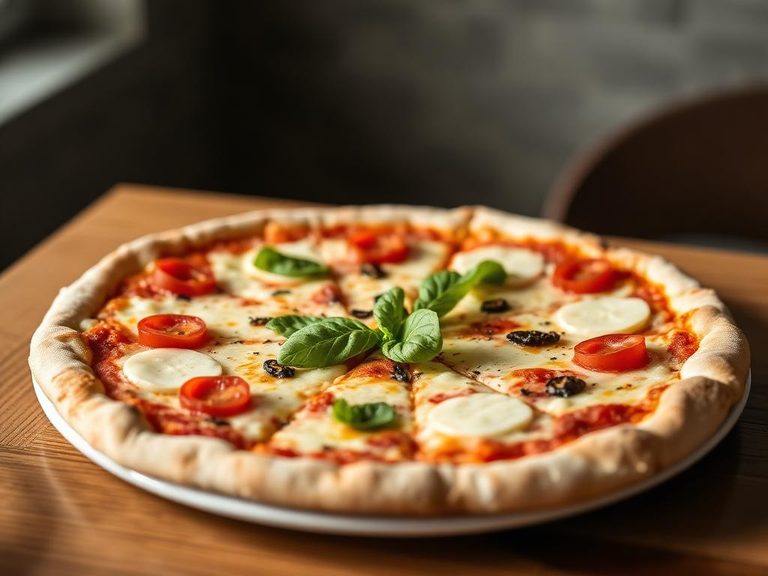
This is a large, 14-inch cheese pizza from Domino's, defined by its signature Crunchy Thin Crust—a cracker-like base that shatters with each bite, supporting a layer of tangy tomato sauce and a generous blanket of melted, browned mozzarella. The nutrition profile is moderate for its size, with a notable 12.33g of protein per 100g from the cheese, balanced by 28.18g of carbs and 15.1g of fat.
💚 Why it's loved
People adore the textural contrast of the shatteringly crisp, sturdy crust against the hot, stretchy cheese and savory sauce. It's a beloved social food, perfect for sharing at gatherings, game nights, or as a customizable canvas for personal toppings.
⚠️ Watch-outs & how to enjoy it better
The pizza is high in sodium and saturated fat, which can contribute to water retention and is a concern for heart health. To mitigate, pair a slice with a large, leafy green salad dressed in vinegar to add volume and fiber, practice strict portion control (e.g., 1-2 slices), and drink plenty of water to help flush excess sodium.
Key benefits
- Good source of protein for muscle maintenance
- Provides calcium from the cheese
- Thin crust reduces overall carbohydrate load versus thicker options
- Contains dietary fiber from the wheat crust
- Convenient and widely available meal option
🍽️ Popular dishes
🌍 Where it's eaten
💡 Did you know?
The 'cracker-thin' crust style was popularized by American pizza chains in the 1980s as a direct response to consumer demand for a lighter, crispier alternative to the traditional chewy, bready crust.
Full nutrition (scales with serving)
| Water | 41.6 g |
| Energy | 298 kcal |
| Energy | 1247 kj |
| Protein | 12.3 g |
| Total lipid (fat) | 15.1 g |
| Ash | 2.8 g |
| Carbohydrate, by difference | 28.2 g |
| Fiber, total dietary | 2.5 g |
| Total Sugars | 4.1 g |
| Sucrose | 0.77 g |
| Glucose | 0.97 g |
| Fructose | 1.1 g |
| Lactose | 0.60 g |
| Maltose | 0.57 g |
| Galactose | 0.09 g |
| Starch | 20.0 g |
| Calcium, Ca | 292 mg |
| Iron, Fe | 0.91 mg |
| Magnesium, Mg | 24.0 mg |
| Phosphorus, P | 292 mg |
| Potassium, K | 202 mg |
| Sodium, Na | 628 mg |
| Zinc, Zn | 1.5 mg |
| Copper, Cu | 0.10 mg |
| Manganese, Mn | 0.23 mg |
| Selenium, Se | 19.8 ug |
| Vitamin C, total ascorbic acid | 1.7 mg |
| Thiamin | 0.06 mg |
| Riboflavin | 0.08 mg |
| Niacin | 1.0 mg |
| Vitamin B-6 | 0.07 mg |
| Vitamin B-12 | 0.64 ug |
| Vitamin E (alpha-tocopherol) | 1.5 mg |
| Tocopherol, beta | 0.06 mg |
| Tocopherol, gamma | 3.5 mg |
| Tocopherol, delta | 1.4 mg |
| Tocotrienol, alpha | 0.09 mg |
| Tocotrienol, beta | 0.00 mg |
| Tocotrienol, gamma | 0.01 mg |
| Tocotrienol, delta | 0.00 mg |
| Vitamin K (phylloquinone) | 15.8 ug |
| Vitamin K (Dihydrophylloquinone) | 0.00 ug |
Fat & fatty acid profile (per 100g)
| Fatty acids, total saturated | 6.3 g |
| SFA 4:0 | 0.17 g |
| SFA 6:0 | 0.13 g |
| SFA 8:0 | 0.09 g |
| SFA 10:0 | 0.22 g |
| SFA 12:0 | 0.26 g |
| SFA 14:0 | 0.90 g |
| SFA 15:0 | 0.10 g |
| SFA 16:0 | 3.1 g |
| SFA 17:0 | 0.07 g |
| SFA 18:0 | 1.3 g |
| SFA 20:0 | 0.03 g |
| SFA 22:0 | 0.03 g |
| SFA 24:0 | 0.01 g |
| Fatty acids, total monounsaturated | 3.7 g |
| MUFA 14:1 | 0.07 g |
| MUFA 15:1 | 0.00 g |
| MUFA 16:1 | 0.16 g |
| MUFA 16:1 c | 0.13 g |
| MUFA 17:1 | 0.02 g |
| MUFA 18:1 | 3.4 g |
| MUFA 18:1 c | 3.2 g |
| MUFA 20:1 | 0.06 g |
| MUFA 22:1 | 0.00 g |
| MUFA 22:1 c | 0.00 g |
| MUFA 24:1 c | 0.00 g |
| Fatty acids, total polyunsaturated | 3.8 g |
| PUFA 18:2 | 3.2 g |
| PUFA 18:2 n-6 c,c | 3.1 g |
| PUFA 18:2 CLAs | 0.06 g |
| PUFA 18:3 | 0.46 g |
| PUFA 18:3 n-3 c,c,c (ALA) | 0.45 g |
| PUFA 18:3 n-6 c,c,c | 0.00 g |
| PUFA 18:4 | 0.00 g |
| PUFA 20:2 n-6 c,c | 0.01 g |
| PUFA 20:3 | 0.01 g |
| PUFA 20:3 n-3 | 0.00 g |
| PUFA 20:3 n-6 | 0.01 g |
| PUFA 20:4 | 0.02 g |
| PUFA 20:5 n-3 (EPA) | 0.01 g |
| PUFA 22:4 | 0.01 g |
| PUFA 22:5 n-3 (DPA) | 0.01 g |
| PUFA 22:6 n-3 (DHA) | 0.00 g |
| Fatty acids, total trans | 0.36 g |
| Fatty acids, total trans-monoenoic | 0.27 g |
| TFA 16:1 t | 0.03 g |
| TFA 18:1 t | 0.24 g |
| TFA 22:1 t | 0.00 g |
| TFA 18:2 t not further defined | 0.09 g |
| Fatty acids, total trans-polyenoic | 0.09 g |
| Cholesterol | 27.0 mg |
Amino acid profile (per 100g)
| Tryptophan | 0.10 g |
| Threonine | 0.42 g |
| Isoleucine | 0.58 g |
| Leucine | 1.2 g |
| Lysine | 0.88 g |
| Methionine | 0.33 g |
| Cystine | 0.15 g |
| Phenylalanine | 0.69 g |
| Tyrosine | 0.51 g |
| Valine | 0.75 g |
| Arginine | 0.51 g |
| Histidine | 0.37 g |
| Alanine | 0.40 g |
| Aspartic acid | 0.97 g |
| Glutamic acid | 3.7 g |
| Glycine | 0.32 g |
| Proline | 1.9 g |
| Serine | 0.83 g |
| Hydroxyproline | 0.00 g |
FAQ
How does the Crunchy Thin Crust differ nutritionally from a hand-tossed crust?
Per 100g, the Crunchy Thin Crust typically has fewer carbohydrates and calories than a thicker, doughier hand-tossed crust, as it contains less bread. However, the protein and fat content from the cheese remains similar.
Is this pizza a good post-workout meal?
It can be. The combination of protein from the cheese and carbohydrates from the crust can help with muscle recovery and glycogen replenishment. However, be mindful of the high sodium and fat content, which may not be ideal immediately after intense exercise.
Can I make this pizza more nutritious at home?
Absolutely. Use a whole-wheat thin crust, add a variety of vegetable toppings like bell peppers, mushrooms, and spinach to boost fiber and vitamins, and consider using part-skim mozzarella to reduce saturated fat.