

Yogurt, Greek, nonfat, strawberry, DANNON OIKOS
Whole food · Dairy and Egg Products

Photo: Wikipedia
This is a smooth, creamy, low-fat Greek yogurt with a vibrant strawberry flavor, offering a satisfying tang balanced by sweet fruit notes. It's a protein-packed powerhouse, delivering over 8 grams of protein per 100 grams, making it a filling and nutritious snack or breakfast base. The nonfat formulation keeps the calorie count low at just 84 kcal per 100g, ideal for those watching their energy intake.
Calorie split: 38% protein · 60% carbs · 2% fat
↓ Full nutrition💚 Why it's loved
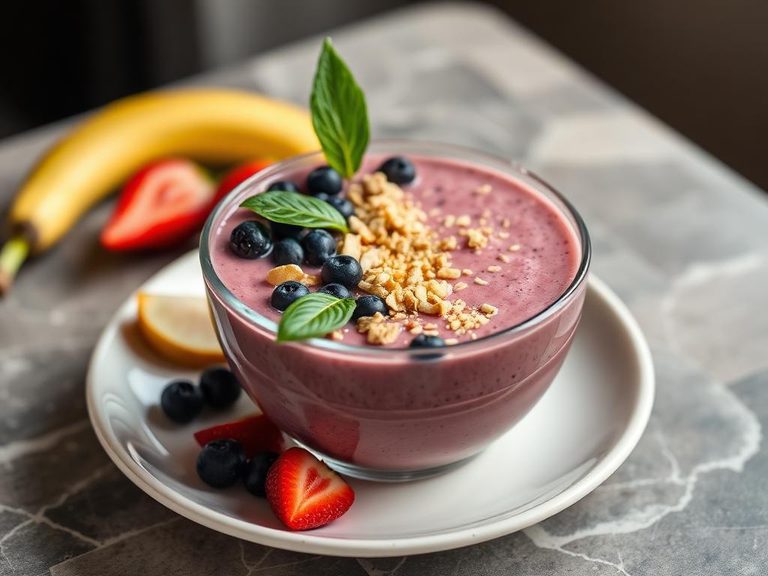
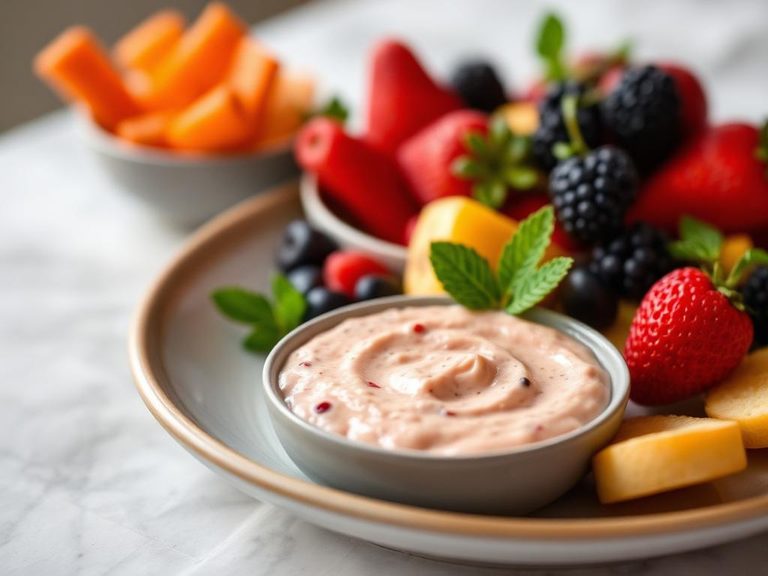
People love it for its creamy, indulgent texture that feels like a treat while being nutritionally smart, and its sweet strawberry flavor that satisfies sugar cravings without excessive calories. It's incredibly versatile, fitting seamlessly into breakfast bowls, smoothies, or as a standalone snack, and is a staple in many health-conscious and fitness-focused diets.
⚠️ Watch-outs & how to enjoy it better
The relatively high sugar content (11.63g per 100g) can lead to blood-sugar spikes, especially for those with insulin sensitivity or diabetes. To counteract this, pair it with a source of healthy fat (like nuts or seeds) or fiber (like berries or oats) to slow sugar absorption, and be mindful of portion sizes. Additionally, those with lactose intolerance or a dairy allergy should avoid it or opt for a lactose-free version.
Key benefits
- High in protein (8.03g per 100g) for muscle maintenance and satiety
- Low in fat (0.22g per 100g), making it a lean dairy option
- Good source of probiotics for gut health
- Contains calcium for bone strength
- Convenient, portable source of nutrition
🍽️ Popular dishes




🌍 Where it's eaten
💡 Did you know?
Greek yogurt is strained to remove whey, which is why it's thicker and higher in protein than regular yogurt—this process originated in Greece but was popularized in the U.S. by brands like Dannon Oikos in the early 2000s.
Full nutrition (USDA data · scales with serving)
| Water | 78.6 g |
| Energy | 84.0 kcal |
| Energy | 352 kj |
| Protein | 8.0 g |
| Total lipid (fat) | 0.22 g |
| Ash | 0.59 g |
| Carbohydrate, by difference | 12.5 g |
| Fiber, total dietary | 0.40 g |
| Total Sugars | 11.6 g |
| Sucrose | 4.0 g |
| Glucose | 0.25 g |
| Fructose | 4.4 g |
| Lactose | 2.4 g |
| Maltose | 0.00 g |
| Galactose | 0.56 g |
| Starch | 0.00 g |
| Calcium, Ca | 94.0 mg |
| Iron, Fe | 0.06 mg |
| Magnesium, Mg | 11.0 mg |
| Phosphorus, P | 114 mg |
| Potassium, K | 145 mg |
| Sodium, Na | 33.0 mg |
| Zinc, Zn | 0.45 mg |
| Copper, Cu | 0.02 mg |
| Manganese, Mn | 0.03 mg |
| Selenium, Se | 8.9 ug |
| Vitamin C, total ascorbic acid | 0.20 mg |
| Thiamin | 0.03 mg |
| Riboflavin | 0.22 mg |
| Niacin | 0.22 mg |
| Pantothenic acid | 0.39 mg |
| Vitamin B-6 | 0.05 mg |
| Folate, total | 20.0 ug |
| Folate, food | 20.0 ug |
| Vitamin B-12 | 0.59 ug |
| Vitamin D (D2 + D3), International Units | 40.0 iu |
| Vitamin D (D2 + D3) | 1.0 ug |
| Vitamin D2 (ergocalciferol) | 0.00 ug |
| Vitamin D3 (cholecalciferol) | 1.0 ug |
Fat & fatty acid profile (per 100g)
| Fatty acids, total saturated | 0.11 g |
| SFA 4:0 | 0.01 g |
| SFA 6:0 | 0.00 g |
| SFA 8:0 | 0.00 g |
| SFA 10:0 | 0.02 g |
| SFA 12:0 | 0.01 g |
| SFA 14:0 | 0.01 g |
| SFA 15:0 | 0.00 g |
| SFA 16:0 | 0.04 g |
| SFA 17:0 | 0.00 g |
| SFA 18:0 | 0.02 g |
| SFA 20:0 | 0.00 g |
| SFA 22:0 | 0.00 g |
| SFA 24:0 | 0.00 g |
| Fatty acids, total monounsaturated | 0.02 g |
| MUFA 14:1 | 0.00 g |
| MUFA 15:1 | 0.00 g |
| MUFA 16:1 | 0.00 g |
| MUFA 16:1 c | 0.00 g |
| MUFA 17:1 | 0.00 g |
| MUFA 18:1 | 0.02 g |
| MUFA 18:1 c | 0.02 g |
| MUFA 20:1 | 0.00 g |
| MUFA 22:1 | 0.00 g |
| MUFA 22:1 c | 0.00 g |
| MUFA 24:1 c | 0.00 g |
| Fatty acids, total polyunsaturated | 0.01 g |
| PUFA 18:2 | 0.01 g |
| PUFA 18:2 n-6 c,c | 0.01 g |
| PUFA 18:2 CLAs | 0.00 g |
| PUFA 18:3 | 0.00 g |
| PUFA 18:3 n-3 c,c,c (ALA) | 0.00 g |
| PUFA 18:3 n-6 c,c,c | 0.00 g |
| PUFA 18:3i | 0.00 g |
| PUFA 18:4 | 0.00 g |
| PUFA 20:2 n-6 c,c | 0.00 g |
| PUFA 20:3 | 0.00 g |
| PUFA 20:3 n-3 | 0.00 g |
| PUFA 20:3 n-6 | 0.00 g |
| PUFA 20:4 | 0.00 g |
| PUFA 20:5 n-3 (EPA) | 0.00 g |
| PUFA 22:4 | 0.00 g |
| PUFA 22:5 n-3 (DPA) | 0.00 g |
| PUFA 22:6 n-3 (DHA) | 0.00 g |
| Fatty acids, total trans | 0.00 g |
| Fatty acids, total trans-monoenoic | 0.00 g |
| TFA 16:1 t | 0.00 g |
| TFA 18:1 t | 0.00 g |
| TFA 22:1 t | 0.00 g |
| TFA 18:2 t not further defined | 0.00 g |
| Fatty acids, total trans-polyenoic | 0.00 g |
Amino acid profile (per 100g)
Estimated from Yogurt, fruit variety, nonfat — USDA does not publish this profile for Yogurt.
| Tryptophan | 0.03 g |
| Threonine | 0.20 g |
| Isoleucine | 0.27 g |
| Leucine | 0.50 g |
| Lysine | 0.44 g |
| Methionine | 0.14 g |
| Cystine | 0.04 g |
| Phenylalanine | 0.27 g |
| Tyrosine | 0.25 g |
| Valine | 0.41 g |
| Arginine | 0.15 g |
| Histidine | 0.12 g |
| Alanine | 0.21 g |
| Aspartic acid | 0.39 g |
| Glutamic acid | 0.97 g |
| Glycine | 0.12 g |
| Proline | 0.58 g |
| Serine | 0.30 g |
FAQ
Is this yogurt suitable for a low-carb diet?
While it's lower in carbs than many flavored yogurts, at 12.53g per 100g, it may not be ideal for strict low-carb diets. Opt for plain Greek yogurt if you're minimizing carbs.
Can I use this in baking?
Yes, it can be used as a moist, protein-rich substitute for oil or sour cream in cakes, muffins, and pancakes, adding a subtle tang and reducing fat content.
How does it compare to regular yogurt?
It has more protein and less lactose due to straining, but similar sugar content if flavored. The texture is thicker and creamier, making it more satiating.
Nutrient density (calculated · NRF9.3)
Nutrient Rich Foods index: beneficial nutrients (protein, fiber, vitamins, minerals) minus saturated fat, added sugar & sodium, per 100 kcal.
NRF9.3 index — Fulgoni, Keast & Drewnowski, 2009. Computed from USDA nutrients.
Weight-loss friendliness (composite index)
Energy density 0.84 kcal/g · 38% calories from protein · 0.4 g fiber · 11.6 g sugar per 100 g.
Composite of energy density (Rolls et al., 1999), protein & fiber satiety, minus sugar. A calculated heuristic — ranks satiety-per-calorie, not a clinical measure.
Dietary load (calculated from USDA values)
Potential renal acid load. Positive = acid-forming, negative = alkaline-forming.
Sodium-to-potassium ratio: 0.23 (lower is better — aim for ≤ 1)
Sodium:potassium per WHO potassium guidance. Computed from USDA nutrients.