

Pork, fresh, shoulder, (Boston butt), blade (steaks), separable lean only, cooked, braised
Whole food · Pork Products

Photo: Wikipedia
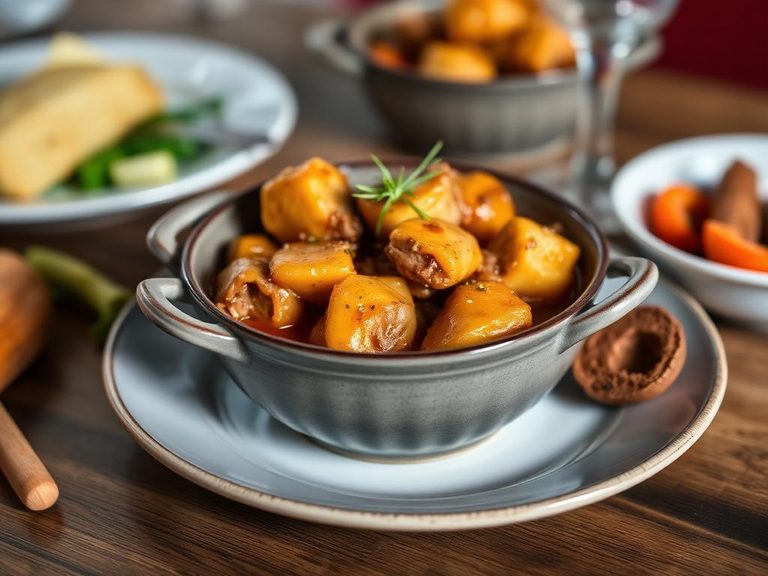
This cut is the well-marbled, flavorful shoulder of the pig, specifically the Boston butt section, which becomes incredibly tender and succulent when braised. The slow cooking process breaks down connective tissue, resulting in a rich, melt-in-your-mouth texture with a deep, savory pork flavor. Nutritionally, it's a powerhouse of protein with a moderate amount of fat, providing zero carbohydrates.
Calorie split: 47% protein · 0% carbs · 53% fat
↓ Full nutrition💚 Why it's loved
People adore it for its unparalleled ability to absorb flavors from braising liquids and spices, becoming fork-tender and deeply savory. It's the quintessential comfort food, forming the base of iconic, culturally significant dishes worldwide.
⚠️ Watch-outs & how to enjoy it better
The primary downside is its relatively high saturated fat content, which can be a concern for heart health if consumed in excess. To counteract this, practice portion control, skim fat from braising liquids, and pair it with fiber-rich vegetables or whole grains to create a more balanced meal.
Key benefits
- Excellent source of complete protein for muscle maintenance and repair.
- Rich in B vitamins, particularly thiamine (B1), niacin (B3), and B6, which support energy metabolism.
- Provides essential minerals like selenium, zinc, and phosphorus.
- The slow-braising method makes it easier to digest than tougher cuts.
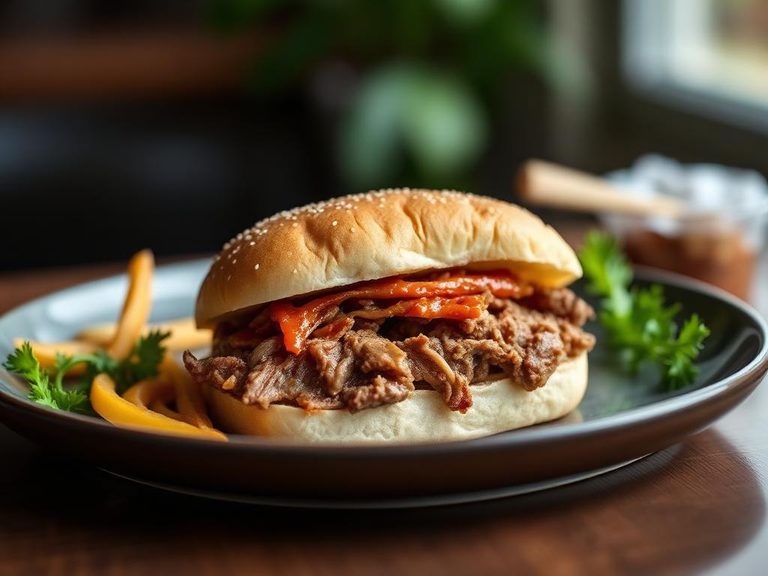
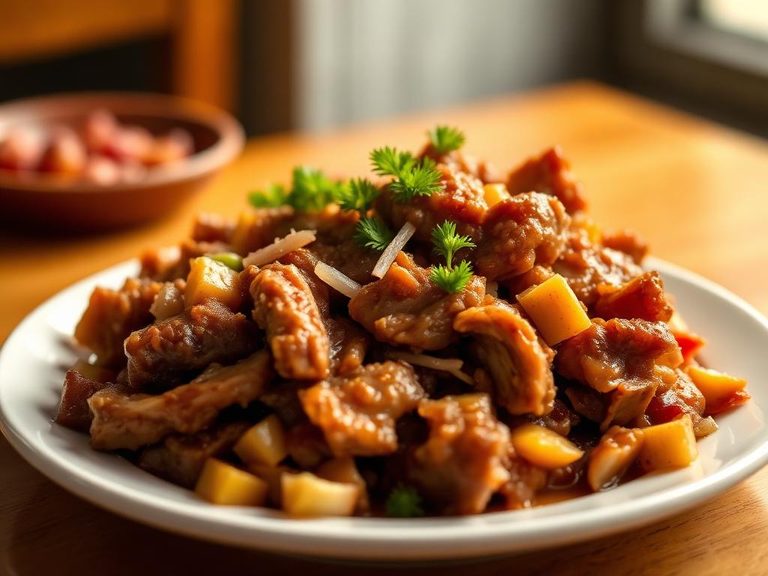
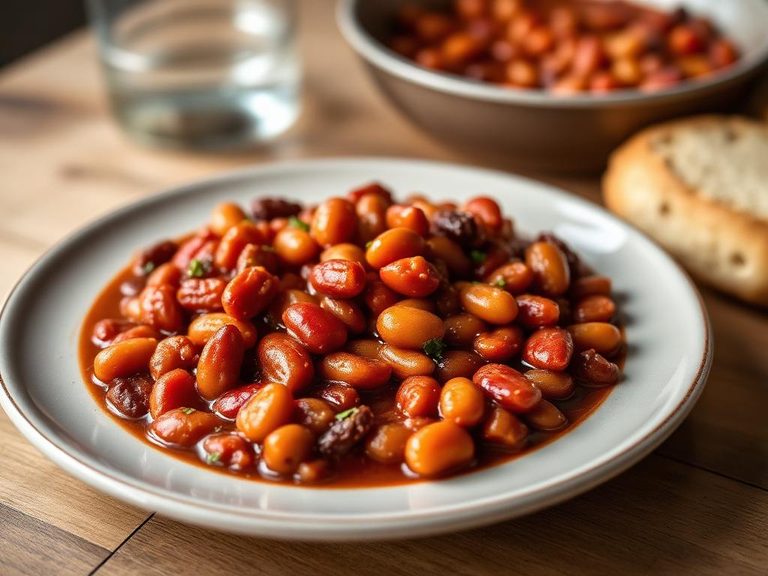
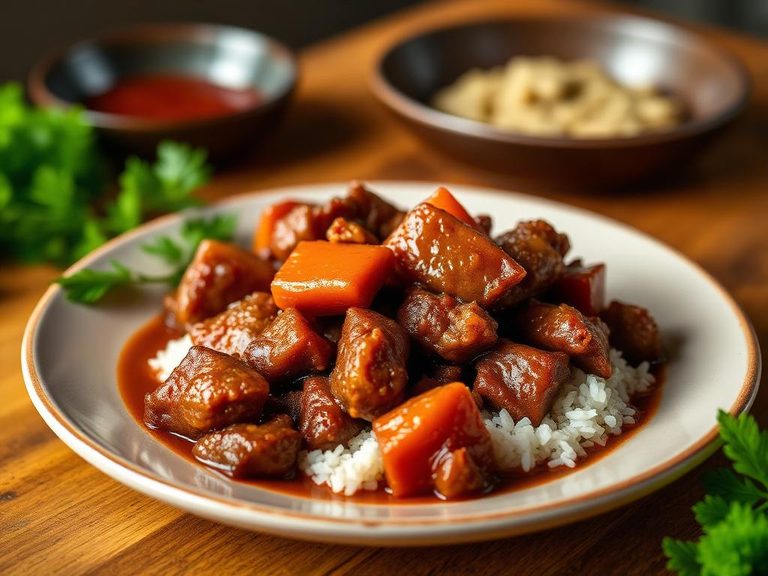
🍽️ Popular dishes

🌍 Where it's eaten
💡 Did you know?
The name 'Boston butt' is a historical misnomer; it refers to the practice of packing this cut of pork into barrels, or 'butts,' for shipping from Boston in colonial times.
Full nutrition (USDA data · scales with serving)
| Water | 58.0 g |
| Energy | 233 kcal |
| Energy | 973 kj |
| Protein | 26.6 g |
| Total lipid (fat) | 13.2 g |
| Ash | 0.85 g |
| Carbohydrate, by difference | 0.00 g |
| Fiber, total dietary | 0.00 g |
| Total Sugars | 0.00 g |
| Calcium, Ca | 25.0 mg |
| Iron, Fe | 1.9 mg |
| Magnesium, Mg | 24.0 mg |
| Phosphorus, P | 217 mg |
| Potassium, K | 318 mg |
| Sodium, Na | 60.0 mg |
| Zinc, Zn | 5.2 mg |
| Copper, Cu | 0.14 mg |
| Manganese, Mn | 0.01 mg |
| Selenium, Se | 45.0 ug |
| Vitamin C, total ascorbic acid | 0.00 mg |
| Thiamin | 0.53 mg |
| Riboflavin | 0.39 mg |
| Niacin | 3.9 mg |
| Pantothenic acid | 1.4 mg |
| Vitamin B-6 | 0.47 mg |
| Folate, total | 0.00 ug |
| Folic acid | 0.00 ug |
| Folate, food | 0.00 ug |
| Folate, DFE | 0.00 ug |
| Choline, total | 109 mg |
| Betaine | 3.5 mg |
| Vitamin B-12 | 0.90 ug |
| Vitamin B-12, added | 0.00 ug |
| Vitamin A, RAE | 0.00 ug |
| Retinol | 0.00 ug |
| Carotene, beta | 0.00 ug |
| Carotene, alpha | 0.00 ug |
| Cryptoxanthin, beta | 0.00 ug |
| Vitamin A, IU | 0.00 iu |
| Lycopene | 0.00 ug |
| Lutein + zeaxanthin | 0.00 ug |
| Vitamin E (alpha-tocopherol) | 0.11 mg |
| Vitamin E, added | 0.00 mg |
| Vitamin D (D2 + D3), International Units | 45.0 iu |
| Vitamin D (D2 + D3) | 1.1 ug |
| Vitamin D3 (cholecalciferol) | 1.1 ug |
| Vitamin K (phylloquinone) | 0.00 ug |
| Vitamin K (Dihydrophylloquinone) | 0.00 ug |
| Alcohol, ethyl | 0.00 g |
| Caffeine | 0.00 mg |
| Theobromine | 0.00 mg |
Fat & fatty acid profile (per 100g)
| Fatty acids, total saturated | 5.0 g |
| SFA 4:0 | 0.00 g |
| SFA 6:0 | 0.00 g |
| SFA 8:0 | 0.00 g |
| SFA 10:0 | 0.01 g |
| SFA 12:0 | 0.01 g |
| SFA 14:0 | 0.17 g |
| SFA 15:0 | 0.00 g |
| SFA 16:0 | 3.1 g |
| SFA 17:0 | 0.04 g |
| SFA 18:0 | 1.7 g |
| SFA 20:0 | 0.02 g |
| SFA 22:0 | 0.00 g |
| Fatty acids, total monounsaturated | 6.2 g |
| MUFA 14:1 | 0.00 g |
| MUFA 15:1 | 0.00 g |
| MUFA 16:1 | 0.33 g |
| MUFA 17:1 | 0.00 g |
| MUFA 18:1 | 5.8 g |
| MUFA 18:1 c | 5.7 g |
| MUFA 20:1 | 0.10 g |
| MUFA 22:1 | 0.00 g |
| Fatty acids, total polyunsaturated | 1.4 g |
| PUFA 18:2 | 1.2 g |
| PUFA 18:2 n-6 c,c | 1.2 g |
| PUFA 18:3 | 0.05 g |
| PUFA 18:3 n-3 c,c,c (ALA) | 0.05 g |
| PUFA 18:3 n-6 c,c,c | 0.00 g |
| PUFA 18:4 | 0.00 g |
| PUFA 20:2 n-6 c,c | 0.05 g |
| PUFA 20:3 | 0.01 g |
| PUFA 20:4 | 0.09 g |
| PUFA 20:5 n-3 (EPA) | 0.00 g |
| PUFA 22:5 n-3 (DPA) | 0.00 g |
| PUFA 22:6 n-3 (DHA) | 0.00 g |
| Fatty acids, total trans | 0.10 g |
| Fatty acids, total trans-monoenoic | 0.06 g |
| TFA 18:1 t | 0.06 g |
| TFA 18:2 t,t | 0.04 g |
| Fatty acids, total trans-polyenoic | 0.04 g |
| Cholesterol | 100 mg |
Amino acid profile (per 100g)
| Tryptophan | 0.28 g |
| Threonine | 1.2 g |
| Isoleucine | 1.3 g |
| Leucine | 2.3 g |
| Lysine | 2.5 g |
| Methionine | 0.73 g |
| Cystine | 0.31 g |
| Phenylalanine | 1.1 g |
| Tyrosine | 1.0 g |
| Valine | 1.4 g |
| Arginine | 1.8 g |
| Histidine | 1.1 g |
| Alanine | 1.6 g |
| Aspartic acid | 2.6 g |
| Glutamic acid | 4.2 g |
| Glycine | 1.2 g |
| Proline | 1.1 g |
| Serine | 1.1 g |
| Hydroxyproline | 0.07 g |
FAQ
What's the difference between Boston butt and pork shoulder?
They are the same cut of meat. 'Boston butt' is the American term for the upper portion of the shoulder, while 'pork shoulder' or 'picnic shoulder' refers to the lower portion. Both are ideal for braising.
How do I know when braised pork shoulder is done?
It's done when the internal temperature reaches about 195-205°F (90-96°C) and a fork can be inserted and twisted with almost no resistance, meaning the collagen has fully melted into gelatin.
Can I use this cut for grilling?
It's not ideal for direct grilling due to its high fat and connective tissue content, which can cause flare-ups and result in a tough texture. It's best suited for low-and-slow, moist-heat methods like braising, smoking, or stewing.
Nutrient density (calculated · NRF9.3)
Nutrient Rich Foods index: beneficial nutrients (protein, fiber, vitamins, minerals) minus saturated fat, added sugar & sodium, per 100 kcal.
NRF9.3 index — Fulgoni, Keast & Drewnowski, 2009. Computed from USDA nutrients.
Weight-loss friendliness (composite index)
Energy density 2.33 kcal/g · 46% calories from protein · 0.0 g fiber · 0.0 g sugar per 100 g.
Composite of energy density (Rolls et al., 1999), protein & fiber satiety, minus sugar. A calculated heuristic — ranks satiety-per-calorie, not a clinical measure.
Dietary load (calculated from USDA values)
Potential renal acid load. Positive = acid-forming, negative = alkaline-forming.
Sodium-to-potassium ratio: 0.19 (lower is better — aim for ≤ 1)
Sodium:potassium per WHO potassium guidance. Computed from USDA nutrients.