

Pasta, whole grain, 51% whole wheat, remaining enriched semolina, dry (Includes foods for USDA's Food Distribution Program)
Whole food · Cereal Grains and Pasta

Photo: Wikipedia
This dry pasta is a hybrid blend, combining the earthy, nutty flavor of whole wheat with the smooth, familiar texture of enriched semolina. It cooks to a firm, satisfying al dente bite, offering a more complex taste than standard white pasta while remaining approachable. Nutritionally, it's a fiber powerhouse, delivering over 40% of your daily value per 100g, with a solid protein base.
Calorie split: 14% protein · 79% carbs · 6% fat
↓ Full nutrition💚 Why it's loved
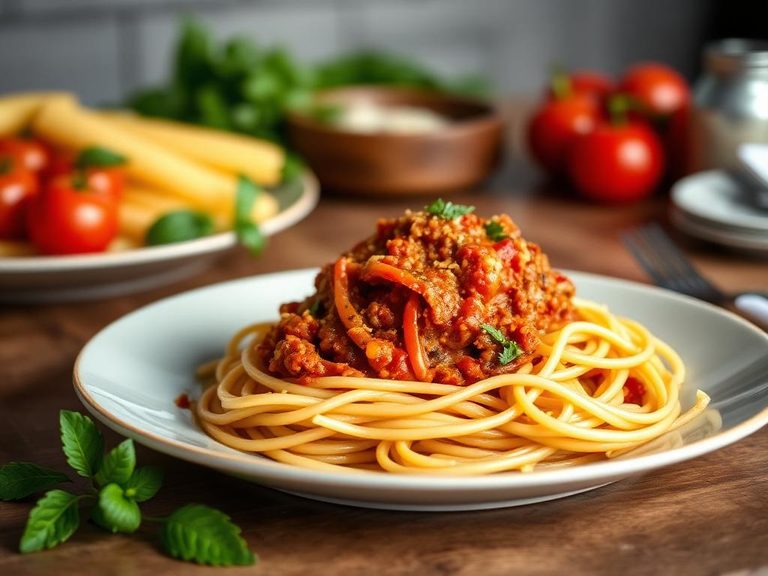
People love it for striking a perfect balance: it offers the nutritional benefits and hearty flavor of whole grains without the sometimes-gritty texture of 100% whole wheat pasta. Its versatility makes it a reliable canvas for everything from robust meat sauces to light olive oil and herb tosses.
⚠️ Watch-outs & how to enjoy it better
The higher fiber content can cause digestive discomfort (gas, bloating) for those not accustomed to it, especially if consumed in large portions. To mitigate this, increase intake gradually and ensure you drink plenty of water. The carbohydrates can still impact blood sugar, so pairing it with a source of protein (like chicken or beans) and healthy fat (like olive oil or avocado) helps slow digestion and stabilize glucose levels.
Key benefits
- Excellent source of dietary fiber (11.3g per 100g dry)
- Good plant-based protein source (13.2g per 100g dry)
- Low in fat (2.55g per 100g dry)
- Provides B vitamins and iron from enriched semolina
- Higher satiety than refined pasta due to fiber content
🍽️ Popular dishes
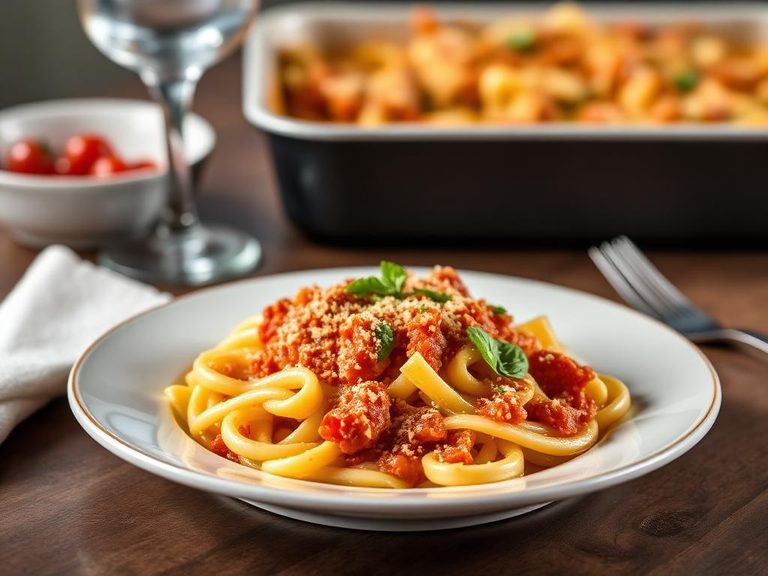
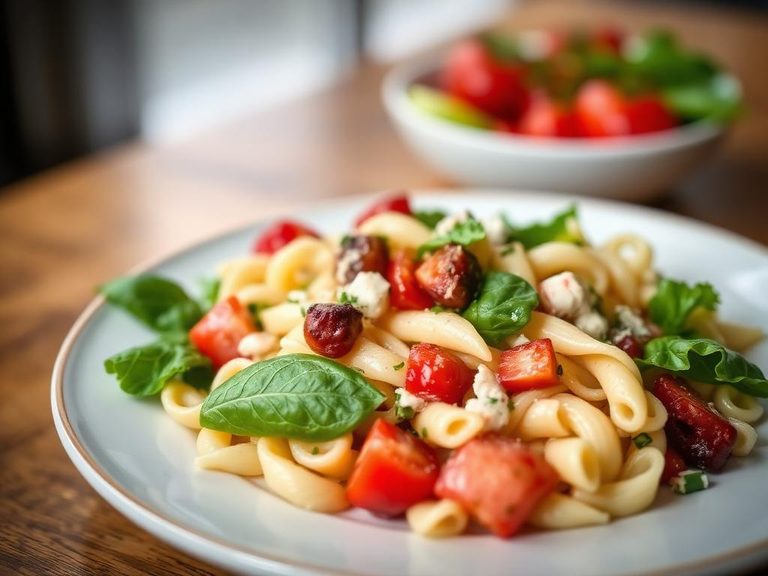
🌍 Where it's eaten
💡 Did you know?
The specific 51% whole wheat threshold is often used to meet certain nutritional standards for programs like the USDA's, ensuring a meaningful whole grain contribution while maintaining a texture many consumers prefer.
Full nutrition (USDA data · scales with serving)
| Water | 9.2 g |
| Energy | 361 kcal |
| Energy | 1509 kj |
| Protein | 13.2 g |
| Total lipid (fat) | 2.5 g |
| Ash | 1.7 g |
| Carbohydrate, by difference | 73.3 g |
| Fiber, total dietary | 11.3 g |
| Total Sugars | 2.2 g |
| Sucrose | 0.40 g |
| Glucose | 0.20 g |
| Fructose | 0.20 g |
| Lactose | 0.00 g |
| Maltose | 1.4 g |
| Galactose | 0.00 g |
| Starch | 55.7 g |
| Calcium, Ca | 25.0 mg |
| Iron, Fe | 3.4 mg |
| Magnesium, Mg | 94.0 mg |
| Phosphorus, P | 252 mg |
| Potassium, K | 318 mg |
| Sodium, Na | 12.0 mg |
| Zinc, Zn | 2.2 mg |
| Copper, Cu | 0.39 mg |
| Manganese, Mn | 2.1 mg |
| Selenium, Se | 76.8 ug |
| Thiamin | 0.55 mg |
| Riboflavin | 0.31 mg |
| Niacin | 8.6 mg |
| Pantothenic acid | 0.70 mg |
| Vitamin B-6 | 0.24 mg |
| Folate, total | 114 ug |
| Folic acid | 55.0 ug |
| Folate, food | 59.0 ug |
| Folate, DFE | 153 ug |
| Choline, total | 17.9 mg |
| Vitamin K (phylloquinone) | 0.90 ug |
| Vitamin K (Dihydrophylloquinone) | 0.00 ug |
| Vitamin K (Menaquinone-4) | 0.00 ug |
Fat & fatty acid profile (per 100g)
| Fatty acids, total saturated | 0.32 g |
| SFA 4:0 | 0.00 g |
| SFA 6:0 | 0.00 g |
| SFA 8:0 | 0.00 g |
| SFA 10:0 | 0.00 g |
| SFA 12:0 | 0.00 g |
| SFA 14:0 | 0.00 g |
| SFA 15:0 | 0.00 g |
| SFA 16:0 | 0.28 g |
| SFA 17:0 | 0.00 g |
| SFA 18:0 | 0.03 g |
| SFA 20:0 | 0.00 g |
| SFA 22:0 | 0.00 g |
| SFA 24:0 | 0.00 g |
| Fatty acids, total monounsaturated | 0.24 g |
| MUFA 14:1 | 0.00 g |
| MUFA 15:1 | 0.00 g |
| MUFA 16:1 | 0.00 g |
| MUFA 16:1 c | 0.00 g |
| MUFA 17:1 | 0.00 g |
| MUFA 18:1 | 0.23 g |
| MUFA 18:1 c | 0.23 g |
| MUFA 20:1 | 0.01 g |
| MUFA 22:1 | 0.00 g |
| MUFA 22:1 c | 0.00 g |
| MUFA 24:1 c | 0.00 g |
| Fatty acids, total polyunsaturated | 0.85 g |
| PUFA 18:2 | 0.79 g |
| PUFA 18:2 n-6 c,c | 0.79 g |
| PUFA 18:2 CLAs | 0.00 g |
| PUFA 18:3 | 0.05 g |
| PUFA 18:3 n-3 c,c,c (ALA) | 0.05 g |
| PUFA 18:3 n-6 c,c,c | 0.00 g |
| PUFA 18:3i | 0.00 g |
| PUFA 18:4 | 0.00 g |
| PUFA 20:2 n-6 c,c | 0.00 g |
| PUFA 20:3 | 0.00 g |
| PUFA 20:3 n-3 | 0.00 g |
| PUFA 20:3 n-6 | 0.00 g |
| PUFA 20:4 | 0.00 g |
| PUFA 20:5 n-3 (EPA) | 0.00 g |
| PUFA 22:4 | 0.00 g |
| PUFA 22:5 n-3 (DPA) | 0.00 g |
| PUFA 22:6 n-3 (DHA) | 0.00 g |
| Fatty acids, total trans | 0.00 g |
| Fatty acids, total trans-monoenoic | 0.00 g |
| TFA 16:1 t | 0.00 g |
| TFA 18:1 t | 0.00 g |
| TFA 22:1 t | 0.00 g |
| TFA 18:2 t not further defined | 0.00 g |
| Fatty acids, total trans-polyenoic | 0.00 g |
Amino acid profile (per 100g)
Estimated from Pasta, gluten-free, corn, dry — USDA does not publish this profile for Pasta.
| Tryptophan | 0.05 g |
| Threonine | 0.28 g |
| Isoleucine | 0.27 g |
| Leucine | 0.92 g |
| Lysine | 0.21 g |
| Methionine | 0.16 g |
| Cystine | 0.13 g |
| Phenylalanine | 0.37 g |
| Tyrosine | 0.30 g |
| Valine | 0.38 g |
| Arginine | 0.37 g |
| Histidine | 0.23 g |
| Alanine | 0.56 g |
| Aspartic acid | 0.52 g |
| Glutamic acid | 1.4 g |
| Glycine | 0.31 g |
| Proline | 0.65 g |
| Serine | 0.35 g |
FAQ
How does this differ from 100% whole wheat pasta?
This blend has a milder, less bitter flavor and a smoother, more familiar texture than 100% whole wheat pasta, which can be denser and more robustly nutty. The enriched semolina lightens the overall profile.
Is it suitable for a gluten-free diet?
No. Both whole wheat and semolina are derived from wheat, which contains gluten. It is not safe for individuals with celiac disease or gluten sensitivity.
Why is it 'enriched'?
The refined semolina portion has B vitamins (like folic acid, niacin, thiamine, riboflavin) and iron added back after processing, which are lost during milling. This helps prevent nutrient deficiencies.
Nutrient density (calculated · NRF9.3)
Nutrient Rich Foods index: beneficial nutrients (protein, fiber, vitamins, minerals) minus saturated fat, added sugar & sodium, per 100 kcal.
NRF9.3 index — Fulgoni, Keast & Drewnowski, 2009. Computed from USDA nutrients.
Weight-loss friendliness (composite index)
Energy density 3.61 kcal/g · 15% calories from protein · 11.3 g fiber · 2.2 g sugar per 100 g.
Composite of energy density (Rolls et al., 1999), protein & fiber satiety, minus sugar. A calculated heuristic — ranks satiety-per-calorie, not a clinical measure.
Dietary load (calculated from USDA values)
Potential renal acid load. Positive = acid-forming, negative = alkaline-forming.
Sodium-to-potassium ratio: 0.04 (lower is better — aim for ≤ 1)
Sodium:potassium per WHO potassium guidance. Computed from USDA nutrients.