

Nuts, macadamia nuts, dry roasted, with salt added
Whole food · Nut and Seed Products

Photo: Wikipedia
These are whole macadamia kernels, dry-roasted to a deep golden hue and finished with a light salting, resulting in a rich, buttery crunch with a satisfying, savory finish. Nutritionally, they are a powerhouse of monounsaturated fats, providing over 76g of fat per 100g, making them a dense, energy-rich snack.
Calorie split: 4% protein · 7% carbs · 89% fat
↓ Full nutrition💚 Why it's loved
People adore them for their uniquely creamy, buttery flavor and satisfyingly crisp texture, which feels like a luxurious treat. Their versatility makes them a staple in both sweet desserts and savory dishes, from cookies to crusts.
⚠️ Watch-outs & how to enjoy it better
The high fat and calorie density means it's easy to overconsume, and the added sodium can be a concern for those monitoring salt intake. As a tree nut, it is a common allergen, and the high oxalate content may be problematic for individuals prone to kidney stones. To enjoy mindfully, practice strict portion control (stick to a 1-ounce serving) and pair with a protein source like Greek yogurt to increase satiety.
Key benefits
- Excellent source of heart-healthy monounsaturated fats
- Good source of dietary fiber (8g per 100g)
- Provides essential minerals like manganese and thiamine
- Naturally low in sugar and carbohydrates
🍽️ Popular dishes
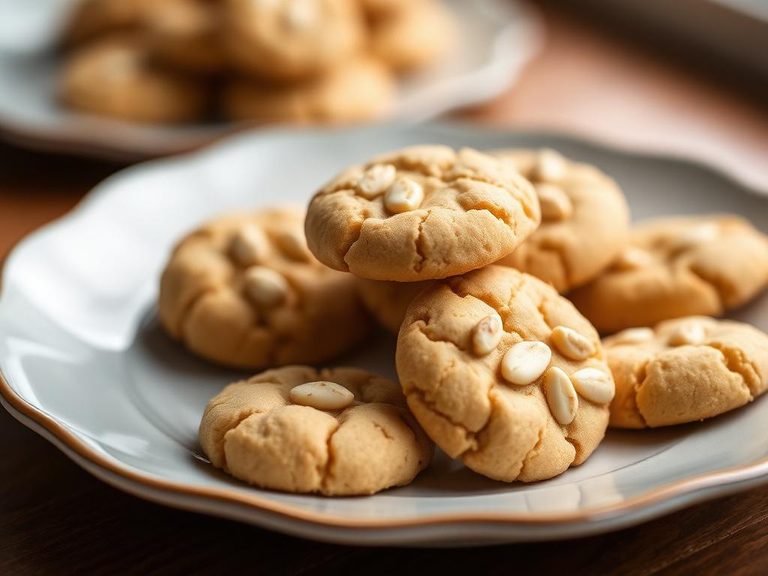
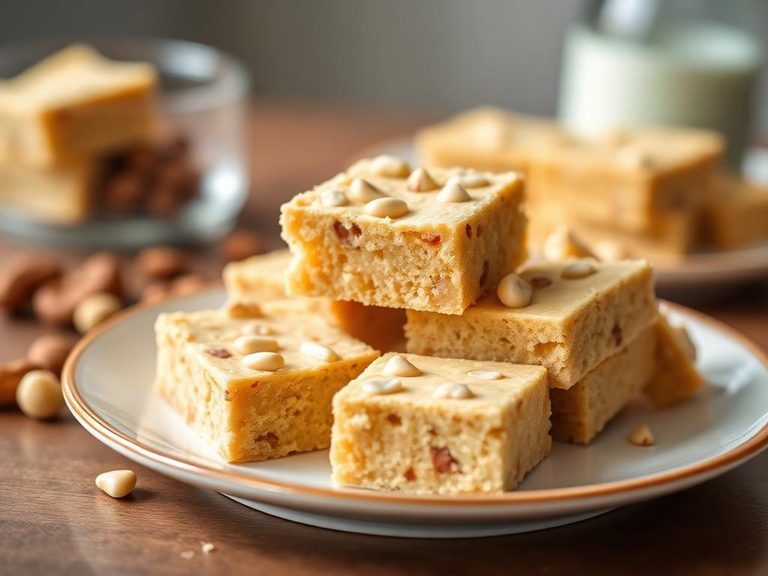
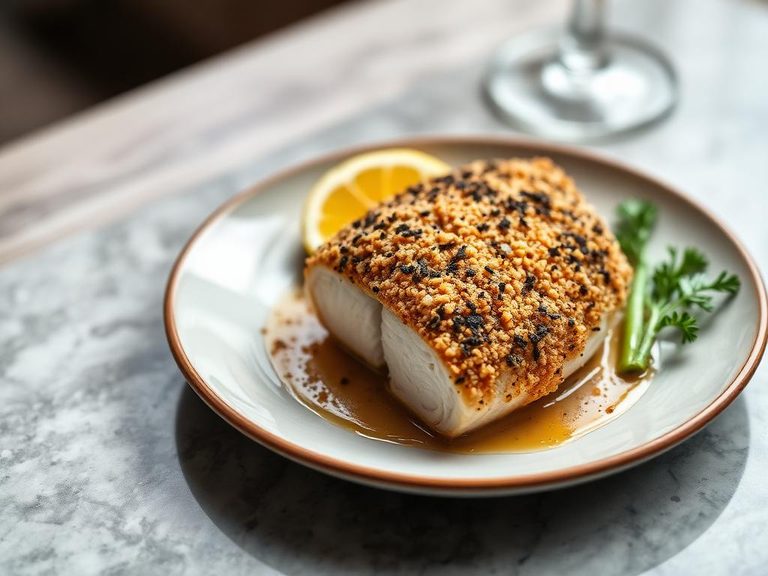
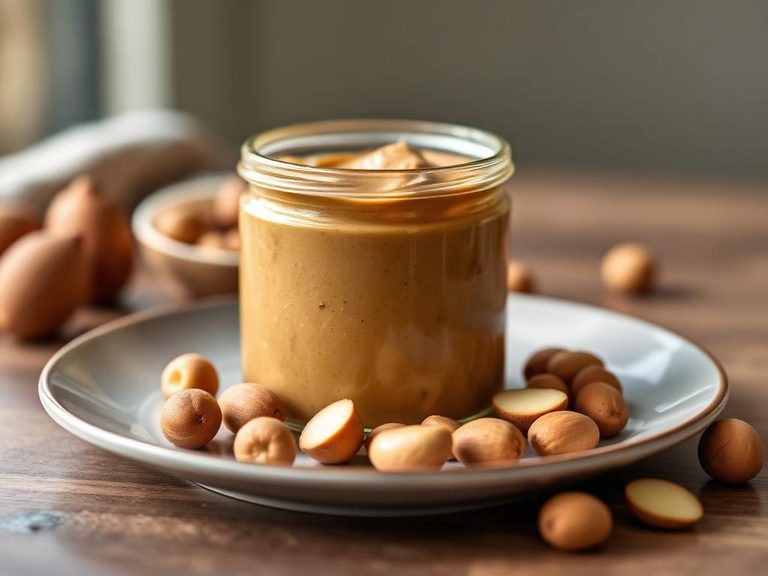
🌍 Where it's eaten
💡 Did you know?
Macadamia nuts are the hardest nut in the world to crack, requiring about 300 pounds of pressure per square inch to break open the shell.
Full nutrition (USDA data · scales with serving)
| Water | 1.6 g |
| Energy | 716 kcal |
| Energy | 2996 kj |
| Protein | 7.8 g |
| Total lipid (fat) | 76.1 g |
| Ash | 1.7 g |
| Carbohydrate, by difference | 12.8 g |
| Fiber, total dietary | 8.0 g |
| Total Sugars | 4.1 g |
| Sucrose | 4.0 g |
| Glucose | 0.07 g |
| Fructose | 0.07 g |
| Lactose | 0.00 g |
| Maltose | 0.00 g |
| Starch | 1.1 g |
| Calcium, Ca | 70.0 mg |
| Iron, Fe | 2.6 mg |
| Magnesium, Mg | 118 mg |
| Phosphorus, P | 198 mg |
| Potassium, K | 363 mg |
| Sodium, Na | 353 mg |
| Zinc, Zn | 1.3 mg |
| Copper, Cu | 0.57 mg |
| Manganese, Mn | 3.0 mg |
| Selenium, Se | 11.7 ug |
| Vitamin C, total ascorbic acid | 0.70 mg |
| Thiamin | 0.71 mg |
| Riboflavin | 0.09 mg |
| Niacin | 2.3 mg |
| Pantothenic acid | 0.60 mg |
| Vitamin B-6 | 0.36 mg |
| Folate, total | 10.0 ug |
| Folic acid | 0.00 ug |
| Folate, food | 10.0 ug |
| Folate, DFE | 10.0 ug |
| Choline, total | 44.6 mg |
| Betaine | 0.30 mg |
| Vitamin B-12 | 0.00 ug |
| Vitamin B-12, added | 0.00 ug |
| Vitamin A, RAE | 0.00 ug |
| Retinol | 0.00 ug |
| Carotene, beta | 0.00 ug |
| Carotene, alpha | 0.00 ug |
| Cryptoxanthin, beta | 0.00 ug |
| Vitamin A, IU | 0.00 iu |
| Lycopene | 0.00 ug |
| Lutein + zeaxanthin | 0.00 ug |
| Vitamin E (alpha-tocopherol) | 0.57 mg |
| Vitamin E, added | 0.00 mg |
| Tocopherol, beta | 0.00 mg |
| Tocopherol, gamma | 0.00 mg |
| Tocopherol, delta | 0.00 mg |
| Vitamin D (D2 + D3), International Units | 0.00 iu |
| Vitamin D (D2 + D3) | 0.00 ug |
| Vitamin K (phylloquinone) | 0.00 ug |
| Vitamin K (Dihydrophylloquinone) | 0.00 ug |
| Alcohol, ethyl | 0.00 g |
| Caffeine | 0.00 mg |
| Theobromine | 0.00 mg |
Fat & fatty acid profile (per 100g)
| Fatty acids, total saturated | 11.9 g |
| SFA 4:0 | 0.00 g |
| SFA 6:0 | 0.00 g |
| SFA 8:0 | 0.00 g |
| SFA 10:0 | 0.00 g |
| SFA 12:0 | 0.07 g |
| SFA 13:0 | 0.00 g |
| SFA 14:0 | 0.67 g |
| SFA 15:0 | 0.00 g |
| SFA 16:0 | 5.9 g |
| SFA 17:0 | 0.16 g |
| SFA 18:0 | 2.3 g |
| SFA 20:0 | 1.9 g |
| SFA 22:0 | 0.62 g |
| SFA 24:0 | 0.27 g |
| Fatty acids, total monounsaturated | 59.3 g |
| MUFA 14:1 | 0.00 g |
| MUFA 16:1 | 12.7 g |
| MUFA 18:1 | 44.4 g |
| MUFA 20:1 | 1.9 g |
| MUFA 22:1 | 0.24 g |
| MUFA 24:1 c | 0.01 g |
| Fatty acids, total polyunsaturated | 1.5 g |
| PUFA 18:2 | 1.3 g |
| PUFA 18:3 | 0.20 g |
| PUFA 18:4 | 0.00 g |
| PUFA 20:2 n-6 c,c | 0.00 g |
| PUFA 20:3 | 0.00 g |
| PUFA 20:4 | 0.00 g |
| PUFA 20:5 n-3 (EPA) | 0.00 g |
| PUFA 22:5 n-3 (DPA) | 0.00 g |
| PUFA 22:6 n-3 (DHA) | 0.00 g |
| Cholesterol | 0.00 mg |
| Stigmasterol | 0.00 mg |
| Campesterol | 10.0 mg |
| Beta-sitosterol | 145 mg |
Amino acid profile (per 100g)
Estimated from Nuts, mixed nuts, dry roasted, with peanuts, with salt added — USDA does not publish this profile for Nuts.
| Tryptophan | 0.26 g |
| Threonine | 0.60 g |
| Isoleucine | 0.74 g |
| Leucine | 1.4 g |
| Lysine | 0.71 g |
| Methionine | 0.23 g |
| Cystine | 0.29 g |
| Phenylalanine | 0.95 g |
| Tyrosine | 0.68 g |
| Valine | 0.93 g |
| Arginine | 2.2 g |
| Histidine | 0.48 g |
| Alanine | 0.81 g |
| Aspartic acid | 2.1 g |
| Glutamic acid | 4.4 g |
| Glycine | 1.1 g |
| Proline | 0.88 g |
| Serine | 0.92 g |
FAQ
Why are macadamia nuts so expensive?
They are expensive due to their long maturation time (7-10 years to bear fruit), labor-intensive harvesting, and the difficulty of processing their extremely hard shells.
What's the difference between raw and dry-roasted macadamia nuts?
Dry-roasting enhances the nutty flavor and creates a crispier texture without adding extra oil. The nutritional profile is very similar, though roasting can slightly reduce heat-sensitive nutrients.
How should I store them to keep them fresh?
Due to their high oil content, they can go rancid. Store them in an airtight container in a cool, dark place for a few months, or in the refrigerator or freezer for up to a year.
Nutrient density (calculated · NRF9.3)
Nutrient Rich Foods index: beneficial nutrients (protein, fiber, vitamins, minerals) minus saturated fat, added sugar & sodium, per 100 kcal.
NRF9.3 index — Fulgoni, Keast & Drewnowski, 2009. Computed from USDA nutrients.
Weight-loss friendliness (composite index)
Energy density 7.16 kcal/g · 4% calories from protein · 8.0 g fiber · 4.1 g sugar per 100 g.
Composite of energy density (Rolls et al., 1999), protein & fiber satiety, minus sugar. A calculated heuristic — ranks satiety-per-calorie, not a clinical measure.
Dietary load (calculated from USDA values)
Potential renal acid load. Positive = acid-forming, negative = alkaline-forming.
Sodium-to-potassium ratio: 0.97 (lower is better — aim for ≤ 1)
Sodium:potassium per WHO potassium guidance. Computed from USDA nutrients.