

Nuts, almond butter, plain, with salt added
Whole food · Nut and Seed Products

Photo: Wikipedia
Almond butter is a rich, creamy paste made from ground roasted almonds, offering a deep, nutty flavor with a subtle sweetness and a satisfying, slightly gritty texture. Nutritionally, it's a powerhouse, delivering over 20 grams of protein and a substantial amount of healthy monounsaturated fats per 100 grams, making it a dense source of energy and satiety.
Calorie split: 13% protein · 11% carbs · 76% fat
↓ Full nutrition💚 Why it's loved
People adore its luxurious, creamy texture and deep, toasty flavor that elevates everything from toast to smoothies. Its incredible versatility in both sweet and savory applications makes it a beloved staple in kitchens worldwide.
⚠️ Watch-outs & how to enjoy it better
Its high calorie density means portion control is key for those managing weight. As a common tree nut allergen, it's unsafe for many individuals, and the added salt can be a concern for those monitoring sodium intake. To manage calories, measure servings (e.g., 2 tablespoons) and pair it with fiber-rich foods like apple slices.
Key benefits
- Excellent source of heart-healthy monounsaturated fats
- Provides a significant plant-based protein boost
- High in fiber, promoting digestive health and fullness
- Rich in vitamin E, a potent antioxidant
- Contains minerals like magnesium and manganese
🍽️ Popular dishes
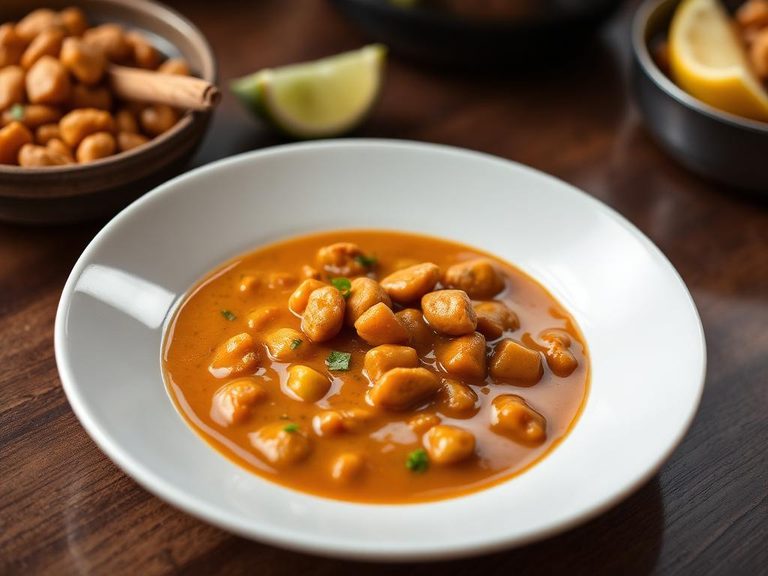
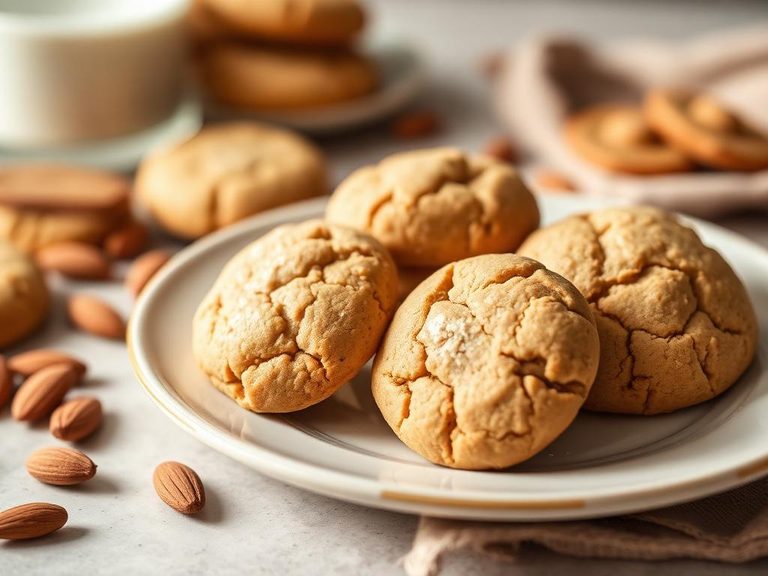
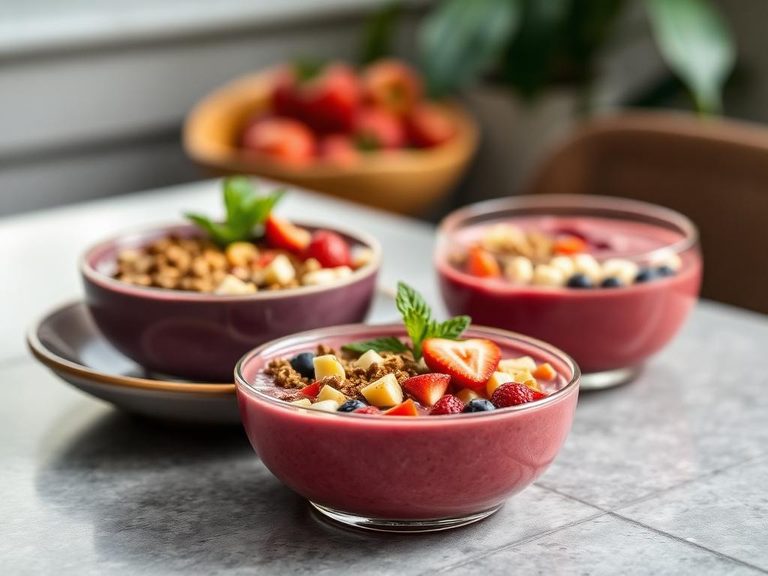
🌍 Where it's eaten
💡 Did you know?
It takes approximately 75-100 whole almonds to produce a single 2-tablespoon serving of almond butter.
Full nutrition (USDA data · scales with serving)
| Water | 1.6 g |
| Energy | 614 kcal |
| Energy | 2568 kj |
| Protein | 21.0 g |
| Total lipid (fat) | 55.5 g |
| Ash | 3.1 g |
| Carbohydrate, by difference | 18.8 g |
| Fiber, total dietary | 10.3 g |
| Total Sugars | 6.3 g |
| Sucrose | 6.1 g |
| Glucose | 0.02 g |
| Fructose | 0.00 g |
| Lactose | 0.00 g |
| Maltose | 0.10 g |
| Galactose | 0.00 g |
| Starch | 0.08 g |
| Calcium, Ca | 347 mg |
| Iron, Fe | 3.5 mg |
| Magnesium, Mg | 279 mg |
| Phosphorus, P | 508 mg |
| Potassium, K | 748 mg |
| Sodium, Na | 227 mg |
| Zinc, Zn | 3.3 mg |
| Copper, Cu | 0.93 mg |
| Manganese, Mn | 2.1 mg |
| Selenium, Se | 2.4 ug |
| Vitamin C, total ascorbic acid | 0.00 mg |
| Thiamin | 0.04 mg |
| Riboflavin | 0.94 mg |
| Niacin | 3.2 mg |
| Pantothenic acid | 0.32 mg |
| Vitamin B-6 | 0.10 mg |
| Folate, total | 53.0 ug |
| Folic acid | 0.00 ug |
| Folate, food | 53.0 ug |
| Folate, DFE | 53.0 ug |
| Choline, total | 52.1 mg |
| Vitamin B-12 | 0.00 ug |
| Vitamin B-12, added | 0.00 ug |
| Vitamin A, RAE | 0.00 ug |
| Retinol | 0.00 ug |
| Carotene, beta | 1.0 ug |
| Carotene, alpha | 0.00 ug |
| Cryptoxanthin, beta | 0.00 ug |
| Vitamin A, IU | 1.0 iu |
| Lycopene | 0.00 ug |
| Lutein + zeaxanthin | 1.0 ug |
| Vitamin E (alpha-tocopherol) | 24.2 mg |
| Vitamin E, added | 0.00 mg |
| Tocopherol, beta | 0.53 mg |
| Tocopherol, gamma | 1.0 mg |
| Tocopherol, delta | 0.00 mg |
| Vitamin D (D2 + D3), International Units | 0.00 iu |
| Vitamin D (D2 + D3) | 0.00 ug |
| Vitamin K (phylloquinone) | 0.00 ug |
| Alcohol, ethyl | 0.00 g |
| Caffeine | 0.00 mg |
| Theobromine | 0.00 mg |
Fat & fatty acid profile (per 100g)
| Fatty acids, total saturated | 6.5 g |
| SFA 4:0 | 0.00 g |
| SFA 6:0 | 0.00 g |
| SFA 8:0 | 0.00 g |
| SFA 10:0 | 0.00 g |
| SFA 12:0 | 0.00 g |
| SFA 14:0 | 0.01 g |
| SFA 15:0 | 0.00 g |
| SFA 16:0 | 5.0 g |
| SFA 17:0 | 0.01 g |
| SFA 18:0 | 1.5 g |
| SFA 20:0 | 0.01 g |
| SFA 22:0 | 0.00 g |
| Fatty acids, total monounsaturated | 32.4 g |
| MUFA 14:1 | 0.00 g |
| MUFA 15:1 | 0.00 g |
| MUFA 16:1 | 0.25 g |
| MUFA 17:1 | 0.04 g |
| MUFA 18:1 | 32.1 g |
| MUFA 20:1 | 0.02 g |
| MUFA 22:1 | 0.00 g |
| Fatty acids, total polyunsaturated | 13.6 g |
| PUFA 18:2 | 13.6 g |
| PUFA 18:3 | 0.01 g |
| PUFA 18:4 | 0.00 g |
| PUFA 20:2 n-6 c,c | 0.00 g |
| PUFA 20:3 | 0.00 g |
| PUFA 20:4 | 0.00 g |
| PUFA 20:5 n-3 (EPA) | 0.00 g |
| PUFA 22:5 n-3 (DPA) | 0.00 g |
| PUFA 22:6 n-3 (DHA) | 0.00 g |
| Fatty acids, total trans | 0.00 g |
| Cholesterol | 0.00 mg |
| Stigmasterol | 3.0 mg |
| Campesterol | 6.0 mg |
| Beta-sitosterol | 131 mg |
Amino acid profile (per 100g)
| Tryptophan | 0.16 g |
| Threonine | 0.56 g |
| Isoleucine | 0.81 g |
| Leucine | 1.5 g |
| Lysine | 0.61 g |
| Methionine | 0.12 g |
| Cystine | 0.24 g |
| Phenylalanine | 1.1 g |
| Tyrosine | 0.59 g |
| Valine | 0.94 g |
| Arginine | 2.4 g |
| Histidine | 0.55 g |
| Alanine | 0.99 g |
| Aspartic acid | 2.4 g |
| Glutamic acid | 5.9 g |
| Glycine | 1.5 g |
| Proline | 0.92 g |
| Serine | 0.93 g |
FAQ
How does almond butter differ from peanut butter?
Almond butter typically has a milder, slightly sweeter and more nuanced nutty flavor compared to the stronger, more robust taste of peanut butter. Nutritionally, it often has a bit more fiber, vitamin E, and calcium, while peanut butter may have slightly more protein.
Is the oil separation in natural almond butter normal?
Yes, it's completely normal and a sign of a natural product without stabilizers. Simply stir it back in before use. Storing the jar upside down in the pantry can help make stirring easier.
Can I use almond butter in baking as a 1:1 substitute for peanut butter?
Often yes, but be aware it has a higher fat content and can make baked goods slightly more tender. It also has a milder flavor, so the final taste will be different. It works well in cookies, brownies, and energy bites.
Nutrient density (calculated · NRF9.3)
Nutrient Rich Foods index: beneficial nutrients (protein, fiber, vitamins, minerals) minus saturated fat, added sugar & sodium, per 100 kcal.
NRF9.3 index — Fulgoni, Keast & Drewnowski, 2009. Computed from USDA nutrients.
Weight-loss friendliness (composite index)
Energy density 6.14 kcal/g · 14% calories from protein · 10.3 g fiber · 6.3 g sugar per 100 g.
Composite of energy density (Rolls et al., 1999), protein & fiber satiety, minus sugar. A calculated heuristic — ranks satiety-per-calorie, not a clinical measure.
Dietary load (calculated from USDA values)
Potential renal acid load. Positive = acid-forming, negative = alkaline-forming.
Sodium-to-potassium ratio: 0.30 (lower is better — aim for ≤ 1)
Sodium:potassium per WHO potassium guidance. Computed from USDA nutrients.