

Lamb, New Zealand, imported, square-cut shoulder chops, separable lean and fat, raw
Whole food · Lamb, Veal, and Game Products
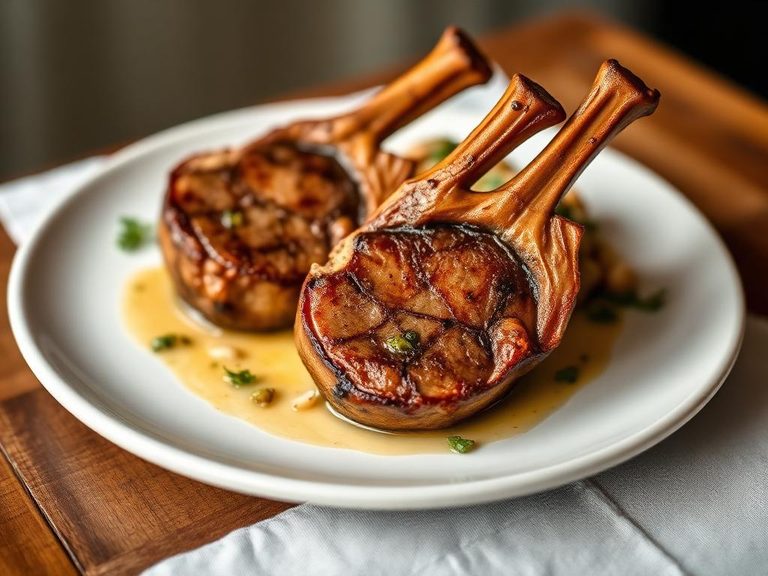
This is a raw, bone-in cut from the shoulder of New Zealand lamb, prized for its rich marbling and robust, slightly gamey flavor. When cooked, the generous fat content renders down to create incredibly tender, juicy meat with a satisfying, hearty texture. It's a protein powerhouse, delivering over 17g per 100g with virtually no carbohydrates.
Calorie split: 25% protein · 0% carbs · 75% fat
↓ Full nutrition💚 Why it's loved
People love these chops for their deep, authentic lamb flavor and forgiving nature—the fat keeps the meat moist even if slightly overcooked. They are incredibly versatile, perfect for simple grilling, slow braising, or being the star of a traditional roast.
⚠️ Watch-outs & how to enjoy it better
The high fat content (nearly 23g per 100g) means it's calorie-dense, which may concern those monitoring fat intake. To enjoy it healthily, practice portion control (a single chop is often a serving) and trim any large, external fat caps before cooking. Pairing with a fiber-rich vegetable side can also create a more balanced meal.
Key benefits
- Excellent source of high-quality protein for muscle maintenance.
- Provides essential B vitamins, especially B12, for energy metabolism.
- Rich in minerals like zinc and iron, crucial for immune function.
- Contains conjugated linoleic acid (CLA), a type of beneficial fatty acid.
🍽️ Popular dishes
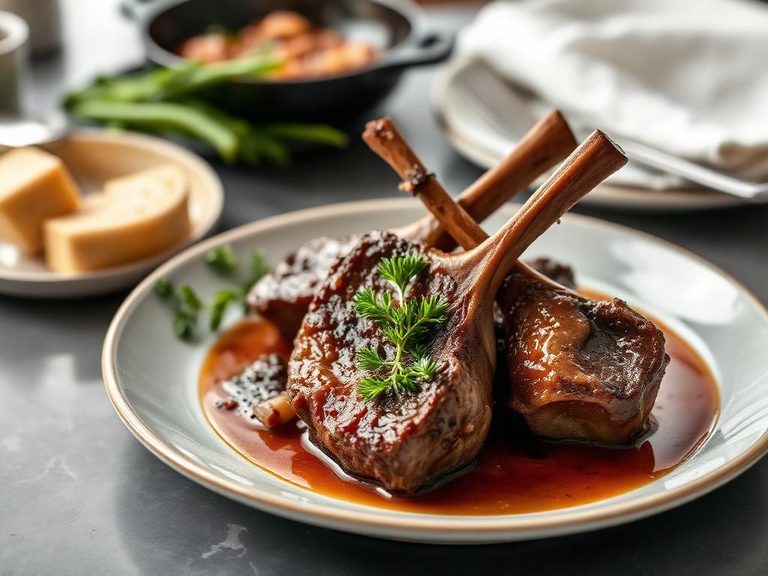
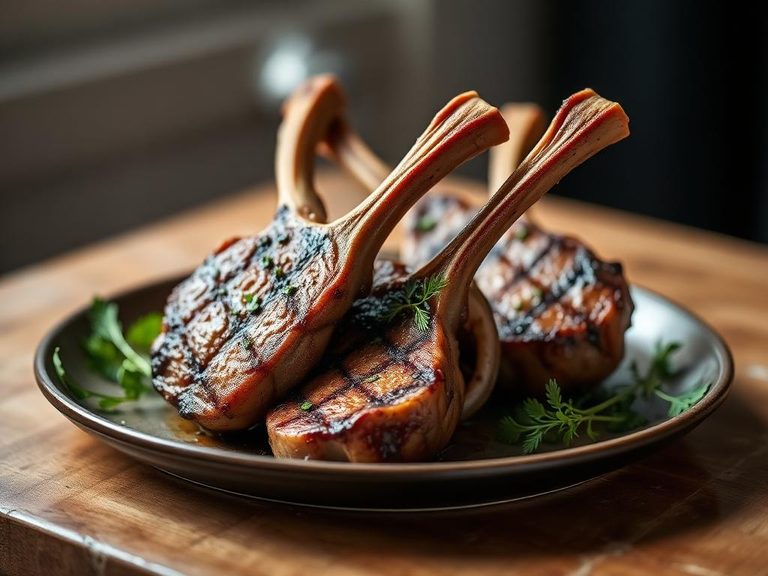
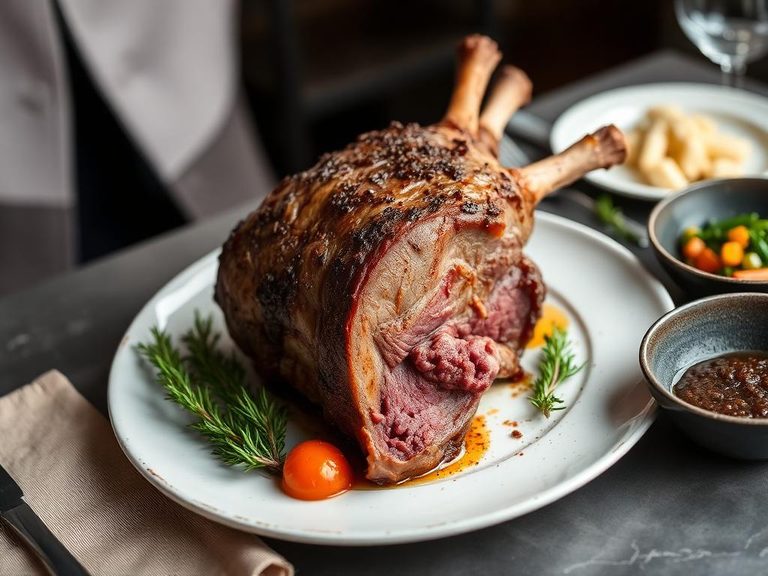
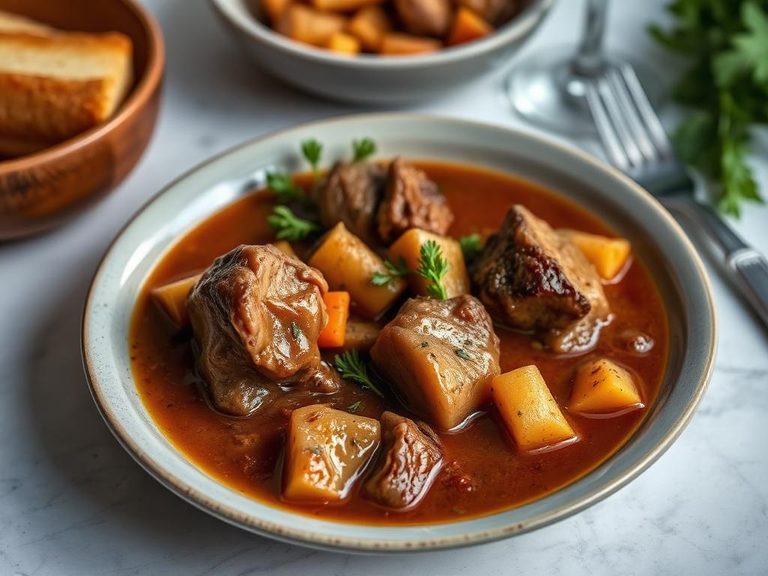
🌍 Where it's eaten
💡 Did you know?
New Zealand lamb is renowned worldwide because the sheep are typically grass-fed year-round in open pastures, which contributes to a distinct, leaner flavor profile compared to grain-fed lamb.
Full nutrition (USDA data · scales with serving)
| Water | 61.2 g |
| Energy | 275 kcal |
| Energy | 1149 kj |
| Protein | 17.0 g |
| Total lipid (fat) | 22.8 g |
| Ash | 0.83 g |
| Carbohydrate, by difference | 0.23 g |
| Fiber, total dietary | 0.00 g |
| Total Sugars | 0.00 g |
| Calcium, Ca | 22.0 mg |
| Iron, Fe | 1.1 mg |
| Magnesium, Mg | 18.0 mg |
| Phosphorus, P | 160 mg |
| Potassium, K | 274 mg |
| Sodium, Na | 71.0 mg |
| Zinc, Zn | 2.7 mg |
| Copper, Cu | 0.07 mg |
| Manganese, Mn | 0.01 mg |
| Selenium, Se | 6.2 ug |
| Vitamin C, total ascorbic acid | 0.00 mg |
| Thiamin | 0.07 mg |
| Riboflavin | 0.15 mg |
| Niacin | 3.3 mg |
| Pantothenic acid | 0.26 mg |
| Vitamin B-6 | 0.06 mg |
| Vitamin B-12 | 2.1 ug |
| Vitamin A, RAE | 15.0 ug |
| Retinol | 15.0 ug |
| Carotene, beta | 0.00 ug |
| Carotene, alpha | 0.00 ug |
| Cryptoxanthin, beta | 0.00 ug |
| Vitamin A, IU | 50.0 iu |
| Lycopene | 0.00 ug |
| Lutein + zeaxanthin | 0.00 ug |
| Vitamin E (alpha-tocopherol) | 0.52 mg |
| Vitamin D (D2 + D3), International Units | 6.0 iu |
| Vitamin D (D2 + D3) | 0.10 ug |
| Vitamin D3 (cholecalciferol) | 0.10 ug |
| Alcohol, ethyl | 0.00 g |
| Caffeine | 0.00 mg |
| Theobromine | 0.00 mg |
Fat & fatty acid profile (per 100g)
| Fatty acids, total saturated | 9.1 g |
| SFA 4:0 | 0.00 g |
| SFA 6:0 | 0.00 g |
| SFA 8:0 | 0.00 g |
| SFA 10:0 | 0.03 g |
| SFA 12:0 | 0.03 g |
| SFA 14:0 | 0.45 g |
| SFA 16:0 | 3.5 g |
| SFA 17:0 | 0.39 g |
| SFA 18:0 | 4.7 g |
| SFA 20:0 | 0.02 g |
| SFA 22:0 | 0.05 g |
| SFA 24:0 | 0.00 g |
| Fatty acids, total monounsaturated | 6.3 g |
| MUFA 14:1 | 0.01 g |
| MUFA 15:1 | 0.00 g |
| MUFA 16:1 | 0.18 g |
| MUFA 16:1 c | 0.16 g |
| MUFA 17:1 | 0.00 g |
| MUFA 18:1 | 6.1 g |
| MUFA 18:1 c | 5.0 g |
| MUFA 20:1 | 0.01 g |
| MUFA 22:1 | 0.00 g |
| MUFA 22:1 c | 0.00 g |
| MUFA 24:1 c | 0.00 g |
| Fatty acids, total polyunsaturated | 0.85 g |
| PUFA 18:2 | 0.57 g |
| PUFA 18:2 n-6 c,c | 0.22 g |
| PUFA 18:2 CLAs | 0.34 g |
| PUFA 18:3 | 0.22 g |
| PUFA 18:3 n-3 c,c,c (ALA) | 0.22 g |
| PUFA 18:3 n-6 c,c,c | 0.00 g |
| PUFA 18:4 | 0.00 g |
| PUFA 20:2 n-6 c,c | 0.00 g |
| PUFA 20:3 | 0.00 g |
| PUFA 20:3 n-3 | 0.00 g |
| PUFA 20:3 n-6 | 0.00 g |
| PUFA 20:4 | 0.02 g |
| PUFA 20:4 n-6 | 0.02 g |
| PUFA 20:5 n-3 (EPA) | 0.01 g |
| PUFA 22:5 n-3 (DPA) | 0.03 g |
| PUFA 22:6 n-3 (DHA) | 0.00 g |
| Fatty acids, total trans | 1.1 g |
| Fatty acids, total trans-monoenoic | 1.1 g |
| TFA 16:1 t | 0.03 g |
| TFA 18:1 t | 1.1 g |
| TFA 18:2 t,t | 0.01 g |
| Fatty acids, total trans-polyenoic | 0.01 g |
| Cholesterol | 63.0 mg |
Amino acid profile (per 100g)
| Tryptophan | 0.19 g |
| Threonine | 0.81 g |
| Isoleucine | 0.76 g |
| Leucine | 1.3 g |
| Lysine | 1.5 g |
| Methionine | 0.56 g |
| Cystine | 0.22 g |
| Phenylalanine | 0.67 g |
| Tyrosine | 0.59 g |
| Valine | 0.87 g |
| Arginine | 1.1 g |
| Histidine | 0.36 g |
| Alanine | 0.85 g |
| Glutamic acid | 2.4 g |
| Glycine | 0.73 g |
| Proline | 0.55 g |
| Serine | 0.58 g |
FAQ
What's the best way to cook these tough shoulder chops?
Shoulder chops benefit from methods that break down connective tissue. Braising, stewing, or slow-roasting are ideal for tenderness. For grilling or pan-searing, marinate first and cook to medium (145°F) to avoid toughness.
Is the fat on lamb chops bad for you?
Lamb fat contains saturated fat, so moderation is key. However, it also has beneficial monounsaturated fats and CLA. Trimming excess visible fat before cooking and draining rendered fat can significantly reduce the overall fat content of your meal.
How is this different from a lamb loin chop?
Shoulder chops come from the working shoulder muscle, making them more flavorful but tougher with more connective tissue and fat. Loin chops are from the back, are more tender and lean, and resemble a small T-bone steak.
Nutrient density (calculated · NRF9.3)
Nutrient Rich Foods index: beneficial nutrients (protein, fiber, vitamins, minerals) minus saturated fat, added sugar & sodium, per 100 kcal.
NRF9.3 index — Fulgoni, Keast & Drewnowski, 2009. Computed from USDA nutrients.
Weight-loss friendliness (composite index)
Energy density 2.75 kcal/g · 25% calories from protein · 0.0 g fiber · 0.0 g sugar per 100 g.
Composite of energy density (Rolls et al., 1999), protein & fiber satiety, minus sugar. A calculated heuristic — ranks satiety-per-calorie, not a clinical measure.
Dietary load (calculated from USDA values)
Potential renal acid load. Positive = acid-forming, negative = alkaline-forming.
Sodium-to-potassium ratio: 0.26 (lower is better — aim for ≤ 1)
Sodium:potassium per WHO potassium guidance. Computed from USDA nutrients.