

Lamb, New Zealand, imported, square-cut shoulder chops, separable lean and fat, cooked, braised
Whole food · Lamb, Veal, and Game Products
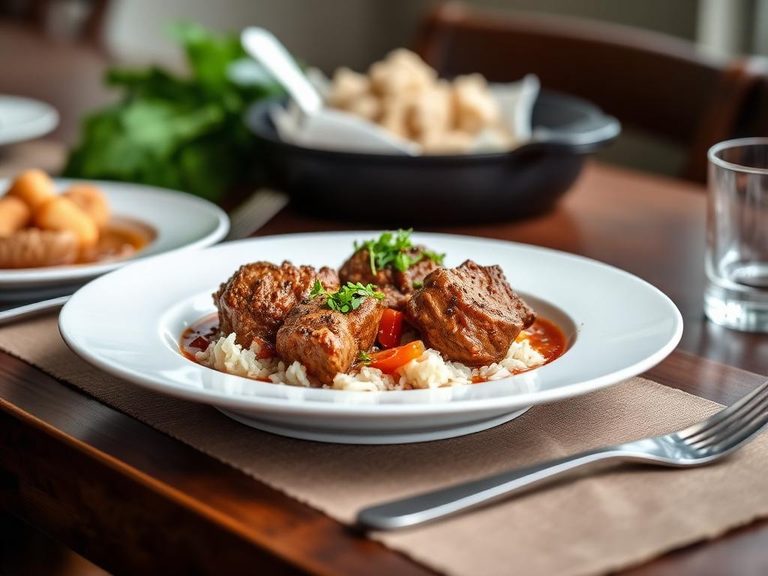
This is a hearty, square-cut portion from the shoulder of New Zealand lamb, braised until the connective tissue melts into the meat. The result is a deeply savory, fork-tender cut with a rich, beefy-lamb flavor and a luxurious mouthfeel from its well-distributed fat. It's a protein powerhouse with virtually no carbohydrates, making it a staple for low-carb and ketogenic diets.
Calorie split: 33% protein · 0% carbs · 67% fat
↓ Full nutrition💚 Why it's loved
People love it for its profound, comforting savoriness and the melt-in-your-mouth texture achieved through slow cooking. It's a versatile centerpiece that absorbs herbs and braising liquids beautifully, making it a beloved choice for family meals and hearty stews across many cultures.
⚠️ Watch-outs & how to enjoy it better
The high fat and calorie density can be a concern for those monitoring caloric intake or managing certain heart health conditions. To counteract, practice strict portion control (stick to a 3-4 oz serving) and pair it with a large portion of fibrous, non-starchy vegetables like roasted broccoli or a vinegar-based slaw to add volume and balance the meal.
Key benefits
- Excellent source of complete, high-quality protein for muscle maintenance and satiety.
- Rich in bioavailable heme iron, crucial for energy and preventing anemia.
- Provides essential minerals like zinc (for immune function) and selenium.
- Contains B vitamins, particularly B12 (nerve health) and niacin.
- Virtually zero carbohydrates, making it ideal for low-carb dietary patterns.
🍽️ Popular dishes
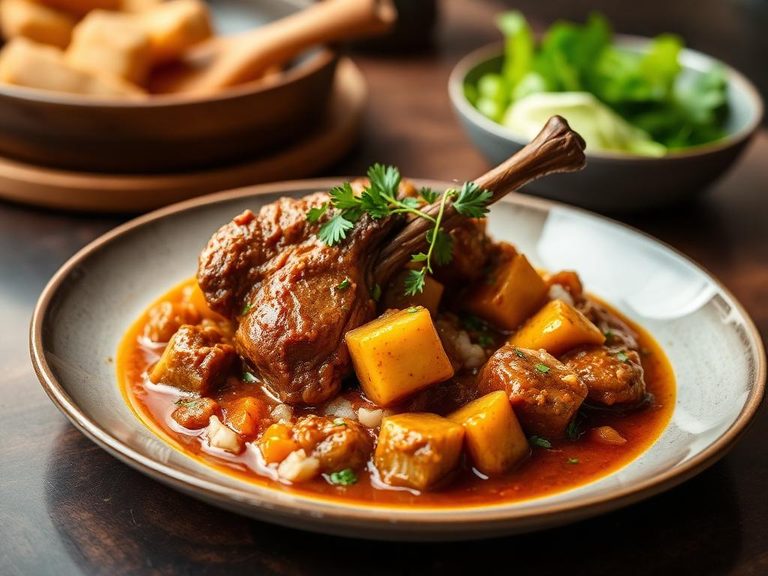
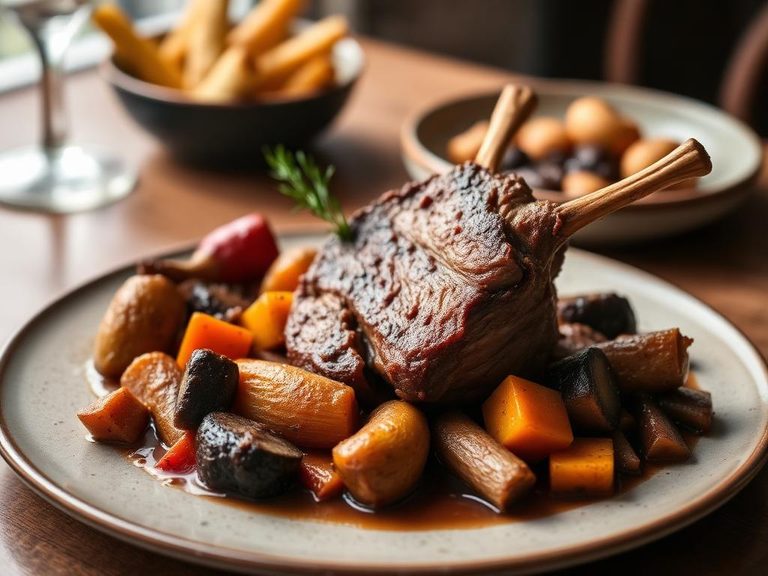
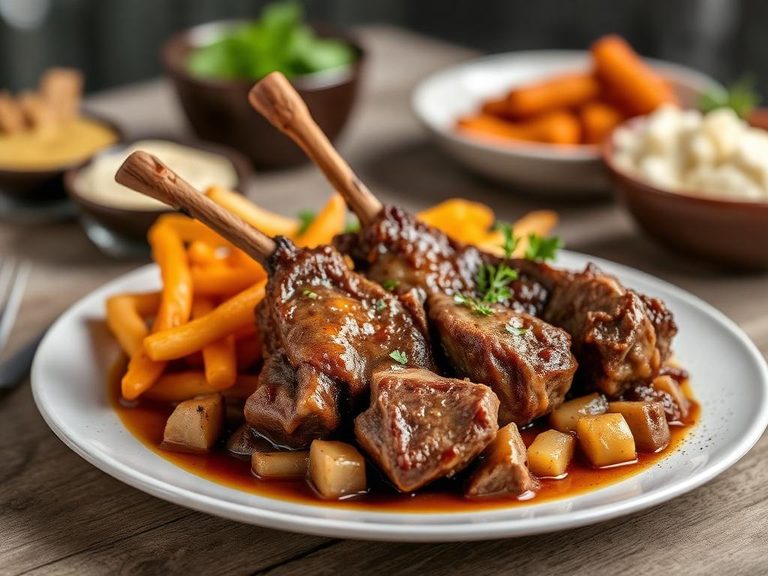
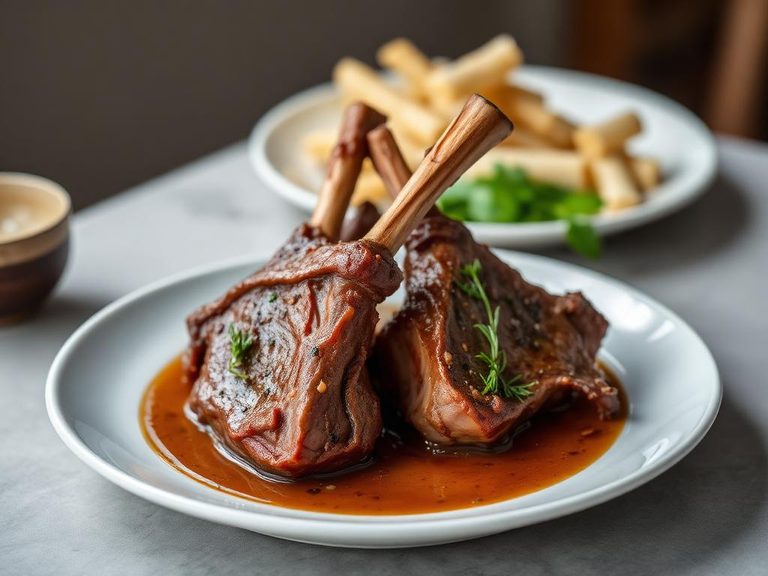
🌍 Where it's eaten
💡 Did you know?
New Zealand lamb is often from sheep that are grass-fed year-round in open pastures, which contributes to a distinct, leaner flavor profile compared to grain-finished lamb, despite the marbling in this specific cut.
Full nutrition (USDA data · scales with serving)
| Water | 50.1 g |
| Energy | 322 kcal |
| Energy | 1348 kj |
| Protein | 26.8 g |
| Total lipid (fat) | 23.9 g |
| Ash | 1.0 g |
| Carbohydrate, by difference | 0.05 g |
| Fiber, total dietary | 0.00 g |
| Total Sugars | 0.00 g |
| Calcium, Ca | 34.0 mg |
| Iron, Fe | 1.7 mg |
| Magnesium, Mg | 20.0 mg |
| Phosphorus, P | 162 mg |
| Potassium, K | 207 mg |
| Sodium, Na | 57.0 mg |
| Zinc, Zn | 5.3 mg |
| Copper, Cu | 0.12 mg |
| Manganese, Mn | 0.01 mg |
| Selenium, Se | 10.1 ug |
| Vitamin C, total ascorbic acid | 0.00 mg |
| Thiamin | 0.05 mg |
| Riboflavin | 0.19 mg |
| Niacin | 2.7 mg |
| Pantothenic acid | 0.52 mg |
| Vitamin B-6 | 0.10 mg |
| Vitamin B-12 | 2.1 ug |
| Vitamin A, RAE | 15.0 ug |
| Retinol | 15.0 ug |
| Carotene, beta | 0.00 ug |
| Carotene, alpha | 0.00 ug |
| Cryptoxanthin, beta | 0.00 ug |
| Vitamin A, IU | 49.0 iu |
| Lycopene | 0.00 ug |
| Lutein + zeaxanthin | 0.00 ug |
| Vitamin E (alpha-tocopherol) | 0.69 mg |
| Vitamin D (D2 + D3), International Units | 7.0 iu |
| Vitamin D (D2 + D3) | 0.20 ug |
| Vitamin D3 (cholecalciferol) | 0.20 ug |
| Alcohol, ethyl | 0.00 g |
| Caffeine | 0.00 mg |
| Theobromine | 0.00 mg |
Fat & fatty acid profile (per 100g)
| Fatty acids, total saturated | 9.6 g |
| SFA 4:0 | 0.00 g |
| SFA 6:0 | 0.00 g |
| SFA 8:0 | 0.00 g |
| SFA 10:0 | 0.04 g |
| SFA 12:0 | 0.06 g |
| SFA 14:0 | 0.55 g |
| SFA 16:0 | 3.7 g |
| SFA 17:0 | 0.42 g |
| SFA 18:0 | 4.8 g |
| SFA 20:0 | 0.01 g |
| SFA 22:0 | 0.03 g |
| SFA 24:0 | 0.00 g |
| Fatty acids, total monounsaturated | 6.8 g |
| MUFA 14:1 | 0.02 g |
| MUFA 15:1 | 0.00 g |
| MUFA 16:1 | 0.23 g |
| MUFA 16:1 c | 0.20 g |
| MUFA 17:1 | 0.00 g |
| MUFA 18:1 | 6.5 g |
| MUFA 18:1 c | 5.4 g |
| MUFA 20:1 | 0.01 g |
| MUFA 22:1 | 0.00 g |
| MUFA 22:1 c | 0.00 g |
| MUFA 24:1 c | 0.00 g |
| Fatty acids, total polyunsaturated | 1.0 g |
| PUFA 18:2 | 0.67 g |
| PUFA 18:2 n-6 c,c | 0.29 g |
| PUFA 18:2 CLAs | 0.37 g |
| PUFA 18:3 | 0.28 g |
| PUFA 18:3 n-3 c,c,c (ALA) | 0.28 g |
| PUFA 18:3 n-6 c,c,c | 0.00 g |
| PUFA 18:4 | 0.00 g |
| PUFA 20:2 n-6 c,c | 0.00 g |
| PUFA 20:3 | 0.02 g |
| PUFA 20:3 n-3 | 0.00 g |
| PUFA 20:3 n-6 | 0.02 g |
| PUFA 20:4 | 0.02 g |
| PUFA 20:4 n-6 | 0.02 g |
| PUFA 20:5 n-3 (EPA) | 0.01 g |
| PUFA 22:5 n-3 (DPA) | 0.03 g |
| PUFA 22:6 n-3 (DHA) | 0.01 g |
| Fatty acids, total trans | 1.1 g |
| Fatty acids, total trans-monoenoic | 1.1 g |
| TFA 16:1 t | 0.03 g |
| TFA 18:1 t | 1.1 g |
| TFA 18:2 t,t | 0.01 g |
| Fatty acids, total trans-polyenoic | 0.01 g |
| Cholesterol | 95.0 mg |
Amino acid profile (per 100g)
| Tryptophan | 0.30 g |
| Threonine | 1.3 g |
| Isoleucine | 1.2 g |
| Leucine | 2.1 g |
| Lysine | 2.3 g |
| Methionine | 0.87 g |
| Cystine | 0.35 g |
| Phenylalanine | 1.1 g |
| Tyrosine | 0.93 g |
| Valine | 1.4 g |
| Arginine | 1.8 g |
| Histidine | 0.57 g |
| Alanine | 1.3 g |
| Glutamic acid | 3.7 g |
| Glycine | 1.1 g |
| Proline | 0.86 g |
| Serine | 0.91 g |
FAQ
What's the best way to cook square-cut shoulder chops?
Due to their marbling and connective tissue, they are ideal for slow, moist-heat cooking methods like braising, stewing, or slow-roasting. This breaks down the collagen, making the meat exceptionally tender. Quick, high-heat methods like grilling can make them tough.
How does braised lamb shoulder differ from leg of lamb?
Shoulder is a harder-working muscle with more fat and connective tissue, making it more flavorful and perfect for slow cooking. Leg of lamb is leaner and more uniform, making it better suited for roasting whole or into steaks.
Is this cut suitable for a low-fat diet?
Not in its cooked form with separable fat. While the lean meat itself is moderate in fat, the 'separable lean and fat' designation means the listed fat content includes the attached fat. For a lower-fat option, you would need to trim the visible fat before cooking or choose a leaner cut like leg.
Nutrient density (calculated · NRF9.3)
Nutrient Rich Foods index: beneficial nutrients (protein, fiber, vitamins, minerals) minus saturated fat, added sugar & sodium, per 100 kcal.
NRF9.3 index — Fulgoni, Keast & Drewnowski, 2009. Computed from USDA nutrients.
Weight-loss friendliness (composite index)
Energy density 3.22 kcal/g · 33% calories from protein · 0.0 g fiber · 0.0 g sugar per 100 g.
Composite of energy density (Rolls et al., 1999), protein & fiber satiety, minus sugar. A calculated heuristic — ranks satiety-per-calorie, not a clinical measure.
Dietary load (calculated from USDA values)
Potential renal acid load. Positive = acid-forming, negative = alkaline-forming.
Sodium-to-potassium ratio: 0.28 (lower is better — aim for ≤ 1)
Sodium:potassium per WHO potassium guidance. Computed from USDA nutrients.