Moroccan Lamb Tagine
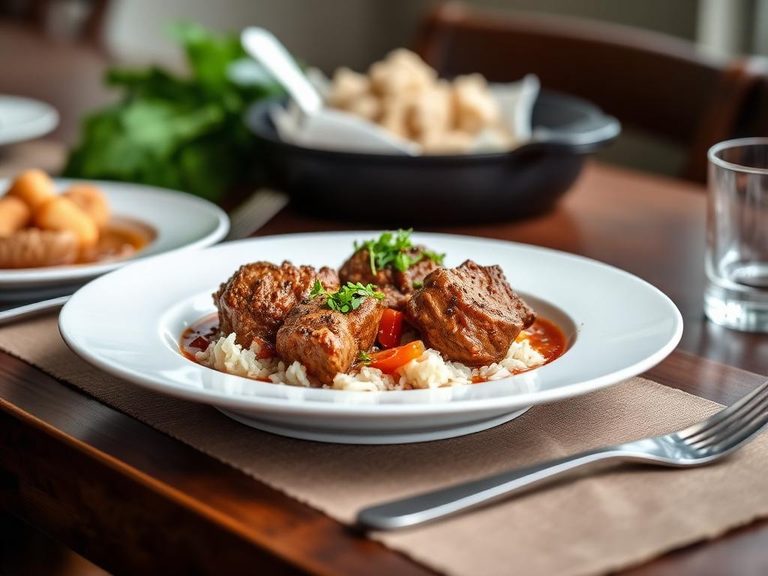
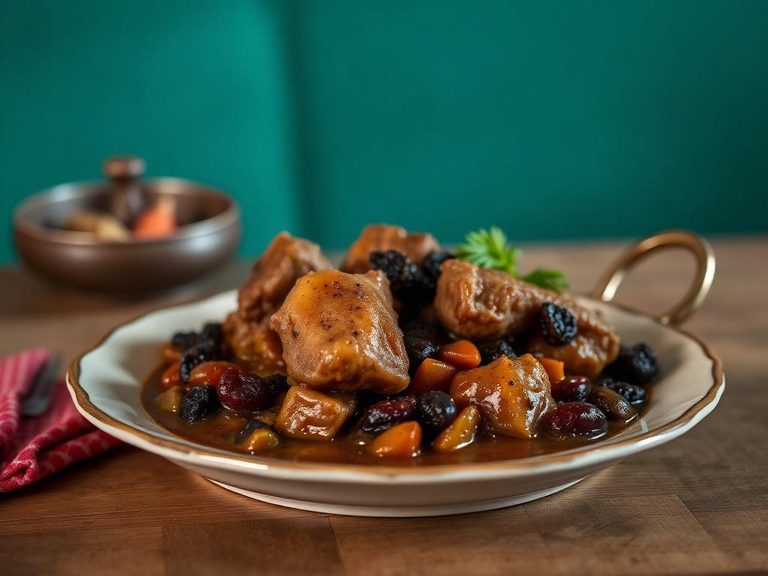
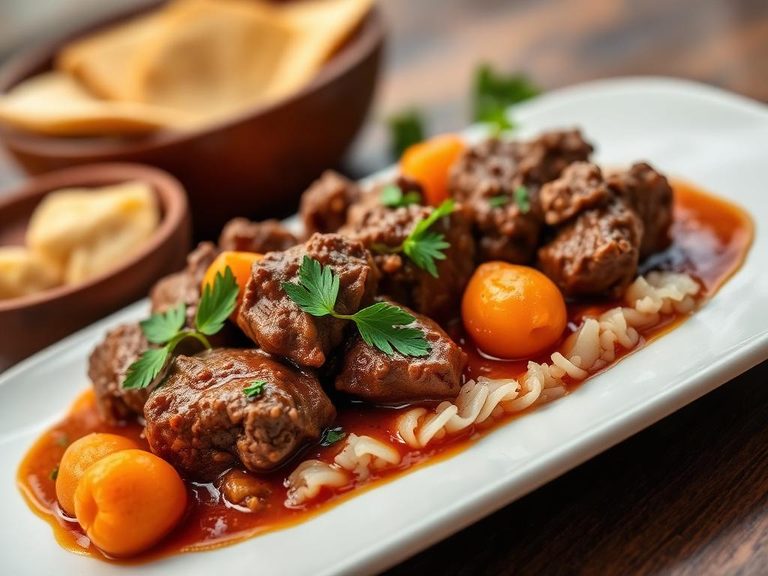
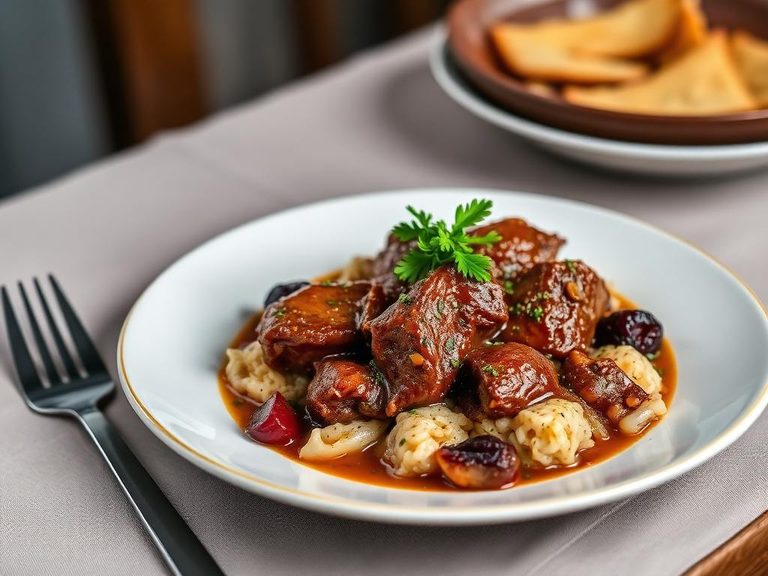
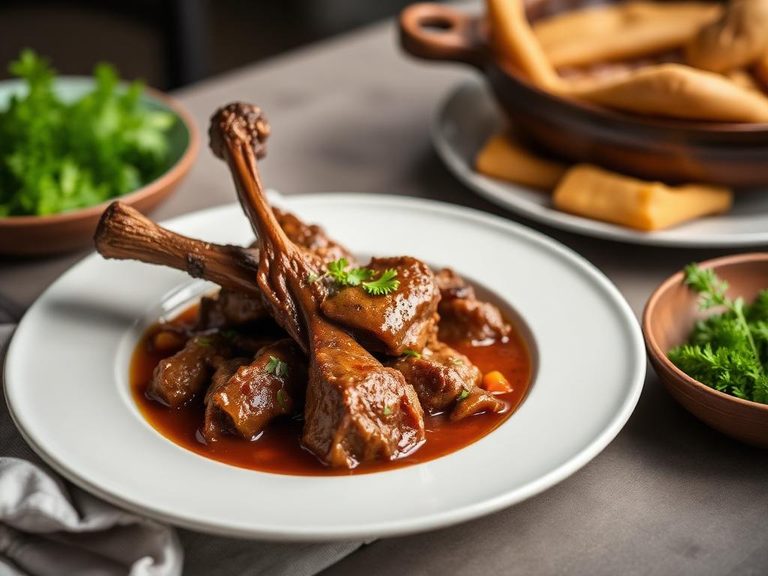
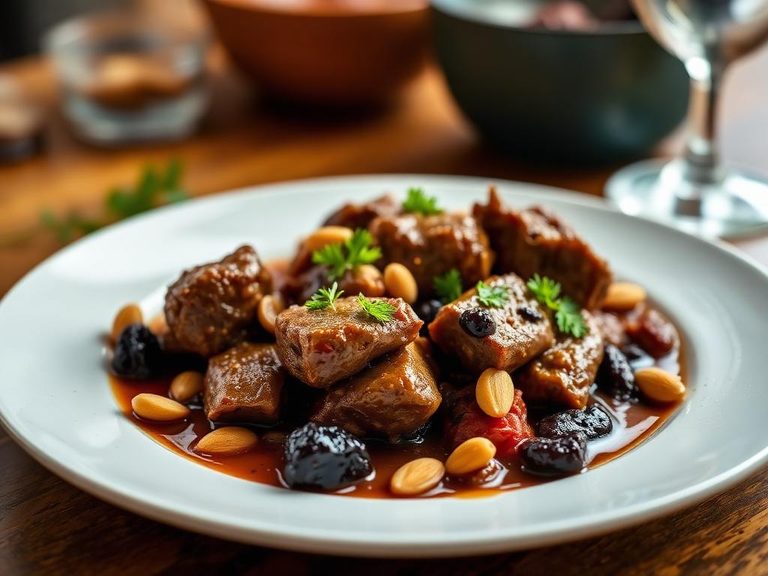
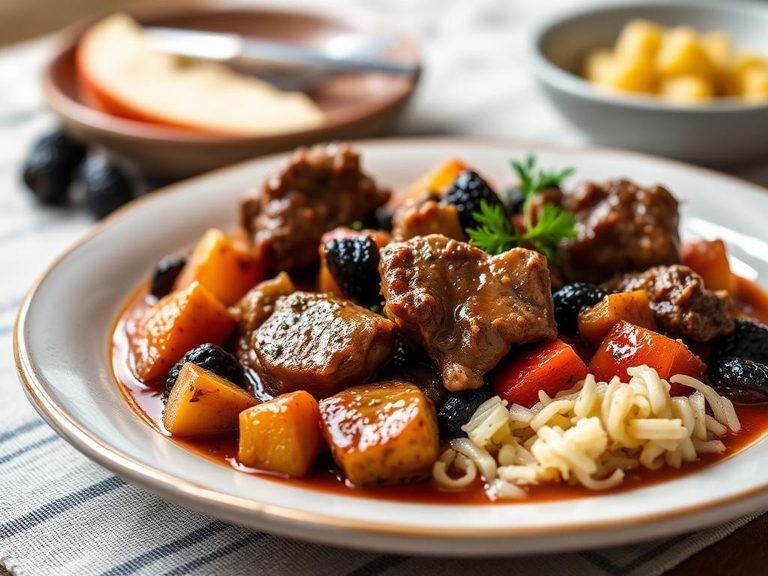
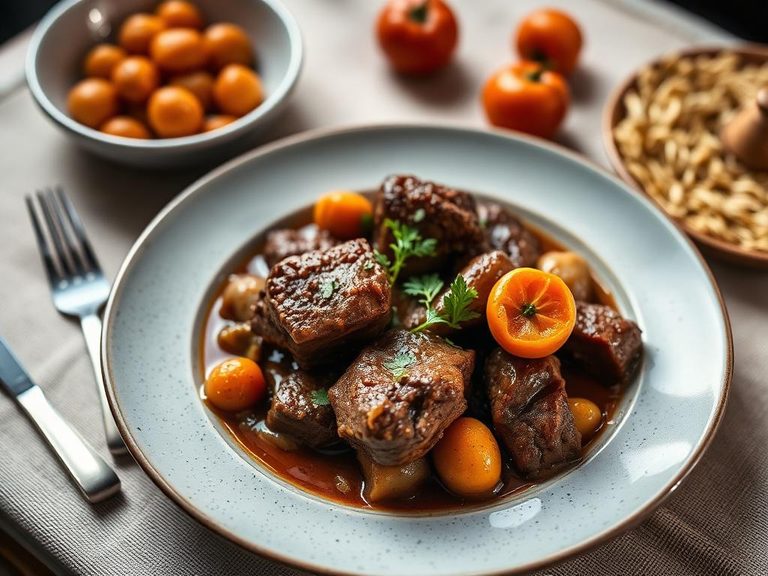
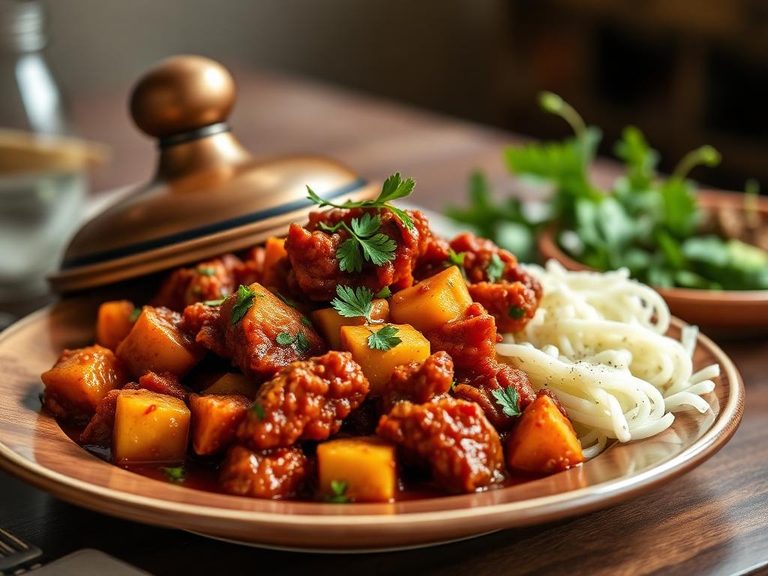
Moroccan Lamb Tagine is a slow-cooked, aromatic stew traditionally prepared in a conical clay pot of the same name, which helps tenderize the meat and concentrate flavors. It typically features tender lamb simmered with a rich blend of spices like cumin, cinnamon, and ginger, along with ingredients such as dried apricots, prunes, almonds, and preserved lemons. This beloved dish originates from Morocco and is a staple of North African cuisine.
🍽️ Nutrition at a glance
This dish is generally high in protein from the lamb and healthy fats, with a moderate amount of carbohydrates coming from dried fruits and sometimes couscous or bread served alongside. It provides key nutrients like iron, zinc, and B vitamins from the meat, along with fiber and antioxidants from the spices and fruits. A typical serving can range from approximately 400 to 600 calories, depending on the cut of lamb and specific ingredients used.
Nutrition breakdown
| Calories | 350 kcal |
| Protein | 25 g |
| Carbs | 20 g |
| Fat | 18 g |
| Fiber | 4 g |
| Sugar | 8 g |
| Sodium | 650 mg |
| Iron | 3.5 mg |
| Potassium | 450 mg |
| Vitamin B12 | 2.5 mcg |
| Zinc | 5 mg |
| Vitamin C | 15 mg |
| Vitamin A | 300 mcg RAE |
| Calcium | 80 mg |
| Magnesium | 40 mg |
Per 1 cup (240 g) · estimated, varies by recipe
💡 What's interesting
Culturally, the tagine pot itself is a fascinating piece of cookware, designed to return steam to the dish, making it a perfect example of slow-cooking ingenuity in arid climates. Nutritionally, the combination of sweet fruits with savory spices and meat is a hallmark of Moroccan cuisine, creating a complex flavor profile that also aids in digestion and nutrient absorption.