

Couscous, dry
Whole food · Cereal Grains and Pasta
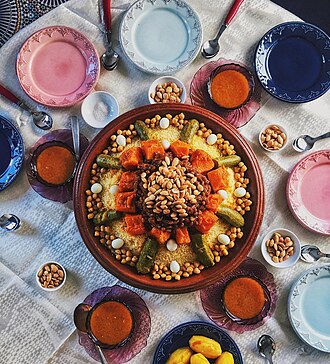
Photo: Wikipedia
Couscous is a tiny, granular pasta made from semolina wheat, with a light, fluffy texture when steamed and a subtle, nutty flavor. Nutritionally, it's a powerhouse of complex carbohydrates, providing sustained energy with minimal fat. Its 5g of fiber per 100g dry also supports digestive health.
Calorie split: 14% protein · 85% carbs · 2% fat
↓ Full nutrition💚 Why it's loved
People love couscous for its incredible versatility—it acts as a neutral canvas that absorbs the flavors of spices, broths, and sauces beautifully. It's also cherished for its speed, ready in just 5 minutes, making it a staple for quick, satisfying meals across cultures.
⚠️ Watch-outs & how to enjoy it better
Its high carbohydrate content can lead to blood sugar spikes if eaten alone, especially for those with insulin sensitivity. To counteract this, always pair it with protein (like chickpeas or lamb) and healthy fats (like olive oil or nuts) to slow digestion. Those with celiac disease or gluten sensitivity must avoid it as it's made from wheat.
Key benefits
- Excellent source of complex carbohydrates for energy
- Good plant-based protein content (12.76g per 100g dry)
- High in fiber (5g per 100g dry) for digestive health
- Low in fat and contains no sugar
- Quick-cooking and versatile base for many dishes
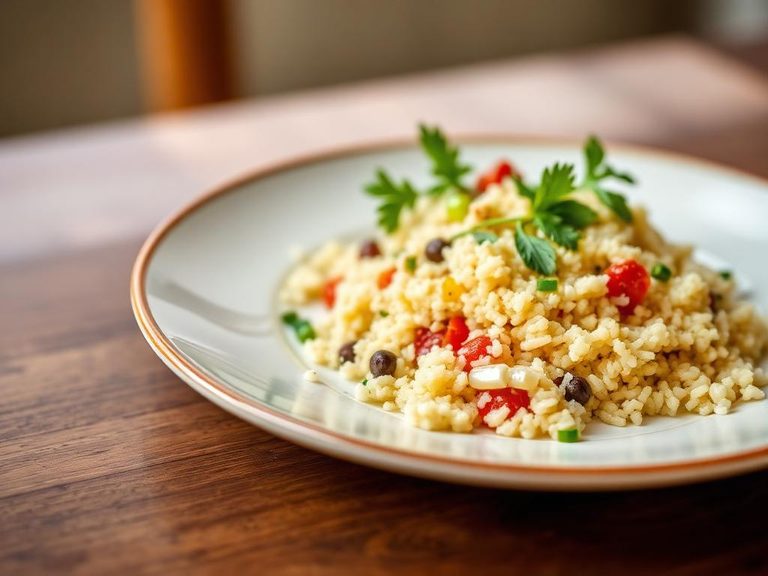
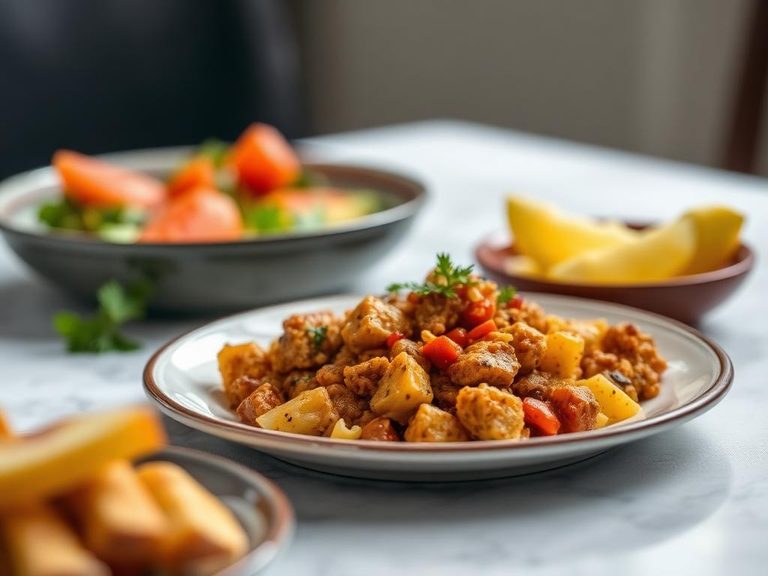
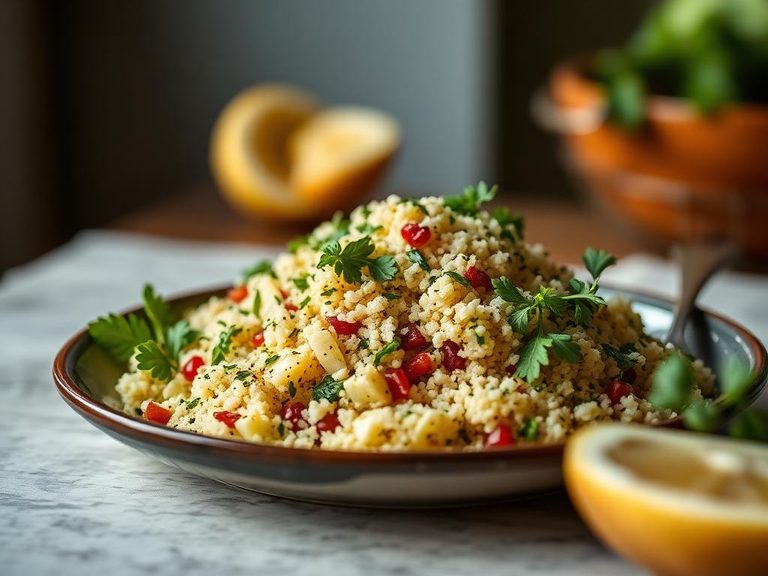
🍽️ Popular dishes

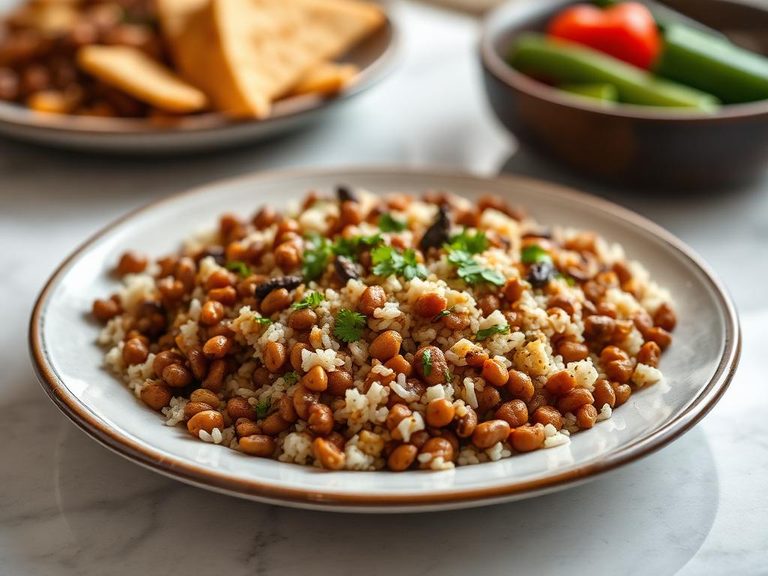

🌍 Where it's eaten
💡 Did you know?
The word 'couscous' comes from the Berber word 'seksu', meaning 'well rolled' or 'rounded', referring to the tiny granules of hand-rolled semolina.
Full nutrition (USDA data · scales with serving)
| Water | 8.6 g |
| Energy | 376 kcal |
| Energy | 1573 kj |
| Protein | 12.8 g |
| Total lipid (fat) | 0.64 g |
| Ash | 0.62 g |
| Carbohydrate, by difference | 77.4 g |
| Fiber, total dietary | 5.0 g |
| Calcium, Ca | 24.0 mg |
| Iron, Fe | 1.1 mg |
| Magnesium, Mg | 44.0 mg |
| Phosphorus, P | 170 mg |
| Potassium, K | 166 mg |
| Sodium, Na | 10.0 mg |
| Zinc, Zn | 0.83 mg |
| Copper, Cu | 0.25 mg |
| Manganese, Mn | 0.78 mg |
| Vitamin C, total ascorbic acid | 0.00 mg |
| Thiamin | 0.16 mg |
| Riboflavin | 0.08 mg |
| Niacin | 3.5 mg |
| Pantothenic acid | 1.2 mg |
| Vitamin B-6 | 0.11 mg |
| Folate, total | 20.0 ug |
| Folic acid | 0.00 ug |
| Folate, food | 20.0 ug |
| Folate, DFE | 20.0 ug |
| Vitamin B-12 | 0.00 ug |
| Vitamin A, RAE | 0.00 ug |
| Retinol | 0.00 ug |
| Vitamin A, IU | 0.00 iu |
| Vitamin D (D2 + D3), International Units | 0.00 iu |
| Vitamin D (D2 + D3) | 0.00 ug |
Fat & fatty acid profile (per 100g)
| Fatty acids, total saturated | 0.12 g |
| SFA 14:0 | 0.00 g |
| SFA 16:0 | 0.11 g |
| SFA 18:0 | 0.01 g |
| Fatty acids, total monounsaturated | 0.09 g |
| MUFA 16:1 | 0.00 g |
| MUFA 18:1 | 0.09 g |
| Fatty acids, total polyunsaturated | 0.25 g |
| PUFA 18:2 | 0.24 g |
| PUFA 18:3 | 0.01 g |
| Cholesterol | 0.00 mg |
Amino acid profile (per 100g)
| Tryptophan | 0.16 g |
| Threonine | 0.34 g |
| Isoleucine | 0.49 g |
| Leucine | 0.87 g |
| Lysine | 0.24 g |
| Methionine | 0.20 g |
| Cystine | 0.36 g |
| Phenylalanine | 0.62 g |
| Tyrosine | 0.34 g |
| Valine | 0.54 g |
| Arginine | 0.47 g |
| Histidine | 0.26 g |
| Alanine | 0.37 g |
| Aspartic acid | 0.52 g |
| Glutamic acid | 4.6 g |
| Glycine | 0.40 g |
| Proline | 1.4 g |
| Serine | 0.60 g |
FAQ
Is couscous a grain or a pasta?
Couscous is a type of tiny pasta made from ground durum wheat semolina and water. It is not a whole grain in its traditional form, though whole-wheat versions exist.
How do you prevent couscous from becoming mushy?
Use the correct liquid ratio (typically 1:1.25 couscous to water/broth), let it steam off the heat with a lid on for 5-10 minutes, and fluff gently with a fork instead of stirring.
Is couscous gluten-free?
No, traditional couscous is made from wheat and contains gluten. For a gluten-free alternative, look for couscous made from corn, millet, or quinoa.
Nutrient density (calculated · NRF9.3)
Nutrient Rich Foods index: beneficial nutrients (protein, fiber, vitamins, minerals) minus saturated fat, added sugar & sodium, per 100 kcal.
NRF9.3 index — Fulgoni, Keast & Drewnowski, 2009. Computed from USDA nutrients.
Weight-loss friendliness (composite index)
Energy density 3.76 kcal/g · 14% calories from protein · 5.0 g fiber · 0.0 g sugar per 100 g.
Composite of energy density (Rolls et al., 1999), protein & fiber satiety, minus sugar. A calculated heuristic — ranks satiety-per-calorie, not a clinical measure.
Dietary load (calculated from USDA values)
Potential renal acid load. Positive = acid-forming, negative = alkaline-forming.
Sodium-to-potassium ratio: 0.06 (lower is better — aim for ≤ 1)
Sodium:potassium per WHO potassium guidance. Computed from USDA nutrients.