

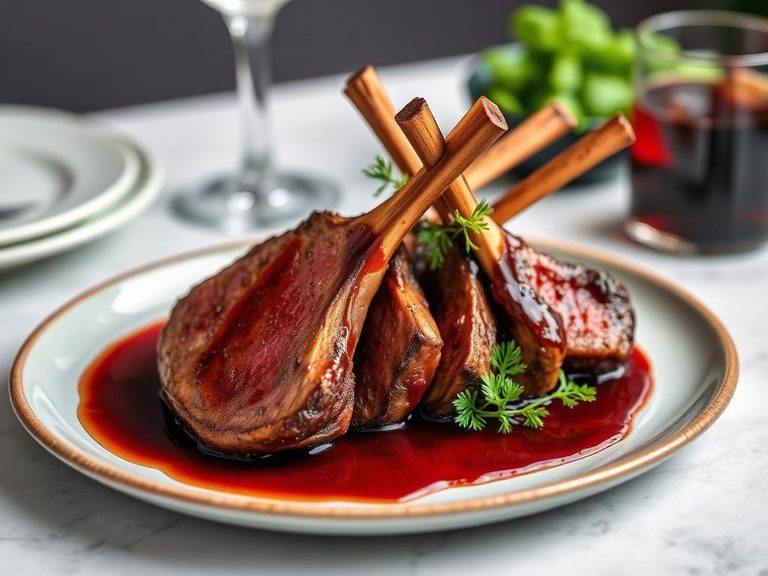
Lamb, New Zealand, imported, rack - partly frenched, separable lean and fat, raw
Whole food · Lamb, Veal, and Game Products

Photo: Wikipedia
This is a premium cut of raw New Zealand lamb, specifically the rack, with a partial Frenching (bone exposed) and a balance of lean meat and fat. It offers a rich, tender, and subtly sweet flavor with a buttery, melt-in-your-mouth texture when cooked properly. Nutritionally, it is a dense source of high-quality protein and healthy fats, with virtually no carbohydrates.
Calorie split: 30% protein · 0% carbs · 70% fat
↓ Full nutrition💚 Why it's loved
People love it for its luxurious, tender texture and rich, savory flavor that is milder than beef. It is a versatile centerpiece for special occasions, easily prepared by roasting, grilling, or pan-searing to highlight its natural taste.
⚠️ Watch-outs & how to enjoy it better
The high fat content can be a concern for those monitoring saturated fat intake or with specific dietary restrictions. To counteract, trim excess visible fat before cooking, use leaner cooking methods like roasting or grilling, and pair with fiber-rich vegetables to balance the meal.
Key benefits
- Excellent source of high-quality protein for muscle maintenance and repair.
- Rich in essential minerals like iron, zinc, and selenium.
- Provides healthy fats, including conjugated linoleic acid (CLA).
- Low in carbohydrates, suitable for low-carb and ketogenic diets.
🍽️ Popular dishes
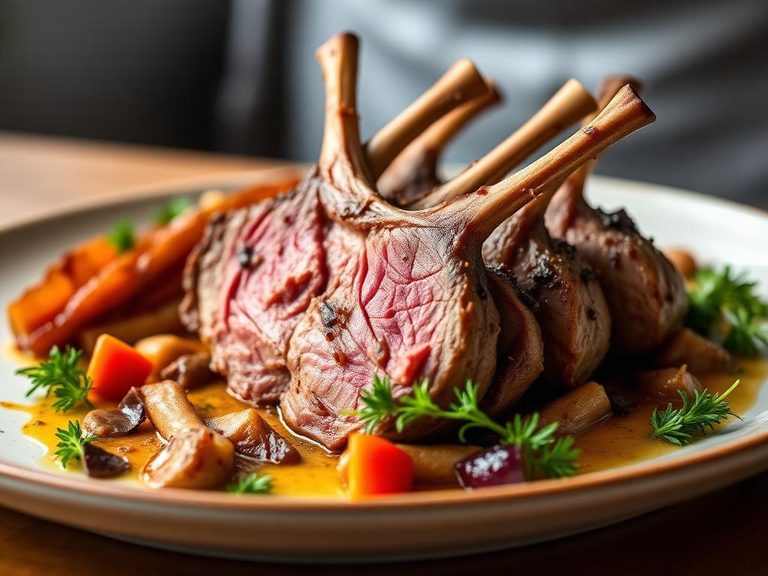
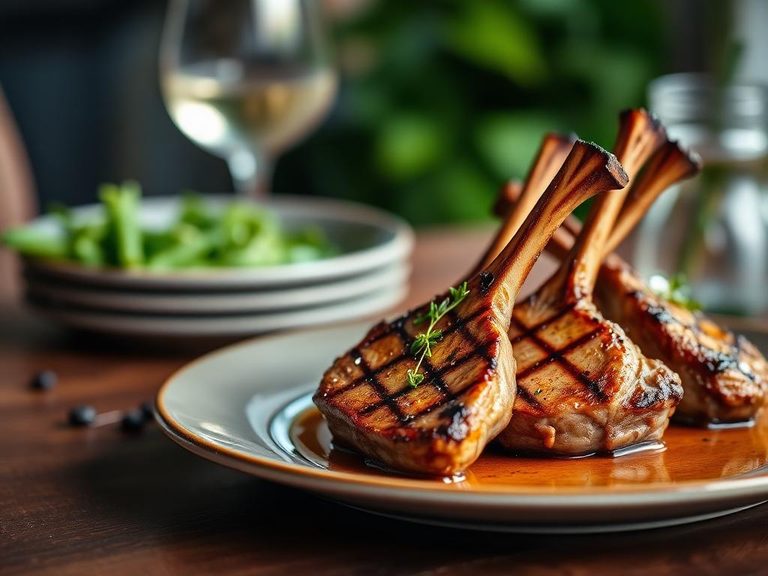
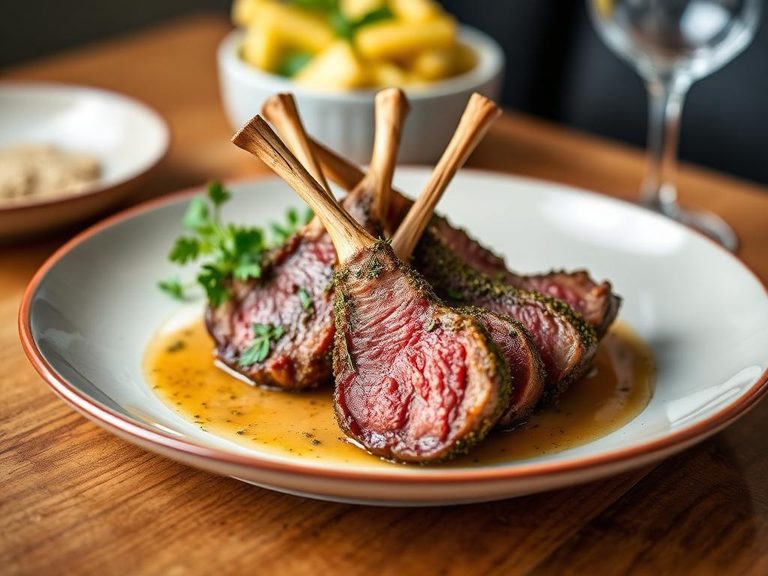
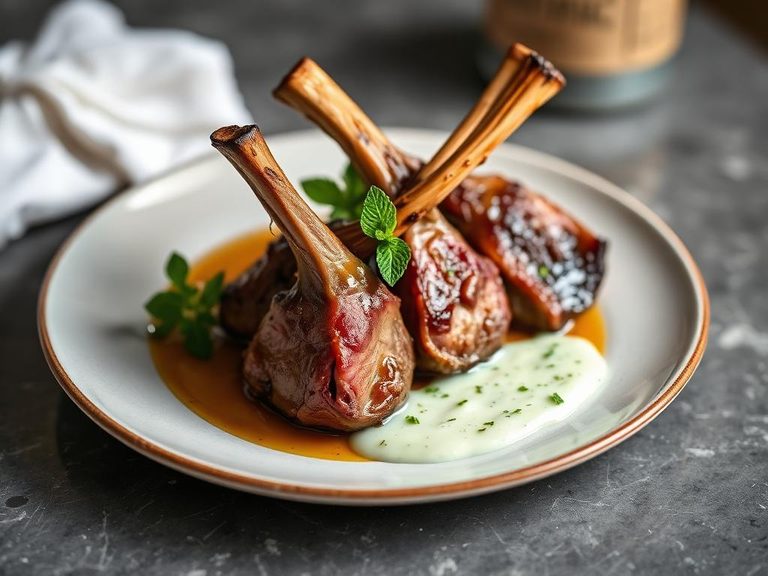
🌍 Where it's eaten
💡 Did you know?
New Zealand lamb is renowned for its high quality due to the country's grass-fed farming practices, which contribute to a distinct, clean flavor and a higher concentration of omega-3 fatty acids compared to grain-fed lamb.
Full nutrition (USDA data · scales with serving)
| Water | 62.8 g |
| Energy | 240 kcal |
| Energy | 1003 kj |
| Protein | 18.1 g |
| Total lipid (fat) | 18.5 g |
| Ash | 0.84 g |
| Carbohydrate, by difference | 0.13 g |
| Fiber, total dietary | 0.00 g |
| Total Sugars | 0.00 g |
| Calcium, Ca | 10.0 mg |
| Iron, Fe | 1.3 mg |
| Magnesium, Mg | 20.0 mg |
| Phosphorus, P | 165 mg |
| Potassium, K | 277 mg |
| Sodium, Na | 61.0 mg |
| Zinc, Zn | 2.3 mg |
| Copper, Cu | 0.10 mg |
| Manganese, Mn | 0.01 mg |
| Selenium, Se | 3.3 ug |
| Vitamin C, total ascorbic acid | 0.00 mg |
| Thiamin | 0.08 mg |
| Riboflavin | 0.17 mg |
| Niacin | 5.0 mg |
| Pantothenic acid | 0.41 mg |
| Vitamin B-6 | 0.16 mg |
| Folic acid | 0.00 ug |
| Vitamin B-12 | 1.1 ug |
| Vitamin A, RAE | 11.0 ug |
| Retinol | 11.0 ug |
| Carotene, beta | 0.00 ug |
| Carotene, alpha | 0.00 ug |
| Cryptoxanthin, beta | 0.00 ug |
| Vitamin A, IU | 37.0 iu |
| Lycopene | 0.00 ug |
| Lutein + zeaxanthin | 0.00 ug |
| Vitamin E (alpha-tocopherol) | 0.40 mg |
| Vitamin D (D2 + D3), International Units | 2.0 iu |
| Vitamin D (D2 + D3) | 0.00 ug |
| Vitamin D3 (cholecalciferol) | 0.00 ug |
| Alcohol, ethyl | 0.00 g |
| Caffeine | 0.00 mg |
| Theobromine | 0.00 mg |
Fat & fatty acid profile (per 100g)
| Fatty acids, total saturated | 7.2 g |
| SFA 4:0 | 0.00 g |
| SFA 6:0 | 0.00 g |
| SFA 8:0 | 0.00 g |
| SFA 10:0 | 0.02 g |
| SFA 12:0 | 0.02 g |
| SFA 14:0 | 0.34 g |
| SFA 16:0 | 2.8 g |
| SFA 17:0 | 0.31 g |
| SFA 18:0 | 3.7 g |
| SFA 20:0 | 0.02 g |
| SFA 22:0 | 0.03 g |
| SFA 24:0 | 0.00 g |
| Fatty acids, total monounsaturated | 4.9 g |
| MUFA 14:1 | 0.01 g |
| MUFA 15:1 | 0.00 g |
| MUFA 16:1 | 0.15 g |
| MUFA 16:1 c | 0.13 g |
| MUFA 17:1 | 0.00 g |
| MUFA 18:1 | 4.7 g |
| MUFA 18:1 c | 3.9 g |
| MUFA 20:1 | 0.00 g |
| MUFA 22:1 | 0.00 g |
| MUFA 22:1 c | 0.00 g |
| MUFA 24:1 c | 0.00 g |
| Fatty acids, total polyunsaturated | 0.72 g |
| PUFA 18:2 | 0.46 g |
| PUFA 18:2 n-6 c,c | 0.18 g |
| PUFA 18:2 CLAs | 0.27 g |
| PUFA 18:3 | 0.19 g |
| PUFA 18:3 n-3 c,c,c (ALA) | 0.19 g |
| PUFA 18:3 n-6 c,c,c | 0.00 g |
| PUFA 18:4 | 0.00 g |
| PUFA 20:2 n-6 c,c | 0.00 g |
| PUFA 20:3 | 0.00 g |
| PUFA 20:3 n-3 | 0.00 g |
| PUFA 20:3 n-6 | 0.00 g |
| PUFA 20:4 | 0.02 g |
| PUFA 20:4 n-6 | 0.02 g |
| PUFA 20:5 n-3 (EPA) | 0.02 g |
| PUFA 22:5 n-3 (DPA) | 0.03 g |
| PUFA 22:6 n-3 (DHA) | 0.00 g |
| Fatty acids, total trans | 0.89 g |
| Fatty acids, total trans-monoenoic | 0.88 g |
| TFA 16:1 t | 0.02 g |
| TFA 18:1 t | 0.86 g |
| TFA 18:2 t,t | 0.01 g |
| Fatty acids, total trans-polyenoic | 0.01 g |
| Cholesterol | 66.0 mg |
Amino acid profile (per 100g)
| Tryptophan | 0.20 g |
| Threonine | 0.86 g |
| Isoleucine | 0.81 g |
| Leucine | 1.4 g |
| Lysine | 1.6 g |
| Methionine | 0.59 g |
| Cystine | 0.24 g |
| Phenylalanine | 0.71 g |
| Tyrosine | 0.63 g |
| Valine | 0.92 g |
| Arginine | 1.2 g |
| Histidine | 0.38 g |
| Alanine | 0.90 g |
| Glutamic acid | 2.5 g |
| Glycine | 0.78 g |
| Proline | 0.58 g |
| Serine | 0.62 g |
FAQ
What does 'partly frenched' mean for a lamb rack?
Partly frenched means the rib bones have been partially cleaned of meat and fat, exposing the bone for a more elegant presentation, but not as extensively as a fully frenched rack.
How should I cook this cut for the best results?
For optimal tenderness and flavor, roast or grill the rack to a medium-rare internal temperature of about 135°F (57°C), then let it rest before slicing. This preserves the juices and texture.
Is New Zealand lamb different from other lamb?
Yes, New Zealand lamb is typically grass-fed, which gives it a leaner, more distinct flavor and a higher nutrient profile, including more omega-3 fatty acids, compared to grain-fed lamb from other regions.
Nutrient density (calculated · NRF9.3)
Nutrient Rich Foods index: beneficial nutrients (protein, fiber, vitamins, minerals) minus saturated fat, added sugar & sodium, per 100 kcal.
NRF9.3 index — Fulgoni, Keast & Drewnowski, 2009. Computed from USDA nutrients.
Weight-loss friendliness (composite index)
Energy density 2.40 kcal/g · 30% calories from protein · 0.0 g fiber · 0.0 g sugar per 100 g.
Composite of energy density (Rolls et al., 1999), protein & fiber satiety, minus sugar. A calculated heuristic — ranks satiety-per-calorie, not a clinical measure.
Dietary load (calculated from USDA values)
Potential renal acid load. Positive = acid-forming, negative = alkaline-forming.
Sodium-to-potassium ratio: 0.22 (lower is better — aim for ≤ 1)
Sodium:potassium per WHO potassium guidance. Computed from USDA nutrients.