

Lamb, New Zealand, imported, neck chops, separable lean and fat, raw
Whole food · Lamb, Veal, and Game Products

Photo: Wikipedia
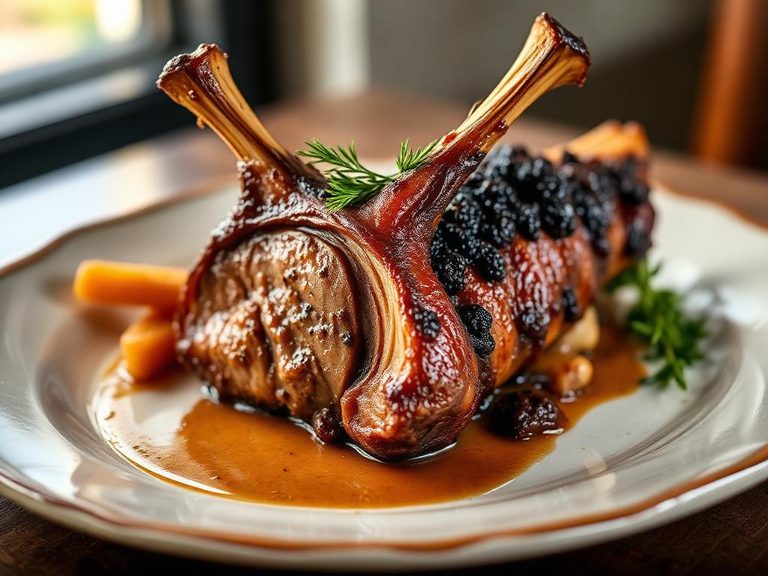
New Zealand lamb neck chops are a richly marbled, bone-in cut prized for their deep, gamey-sweet flavor and tender, succulent texture when cooked low and slow. Nutritionally, they are a powerhouse of high-quality protein and healthy fats, with virtually no carbohydrates.
Calorie split: 30% protein · 0% carbs · 70% fat
↓ Full nutrition💚 Why it's loved
People love these chops for their intense, savory lamb flavor and the luxurious mouthfeel from the well-distributed fat and collagen, which melts into a rich sauce during braising. They are a versatile cut, perfect for both quick grilling for a charred exterior and slow cooking for fall-off-the-bone tenderness.
⚠️ Watch-outs & how to enjoy it better
The high saturated fat content means they should be enjoyed in moderation, especially by those monitoring heart health or calorie intake. To counteract this, pair with fiber-rich vegetables like roasted root vegetables or a tangy salad, and practice portion control. The strong flavor can be overwhelming for some; marinating in herbs like rosemary or garlic can mellow it.
Key benefits
- Excellent source of complete protein for muscle maintenance
- Rich in conjugated linoleic acid (CLA), a beneficial fatty acid
- Provides essential minerals like iron, zinc, and selenium
- Naturally low in carbohydrates and sugars
- High in B vitamins, particularly B12 for nerve function
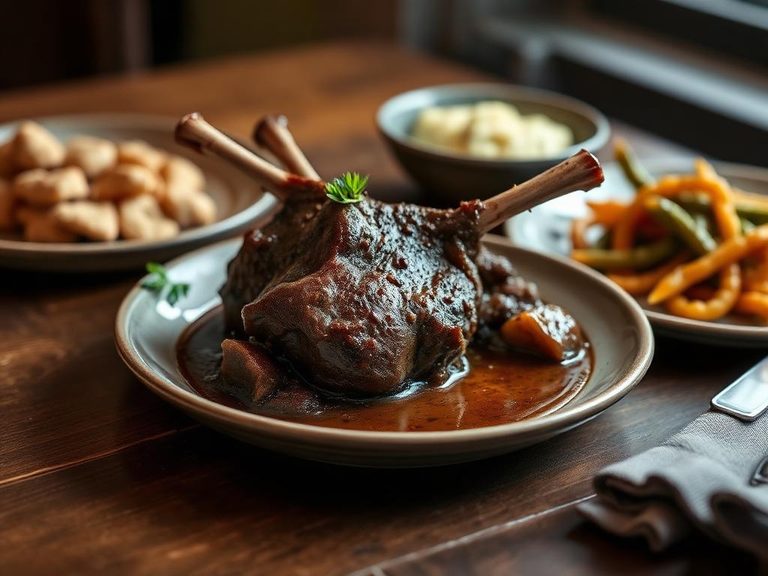
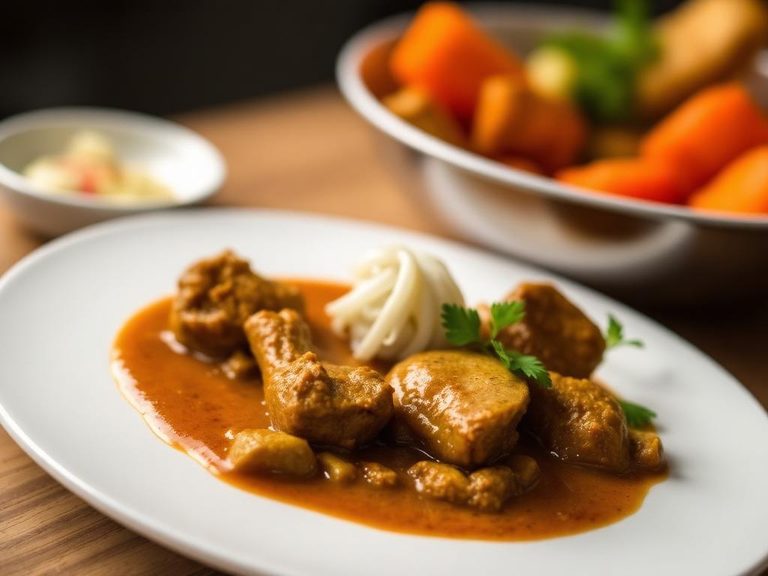
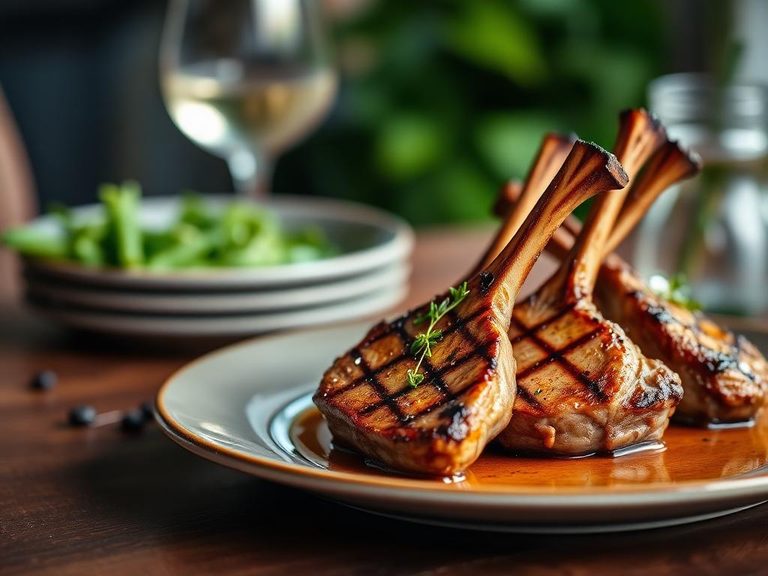
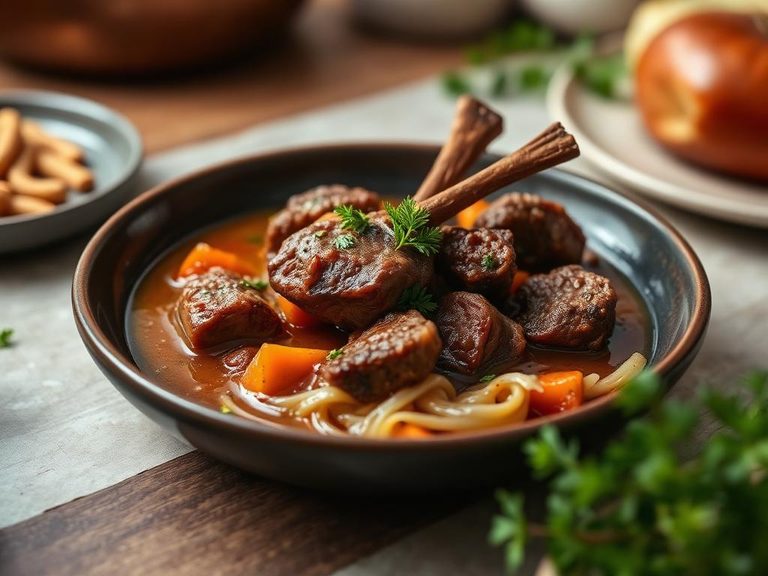
🍽️ Popular dishes
🌍 Where it's eaten
💡 Did you know?
The neck is one of the most worked muscles on the animal, which is why it's packed with collagen that transforms into rich, unctuous gelatin during slow cooking, making it a favorite for stews and braises.
Full nutrition (USDA data · scales with serving)
| Water | 64.7 g |
| Energy | 231 kcal |
| Energy | 968 kj |
| Protein | 17.4 g |
| Total lipid (fat) | 17.9 g |
| Ash | 0.88 g |
| Carbohydrate, by difference | 0.14 g |
| Fiber, total dietary | 0.00 g |
| Total Sugars | 0.00 g |
| Calcium, Ca | 20.0 mg |
| Iron, Fe | 1.1 mg |
| Magnesium, Mg | 18.0 mg |
| Phosphorus, P | 156 mg |
| Potassium, K | 290 mg |
| Sodium, Na | 73.0 mg |
| Zinc, Zn | 3.0 mg |
| Copper, Cu | 0.08 mg |
| Manganese, Mn | 0.01 mg |
| Selenium, Se | 4.3 ug |
| Vitamin C, total ascorbic acid | 0.00 mg |
| Thiamin | 0.08 mg |
| Riboflavin | 0.13 mg |
| Niacin | 3.8 mg |
| Pantothenic acid | 0.31 mg |
| Vitamin B-6 | 0.11 mg |
| Vitamin B-12 | 2.5 ug |
| Vitamin A, RAE | 11.0 ug |
| Retinol | 11.0 ug |
| Carotene, beta | 0.00 ug |
| Carotene, alpha | 0.00 ug |
| Cryptoxanthin, beta | 0.00 ug |
| Vitamin A, IU | 38.0 iu |
| Lycopene | 0.00 ug |
| Lutein + zeaxanthin | 0.00 ug |
| Vitamin E (alpha-tocopherol) | 0.36 mg |
| Vitamin D (D2 + D3), International Units | 2.0 iu |
| Vitamin D (D2 + D3) | 0.00 ug |
| Vitamin D3 (cholecalciferol) | 0.00 ug |
| Alcohol, ethyl | 0.00 g |
| Caffeine | 0.00 mg |
| Theobromine | 0.00 mg |
Fat & fatty acid profile (per 100g)
| Fatty acids, total saturated | 7.5 g |
| SFA 4:0 | 0.00 g |
| SFA 6:0 | 0.00 g |
| SFA 8:0 | 0.00 g |
| SFA 10:0 | 0.02 g |
| SFA 12:0 | 0.02 g |
| SFA 14:0 | 0.36 g |
| SFA 16:0 | 2.9 g |
| SFA 17:0 | 0.34 g |
| SFA 18:0 | 3.9 g |
| SFA 20:0 | 0.02 g |
| SFA 22:0 | 0.04 g |
| SFA 24:0 | 0.00 g |
| Fatty acids, total monounsaturated | 5.0 g |
| MUFA 14:1 | 0.01 g |
| MUFA 15:1 | 0.00 g |
| MUFA 16:1 | 0.16 g |
| MUFA 16:1 c | 0.13 g |
| MUFA 17:1 | 0.00 g |
| MUFA 18:1 | 4.8 g |
| MUFA 18:1 c | 4.0 g |
| MUFA 20:1 | 0.00 g |
| MUFA 22:1 | 0.00 g |
| MUFA 22:1 c | 0.00 g |
| MUFA 24:1 c | 0.00 g |
| Fatty acids, total polyunsaturated | 0.68 g |
| PUFA 18:2 | 0.43 g |
| PUFA 18:2 n-6 c,c | 0.19 g |
| PUFA 18:2 CLAs | 0.23 g |
| PUFA 18:3 | 0.20 g |
| PUFA 18:3 n-3 c,c,c (ALA) | 0.20 g |
| PUFA 18:3 n-6 c,c,c | 0.00 g |
| PUFA 18:4 | 0.00 g |
| PUFA 20:2 n-6 c,c | 0.00 g |
| PUFA 20:3 | 0.00 g |
| PUFA 20:3 n-3 | 0.00 g |
| PUFA 20:3 n-6 | 0.00 g |
| PUFA 20:4 | 0.02 g |
| PUFA 20:4 n-6 | 0.02 g |
| PUFA 20:5 n-3 (EPA) | 0.02 g |
| PUFA 22:5 n-3 (DPA) | 0.02 g |
| PUFA 22:6 n-3 (DHA) | 0.00 g |
| Fatty acids, total trans | 0.85 g |
| Fatty acids, total trans-monoenoic | 0.84 g |
| TFA 16:1 t | 0.04 g |
| TFA 18:1 t | 0.81 g |
| TFA 18:2 t,t | 0.01 g |
| Fatty acids, total trans-polyenoic | 0.01 g |
| Cholesterol | 72.0 mg |
Amino acid profile (per 100g)
| Tryptophan | 0.20 g |
| Threonine | 0.86 g |
| Isoleucine | 0.81 g |
| Leucine | 1.4 g |
| Lysine | 1.6 g |
| Methionine | 0.59 g |
| Cystine | 0.24 g |
| Phenylalanine | 0.71 g |
| Tyrosine | 0.62 g |
| Valine | 0.92 g |
| Arginine | 1.2 g |
| Histidine | 0.38 g |
| Alanine | 0.90 g |
| Glutamic acid | 2.5 g |
| Glycine | 0.77 g |
| Proline | 0.58 g |
| Serine | 0.61 g |
FAQ
What's the best way to cook lamb neck chops to make them tender?
Low and slow cooking methods like braising, stewing, or slow-roasting are ideal. These methods break down the tough connective tissue (collagen) into gelatin, resulting in a tender, succulent texture. Quick, high-heat methods like grilling are possible but require careful attention to avoid toughness.
How do I reduce the strong 'gamey' flavor of lamb?
Marinating the chops for several hours in acidic ingredients (like yogurt, lemon juice, or vinegar) combined with strong aromatics (rosemary, garlic, thyme) can significantly milder the flavor. Soaking in milk for a few hours is another traditional method.
Are lamb neck chops a fatty cut?
Yes, they are a well-marbled cut with significant fat content, both within the meat and around the edges. This fat is what provides immense flavor and moisture during cooking, but it does make them a higher-calorie, higher-fat protein choice.
Nutrient density (calculated · NRF9.3)
Nutrient Rich Foods index: beneficial nutrients (protein, fiber, vitamins, minerals) minus saturated fat, added sugar & sodium, per 100 kcal.
NRF9.3 index — Fulgoni, Keast & Drewnowski, 2009. Computed from USDA nutrients.
Weight-loss friendliness (composite index)
Energy density 2.31 kcal/g · 30% calories from protein · 0.0 g fiber · 0.0 g sugar per 100 g.
Composite of energy density (Rolls et al., 1999), protein & fiber satiety, minus sugar. A calculated heuristic — ranks satiety-per-calorie, not a clinical measure.
Dietary load (calculated from USDA values)
Potential renal acid load. Positive = acid-forming, negative = alkaline-forming.
Sodium-to-potassium ratio: 0.25 (lower is better — aim for ≤ 1)
Sodium:potassium per WHO potassium guidance. Computed from USDA nutrients.