

Lamb, New Zealand, imported, neck chops, separable lean and fat, cooked, braised
Whole food · Lamb, Veal, and Game Products
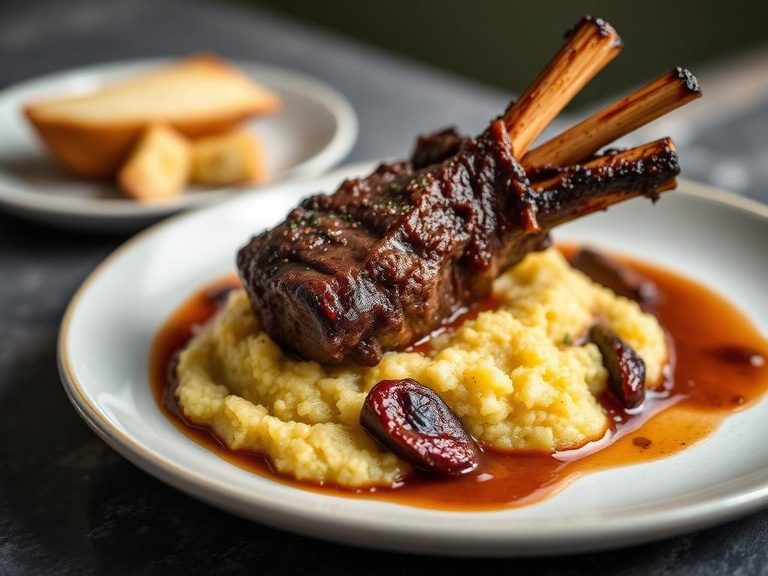
New Zealand lamb neck chops are a robust, well-marbled cut from the animal's neck, prized for its deep, savory flavor and tender, fall-apart texture when braised. Nutritionally, they are a powerhouse of protein and healthy fats, providing substantial energy with virtually no carbohydrates.
Calorie split: 37% protein · 0% carbs · 63% fat
↓ Full nutrition💚 Why it's loved
People adore the intense, rich lamb flavor and the succulent, melt-in-your-mouth texture that braising achieves. It's a versatile cut that shines in hearty, comforting dishes, from rustic stews to elegant slow-cooked meals.
⚠️ Watch-outs & how to enjoy it better
The high fat content (over 21g per 100g) makes it a calorie-dense choice, which may require portion control for those monitoring energy intake. To counteract this, pair it with large portions of fibrous, non-starchy vegetables (like roasted broccoli or a vinegar-based slaw) to add volume and balance the meal.
Key benefits
- Excellent source of high-quality protein for muscle maintenance
- Rich in conjugated linoleic acid (CLA), a beneficial fatty acid
- Provides essential minerals like zinc, iron, and selenium
- High in B vitamins, particularly B12 for nerve function
🍽️ Popular dishes
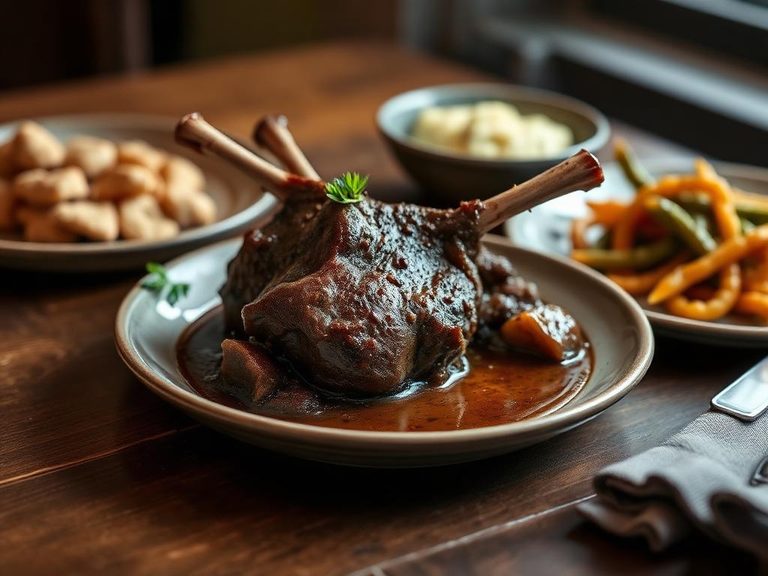
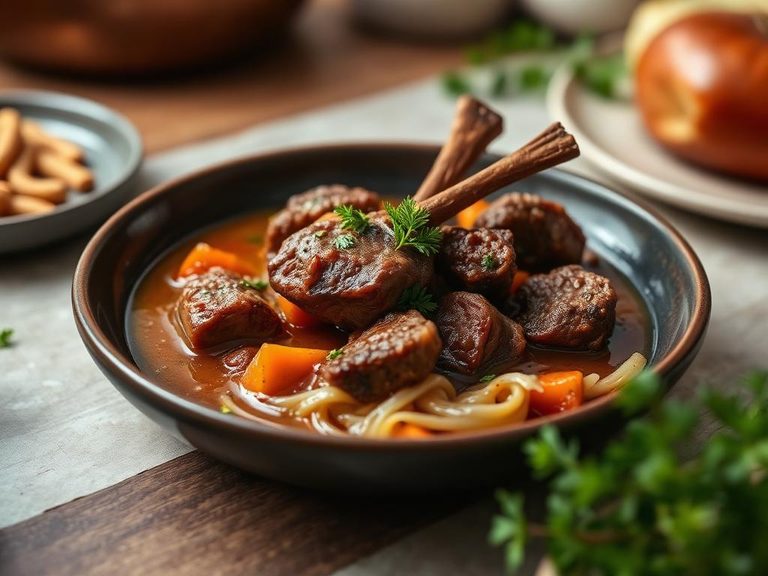
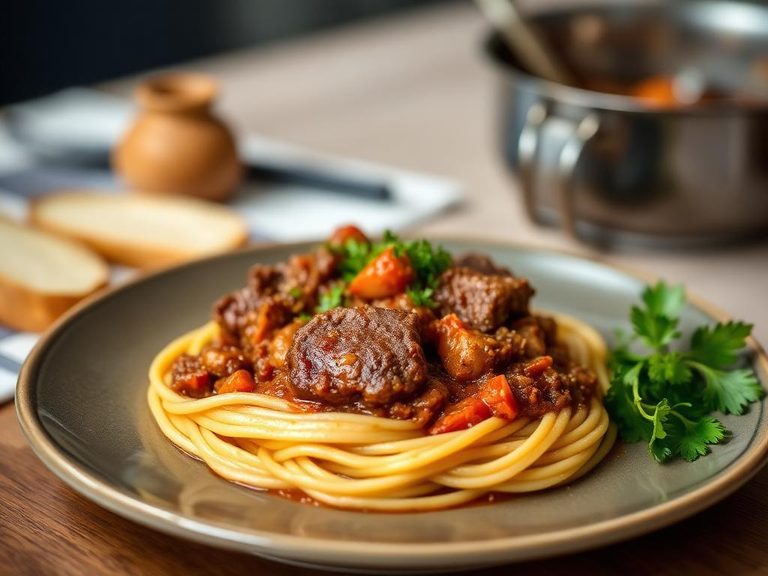
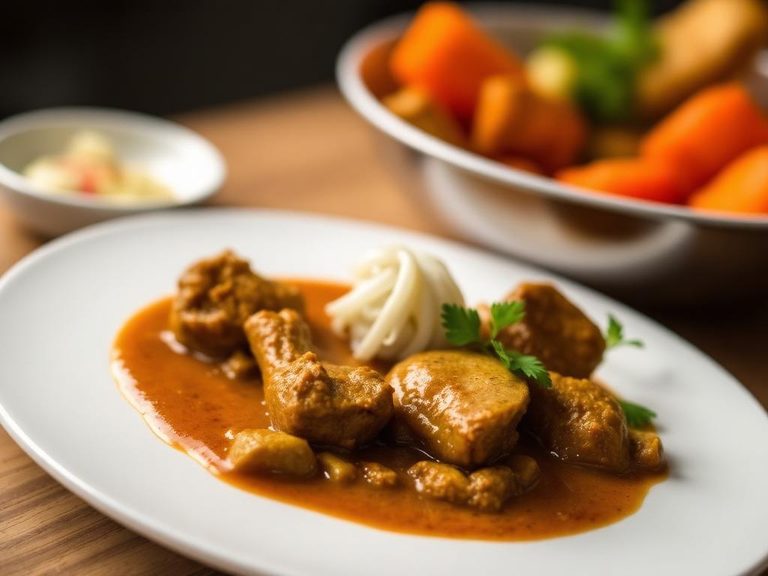
🌍 Where it's eaten
💡 Did you know?
Lamb neck is often called the 'butcher's secret' because it offers exceptional flavor and tenderness at a lower price point than more popular cuts like the rack or loin.
Full nutrition (USDA data · scales with serving)
| Water | 51.3 g |
| Energy | 307 kcal |
| Energy | 1285 kj |
| Protein | 28.5 g |
| Total lipid (fat) | 21.4 g |
| Ash | 1.0 g |
| Carbohydrate, by difference | 0.03 g |
| Fiber, total dietary | 0.00 g |
| Total Sugars | 0.00 g |
| Calcium, Ca | 52.0 mg |
| Iron, Fe | 2.1 mg |
| Magnesium, Mg | 21.0 mg |
| Phosphorus, P | 183 mg |
| Potassium, K | 276 mg |
| Sodium, Na | 91.0 mg |
| Zinc, Zn | 5.2 mg |
| Copper, Cu | 0.11 mg |
| Manganese, Mn | 0.01 mg |
| Selenium, Se | 7.2 ug |
| Vitamin C, total ascorbic acid | 0.00 mg |
| Thiamin | 0.04 mg |
| Riboflavin | 0.13 mg |
| Niacin | 3.9 mg |
| Pantothenic acid | 0.39 mg |
| Vitamin B-6 | 0.07 mg |
| Vitamin B-12 | 1.9 ug |
| Vitamin A, RAE | 13.0 ug |
| Retinol | 13.0 ug |
| Carotene, beta | 0.00 ug |
| Carotene, alpha | 0.00 ug |
| Cryptoxanthin, beta | 0.00 ug |
| Vitamin A, IU | 42.0 iu |
| Lycopene | 0.00 ug |
| Lutein + zeaxanthin | 0.00 ug |
| Vitamin E (alpha-tocopherol) | 0.62 mg |
| Vitamin D (D2 + D3), International Units | 2.0 iu |
| Vitamin D (D2 + D3) | 0.10 ug |
| Vitamin D3 (cholecalciferol) | 0.10 ug |
| Alcohol, ethyl | 0.00 g |
| Caffeine | 0.00 mg |
| Theobromine | 0.00 mg |
Fat & fatty acid profile (per 100g)
| Fatty acids, total saturated | 8.7 g |
| SFA 4:0 | 0.00 g |
| SFA 6:0 | 0.00 g |
| SFA 8:0 | 0.00 g |
| SFA 10:0 | 0.04 g |
| SFA 12:0 | 0.03 g |
| SFA 14:0 | 0.45 g |
| SFA 16:0 | 3.3 g |
| SFA 17:0 | 0.41 g |
| SFA 18:0 | 4.4 g |
| SFA 20:0 | 0.03 g |
| SFA 22:0 | 0.02 g |
| SFA 24:0 | 0.00 g |
| Fatty acids, total monounsaturated | 5.9 g |
| MUFA 14:1 | 0.01 g |
| MUFA 15:1 | 0.00 g |
| MUFA 16:1 | 0.18 g |
| MUFA 16:1 c | 0.17 g |
| MUFA 17:1 | 0.00 g |
| MUFA 18:1 | 5.7 g |
| MUFA 18:1 c | 4.8 g |
| MUFA 20:1 | 0.00 g |
| MUFA 22:1 | 0.00 g |
| MUFA 22:1 c | 0.00 g |
| MUFA 24:1 c | 0.00 g |
| Fatty acids, total polyunsaturated | 0.85 g |
| PUFA 18:2 | 0.51 g |
| PUFA 18:2 n-6 c,c | 0.25 g |
| PUFA 18:2 CLAs | 0.26 g |
| PUFA 18:3 | 0.26 g |
| PUFA 18:3 n-3 c,c,c (ALA) | 0.26 g |
| PUFA 18:3 n-6 c,c,c | 0.00 g |
| PUFA 18:4 | 0.00 g |
| PUFA 20:2 n-6 c,c | 0.00 g |
| PUFA 20:3 | 0.00 g |
| PUFA 20:3 n-3 | 0.00 g |
| PUFA 20:3 n-6 | 0.00 g |
| PUFA 20:4 | 0.03 g |
| PUFA 20:4 n-6 | 0.03 g |
| PUFA 20:5 n-3 (EPA) | 0.02 g |
| PUFA 22:5 n-3 (DPA) | 0.03 g |
| PUFA 22:6 n-3 (DHA) | 0.01 g |
| Fatty acids, total trans | 0.95 g |
| Fatty acids, total trans-monoenoic | 0.94 g |
| TFA 16:1 t | 0.02 g |
| TFA 18:1 t | 0.93 g |
| TFA 18:2 t,t | 0.00 g |
| Fatty acids, total trans-polyenoic | 0.00 g |
| Cholesterol | 116 mg |
Amino acid profile (per 100g)
| Tryptophan | 0.32 g |
| Threonine | 1.4 g |
| Isoleucine | 1.3 g |
| Leucine | 2.2 g |
| Lysine | 2.5 g |
| Methionine | 0.93 g |
| Cystine | 0.37 g |
| Phenylalanine | 1.1 g |
| Tyrosine | 0.99 g |
| Valine | 1.5 g |
| Arginine | 1.9 g |
| Histidine | 0.60 g |
| Alanine | 1.4 g |
| Glutamic acid | 4.0 g |
| Glycine | 1.2 g |
| Proline | 0.91 g |
| Serine | 0.97 g |
FAQ
What's the best way to cook lamb neck chops?
Braising is the ideal method. Sear the chops first, then cook slowly in liquid (like stock, wine, or tomatoes) at a low temperature until the meat is very tender and easily pulls from the bone.
Are lamb neck chops tough?
They can be tough if cooked quickly. The connective tissue in the neck requires long, slow, moist cooking to break down into gelatin, which makes the meat tender and succulent.
How is New Zealand lamb different?
New Zealand lamb is typically grass-fed, which can result in a leaner meat with a more distinct, slightly gamy flavor compared to grain-fed lamb from other regions.
Nutrient density (calculated · NRF9.3)
Nutrient Rich Foods index: beneficial nutrients (protein, fiber, vitamins, minerals) minus saturated fat, added sugar & sodium, per 100 kcal.
NRF9.3 index — Fulgoni, Keast & Drewnowski, 2009. Computed from USDA nutrients.
Weight-loss friendliness (composite index)
Energy density 3.07 kcal/g · 37% calories from protein · 0.0 g fiber · 0.0 g sugar per 100 g.
Composite of energy density (Rolls et al., 1999), protein & fiber satiety, minus sugar. A calculated heuristic — ranks satiety-per-calorie, not a clinical measure.
Dietary load (calculated from USDA values)
Potential renal acid load. Positive = acid-forming, negative = alkaline-forming.
Sodium-to-potassium ratio: 0.33 (lower is better — aim for ≤ 1)
Sodium:potassium per WHO potassium guidance. Computed from USDA nutrients.