

Lamb, New Zealand, imported, loin saddle, separable lean only, cooked, fast roasted
Whole food · Lamb, Veal, and Game Products

Photo: Wikipedia
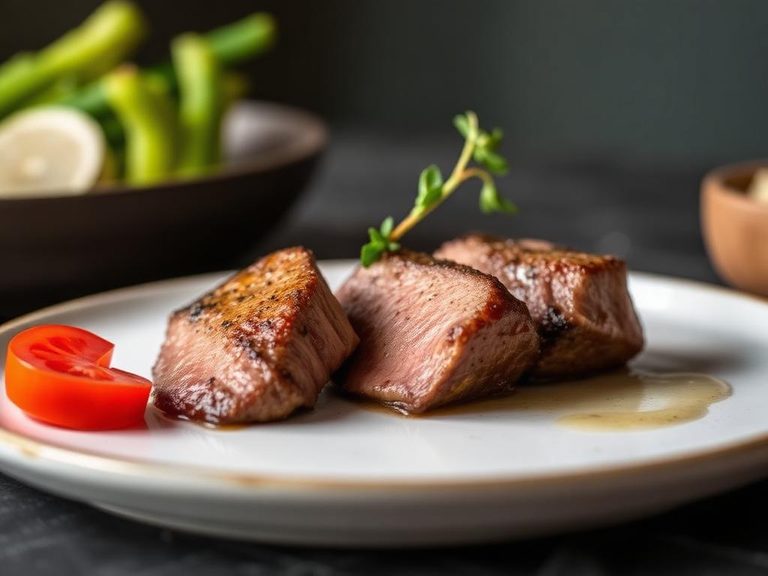
This is premium New Zealand lamb loin saddle, a lean, tender cut from the back of the animal. Cooked by fast roasting, it develops a beautifully browned crust while the interior remains succulent and mild-flavored, with a fine, delicate texture. It's a nutritional powerhouse, delivering an impressive 25.5 grams of high-quality protein with minimal fat per 100g serving.
Calorie split: 63% protein · 0% carbs · 37% fat
↓ Full nutrition💚 Why it's loved
People love it for its elegant, mild flavor that isn't overly gamey, making it approachable even for those new to lamb. Its tenderness and quick cooking time make it ideal for both sophisticated weeknight meals and impressive dinner parties.
⚠️ Watch-outs & how to enjoy it better
As a red meat, it contains saturated fat and cholesterol, so those managing heart health should practice portion control. The primary caution is for individuals with specific religious or cultural dietary restrictions (e.g., halal/kosher) who must verify the sourcing and butchery. To counteract, pair with a large portion of fiber-rich vegetables like roasted Brussels sprouts or a leafy green salad.
Key benefits
- Exceptionally high in complete protein for muscle maintenance.
- Very low in carbohydrates, suitable for low-carb and ketogenic diets.
- Source of essential minerals like iron, zinc, and selenium.
- Lean cut with minimal saturated fat compared to other lamb portions.
- Quick-cooking method preserves nutrients and reduces overall fat content.
🍽️ Popular dishes
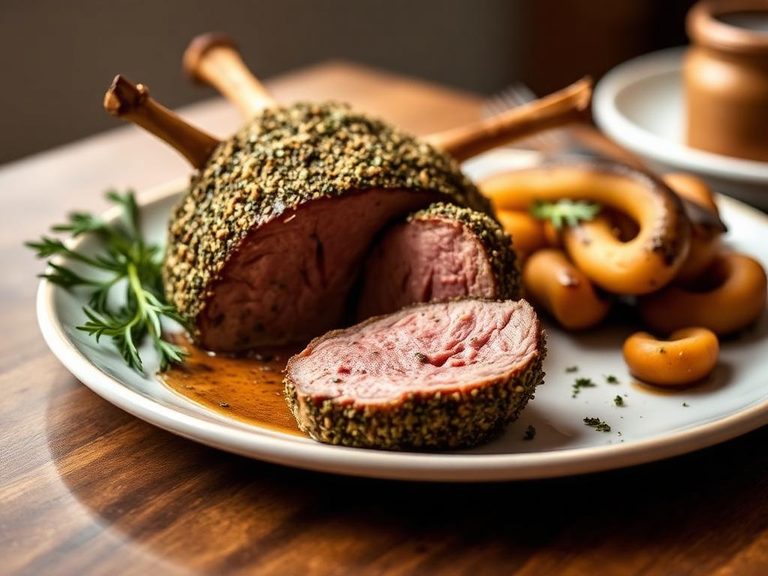
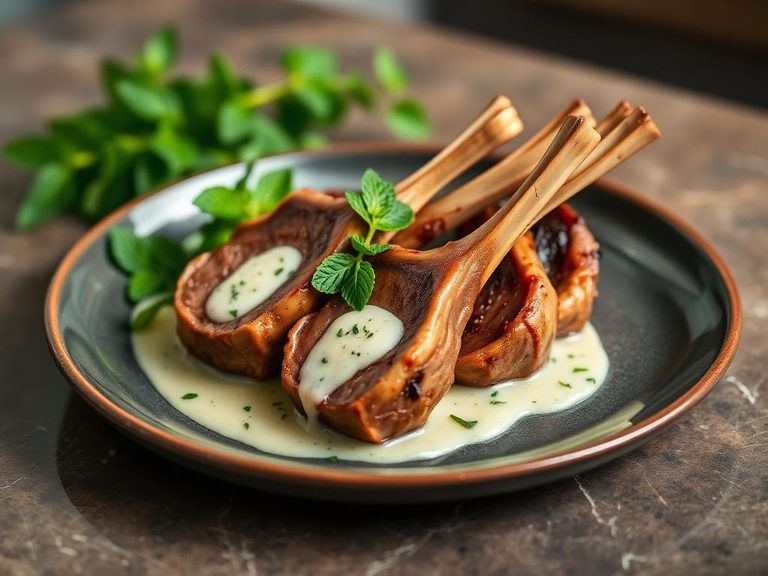
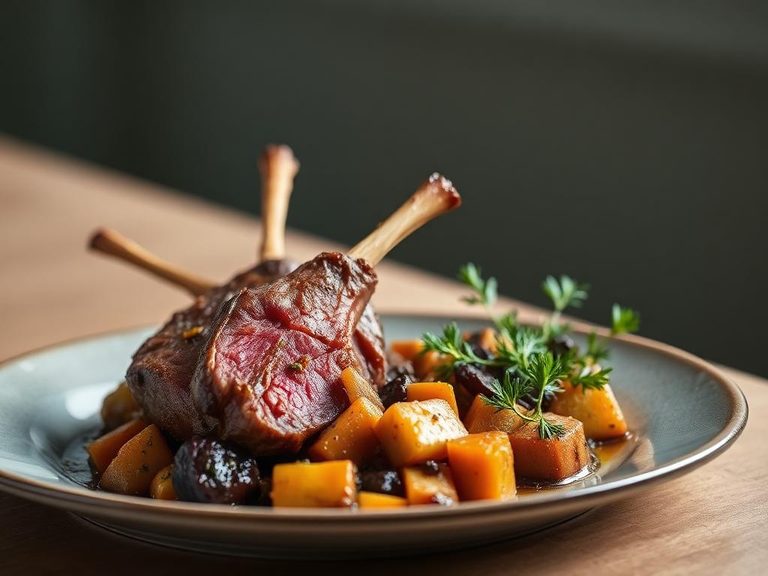
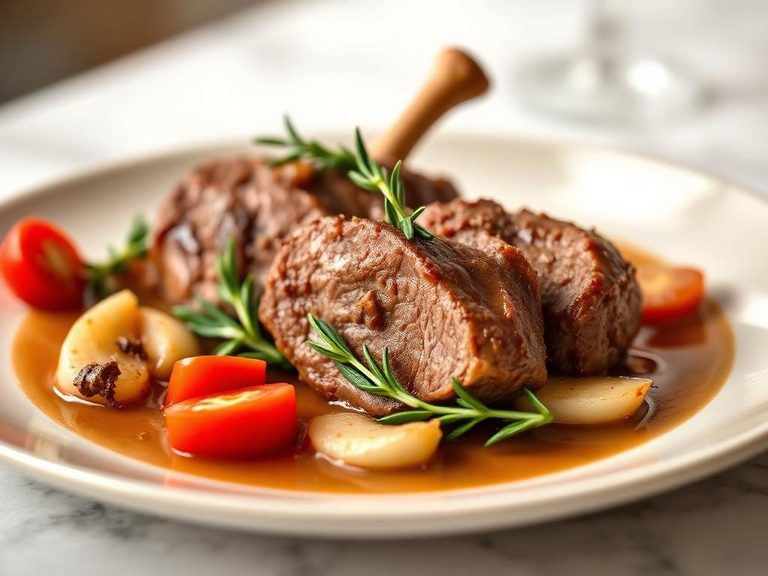
🌍 Where it's eaten
💡 Did you know?
New Zealand lamb is renowned worldwide because the sheep are almost exclusively grass-fed on open pastures year-round, which contributes to a distinctively clean, lean flavor profile.
Full nutrition (USDA data · scales with serving)
| Water | 68.3 g |
| Energy | 162 kcal |
| Energy | 679 kj |
| Protein | 25.5 g |
| Total lipid (fat) | 6.7 g |
| Ash | 1.1 g |
| Carbohydrate, by difference | 0.00 g |
| Fiber, total dietary | 0.00 g |
| Total Sugars | 0.00 g |
| Calcium, Ca | 8.0 mg |
| Iron, Fe | 1.6 mg |
| Magnesium, Mg | 24.0 mg |
| Phosphorus, P | 205 mg |
| Potassium, K | 345 mg |
| Sodium, Na | 76.0 mg |
| Zinc, Zn | 3.0 mg |
| Copper, Cu | 0.14 mg |
| Manganese, Mn | 0.01 mg |
| Selenium, Se | 4.0 ug |
| Vitamin C, total ascorbic acid | 0.00 mg |
| Thiamin | 0.12 mg |
| Riboflavin | 0.22 mg |
| Niacin | 6.4 mg |
| Pantothenic acid | 0.51 mg |
| Vitamin B-6 | 0.21 mg |
| Vitamin B-12 | 1.6 ug |
| Vitamin A, RAE | 5.0 ug |
| Retinol | 5.0 ug |
| Carotene, beta | 0.00 ug |
| Carotene, alpha | 0.00 ug |
| Cryptoxanthin, beta | 0.00 ug |
| Vitamin A, IU | 16.0 iu |
| Lycopene | 0.00 ug |
| Lutein + zeaxanthin | 0.00 ug |
| Vitamin E (alpha-tocopherol) | 0.28 mg |
| Vitamin D (D2 + D3), International Units | 1.0 iu |
| Vitamin D (D2 + D3) | 0.00 ug |
| Vitamin D3 (cholecalciferol) | 0.00 ug |
| Alcohol, ethyl | 0.00 g |
| Caffeine | 0.00 mg |
| Theobromine | 0.00 mg |
Fat & fatty acid profile (per 100g)
| Fatty acids, total saturated | 2.5 g |
| SFA 4:0 | 0.00 g |
| SFA 6:0 | 0.00 g |
| SFA 8:0 | 0.00 g |
| SFA 10:0 | 0.01 g |
| SFA 12:0 | 0.01 g |
| SFA 14:0 | 0.14 g |
| SFA 16:0 | 1.0 g |
| SFA 17:0 | 0.11 g |
| SFA 18:0 | 1.2 g |
| SFA 20:0 | 0.01 g |
| SFA 22:0 | 0.01 g |
| SFA 24:0 | 0.00 g |
| Fatty acids, total monounsaturated | 1.8 g |
| MUFA 14:1 | 0.01 g |
| MUFA 15:1 | 0.00 g |
| MUFA 16:1 | 0.06 g |
| MUFA 16:1 c | 0.05 g |
| MUFA 17:1 | 0.00 g |
| MUFA 18:1 | 1.7 g |
| MUFA 18:1 c | 1.4 g |
| MUFA 20:1 | 0.00 g |
| MUFA 22:1 | 0.00 g |
| MUFA 22:1 c | 0.00 g |
| MUFA 24:1 c | 0.00 g |
| Fatty acids, total polyunsaturated | 0.38 g |
| PUFA 18:2 | 0.20 g |
| PUFA 18:2 n-6 c,c | 0.13 g |
| PUFA 18:2 CLAs | 0.07 g |
| PUFA 18:3 | 0.10 g |
| PUFA 18:3 n-3 c,c,c (ALA) | 0.10 g |
| PUFA 18:3 n-6 c,c,c | 0.00 g |
| PUFA 18:4 | 0.00 g |
| PUFA 20:2 n-6 c,c | 0.00 g |
| PUFA 20:3 | 0.01 g |
| PUFA 20:3 n-3 | 0.00 g |
| PUFA 20:3 n-6 | 0.01 g |
| PUFA 20:4 | 0.03 g |
| PUFA 20:4 n-6 | 0.03 g |
| PUFA 20:5 n-3 (EPA) | 0.02 g |
| PUFA 22:5 n-3 (DPA) | 0.02 g |
| PUFA 22:6 n-3 (DHA) | 0.01 g |
| Fatty acids, total trans | 0.25 g |
| Fatty acids, total trans-monoenoic | 0.25 g |
| TFA 16:1 t | 0.01 g |
| TFA 18:1 t | 0.24 g |
| TFA 18:2 t,t | 0.00 g |
| Fatty acids, total trans-polyenoic | 0.00 g |
| Cholesterol | 78.0 mg |
Amino acid profile (per 100g)
| Tryptophan | 0.28 g |
| Threonine | 1.2 g |
| Isoleucine | 1.1 g |
| Leucine | 2.0 g |
| Lysine | 2.2 g |
| Methionine | 0.83 g |
| Cystine | 0.33 g |
| Phenylalanine | 1.0 g |
| Tyrosine | 0.88 g |
| Valine | 1.3 g |
| Arginine | 1.7 g |
| Histidine | 0.54 g |
| Alanine | 1.3 g |
| Glutamic acid | 3.6 g |
| Glycine | 1.1 g |
| Proline | 0.82 g |
| Serine | 0.87 g |
FAQ
What is the difference between lamb loin saddle and a lamb chop?
The loin saddle is the whole, uncut section of the back. When sliced perpendicular to the bone, it creates individual loin chops, which are T-bone shaped. The saddle itself is often roasted whole for a more dramatic presentation.
Why is it called 'fast roasted'?
Fast roasting uses a high oven temperature (often 400°F/200°C or above) for a shorter time. This method quickly sears the exterior to lock in juices, resulting in a tender, pink interior and a caramelized crust, ideal for lean cuts like this loin.
What does 'separable lean only' mean?
This is a butchery term indicating that all visible, separable fat has been trimmed away from the muscle meat. The nutritional data reflects the lean meat itself, making it a very lean protein source.
Nutrient density (calculated · NRF9.3)
Nutrient Rich Foods index: beneficial nutrients (protein, fiber, vitamins, minerals) minus saturated fat, added sugar & sodium, per 100 kcal.
NRF9.3 index — Fulgoni, Keast & Drewnowski, 2009. Computed from USDA nutrients.
Weight-loss friendliness (composite index)
Energy density 1.62 kcal/g · 63% calories from protein · 0.0 g fiber · 0.0 g sugar per 100 g.
Composite of energy density (Rolls et al., 1999), protein & fiber satiety, minus sugar. A calculated heuristic — ranks satiety-per-calorie, not a clinical measure.
Dietary load (calculated from USDA values)
Potential renal acid load. Positive = acid-forming, negative = alkaline-forming.
Sodium-to-potassium ratio: 0.22 (lower is better — aim for ≤ 1)
Sodium:potassium per WHO potassium guidance. Computed from USDA nutrients.