

Lamb, New Zealand, imported, loin, boneless, separable lean only, raw
Whole food · Lamb, Veal, and Game Products

Photo: Wikipedia
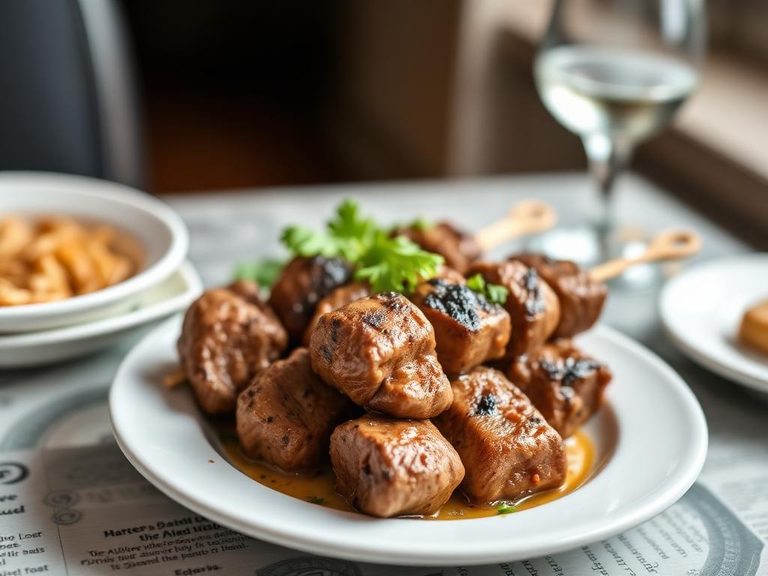
This is premium, boneless New Zealand lamb loin, trimmed of all visible fat. Its lean, tender texture and delicate, slightly sweet flavor make it a prized cut for quick, high-heat cooking. Nutritionally, it's a powerhouse, delivering over 21 grams of high-quality protein per 100 grams with virtually no carbohydrates or sugar.
Calorie split: 72% protein · 0% carbs · 28% fat
↓ Full nutrition💚 Why it's loved
People love this cut for its refined, mild flavor that absorbs marinades and seasonings beautifully, and its consistent tenderness when cooked properly. It's a versatile centerpiece for both simple weeknight meals and elegant dinner parties.
⚠️ Watch-outs & how to enjoy it better
As a red meat, it can be higher in cholesterol and saturated fat than poultry or fish, which some individuals may need to moderate. To balance, pair it with fiber-rich vegetables and consider using heart-healthy herbs like rosemary and thyme in preparation.
Key benefits
- Excellent source of high-quality, complete protein.
- Very low in carbohydrates and sugar.
- Rich in essential minerals like iron and zinc.
- Naturally lean with minimal saturated fat.
- Source of B vitamins, particularly B12.
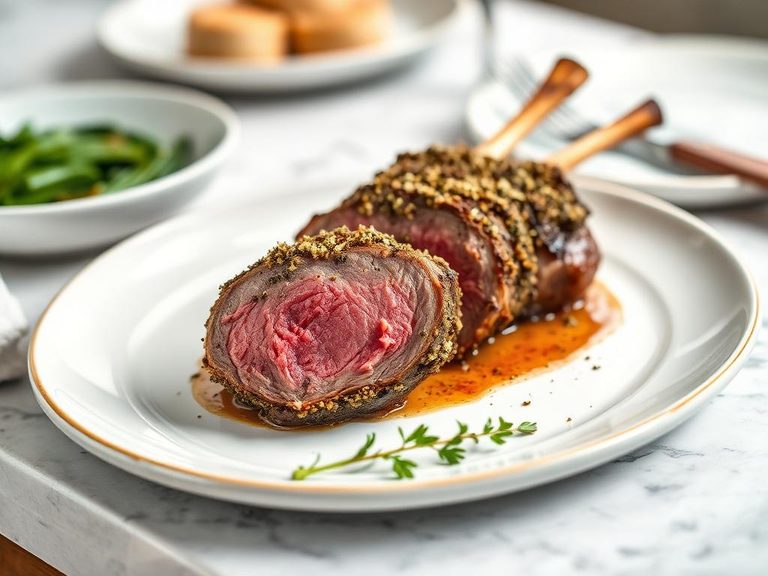
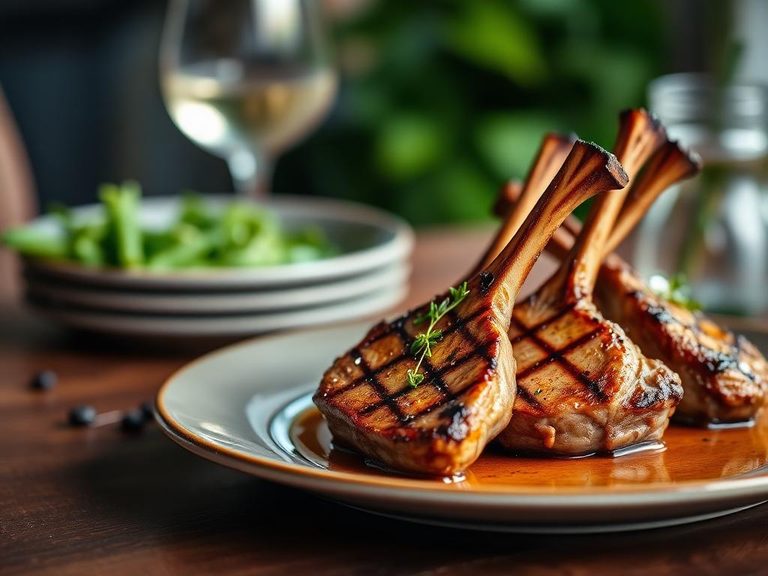
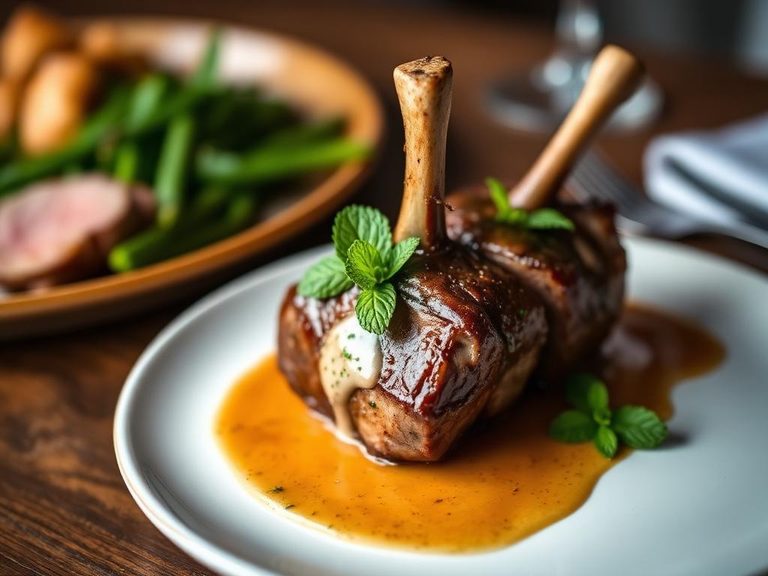
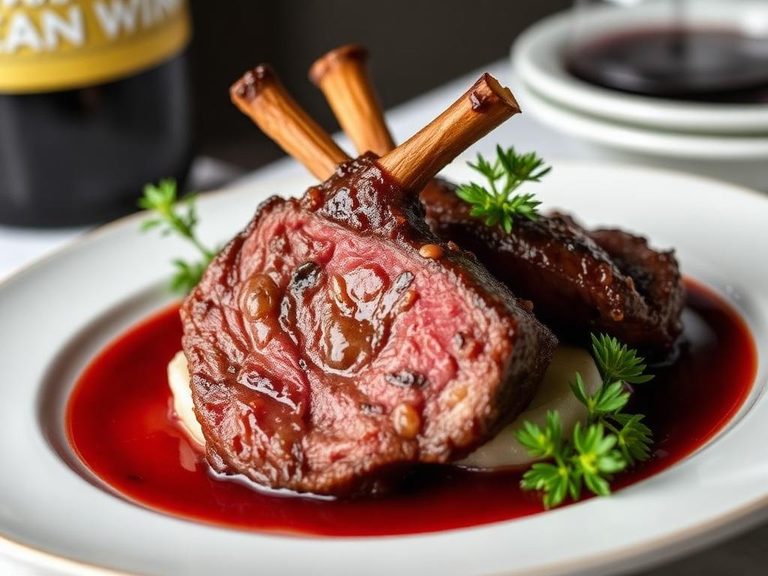
🍽️ Popular dishes
🌍 Where it's eaten
💡 Did you know?
New Zealand's unique pasture-based farming system, where sheep graze outdoors year-round on grass, is often credited with giving the meat a distinctive, clean flavor and a favorable fatty acid profile.
Full nutrition (USDA data · scales with serving)
| Water | 74.5 g |
| Energy | 120 kcal |
| Energy | 502 kj |
| Protein | 21.5 g |
| Total lipid (fat) | 3.8 g |
| Ash | 1.2 g |
| Carbohydrate, by difference | 0.00 g |
| Fiber, total dietary | 0.00 g |
| Total Sugars | 0.00 g |
| Calcium, Ca | 4.0 mg |
| Iron, Fe | 1.6 mg |
| Magnesium, Mg | 26.0 mg |
| Phosphorus, P | 217 mg |
| Potassium, K | 368 mg |
| Sodium, Na | 60.0 mg |
| Zinc, Zn | 2.1 mg |
| Copper, Cu | 0.13 mg |
| Manganese, Mn | 0.01 mg |
| Selenium, Se | 2.9 ug |
| Vitamin C, total ascorbic acid | 0.00 mg |
| Thiamin | 0.07 mg |
| Riboflavin | 0.16 mg |
| Niacin | 6.4 mg |
| Pantothenic acid | 0.55 mg |
| Vitamin B-6 | 0.18 mg |
| Vitamin B-12 | 1.1 ug |
| Vitamin A, RAE | 2.0 ug |
| Retinol | 2.0 ug |
| Carotene, beta | 0.00 ug |
| Carotene, alpha | 0.00 ug |
| Cryptoxanthin, beta | 0.00 ug |
| Vitamin A, IU | 6.0 iu |
| Lycopene | 0.00 ug |
| Lutein + zeaxanthin | 0.00 ug |
| Vitamin E (alpha-tocopherol) | 0.33 mg |
| Vitamin D (D2 + D3), International Units | 1.0 iu |
| Vitamin D (D2 + D3) | 0.00 ug |
| Vitamin D3 (cholecalciferol) | 0.00 ug |
| Alcohol, ethyl | 0.00 g |
| Caffeine | 0.00 mg |
| Theobromine | 0.00 mg |
Fat & fatty acid profile (per 100g)
| Fatty acids, total saturated | 1.2 g |
| SFA 4:0 | 0.00 g |
| SFA 6:0 | 0.00 g |
| SFA 8:0 | 0.00 g |
| SFA 10:0 | 0.01 g |
| SFA 12:0 | 0.01 g |
| SFA 14:0 | 0.07 g |
| SFA 16:0 | 0.59 g |
| SFA 17:0 | 0.04 g |
| SFA 18:0 | 0.47 g |
| SFA 20:0 | 0.00 g |
| SFA 22:0 | 0.01 g |
| SFA 24:0 | 0.00 g |
| Fatty acids, total monounsaturated | 0.92 g |
| MUFA 14:1 | 0.01 g |
| MUFA 15:1 | 0.00 g |
| MUFA 16:1 | 0.03 g |
| MUFA 16:1 c | 0.03 g |
| MUFA 17:1 | 0.00 g |
| MUFA 18:1 | 0.89 g |
| MUFA 18:1 c | 0.83 g |
| MUFA 20:1 | 0.00 g |
| MUFA 22:1 | 0.00 g |
| MUFA 22:1 c | 0.00 g |
| MUFA 24:1 c | 0.00 g |
| Fatty acids, total polyunsaturated | 0.27 g |
| PUFA 18:2 | 0.13 g |
| PUFA 18:2 n-6 c,c | 0.09 g |
| PUFA 18:2 CLAs | 0.04 g |
| PUFA 18:3 | 0.06 g |
| PUFA 18:3 n-3 c,c,c (ALA) | 0.06 g |
| PUFA 18:3 n-6 c,c,c | 0.00 g |
| PUFA 18:4 | 0.00 g |
| PUFA 20:2 n-6 c,c | 0.00 g |
| PUFA 20:3 | 0.00 g |
| PUFA 20:3 n-3 | 0.00 g |
| PUFA 20:3 n-6 | 0.00 g |
| PUFA 20:4 | 0.03 g |
| PUFA 20:4 n-6 | 0.03 g |
| PUFA 20:5 n-3 (EPA) | 0.03 g |
| PUFA 22:5 n-3 (DPA) | 0.02 g |
| PUFA 22:6 n-3 (DHA) | 0.01 g |
| Fatty acids, total trans | 0.06 g |
| Fatty acids, total trans-monoenoic | 0.06 g |
| TFA 16:1 t | 0.00 g |
| TFA 18:1 t | 0.06 g |
| TFA 18:2 t,t | 0.00 g |
| Fatty acids, total trans-polyenoic | 0.00 g |
| Cholesterol | 66.0 mg |
Amino acid profile (per 100g)
| Tryptophan | 0.24 g |
| Threonine | 1.0 g |
| Isoleucine | 0.96 g |
| Leucine | 1.7 g |
| Lysine | 1.9 g |
| Methionine | 0.70 g |
| Cystine | 0.28 g |
| Phenylalanine | 0.85 g |
| Tyrosine | 0.74 g |
| Valine | 1.1 g |
| Arginine | 1.4 g |
| Histidine | 0.46 g |
| Alanine | 1.1 g |
| Glutamic acid | 3.0 g |
| Glycine | 0.92 g |
| Proline | 0.69 g |
| Serine | 0.73 g |
FAQ
How is New Zealand lamb different from other lamb?
New Zealand lamb is primarily grass-fed and pasture-raised year-round, which contributes to its leaner profile and a distinct, slightly sweeter, less 'gamey' flavor compared to grain-fed lamb from other regions.
What's the best way to cook boneless lamb loin to keep it tender?
Quick, high-heat methods are ideal. Sear it in a hot pan or grill it to medium-rare (145°F / 63°C internal temperature), then let it rest for 5-10 minutes before slicing against the grain. Overcooking will make this lean cut tough.
Is this a good cut for people watching their fat intake?
Yes, as the description specifies 'separable lean only, raw,' it is one of the leanest cuts of lamb available. Choosing this over cuts with more marbling or attached fat significantly reduces total and saturated fat content.
Nutrient density (calculated · NRF9.3)
Nutrient Rich Foods index: beneficial nutrients (protein, fiber, vitamins, minerals) minus saturated fat, added sugar & sodium, per 100 kcal.
NRF9.3 index — Fulgoni, Keast & Drewnowski, 2009. Computed from USDA nutrients.
Weight-loss friendliness (composite index)
Energy density 1.20 kcal/g · 72% calories from protein · 0.0 g fiber · 0.0 g sugar per 100 g.
Composite of energy density (Rolls et al., 1999), protein & fiber satiety, minus sugar. A calculated heuristic — ranks satiety-per-calorie, not a clinical measure.
Dietary load (calculated from USDA values)
Potential renal acid load. Positive = acid-forming, negative = alkaline-forming.
Sodium-to-potassium ratio: 0.16 (lower is better — aim for ≤ 1)
Sodium:potassium per WHO potassium guidance. Computed from USDA nutrients.