

Lamb, New Zealand, imported, hind-shank, separable lean only, raw
Whole food · Lamb, Veal, and Game Products

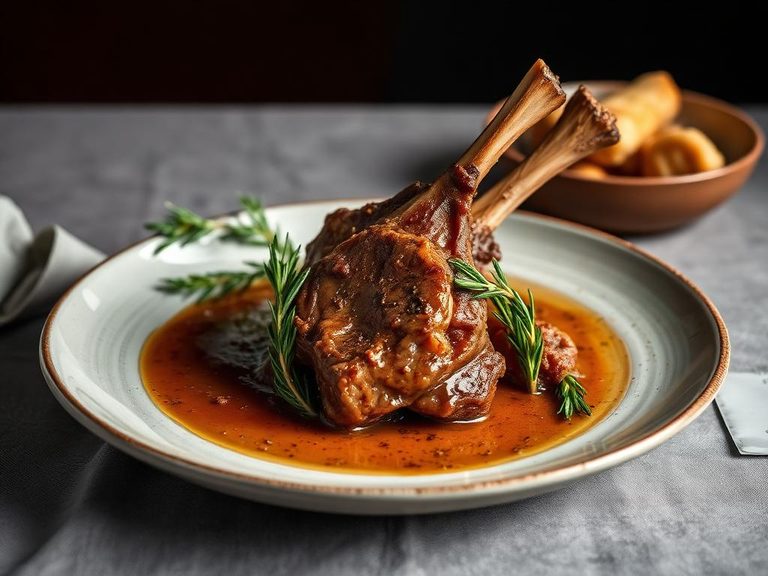
Photo: Wikipedia
New Zealand lamb hind-shank is a lean, robust cut from the lower leg, prized for its deep, slightly gamy flavor and dense, collagen-rich texture. When cooked low and slow, it transforms into tender, succulent meat with a rich, savory taste. Nutritionally, it is a powerhouse of protein (20.4g per 100g) with minimal fat and virtually no carbohydrates, making it an excellent choice for high-protein, low-carb diets.
Calorie split: 71% protein · 3% carbs · 26% fat
↓ Full nutrition💚 Why it's loved
People love lamb shank for its deep, distinctive flavor that is richer than chicken or pork but less intense than game, and for its ability to become incredibly tender and fall-off-the-bone after braising. It's a centerpiece dish in many cultures, often associated with hearty, comforting meals and festive gatherings.
⚠️ Watch-outs & how to enjoy it better
The primary downside is its toughness if not cooked properly; it requires long, slow cooking (braising, stewing) to break down connective tissue, otherwise it can be chewy. For those watching sodium intake, be mindful of added salts in marinades or braising liquids. To counteract toughness, ensure it is cooked in liquid at a low temperature (e.g., 300°F/150°C) for 2-3 hours. To manage sodium, use herbs, spices, and acidic ingredients like lemon juice or vinegar to enhance flavor without excess salt.
Key benefits
- Excellent source of high-quality protein for muscle maintenance and repair.
- Very low in carbohydrates and sugar, suitable for ketogenic and low-carb diets.
- Rich in B vitamins, particularly B12, which supports nerve function and red blood cell formation.
- Contains essential minerals like zinc and iron, important for immune health and oxygen transport.
- Naturally low in fat, especially when prepared with separable lean only.
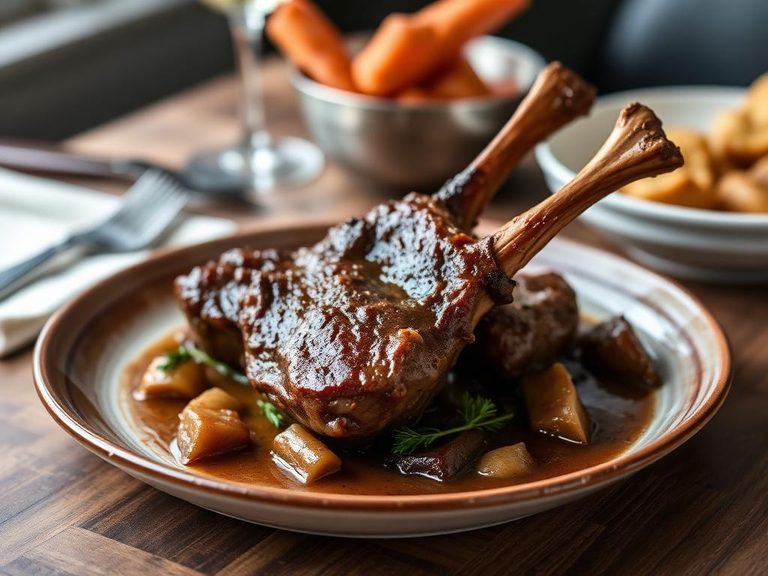
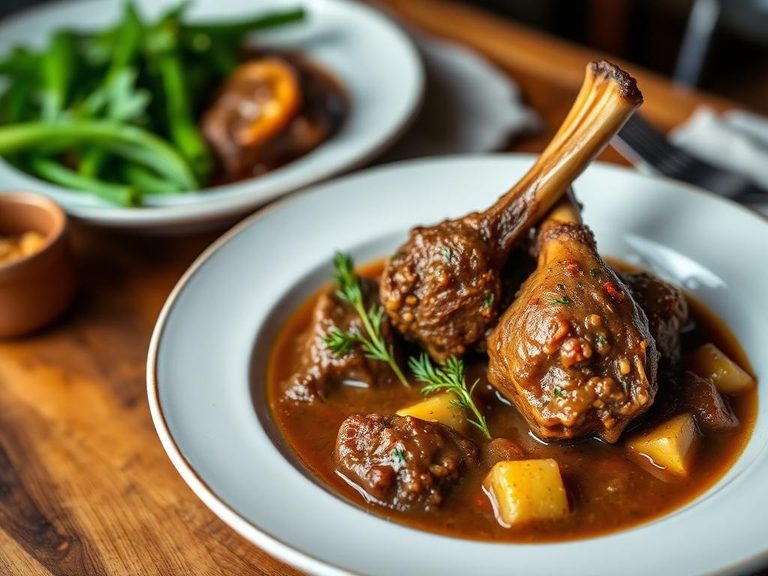
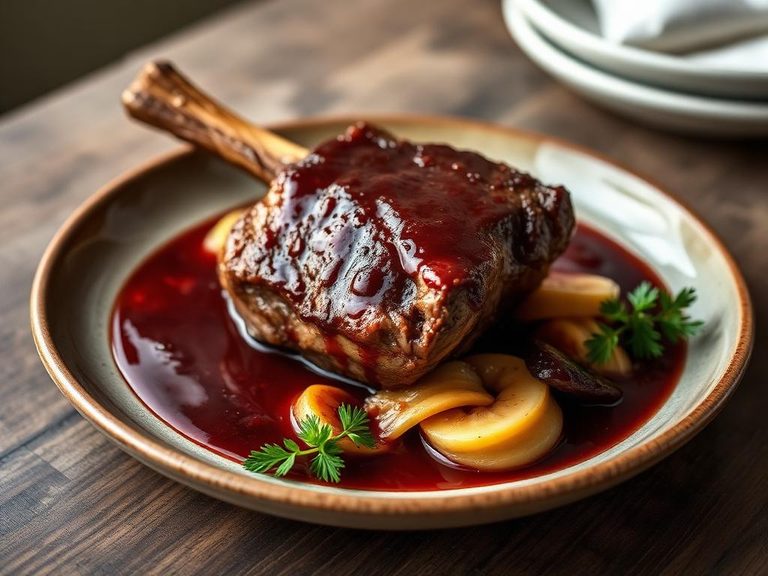
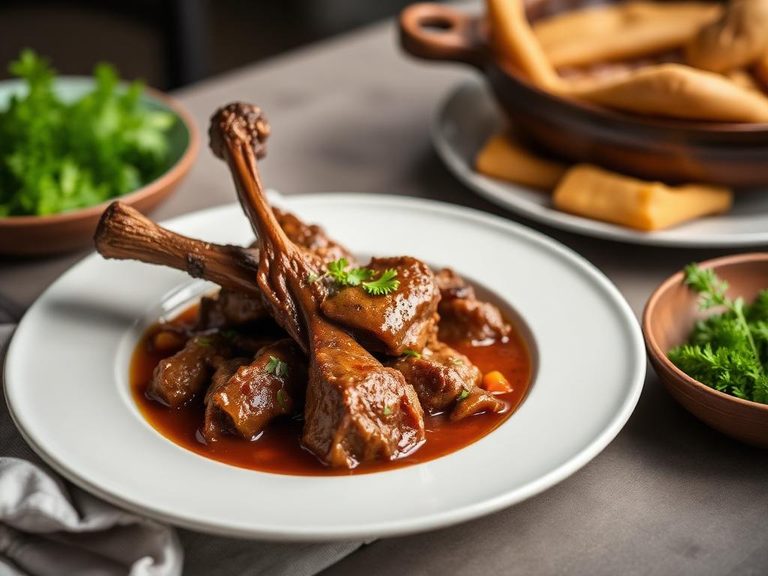
🍽️ Popular dishes
🌍 Where it's eaten
💡 Did you know?
New Zealand lamb is renowned for its quality because the sheep graze on natural, grass-rich pastures year-round, which contributes to a leaner meat with a distinct, clean flavor compared to grain-fed lamb from other regions.
Full nutrition (USDA data · scales with serving)
| Water | 74.5 g |
| Energy | 115 kcal |
| Energy | 480 kj |
| Protein | 20.4 g |
| Total lipid (fat) | 3.4 g |
| Ash | 1.0 g |
| Carbohydrate, by difference | 0.73 g |
| Fiber, total dietary | 0.00 g |
| Total Sugars | 0.00 g |
| Calcium, Ca | 5.0 mg |
| Iron, Fe | 1.5 mg |
| Magnesium, Mg | 22.0 mg |
| Phosphorus, P | 185 mg |
| Potassium, K | 327 mg |
| Sodium, Na | 82.0 mg |
| Zinc, Zn | 3.5 mg |
| Copper, Cu | 0.11 mg |
| Manganese, Mn | 0.01 mg |
| Selenium, Se | 4.7 ug |
| Vitamin C, total ascorbic acid | 0.00 mg |
| Thiamin | 0.06 mg |
| Riboflavin | 0.16 mg |
| Niacin | 4.9 mg |
| Pantothenic acid | 0.49 mg |
| Vitamin B-6 | 0.15 mg |
| Vitamin B-12 | 1.4 ug |
| Vitamin A, RAE | 2.0 ug |
| Retinol | 2.0 ug |
| Carotene, beta | 0.00 ug |
| Carotene, alpha | 0.00 ug |
| Cryptoxanthin, beta | 0.00 ug |
| Vitamin A, IU | 7.0 iu |
| Lycopene | 0.00 ug |
| Lutein + zeaxanthin | 0.00 ug |
| Vitamin E (alpha-tocopherol) | 0.29 mg |
| Vitamin D (D2 + D3), International Units | 2.0 iu |
| Vitamin D (D2 + D3) | 0.00 ug |
| Vitamin D3 (cholecalciferol) | 0.00 ug |
| Alcohol, ethyl | 0.00 g |
| Caffeine | 0.00 mg |
| Theobromine | 0.00 mg |
Fat & fatty acid profile (per 100g)
| Fatty acids, total saturated | 1.1 g |
| SFA 4:0 | 0.00 g |
| SFA 6:0 | 0.00 g |
| SFA 8:0 | 0.00 g |
| SFA 10:0 | 0.00 g |
| SFA 12:0 | 0.01 g |
| SFA 14:0 | 0.07 g |
| SFA 16:0 | 0.52 g |
| SFA 17:0 | 0.04 g |
| SFA 18:0 | 0.40 g |
| SFA 20:0 | 0.00 g |
| SFA 22:0 | 0.01 g |
| SFA 24:0 | 0.00 g |
| Fatty acids, total monounsaturated | 1.0 g |
| MUFA 14:1 | 0.01 g |
| MUFA 15:1 | 0.00 g |
| MUFA 16:1 | 0.04 g |
| MUFA 16:1 c | 0.04 g |
| MUFA 17:1 | 0.00 g |
| MUFA 18:1 | 0.96 g |
| MUFA 18:1 c | 0.88 g |
| MUFA 20:1 | 0.00 g |
| MUFA 22:1 | 0.00 g |
| MUFA 22:1 c | 0.00 g |
| MUFA 24:1 c | 0.00 g |
| Fatty acids, total polyunsaturated | 0.29 g |
| PUFA 18:2 | 0.15 g |
| PUFA 18:2 n-6 c,c | 0.09 g |
| PUFA 18:2 CLAs | 0.06 g |
| PUFA 18:3 | 0.06 g |
| PUFA 18:3 n-3 c,c,c (ALA) | 0.06 g |
| PUFA 18:3 n-6 c,c,c | 0.00 g |
| PUFA 18:4 | 0.00 g |
| PUFA 20:2 n-6 c,c | 0.00 g |
| PUFA 20:3 | 0.00 g |
| PUFA 20:3 n-3 | 0.00 g |
| PUFA 20:3 n-6 | 0.00 g |
| PUFA 20:4 | 0.03 g |
| PUFA 20:4 n-6 | 0.03 g |
| PUFA 20:5 n-3 (EPA) | 0.02 g |
| PUFA 22:5 n-3 (DPA) | 0.02 g |
| PUFA 22:6 n-3 (DHA) | 0.01 g |
| Fatty acids, total trans | 0.09 g |
| Fatty acids, total trans-monoenoic | 0.09 g |
| TFA 16:1 t | 0.01 g |
| TFA 18:1 t | 0.08 g |
| TFA 18:2 t,t | 0.00 g |
| Fatty acids, total trans-polyenoic | 0.00 g |
| Cholesterol | 62.0 mg |
Amino acid profile (per 100g)
| Tryptophan | 0.23 g |
| Threonine | 0.97 g |
| Isoleucine | 0.91 g |
| Leucine | 1.6 g |
| Lysine | 1.8 g |
| Methionine | 0.67 g |
| Cystine | 0.27 g |
| Phenylalanine | 0.80 g |
| Tyrosine | 0.71 g |
| Valine | 1.0 g |
| Arginine | 1.4 g |
| Histidine | 0.43 g |
| Alanine | 1.0 g |
| Glutamic acid | 2.9 g |
| Glycine | 0.87 g |
| Proline | 0.65 g |
| Serine | 0.70 g |
FAQ
What is the best way to cook lamb hind-shank to make it tender?
The best method is slow braising or stewing. Sear the shank first, then cook it in a flavorful liquid (like broth, wine, or tomato sauce) at a low temperature (around 300°F/150°C) for 2-3 hours until the meat is fork-tender and easily pulls away from the bone.
Is lamb hind-shank a healthy meat option?
Yes, it is a nutritious choice. It is high in protein (20.4g per 100g), low in fat (3.35g per 100g), and virtually carb-free. It also provides important nutrients like B12, zinc, and iron. However, like all red meat, it should be consumed in moderation as part of a balanced diet.
How does New Zealand lamb differ from other lamb?
New Zealand lamb is typically grass-fed, which gives it a leaner profile and a distinct, slightly gamy but clean flavor. The sheep are raised in a natural, pasture-based environment, resulting in meat that is often considered more flavorful and higher in certain nutrients like omega-3 fatty acids compared to grain-fed lamb.
Nutrient density (calculated · NRF9.3)
Nutrient Rich Foods index: beneficial nutrients (protein, fiber, vitamins, minerals) minus saturated fat, added sugar & sodium, per 100 kcal.
NRF9.3 index — Fulgoni, Keast & Drewnowski, 2009. Computed from USDA nutrients.
Weight-loss friendliness (composite index)
Energy density 1.15 kcal/g · 71% calories from protein · 0.0 g fiber · 0.0 g sugar per 100 g.
Composite of energy density (Rolls et al., 1999), protein & fiber satiety, minus sugar. A calculated heuristic — ranks satiety-per-calorie, not a clinical measure.
Dietary load (calculated from USDA values)
Potential renal acid load. Positive = acid-forming, negative = alkaline-forming.
Sodium-to-potassium ratio: 0.25 (lower is better — aim for ≤ 1)
Sodium:potassium per WHO potassium guidance. Computed from USDA nutrients.