

Lamb, New Zealand, imported, chump, boneless, separable lean only, raw
Whole food · Lamb, Veal, and Game Products

Photo: Wikipedia
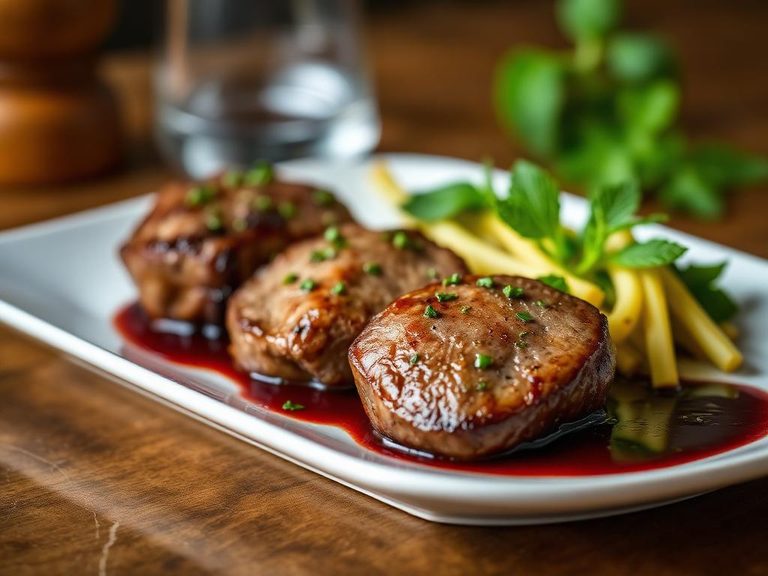
This is a lean, boneless cut from the loin end of New Zealand lamb, prized for its fine-grained, tender texture and clean, subtly sweet flavor. With virtually no fat marbling, it cooks quickly and offers a pure, meaty taste that readily absorbs marinades and seasonings. It's a nutritional powerhouse, delivering an impressive 21.68 grams of high-quality protein per 100 grams with minimal fat.
Calorie split: 72% protein · 0% carbs · 28% fat
↓ Full nutrition💚 Why it's loved
Cooks rapidly to a succulent medium-rare, offering a delicate, non-gamey flavor that's a gateway for those new to lamb. Its versatility makes it perfect for everything from quick weeknight stir-fries to elegant roasts.
⚠️ Watch-outs & how to enjoy it better
Being so lean, it can become tough and dry if overcooked, requiring careful attention to timing. Those monitoring saturated fat intake should note that while low, it is still present in red meat. To counteract dryness, use quick, high-heat methods (grilling, searing) and let it rest after cooking; consider pairing with a flavorful sauce or a side of vegetables for a balanced plate.
Key benefits
- Exceptionally high in complete protein for muscle maintenance and satiety.
- Very low in fat, making it a lean choice for calorie-conscious diets.
- Rich in essential nutrients like iron, zinc, and B vitamins (especially B12).
- Carb-free, suitable for ketogenic and low-carb dietary patterns.
- Sourced from New Zealand, often associated with grass-fed farming practices.
🍽️ Popular dishes
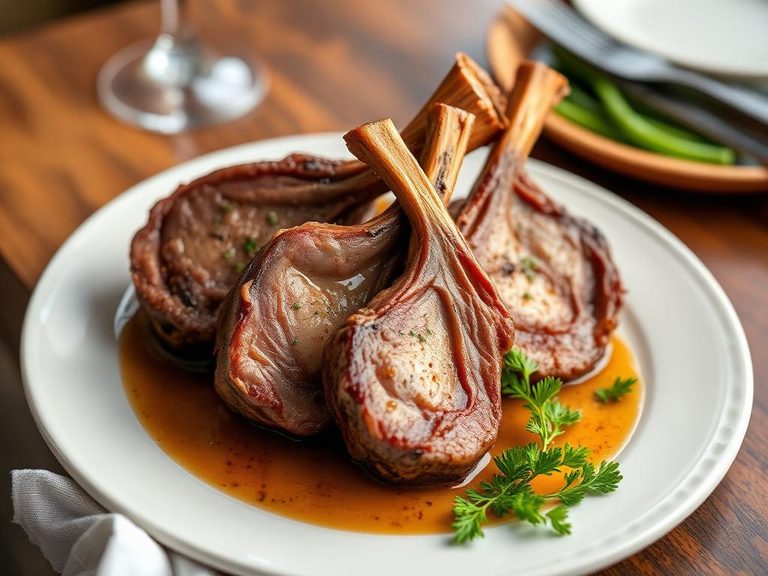
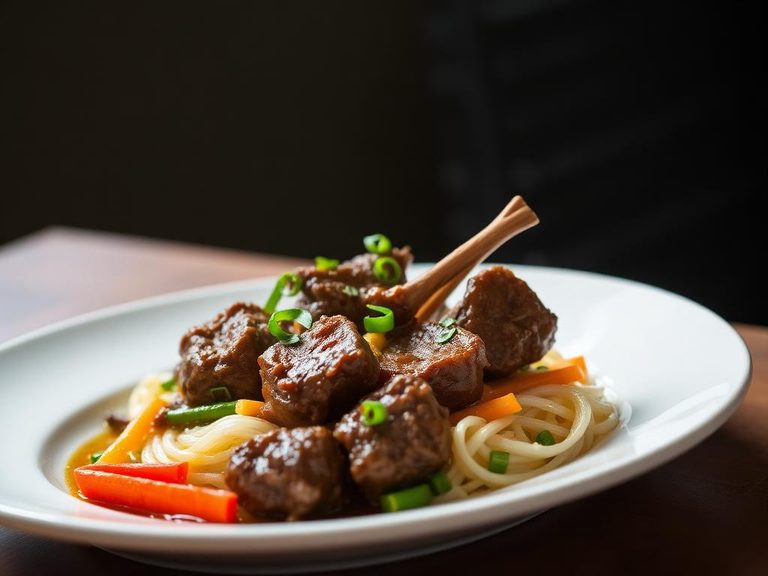
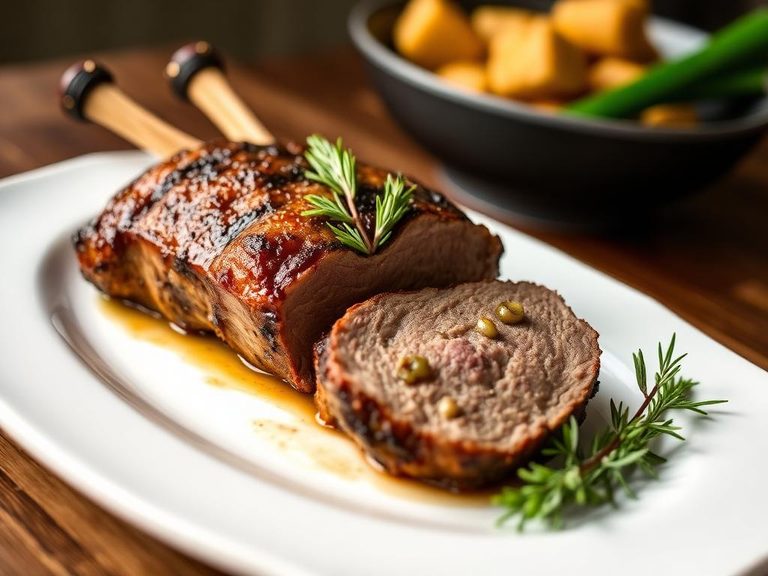
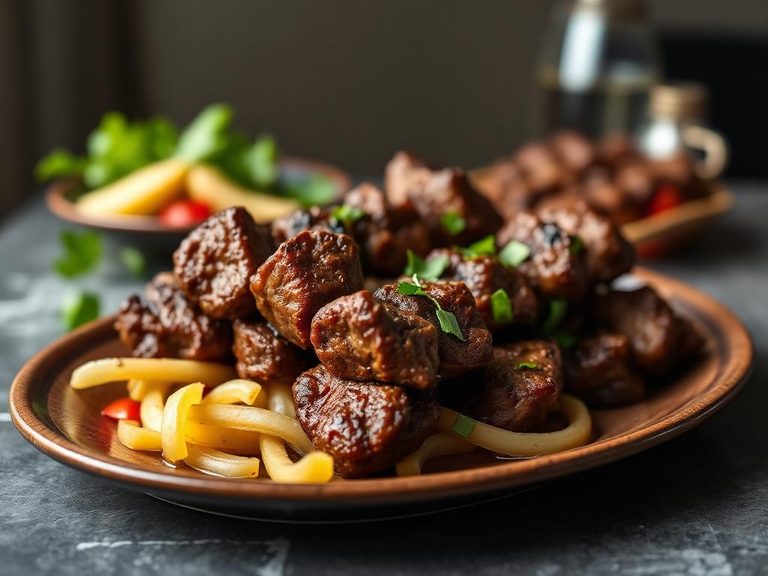
🌍 Where it's eaten
💡 Did you know?
The 'chump' cut gets its name from the fact it's adjacent to the rump (or 'chump end') of the loin, making it a more affordable yet equally tender alternative to the premium loin eye.
Full nutrition (USDA data · scales with serving)
| Water | 74.6 g |
| Energy | 121 kcal |
| Energy | 507 kj |
| Protein | 21.7 g |
| Total lipid (fat) | 3.8 g |
| Ash | 1.2 g |
| Carbohydrate, by difference | 0.00 g |
| Fiber, total dietary | 0.00 g |
| Total Sugars | 0.00 g |
| Calcium, Ca | 4.0 mg |
| Iron, Fe | 1.5 mg |
| Magnesium, Mg | 24.0 mg |
| Phosphorus, P | 201 mg |
| Potassium, K | 346 mg |
| Sodium, Na | 62.0 mg |
| Zinc, Zn | 2.9 mg |
| Copper, Cu | 0.14 mg |
| Manganese, Mn | 0.01 mg |
| Selenium, Se | 4.4 ug |
| Vitamin C, total ascorbic acid | 0.00 mg |
| Thiamin | 0.15 mg |
| Riboflavin | 0.13 mg |
| Niacin | 5.3 mg |
| Pantothenic acid | 0.81 mg |
| Vitamin B-6 | 0.15 mg |
| Vitamin B-12 | 2.1 ug |
| Vitamin A, RAE | 5.0 ug |
| Retinol | 5.0 ug |
| Carotene, beta | 0.00 ug |
| Carotene, alpha | 0.00 ug |
| Cryptoxanthin, beta | 0.00 ug |
| Vitamin A, IU | 15.0 iu |
| Lycopene | 0.00 ug |
| Lutein + zeaxanthin | 0.00 ug |
| Vitamin E (alpha-tocopherol) | 0.32 mg |
| Vitamin D (D2 + D3), International Units | 1.0 iu |
| Vitamin D (D2 + D3) | 0.00 ug |
| Vitamin D3 (cholecalciferol) | 0.00 ug |
| Alcohol, ethyl | 0.00 g |
| Caffeine | 0.00 mg |
| Theobromine | 0.00 mg |
Fat & fatty acid profile (per 100g)
| Fatty acids, total saturated | 1.3 g |
| SFA 4:0 | 0.00 g |
| SFA 6:0 | 0.00 g |
| SFA 8:0 | 0.00 g |
| SFA 10:0 | 0.01 g |
| SFA 12:0 | 0.01 g |
| SFA 14:0 | 0.07 g |
| SFA 16:0 | 0.58 g |
| SFA 17:0 | 0.05 g |
| SFA 18:0 | 0.54 g |
| SFA 20:0 | 0.00 g |
| SFA 22:0 | 0.01 g |
| SFA 24:0 | 0.00 g |
| Fatty acids, total monounsaturated | 1.0 g |
| MUFA 14:1 | 0.00 g |
| MUFA 15:1 | 0.00 g |
| MUFA 16:1 | 0.04 g |
| MUFA 16:1 c | 0.03 g |
| MUFA 17:1 | 0.00 g |
| MUFA 18:1 | 0.97 g |
| MUFA 18:1 c | 0.90 g |
| MUFA 20:1 | 0.00 g |
| MUFA 22:1 | 0.00 g |
| MUFA 22:1 c | 0.00 g |
| MUFA 24:1 c | 0.00 g |
| Fatty acids, total polyunsaturated | 0.31 g |
| PUFA 18:2 | 0.15 g |
| PUFA 18:2 n-6 c,c | 0.10 g |
| PUFA 18:2 CLAs | 0.05 g |
| PUFA 18:3 | 0.08 g |
| PUFA 18:3 n-3 c,c,c (ALA) | 0.08 g |
| PUFA 18:3 n-6 c,c,c | 0.00 g |
| PUFA 18:4 | 0.00 g |
| PUFA 20:2 n-6 c,c | 0.00 g |
| PUFA 20:3 | 0.00 g |
| PUFA 20:3 n-3 | 0.00 g |
| PUFA 20:3 n-6 | 0.00 g |
| PUFA 20:4 | 0.03 g |
| PUFA 20:4 n-6 | 0.03 g |
| PUFA 20:5 n-3 (EPA) | 0.03 g |
| PUFA 22:5 n-3 (DPA) | 0.02 g |
| PUFA 22:6 n-3 (DHA) | 0.01 g |
| Fatty acids, total trans | 0.08 g |
| Fatty acids, total trans-monoenoic | 0.08 g |
| TFA 16:1 t | 0.00 g |
| TFA 18:1 t | 0.07 g |
| TFA 18:2 t,t | 0.00 g |
| Fatty acids, total trans-polyenoic | 0.00 g |
| Cholesterol | 65.0 mg |
Amino acid profile (per 100g)
| Tryptophan | 0.24 g |
| Threonine | 1.0 g |
| Isoleucine | 0.97 g |
| Leucine | 1.7 g |
| Lysine | 1.9 g |
| Methionine | 0.71 g |
| Cystine | 0.28 g |
| Phenylalanine | 0.85 g |
| Tyrosine | 0.75 g |
| Valine | 1.1 g |
| Arginine | 1.5 g |
| Histidine | 0.46 g |
| Alanine | 1.1 g |
| Glutamic acid | 3.0 g |
| Glycine | 0.93 g |
| Proline | 0.69 g |
| Serine | 0.74 g |
FAQ
What's the best way to cook this lean cut?
Quick, high-heat methods are ideal: grilling, pan-searing, or stir-frying. Aim for medium-rare to medium (internal temp of 135-145°F / 57-63°C) to prevent it from drying out. Always let it rest for 5-10 minutes after cooking.
Is New Zealand lamb different from other lamb?
Yes, it's predominantly grass-fed year-round, which can contribute to a leaner profile and a distinct, clean flavor compared to grain-finished lamb from other regions.
How does this compare nutritionally to other lamb cuts?
This boneless, separable lean cut is one of the leanest options available, with significantly less fat than cuts like shoulder or leg, while maintaining the high protein content characteristic of lamb.
Nutrient density (calculated · NRF9.3)
Nutrient Rich Foods index: beneficial nutrients (protein, fiber, vitamins, minerals) minus saturated fat, added sugar & sodium, per 100 kcal.
NRF9.3 index — Fulgoni, Keast & Drewnowski, 2009. Computed from USDA nutrients.
Weight-loss friendliness (composite index)
Energy density 1.21 kcal/g · 72% calories from protein · 0.0 g fiber · 0.0 g sugar per 100 g.
Composite of energy density (Rolls et al., 1999), protein & fiber satiety, minus sugar. A calculated heuristic — ranks satiety-per-calorie, not a clinical measure.
Dietary load (calculated from USDA values)
Potential renal acid load. Positive = acid-forming, negative = alkaline-forming.
Sodium-to-potassium ratio: 0.18 (lower is better — aim for ≤ 1)
Sodium:potassium per WHO potassium guidance. Computed from USDA nutrients.