

Kefir, lowfat, strawberry, LIFEWAY
Whole food · Dairy and Egg Products

Photo: Wikipedia
This is a smooth, drinkable kefir with a vibrant pink hue and a sweet-tart strawberry flavor that balances the characteristic tang of fermented milk. Its texture is creamy yet light, thinner than yogurt but with a satisfying, slightly effervescent mouthfeel from live cultures. Notably, it packs over 3g of protein per 100g while remaining low in fat, making it a nutrient-dense, probiotic-rich beverage.
Calorie split: 22% protein · 65% carbs · 13% fat
↓ Full nutrition💚 Why it's loved
People love it for its perfect marriage of creamy texture and bright, fruity flavor, which makes getting probiotics feel like a treat rather than a chore. It's a versatile staple in many health-conscious kitchens, enjoyed as a quick breakfast, a post-workout refuel, or a tangy base for smoothies.
⚠️ Watch-outs & how to enjoy it better
The primary downside is its sugar content (over 9g per 100g), which can contribute to blood sugar spikes if consumed in large quantities without other foods. Those with severe dairy allergies should avoid it, and the tangy flavor may be an acquired taste for some. To counteract the sugar impact, pair it with a source of fiber (like a handful of nuts or berries) or protein to slow absorption, and stick to a standard serving size.
Key benefits
- Excellent source of live probiotic cultures for gut health
- High in protein relative to its calorie count for satiety
- Provides calcium and vitamin D for bone support
- Naturally lower in lactose due to fermentation
- Contains bioactive peptides from the fermentation process
🍽️ Popular dishes
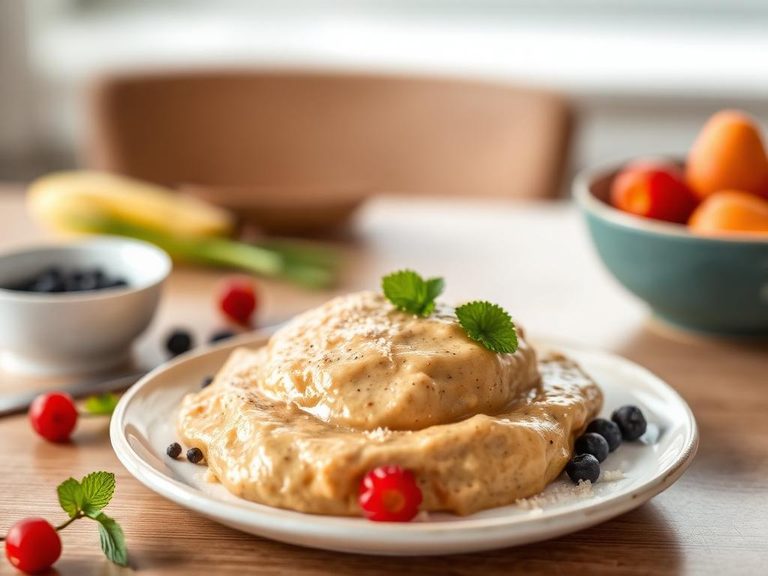
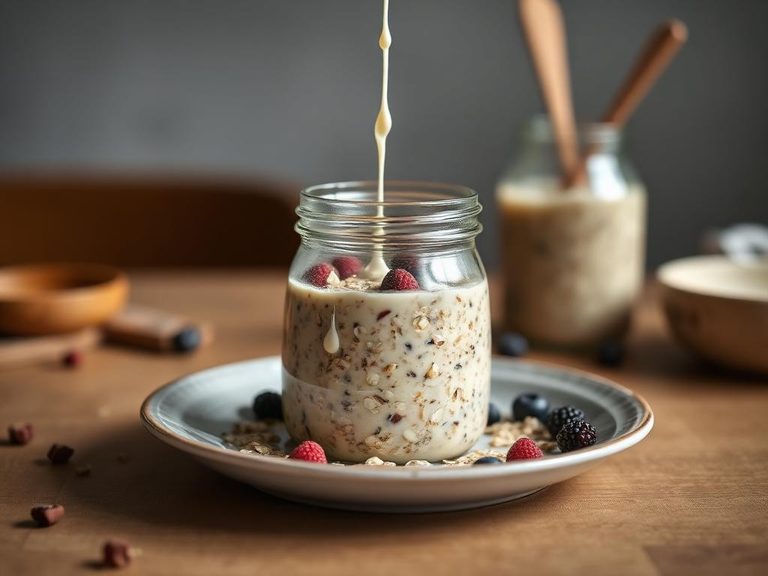
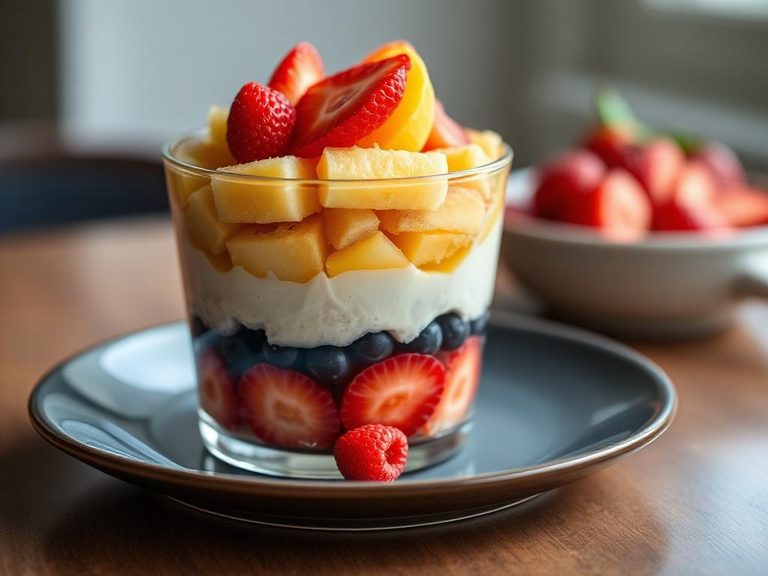

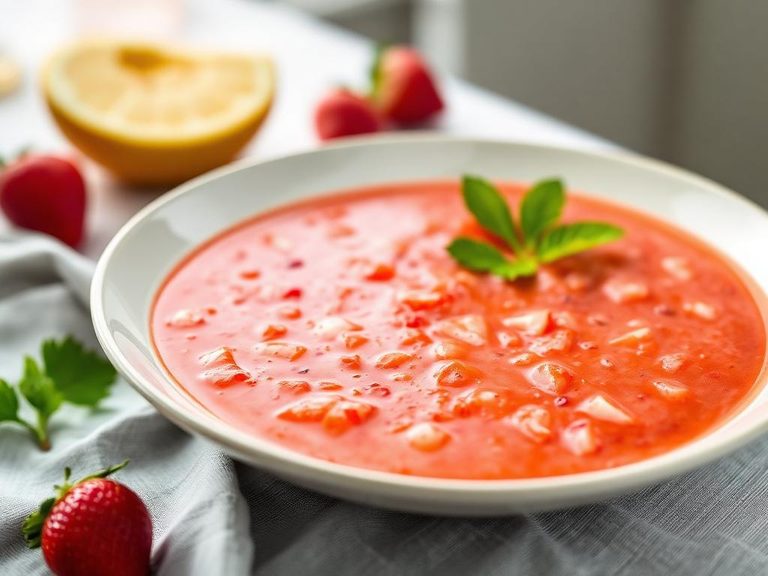
🌍 Where it's eaten
💡 Did you know?
Traditional kefir grains are not grains at all, but a symbiotic colony of bacteria and yeast (SCOBY) that form cauliflower-like clusters, and some cultures have been passed down for over 100 years.
Full nutrition (USDA data · scales with serving)
| Water | 84.8 g |
| Energy | 62.0 kcal |
| Energy | 261 kj |
| Protein | 3.4 g |
| Total lipid (fat) | 0.90 g |
| Ash | 0.68 g |
| Carbohydrate, by difference | 10.2 g |
| Fiber, total dietary | 0.00 g |
| Total Sugars | 9.2 g |
| Sucrose | 5.3 g |
| Glucose | 0.00 g |
| Fructose | 0.00 g |
| Lactose | 3.2 g |
| Maltose | 0.00 g |
| Galactose | 0.63 g |
| Calcium, Ca | 119 mg |
| Iron, Fe | 0.04 mg |
| Magnesium, Mg | 11.0 mg |
| Phosphorus, P | 96.0 mg |
| Potassium, K | 154 mg |
| Sodium, Na | 37.0 mg |
| Zinc, Zn | 0.44 mg |
| Copper, Cu | 0.01 mg |
| Manganese, Mn | 0.01 mg |
| Selenium, Se | 3.6 ug |
| Vitamin C, total ascorbic acid | 1.5 mg |
| Thiamin | 0.03 mg |
| Riboflavin | 0.21 mg |
| Niacin | 0.10 mg |
| Pantothenic acid | 0.38 mg |
| Vitamin B-6 | 0.06 mg |
| Folate, total | 22.0 ug |
| Folic acid | 0.00 ug |
| Folate, food | 22.0 ug |
| Folate, DFE | 22.0 ug |
| Choline, total | 15.2 mg |
| Vitamin B-12 | 0.31 ug |
| Vitamin B-12, added | 0.00 ug |
| Vitamin A, RAE | 178 ug |
| Retinol | 178 ug |
| Carotene, beta | 3.0 ug |
| Carotene, alpha | 0.00 ug |
| Cryptoxanthin, beta | 0.00 ug |
| Vitamin A, IU | 599 iu |
| Lycopene | 0.00 ug |
| Lutein + zeaxanthin | 0.00 ug |
| Vitamin E (alpha-tocopherol) | 0.06 mg |
| Vitamin E, added | 0.00 mg |
| Vitamin D (D2 + D3), International Units | 44.0 iu |
| Vitamin D (D2 + D3) | 1.1 ug |
| Vitamin D2 (ergocalciferol) | 0.00 ug |
| Vitamin D3 (cholecalciferol) | 1.1 ug |
| Vitamin K (phylloquinone) | 1.2 ug |
| Alcohol, ethyl | 0.00 g |
| Caffeine | 0.00 mg |
| Theobromine | 0.00 mg |
Fat & fatty acid profile (per 100g)
| Fatty acids, total saturated | 0.53 g |
| SFA 4:0 | 0.02 g |
| SFA 6:0 | 0.01 g |
| SFA 8:0 | 0.01 g |
| SFA 10:0 | 0.02 g |
| SFA 12:0 | 0.02 g |
| SFA 14:0 | 0.08 g |
| SFA 15:0 | 0.01 g |
| SFA 16:0 | 0.25 g |
| SFA 17:0 | 0.01 g |
| SFA 18:0 | 0.10 g |
| SFA 20:0 | 0.00 g |
| SFA 22:0 | 0.00 g |
| SFA 24:0 | 0.00 g |
| Fatty acids, total monounsaturated | 0.26 g |
| MUFA 14:1 | 0.01 g |
| MUFA 15:1 | 0.00 g |
| MUFA 16:1 | 0.02 g |
| MUFA 16:1 c | 0.01 g |
| MUFA 17:1 | 0.00 g |
| MUFA 18:1 | 0.23 g |
| MUFA 18:1 c | 0.21 g |
| MUFA 20:1 | 0.00 g |
| MUFA 22:1 | 0.00 g |
| MUFA 22:1 c | 0.00 g |
| MUFA 24:1 c | 0.00 g |
| Fatty acids, total polyunsaturated | 0.04 g |
| PUFA 18:2 | 0.03 g |
| PUFA 18:2 n-6 c,c | 0.02 g |
| PUFA 18:2 CLAs | 0.01 g |
| PUFA 18:3 | 0.01 g |
| PUFA 18:3 n-3 c,c,c (ALA) | 0.01 g |
| PUFA 18:3 n-6 c,c,c | 0.00 g |
| PUFA 18:3i | 0.00 g |
| PUFA 18:4 | 0.00 g |
| PUFA 20:2 n-6 c,c | 0.00 g |
| PUFA 20:3 | 0.00 g |
| PUFA 20:3 n-3 | 0.00 g |
| PUFA 20:3 n-6 | 0.00 g |
| PUFA 20:4 | 0.00 g |
| PUFA 20:5 n-3 (EPA) | 0.00 g |
| PUFA 22:4 | 0.00 g |
| PUFA 22:5 n-3 (DPA) | 0.00 g |
| PUFA 22:6 n-3 (DHA) | 0.00 g |
| Fatty acids, total trans | 0.03 g |
| Fatty acids, total trans-monoenoic | 0.03 g |
| TFA 16:1 t | 0.00 g |
| TFA 18:1 t | 0.02 g |
| TFA 22:1 t | 0.00 g |
| TFA 18:2 t not further defined | 0.01 g |
| Fatty acids, total trans-polyenoic | 0.01 g |
| Cholesterol | 5.0 mg |
FAQ
How is this different from drinkable yogurt?
While both are fermented dairy, kefir uses a more diverse mix of bacteria and yeasts, resulting in a tangier flavor, thinner consistency, and typically a broader spectrum of probiotic strains. It's also fermented for longer, which further breaks down lactose.
Is the sugar added or natural?
The sugar content comes from both the natural lactose in milk and added sugars from the strawberry flavoring. The fermentation process consumes some lactose, but the added fruit/sugar contributes significantly to the total.
Can I use this in baking?
Absolutely. Its acidity makes it a fantastic buttermilk substitute in pancakes, waffles, and quick breads, adding moisture and a subtle tang. The live cultures will be killed by heat, but the flavor and texture benefits remain.
Nutrient density (calculated · NRF9.3)
Nutrient Rich Foods index: beneficial nutrients (protein, fiber, vitamins, minerals) minus saturated fat, added sugar & sodium, per 100 kcal.
NRF9.3 index — Fulgoni, Keast & Drewnowski, 2009. Computed from USDA nutrients.
Weight-loss friendliness (composite index)
Energy density 0.62 kcal/g · 22% calories from protein · 0.0 g fiber · 9.2 g sugar per 100 g.
Composite of energy density (Rolls et al., 1999), protein & fiber satiety, minus sugar. A calculated heuristic — ranks satiety-per-calorie, not a clinical measure.
Dietary load (calculated from USDA values)
Potential renal acid load. Positive = acid-forming, negative = alkaline-forming.
Sodium-to-potassium ratio: 0.24 (lower is better — aim for ≤ 1)
Sodium:potassium per WHO potassium guidance. Computed from USDA nutrients.