

Grapes, red or green (European type, such as Thompson seedless), raw
Whole food · Fruits and Fruit Juices
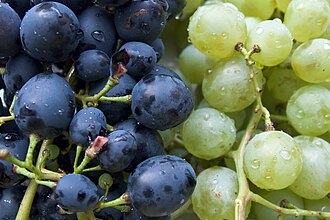
Photo: Wikipedia
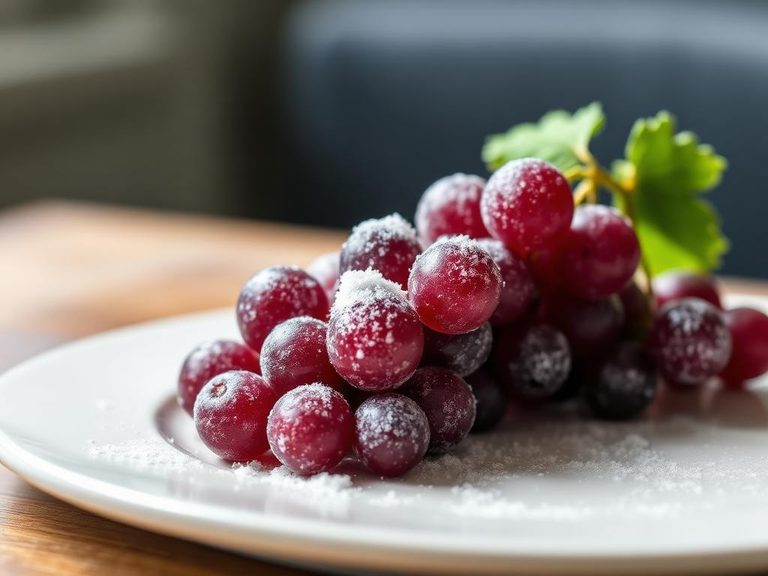
Red or green Thompson seedless grapes are crisp, juicy orbs bursting with a sweet-tart flavor and a satisfying pop. Their high water content and natural sugars make them a refreshing, low-calorie snack. They are a notable source of vitamin K and antioxidants like resveratrol, especially in the skins.
Calorie split: 4% protein · 94% carbs · 2% fat
↓ Full nutrition💚 Why it's loved
People adore them for their perfect balance of sweetness and acidity, their convenient, seedless form, and their versatility as a fresh snack, in salads, or frozen as a treat. They are a staple in fruit bowls and lunchboxes worldwide.
⚠️ Watch-outs & how to enjoy it better
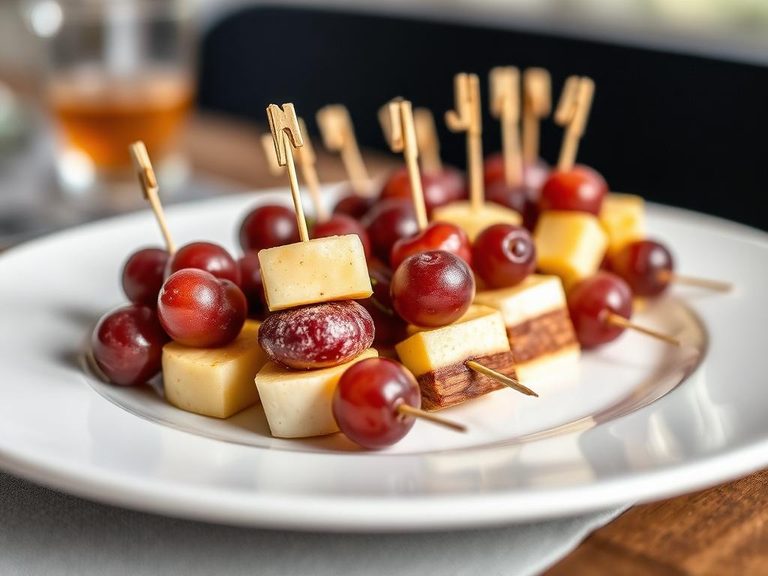
Their high natural sugar content can cause blood-sugar spikes, making portion control important for individuals with diabetes. The skins, while nutritious, can be a choking hazard for very young children. To counteract sugar impact, pair a small handful with a source of protein or fat like cheese or nuts.
Key benefits
- Rich in antioxidants like resveratrol and flavonoids
- Good source of vitamin K for bone health
- High water content aids hydration
- Contains natural sugars for quick energy
- Provides dietary fiber for digestive health
🍽️ Popular dishes
🌍 Where it's eaten
💡 Did you know?
The practice of freezing grapes to eat as a refreshing, candy-like snack gained significant popularity in the early 2000s via internet forums and food blogs.
Full nutrition (USDA data · scales with serving)
| Water | 80.5 g |
| Energy | 69.0 kcal |
| Energy | 288 kj |
| Protein | 0.72 g |
| Total lipid (fat) | 0.16 g |
| Ash | 0.48 g |
| Carbohydrate, by difference | 18.1 g |
| Fiber, total dietary | 0.90 g |
| Total Sugars | 15.5 g |
| Sucrose | 0.15 g |
| Glucose | 7.2 g |
| Fructose | 8.1 g |
| Lactose | 0.00 g |
| Maltose | 0.00 g |
| Galactose | 0.00 g |
| Starch | 0.00 g |
| Calcium, Ca | 10.0 mg |
| Iron, Fe | 0.36 mg |
| Magnesium, Mg | 7.0 mg |
| Phosphorus, P | 20.0 mg |
| Potassium, K | 191 mg |
| Sodium, Na | 2.0 mg |
| Zinc, Zn | 0.07 mg |
| Copper, Cu | 0.13 mg |
| Manganese, Mn | 0.07 mg |
| Selenium, Se | 0.10 ug |
| Fluoride, F | 7.8 ug |
| Vitamin C, total ascorbic acid | 3.2 mg |
| Thiamin | 0.07 mg |
| Riboflavin | 0.07 mg |
| Niacin | 0.19 mg |
| Pantothenic acid | 0.05 mg |
| Vitamin B-6 | 0.09 mg |
| Folate, total | 2.0 ug |
| Folic acid | 0.00 ug |
| Folate, food | 2.0 ug |
| Folate, DFE | 2.0 ug |
| Choline, total | 5.6 mg |
| Betaine | 0.10 mg |
| Vitamin B-12 | 0.00 ug |
| Vitamin B-12, added | 0.00 ug |
| Vitamin A, RAE | 3.0 ug |
| Retinol | 0.00 ug |
| Carotene, beta | 39.0 ug |
| Carotene, alpha | 1.0 ug |
| Cryptoxanthin, beta | 0.00 ug |
| Vitamin A, IU | 66.0 iu |
| Lycopene | 0.00 ug |
| Lutein + zeaxanthin | 72.0 ug |
| Vitamin E (alpha-tocopherol) | 0.19 mg |
| Vitamin E, added | 0.00 mg |
| Tocopherol, beta | 0.00 mg |
| Tocopherol, gamma | 0.07 mg |
| Tocopherol, delta | 0.00 mg |
| Tocotrienol, alpha | 0.00 mg |
| Tocotrienol, beta | 0.00 mg |
| Tocotrienol, gamma | 0.00 mg |
| Tocotrienol, delta | 0.00 mg |
| Vitamin D (D2 + D3), International Units | 0.00 iu |
| Vitamin D (D2 + D3) | 0.00 ug |
| Vitamin K (phylloquinone) | 14.6 ug |
| Vitamin K (Dihydrophylloquinone) | 0.00 ug |
| Alcohol, ethyl | 0.00 g |
| Caffeine | 0.00 mg |
| Theobromine | 0.00 mg |
Fat & fatty acid profile (per 100g)
| Fatty acids, total saturated | 0.05 g |
| SFA 4:0 | 0.00 g |
| SFA 6:0 | 0.00 g |
| SFA 8:0 | 0.00 g |
| SFA 10:0 | 0.00 g |
| SFA 12:0 | 0.00 g |
| SFA 14:0 | 0.00 g |
| SFA 16:0 | 0.05 g |
| SFA 18:0 | 0.01 g |
| Fatty acids, total monounsaturated | 0.01 g |
| MUFA 16:1 | 0.00 g |
| MUFA 18:1 | 0.01 g |
| MUFA 20:1 | 0.00 g |
| MUFA 22:1 | 0.00 g |
| Fatty acids, total polyunsaturated | 0.05 g |
| PUFA 18:2 | 0.04 g |
| PUFA 18:3 | 0.01 g |
| PUFA 18:4 | 0.00 g |
| PUFA 20:4 | 0.00 g |
| PUFA 20:5 n-3 (EPA) | 0.00 g |
| PUFA 22:5 n-3 (DPA) | 0.00 g |
| PUFA 22:6 n-3 (DHA) | 0.00 g |
| Fatty acids, total trans | 0.00 g |
| Cholesterol | 0.00 mg |
| Phytosterols | 4.0 mg |
Amino acid profile (per 100g)
| Tryptophan | 0.01 g |
| Threonine | 0.02 g |
| Isoleucine | 0.01 g |
| Leucine | 0.02 g |
| Lysine | 0.03 g |
| Methionine | 0.01 g |
| Cystine | 0.01 g |
| Phenylalanine | 0.02 g |
| Tyrosine | 0.01 g |
| Valine | 0.02 g |
| Arginine | 0.13 g |
| Histidine | 0.02 g |
| Alanine | 0.02 g |
| Aspartic acid | 0.04 g |
| Glutamic acid | 0.08 g |
| Glycine | 0.02 g |
| Proline | 0.08 g |
| Serine | 0.02 g |
FAQ
Are the seeds in some grapes edible?
Yes, grape seeds are edible and contain antioxidants, but they are bitter. Seedless varieties like Thompson seedless are preferred for eating out of hand.
How should I store grapes?
Store unwashed grapes in a perforated plastic bag in the refrigerator crisper drawer. They can last 1-2 weeks. Wash just before eating to prevent mold.
Why do some grapes have a white, powdery coating?
That's a natural, harmless wax called 'bloom' that the grape produces to protect itself from moisture loss and decay. It's safe to eat.
Nutrient density (calculated · NRF9.3)
Nutrient Rich Foods index: beneficial nutrients (protein, fiber, vitamins, minerals) minus saturated fat, added sugar & sodium, per 100 kcal.
NRF9.3 index — Fulgoni, Keast & Drewnowski, 2009. Computed from USDA nutrients.
Weight-loss friendliness (composite index)
Energy density 0.69 kcal/g · 4% calories from protein · 0.9 g fiber · 15.5 g sugar per 100 g.
Composite of energy density (Rolls et al., 1999), protein & fiber satiety, minus sugar. A calculated heuristic — ranks satiety-per-calorie, not a clinical measure.
Dietary load (calculated from USDA values)
Potential renal acid load. Positive = acid-forming, negative = alkaline-forming.
Sodium-to-potassium ratio: 0.01 (lower is better — aim for ≤ 1)
Sodium:potassium per WHO potassium guidance. Computed from USDA nutrients.