Cheese, mozzarella, low moisture, part-skim
Whole food · Dairy and Egg Products

Photo: Wikipedia
Low-moisture, part-skim mozzarella is the workhorse cheese of the pizza world. It has a firm, sliceable texture and a mild, milky flavor that becomes gloriously stretchy and golden when melted. Nutritionally, it's a protein powerhouse with a solid fat content, making it more satiating than its fresh counterpart.
💚 Why it's loved
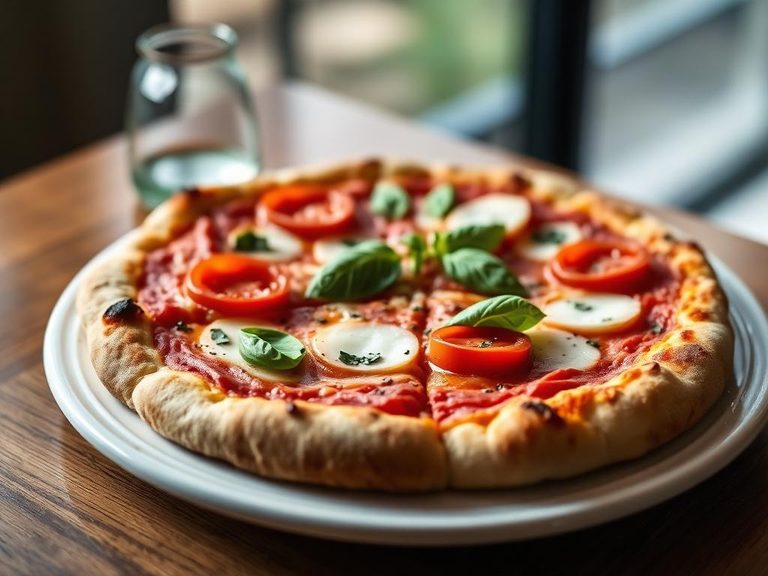
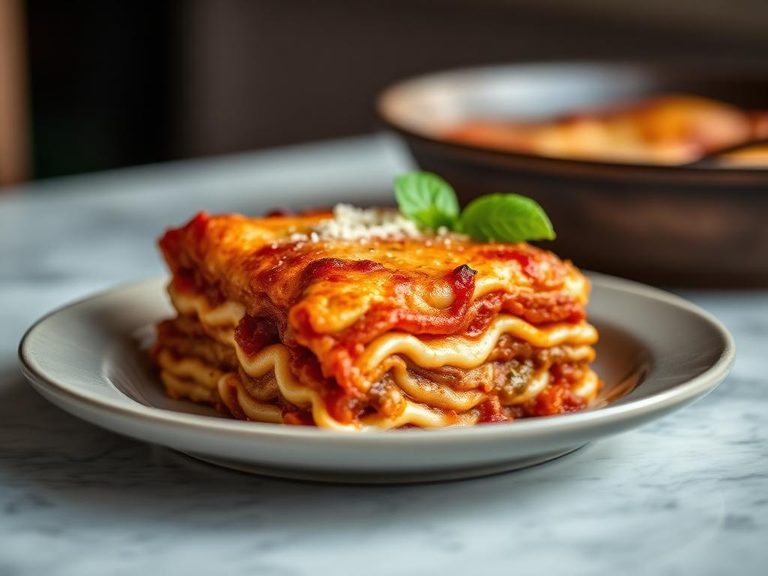
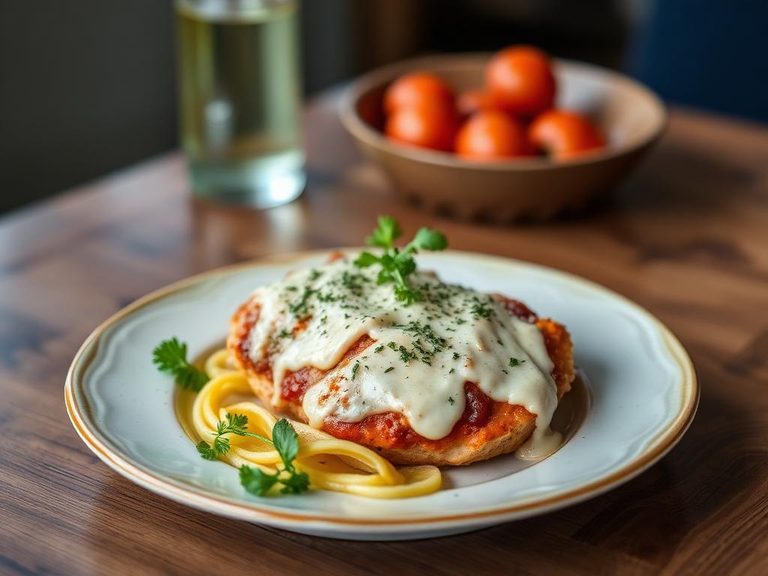
People adore it for its unmatched melting and stretching ability, which creates the iconic cheese pull on pizza and baked pasta. Its mild flavor acts as a perfect canvas for other ingredients, from spicy pepperoni to fresh basil.
⚠️ Watch-outs & how to enjoy it better
It is a common dairy allergen and can be high in sodium, which may be a concern for some. To counteract, use it as a flavorful accent rather than the main event, and pair it with potassium-rich vegetables like spinach or broccoli to help balance sodium intake.
Key benefits
- Excellent source of high-quality protein for muscle maintenance.
- Rich in calcium and phosphorus for bone health.
- Provides conjugated linoleic acid (CLA), a naturally occurring fatty acid.
- Lower in moisture and fat than fresh mozzarella, ideal for baking.
- Contains probiotics from the cheese-making culture.
🍽️ Popular dishes
🌍 Where it's eaten
💡 Did you know?
The low-moisture version was developed by Italian immigrants in the United States in the early 20th century to better withstand the long journey from factory to pizzeria without spoiling.
Full nutrition (scales with serving)
| Water | 47.7 g |
| Energy (Atwater General Factors) | 296 kcal |
| Energy (Atwater Specific Factors) | 298 kcal |
| Energy | 298 kcal |
| Energy | 1240 kj |
| Nitrogen | 3.7 g |
| Protein | 23.7 g |
| Total lipid (fat) | 20.4 g |
| Total fat (NLEA) | 17.8 g |
| Ash | 3.8 g |
| Carbohydrate, by difference | 4.4 g |
| Sugars, Total | 1.8 g |
| Sucrose | 0.00 g |
| Glucose | 0.30 g |
| Fructose | 0.00 g |
| Lactose | 0.66 g |
| Maltose | 0.00 g |
| Galactose | 0.86 g |
| Calcium, Ca | 693 mg |
| Iron, Fe | 0.20 mg |
| Magnesium, Mg | 27.2 mg |
| Phosphorus, P | 533 mg |
| Potassium, K | 116 mg |
| Sodium, Na | 699 mg |
| Zinc, Zn | 3.6 mg |
| Copper, Cu | 0.04 mg |
| Manganese, Mn | 0.04 mg |
| Selenium, Se | 26.7 ug |
| Thiamin | 0.02 mg |
| Riboflavin | 0.36 mg |
| Niacin | 0.10 mg |
| Pantothenic acid | 0.41 mg |
| Vitamin B-6 | 0.09 mg |
| Folate, total | 26.0 ug |
| Choline, total | 13.5 mg |
| Choline, free | 2.1 mg |
| Choline, from phosphocholine | 0.50 mg |
| Choline, from phosphotidyl choline | 4.8 mg |
| Choline, from glycerophosphocholine | 2.6 mg |
| Choline, from sphingomyelin | 3.6 mg |
| Betaine | 0.20 mg |
| Vitamin B-12 | 1.6 ug |
| Vitamin A, RAE | 203 ug |
| Retinol | 203 ug |
| Vitamin E (alpha-tocopherol) | 0.51 mg |
| Tocopherol, beta | 0.00 mg |
| Tocopherol, gamma | 0.04 mg |
| Tocopherol, delta | 0.00 mg |
| Tocotrienol, alpha | 0.00 mg |
| Tocotrienol, beta | 0.00 mg |
| Tocotrienol, gamma | 0.00 mg |
| Tocotrienol, delta | 0.00 mg |
| Vitamin K (phylloquinone) | 1.3 ug |
| Vitamin K (Dihydrophylloquinone) | 0.00 ug |
| Vitamin K (Menaquinone-4) | 5.4 ug |
| Fatty acids, total saturated | 11.7 g |
| SFA 4:0 | 0.40 g |
| SFA 6:0 | 0.33 g |
| SFA 8:0 | 0.21 g |
| SFA 10:0 | 0.51 g |
| SFA 11:0 | 0.00 g |
| SFA 12:0 | 0.58 g |
| SFA 14:0 | 1.9 g |
| SFA 15:0 | 0.20 g |
| SFA 16:0 | 5.4 g |
| SFA 17:0 | 0.12 g |
| SFA 18:0 | 2.0 g |
| SFA 20:0 | 0.03 g |
| SFA 22:0 | 0.01 g |
| SFA 24:0 | 0.01 g |
| Fatty acids, total monounsaturated | 4.7 g |
| MUFA 14:1 c | 0.19 g |
| MUFA 15:1 | 0.00 g |
| MUFA 16:1 c | 0.27 g |
| MUFA 17:1 | 0.04 g |
| MUFA 17:1 c | 0.04 g |
| MUFA 18:1 c | 4.1 g |
| MUFA 20:1 | 0.04 g |
| MUFA 20:1 c | 0.04 g |
| MUFA 22:1 c | 0.00 g |
| MUFA 24:1 c | 0.00 g |
| Fatty acids, total polyunsaturated | 0.74 g |
| PUFA 18:2 c | 0.59 g |
| PUFA 18:2 n-6 c,c | 0.49 g |
| PUFA 18:2 CLAs | 0.10 g |
| PUFA 18:3 c | 0.08 g |
| PUFA 18:3 n-3 c,c,c (ALA) | 0.07 g |
| PUFA 18:3 n-6 c,c,c | 0.00 g |
| PUFA 18:3i | 0.00 g |
| PUFA 18:4 | 0.00 g |
| PUFA 20:2 c | 0.01 g |
| PUFA 20:2 n-6 c,c | 0.01 g |
| PUFA 20:3 c | 0.02 g |
| PUFA 20:3 n-3 | 0.00 g |
| PUFA 20:3 n-6 | 0.02 g |
| PUFA 20:3 n-9 | 0.00 g |
| PUFA 20:4 | 0.03 g |
| PUFA 20:4c | 0.03 g |
| PUFA 20:5c | 0.01 g |
| PUFA 20:5 n-3 (EPA) | 0.01 g |
| PUFA 22:2 | 0.00 g |
| PUFA 22:5 c | 0.01 g |
| PUFA 22:4 | 0.01 g |
| PUFA 22:5 n-3 (DPA) | 0.01 g |
| PUFA 22:6 c | 0.00 g |
| PUFA 22:6 n-3 (DHA) | 0.00 g |
| Fatty acids, total trans | 0.70 g |
| Fatty acids, total trans-monoenoic | 0.56 g |
| TFA 16:1 t | 0.06 g |
| TFA 18:1 t | 0.50 g |
| TFA 22:1 t | 0.00 g |
| Fatty acids, total trans-dienoic | 0.14 g |
| TFA 18:2 t not further defined | 0.14 g |
| Cholesterol | 65.0 mg |
FAQ
What's the difference between low-moisture and fresh mozzarella?
Low-moisture mozzarella has been pressed and aged longer, reducing water content. This gives it a firmer texture, saltier flavor, and superior melting and browning properties compared to soft, milky fresh mozzarella.
Can I substitute it with fresh mozzarella in recipes?
You can, but with adjustments. Fresh mozzarella releases more water when cooked, so you may need to pat it dry or use less. It will also be less stretchy and more prone to becoming rubbery if overcooked.
Why does it sometimes form a oily pool on pizza?
This is called 'oiling off.' It happens when the cheese is cooked at too high a temperature or for too long, causing the fat to separate from the protein matrix. Using the correct oven temperature and baking time helps prevent this.