

Blueberries, raw
Whole food · Fruits and Fruit Juices

Photo: Wikipedia
Raw blueberries are small, round, deep-blue berries with a taut skin that pops when bitten, revealing juicy, slightly tart-sweet flesh. They are a nutritional powerhouse, packed with anthocyanins (the pigments that give them their color) and offering a notable 2.4g of fiber per 100g for such a low-calorie fruit. Their flavor is a unique balance of sweet and tangy, making them a favorite for both fresh eating and cooking.
Calorie split: 5% protein · 91% carbs · 5% fat
↓ Full nutrition💚 Why it's loved
People love blueberries for their burst of sweet-tart flavor and satisfying pop, which makes them incredibly versatile for snacking, baking, or blending into smoothies. Their deep blue color and cultural association with summer, health, and Americana (especially in pies and muffins) make them a beloved and nostalgic fruit.
⚠️ Watch-outs & how to enjoy it better
While nutritious, their natural sugar content (9.96g per 100g) can contribute to blood-sugar spikes if eaten in large quantities, especially for those managing diabetes. To counteract this, pair them with a source of protein or healthy fat, like Greek yogurt or nuts, to slow sugar absorption and promote satiety.
Key benefits
- High in antioxidants, particularly anthocyanins.
- Good source of dietary fiber (2.4g per 100g).
- Low in calories (57 kcal per 100g).
- Contains vitamin C and vitamin K.
- May support brain health and cognitive function.
🍽️ Popular dishes

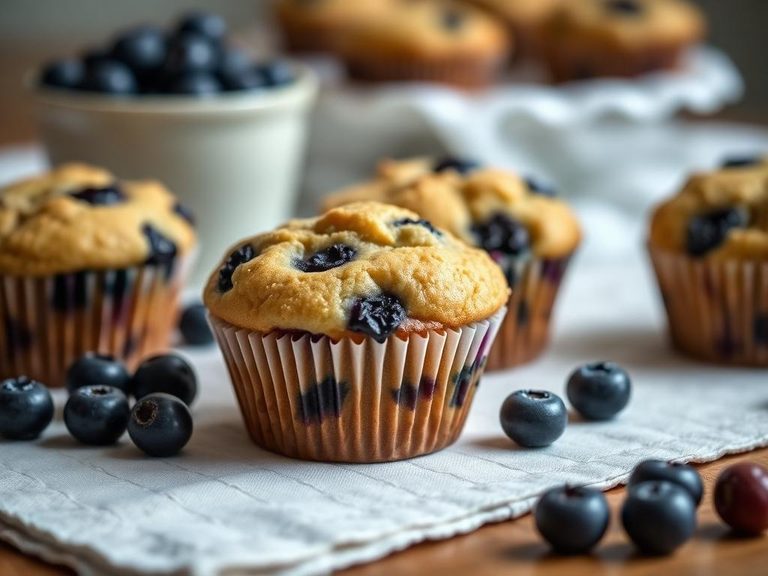

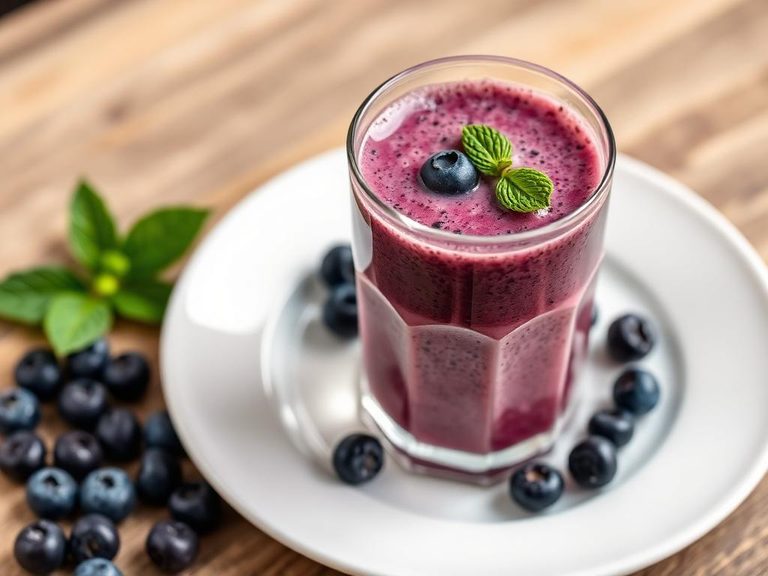
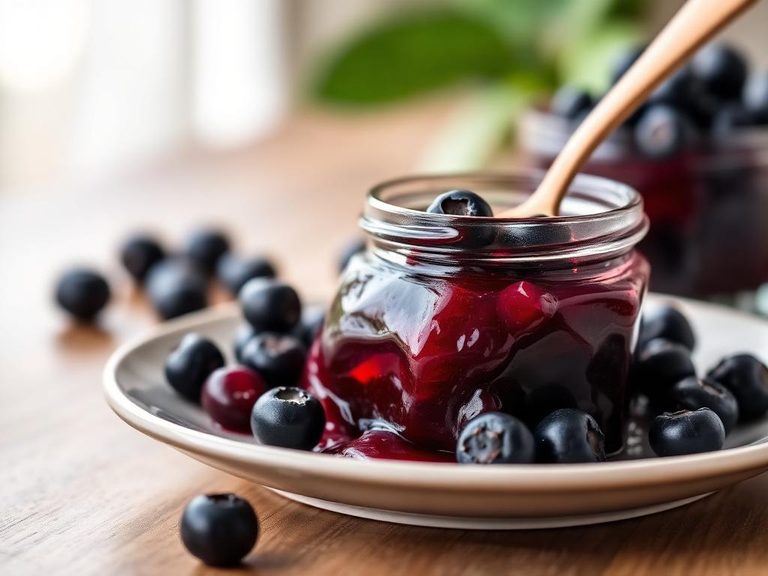
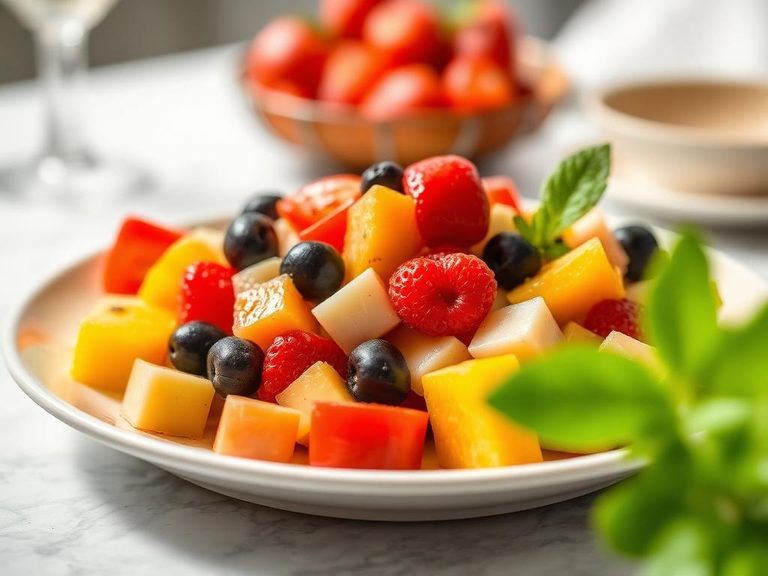
🌍 Where it's eaten
💡 Did you know?
Blueberries are one of the only naturally blue foods, and their blue color comes from anthocyanins, which are also responsible for the reds and purples in other fruits.
Full nutrition (USDA data · scales with serving)
| Water | 84.2 g |
| Energy | 57.0 kcal |
| Energy | 240 kj |
| Protein | 0.74 g |
| Total lipid (fat) | 0.33 g |
| Ash | 0.24 g |
| Carbohydrate, by difference | 14.5 g |
| Fiber, total dietary | 2.4 g |
| Total Sugars | 10.0 g |
| Sucrose | 0.11 g |
| Glucose | 4.9 g |
| Fructose | 5.0 g |
| Lactose | 0.00 g |
| Maltose | 0.00 g |
| Galactose | 0.00 g |
| Starch | 0.03 g |
| Calcium, Ca | 6.0 mg |
| Iron, Fe | 0.28 mg |
| Magnesium, Mg | 6.0 mg |
| Phosphorus, P | 12.0 mg |
| Potassium, K | 77.0 mg |
| Sodium, Na | 1.0 mg |
| Zinc, Zn | 0.16 mg |
| Copper, Cu | 0.06 mg |
| Manganese, Mn | 0.34 mg |
| Selenium, Se | 0.10 ug |
| Vitamin C, total ascorbic acid | 9.7 mg |
| Thiamin | 0.04 mg |
| Riboflavin | 0.04 mg |
| Niacin | 0.42 mg |
| Pantothenic acid | 0.12 mg |
| Vitamin B-6 | 0.05 mg |
| Folate, total | 6.0 ug |
| Folic acid | 0.00 ug |
| Folate, food | 6.0 ug |
| Folate, DFE | 6.0 ug |
| Choline, total | 6.0 mg |
| Betaine | 0.20 mg |
| Vitamin B-12 | 0.00 ug |
| Vitamin B-12, added | 0.00 ug |
| Vitamin A, RAE | 3.0 ug |
| Retinol | 0.00 ug |
| Carotene, beta | 32.0 ug |
| Carotene, alpha | 0.00 ug |
| Cryptoxanthin, beta | 0.00 ug |
| Vitamin A, IU | 54.0 iu |
| Lycopene | 0.00 ug |
| Lutein + zeaxanthin | 80.0 ug |
| Vitamin E (alpha-tocopherol) | 0.57 mg |
| Vitamin E, added | 0.00 mg |
| Tocopherol, beta | 0.01 mg |
| Tocopherol, gamma | 0.36 mg |
| Tocopherol, delta | 0.03 mg |
| Tocotrienol, alpha | 0.00 mg |
| Tocotrienol, beta | 0.00 mg |
| Tocotrienol, gamma | 0.07 mg |
| Tocotrienol, delta | 0.00 mg |
| Vitamin D (D2 + D3), International Units | 0.00 iu |
| Vitamin D (D2 + D3) | 0.00 ug |
| Vitamin K (phylloquinone) | 19.3 ug |
| Vitamin K (Dihydrophylloquinone) | 0.00 ug |
| Alcohol, ethyl | 0.00 g |
| Caffeine | 0.00 mg |
| Theobromine | 0.00 mg |
Fat & fatty acid profile (per 100g)
| Fatty acids, total saturated | 0.03 g |
| SFA 4:0 | 0.00 g |
| SFA 6:0 | 0.00 g |
| SFA 8:0 | 0.00 g |
| SFA 10:0 | 0.00 g |
| SFA 12:0 | 0.00 g |
| SFA 14:0 | 0.00 g |
| SFA 16:0 | 0.02 g |
| SFA 18:0 | 0.01 g |
| Fatty acids, total monounsaturated | 0.05 g |
| MUFA 16:1 | 0.00 g |
| MUFA 18:1 | 0.05 g |
| MUFA 20:1 | 0.00 g |
| MUFA 22:1 | 0.00 g |
| Fatty acids, total polyunsaturated | 0.15 g |
| PUFA 18:2 | 0.09 g |
| PUFA 18:3 | 0.06 g |
| PUFA 18:4 | 0.00 g |
| PUFA 20:4 | 0.00 g |
| PUFA 20:5 n-3 (EPA) | 0.00 g |
| PUFA 22:5 n-3 (DPA) | 0.00 g |
| PUFA 22:6 n-3 (DHA) | 0.00 g |
| Fatty acids, total trans | 0.00 g |
| Cholesterol | 0.00 mg |
Amino acid profile (per 100g)
| Tryptophan | 0.00 g |
| Threonine | 0.02 g |
| Isoleucine | 0.02 g |
| Leucine | 0.04 g |
| Lysine | 0.01 g |
| Methionine | 0.01 g |
| Cystine | 0.01 g |
| Phenylalanine | 0.03 g |
| Tyrosine | 0.01 g |
| Valine | 0.03 g |
| Arginine | 0.04 g |
| Histidine | 0.01 g |
| Alanine | 0.03 g |
| Aspartic acid | 0.06 g |
| Glutamic acid | 0.09 g |
| Glycine | 0.03 g |
| Proline | 0.03 g |
| Serine | 0.02 g |
FAQ
Are blueberries good for you?
Yes, blueberries are highly nutritious. They are low in calories but rich in fiber, vitamin C, vitamin K, and powerful antioxidants like anthocyanins, which may support heart and brain health.
How many calories are in a cup of blueberries?
A cup of whole blueberries (about 148g) contains approximately 84 calories, along with 21g of carbohydrates and 3.6g of fiber.
Can I eat blueberries if I have diabetes?
Blueberries have a low glycemic index and are generally considered safe for people with diabetes in moderation. Their fiber content helps slow sugar absorption. It's best to pair them with protein or fat and monitor portion sizes.
Nutrient density (calculated · NRF9.3)
Nutrient Rich Foods index: beneficial nutrients (protein, fiber, vitamins, minerals) minus saturated fat, added sugar & sodium, per 100 kcal.
NRF9.3 index — Fulgoni, Keast & Drewnowski, 2009. Computed from USDA nutrients.
Weight-loss friendliness (composite index)
Energy density 0.57 kcal/g · 5% calories from protein · 2.4 g fiber · 10.0 g sugar per 100 g.
Composite of energy density (Rolls et al., 1999), protein & fiber satiety, minus sugar. A calculated heuristic — ranks satiety-per-calorie, not a clinical measure.
Dietary load (calculated from USDA values)
Potential renal acid load. Positive = acid-forming, negative = alkaline-forming.
Sodium-to-potassium ratio: 0.01 (lower is better — aim for ≤ 1)
Sodium:potassium per WHO potassium guidance. Computed from USDA nutrients.