

Beef, rib, back ribs, bone-in, separable lean and fat, trimmed to 0" fat, select, raw
Whole food · Beef Products

Photo: Wikipedia
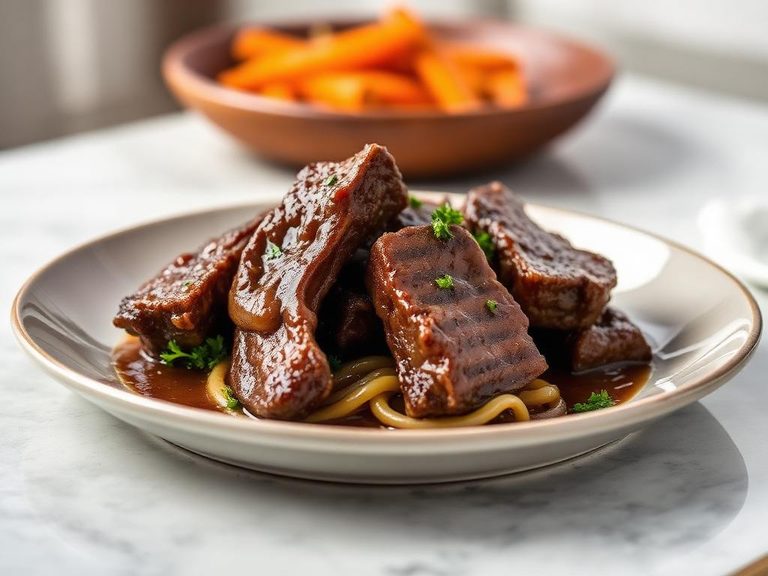
This is a prime cut of beef from the rib section, specifically the back ribs with the bone still attached and trimmed of excess fat. The raw meat boasts a deep red color with fine marbling, promising a rich, beefy flavor and a tender, succulent texture once cooked. Nutritionally, it's a powerhouse of high-quality protein and essential fats, providing substantial energy with virtually no carbohydrates.
Calorie split: 22% protein · 1% carbs · 77% fat
↓ Full nutrition💚 Why it's loved
People adore beef back ribs for their unparalleled depth of flavor and the primal satisfaction of eating meat right off the bone. The slow-cooking process renders the fat and connective tissue, creating a melt-in-the-mouth tenderness that's both versatile for grilling, braising, or smoking.
⚠️ Watch-outs & how to enjoy it better
This cut is high in saturated fat and calories, which should be considered in moderation, especially for those managing heart health or calorie intake. To balance, pair it with high-fiber, non-starchy vegetables like roasted Brussels sprouts or a vinegar-based slaw to aid digestion and add nutritional balance. Opt for grilling or broiling to allow some fat to drip away.
Key benefits
- Excellent source of complete protein for muscle maintenance and repair.
- Rich in bioavailable iron, crucial for oxygen transport in the blood.
- Provides essential B vitamins, particularly B12, for nerve function and energy metabolism.
- Contains zinc, which supports immune system health.
- A good source of selenium, an important antioxidant mineral.
🍽️ Popular dishes
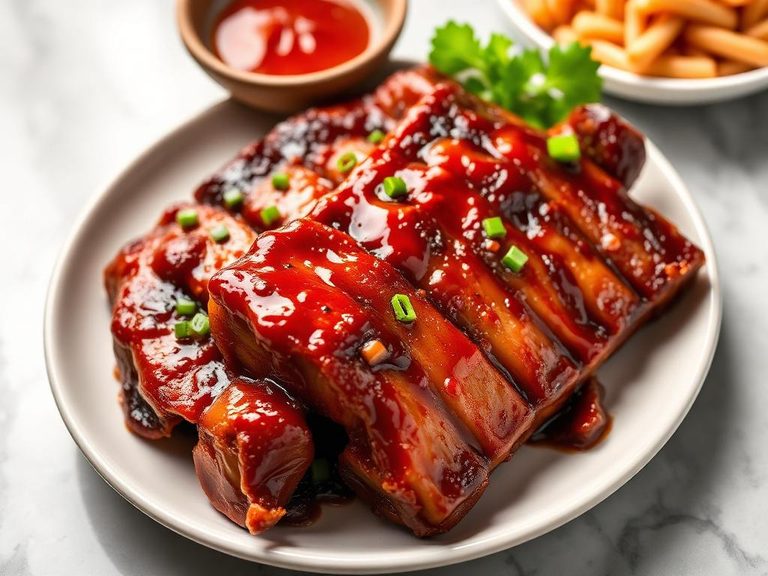
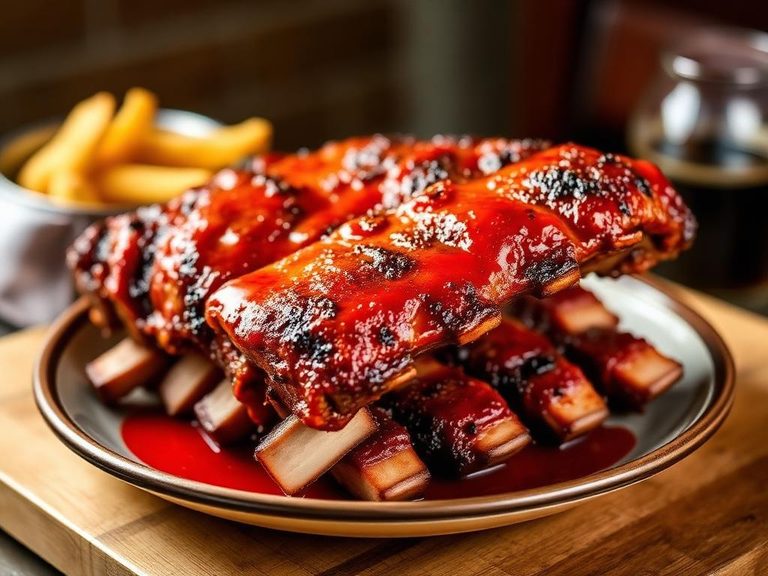
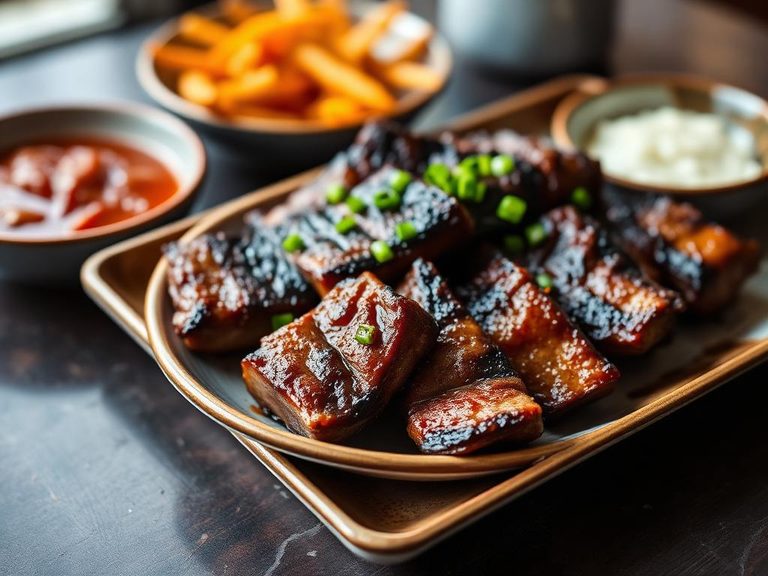
🌍 Where it's eaten
💡 Did you know?
The 'back ribs' are actually cut from the rib primal section behind the shoulder, and the meat between the bones is some of the most flavorful on the entire animal due to its proximity to the spine and rich marbling.
Full nutrition (USDA data · scales with serving)
| Water | 55.7 g |
| Energy | 305 kcal |
| Energy | 1278 kj |
| Protein | 16.8 g |
| Total lipid (fat) | 26.2 g |
| Ash | 0.75 g |
| Carbohydrate, by difference | 0.60 g |
| Fiber, total dietary | 0.00 g |
| Total Sugars | 0.00 g |
| Calcium, Ca | 10.0 mg |
| Iron, Fe | 1.7 mg |
| Magnesium, Mg | 17.0 mg |
| Phosphorus, P | 117 mg |
| Potassium, K | 224 mg |
| Sodium, Na | 52.0 mg |
| Zinc, Zn | 4.0 mg |
| Copper, Cu | 0.06 mg |
| Selenium, Se | 16.7 ug |
| Vitamin C, total ascorbic acid | 0.00 mg |
| Thiamin | 0.08 mg |
| Riboflavin | 0.20 mg |
| Niacin | 4.0 mg |
| Vitamin B-6 | 0.40 mg |
| Folate, total | 3.0 ug |
| Folic acid | 0.00 ug |
| Folate, food | 3.0 ug |
| Folate, DFE | 3.0 ug |
| Vitamin B-12 | 1.6 ug |
| Vitamin B-12, added | 0.00 ug |
| Vitamin A, RAE | 6.0 ug |
| Retinol | 6.0 ug |
| Carotene, beta | 0.00 ug |
| Carotene, alpha | 0.00 ug |
| Cryptoxanthin, beta | 0.00 ug |
| Vitamin A, IU | 19.0 iu |
| Lycopene | 0.00 ug |
| Lutein + zeaxanthin | 0.00 ug |
| Vitamin D (D2 + D3), International Units | 7.0 iu |
| Vitamin D (D2 + D3) | 0.20 ug |
| Vitamin D3 (cholecalciferol) | 0.20 ug |
| Vitamin K (phylloquinone) | 1.5 ug |
| Alcohol, ethyl | 0.00 g |
| Caffeine | 0.00 mg |
| Theobromine | 0.00 mg |
Fat & fatty acid profile (per 100g)
| Fatty acids, total saturated | 11.7 g |
| SFA 4:0 | 0.00 g |
| SFA 6:0 | 0.00 g |
| SFA 8:0 | 0.00 g |
| SFA 10:0 | 0.02 g |
| SFA 12:0 | 0.02 g |
| SFA 14:0 | 0.78 g |
| SFA 15:0 | 0.15 g |
| SFA 16:0 | 6.1 g |
| SFA 17:0 | 0.36 g |
| SFA 18:0 | 4.2 g |
| SFA 20:0 | 0.02 g |
| SFA 24:0 | 0.01 g |
| Fatty acids, total monounsaturated | 12.7 g |
| MUFA 14:1 | 0.17 g |
| MUFA 15:1 | 0.04 g |
| MUFA 16:1 | 0.86 g |
| MUFA 16:1 c | 0.78 g |
| MUFA 17:1 | 0.23 g |
| MUFA 18:1 | 11.3 g |
| MUFA 18:1 c | 9.8 g |
| MUFA 20:1 | 0.06 g |
| MUFA 22:1 | 0.00 g |
| Fatty acids, total polyunsaturated | 1.1 g |
| PUFA 18:2 | 0.96 g |
| PUFA 18:2 n-6 c,c | 0.72 g |
| PUFA 18:2 CLAs | 0.14 g |
| PUFA 18:3 | 0.05 g |
| PUFA 18:3 n-3 c,c,c (ALA) | 0.05 g |
| PUFA 18:4 | 0.00 g |
| PUFA 20:2 n-6 c,c | 0.01 g |
| PUFA 20:3 | 0.03 g |
| PUFA 20:3 n-6 | 0.03 g |
| PUFA 20:4 | 0.04 g |
| PUFA 20:5 n-3 (EPA) | 0.00 g |
| PUFA 22:5 n-3 (DPA) | 0.01 g |
| PUFA 22:6 n-3 (DHA) | 0.00 g |
| Fatty acids, total trans | 1.8 g |
| Fatty acids, total trans-monoenoic | 1.7 g |
| TFA 16:1 t | 0.08 g |
| TFA 18:1 t | 1.6 g |
| TFA 18:2 t not further defined | 0.10 g |
| Fatty acids, total trans-polyenoic | 0.10 g |
| Cholesterol | 73.0 mg |
Amino acid profile (per 100g)
| Tryptophan | 0.19 g |
| Threonine | 0.80 g |
| Isoleucine | 0.80 g |
| Leucine | 1.5 g |
| Lysine | 1.7 g |
| Methionine | 0.46 g |
| Cystine | 0.18 g |
| Phenylalanine | 0.68 g |
| Tyrosine | 0.64 g |
| Valine | 0.85 g |
| Arginine | 1.2 g |
| Histidine | 0.66 g |
| Alanine | 1.1 g |
| Aspartic acid | 1.7 g |
| Glutamic acid | 2.8 g |
| Glycine | 0.83 g |
| Proline | 0.77 g |
| Serine | 0.71 g |
| Hydroxyproline | 0.11 g |
FAQ
What's the difference between beef back ribs and short ribs?
Beef back ribs come from the rib primal behind the shoulder and have less meat between the bones, while short ribs (from the plate or chuck) are thicker, meatier, and often cut across the bone for braising.
How should I cook raw beef back ribs for the best tenderness?
For fall-off-the-bone tenderness, low-and-slow methods are ideal: braise in liquid for 2-3 hours, smoke at 225°F (107°C) for 4-6 hours, or slow-roast covered in the oven at 300°F (149°C) for 2.5-3 hours.
Is this cut suitable for a low-carb or keto diet?
Yes, it's very low in carbs (0.6g per 100g) and high in protein and fat, making it a fitting choice for ketogenic and low-carbohydrate dietary patterns when consumed in appropriate portions.
Nutrient density (calculated · NRF9.3)
Nutrient Rich Foods index: beneficial nutrients (protein, fiber, vitamins, minerals) minus saturated fat, added sugar & sodium, per 100 kcal.
NRF9.3 index — Fulgoni, Keast & Drewnowski, 2009. Computed from USDA nutrients.
Weight-loss friendliness (composite index)
Energy density 3.05 kcal/g · 22% calories from protein · 0.0 g fiber · 0.0 g sugar per 100 g.
Composite of energy density (Rolls et al., 1999), protein & fiber satiety, minus sugar. A calculated heuristic — ranks satiety-per-calorie, not a clinical measure.
Dietary load (calculated from USDA values)
Potential renal acid load. Positive = acid-forming, negative = alkaline-forming.
Sodium-to-potassium ratio: 0.23 (lower is better — aim for ≤ 1)
Sodium:potassium per WHO potassium guidance. Computed from USDA nutrients.