

Beef, New Zealand, imported, variety meats and by-products, tongue, raw
Whole food · Beef Products

Photo: Wikipedia
New Zealand beef tongue is a dense, muscular organ with a rich, beefy flavor and a uniquely smooth, velvety texture when properly slow-cooked. It's a high-protein, high-fat cut, delivering nearly 19 grams of fat and almost 18 grams of protein per 100g, making it a substantial and energy-dense food.
Calorie split: 29% protein · 0% carbs · 71% fat
↓ Full nutrition💚 Why it's loved
People love it for its incredibly tender, melt-in-the-mouth texture when braised or simmered, which transforms a tough cut into a delicacy. Its deep, mild beef flavor acts as a perfect canvas for bold sauces and seasonings, making it a versatile star in many global cuisines.
⚠️ Watch-outs & how to enjoy it better
Its high fat and cholesterol content means it should be enjoyed in moderation, especially by those managing heart health. The initial preparation can be off-putting, as the thick outer skin must be peeled after cooking. To counteract this, slice it thinly against the grain for serving and pair it with acidic or pickled sides like sauerkraut or a sharp chimichurri to cut through the richness.
Key benefits
- Excellent source of complete protein for muscle maintenance.
- Rich in vitamin B12, essential for nerve function and red blood cell formation.
- Provides significant amounts of zinc and iron.
- Contains conjugated linoleic acid (CLA), a type of beneficial fatty acid.
- A traditional nose-to-tail cut that promotes whole-animal utilization.
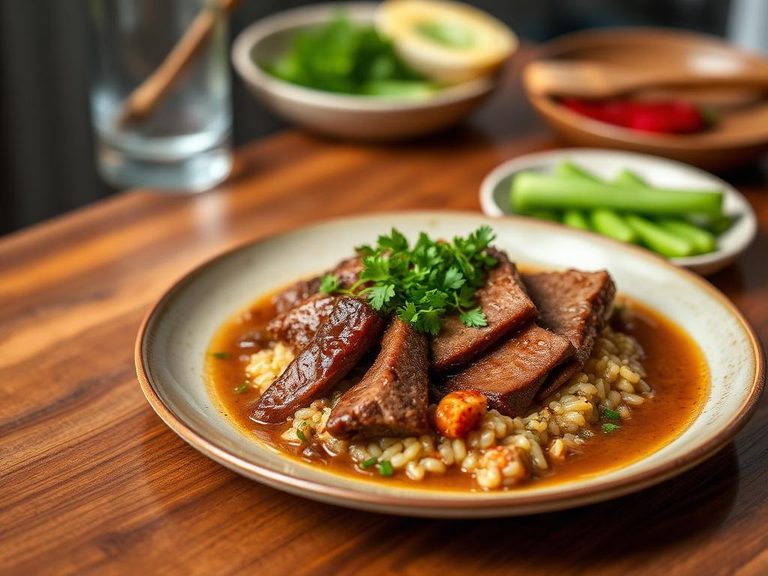
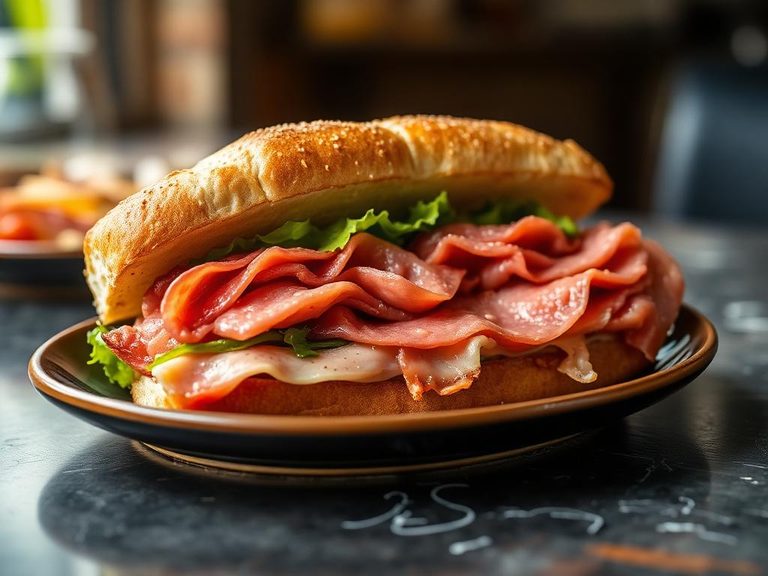
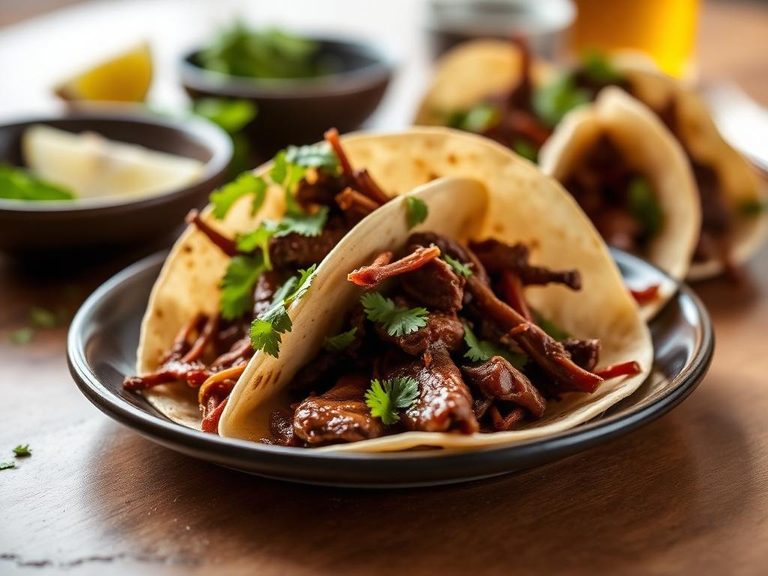
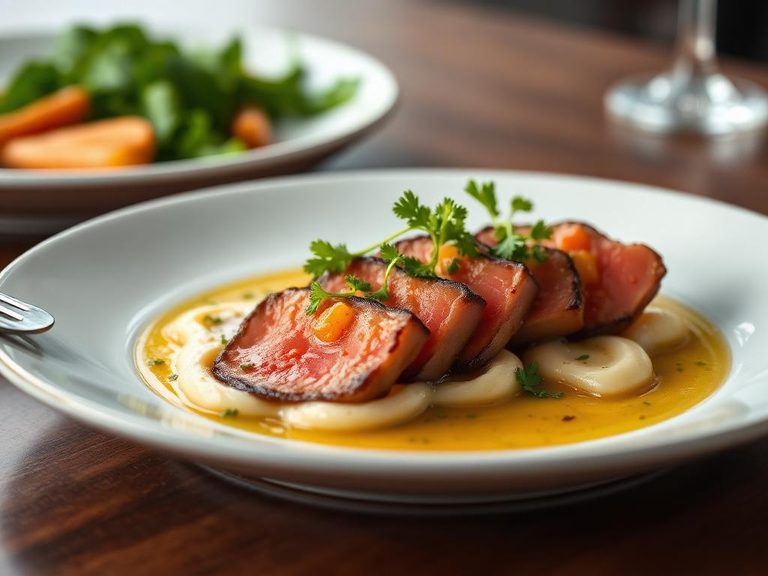
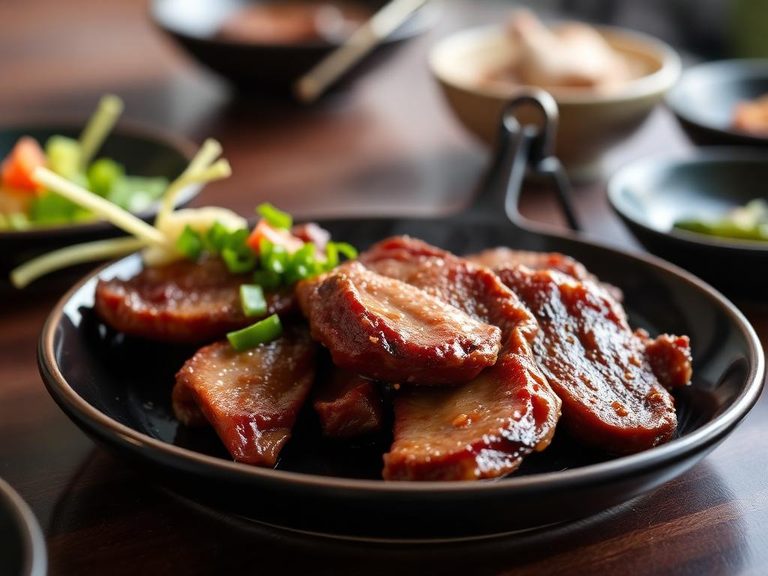
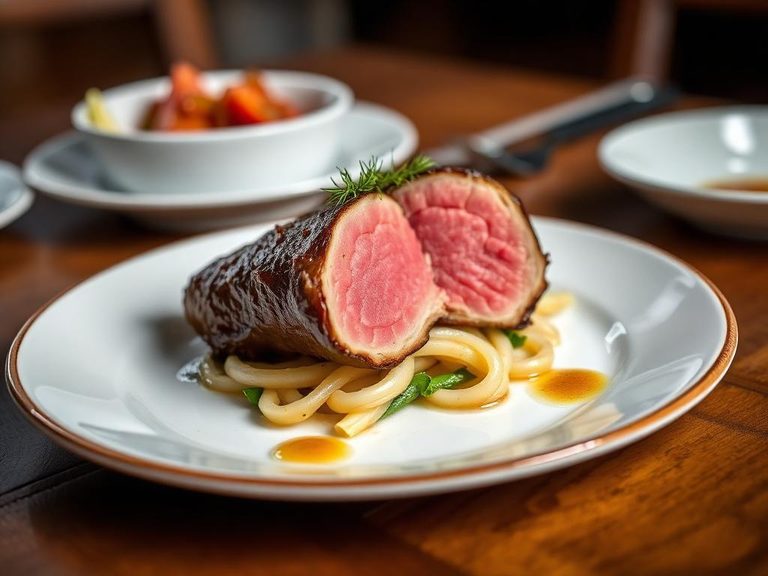
🍽️ Popular dishes
🌍 Where it's eaten
💡 Did you know?
A beef tongue can weigh between 2 to 3 pounds (0.9 to 1.4 kg) and is one of the strongest muscles in a cow's body, used constantly for grazing and grooming.
Full nutrition (USDA data · scales with serving)
| Water | 65.2 g |
| Energy | 243 kcal |
| Energy | 1016 kj |
| Protein | 17.8 g |
| Total lipid (fat) | 19.1 g |
| Ash | 0.80 g |
| Carbohydrate, by difference | 0.00 g |
| Fiber, total dietary | 0.00 g |
| Total Sugars | 0.00 g |
| Calcium, Ca | 4.0 mg |
| Iron, Fe | 1.8 mg |
| Magnesium, Mg | 16.0 mg |
| Phosphorus, P | 150 mg |
| Potassium, K | 252 mg |
| Sodium, Na | 73.0 mg |
| Zinc, Zn | 2.7 mg |
| Copper, Cu | 0.12 mg |
| Manganese, Mn | 0.01 mg |
| Selenium, Se | 2.5 ug |
| Vitamin C, total ascorbic acid | 0.00 mg |
| Thiamin | 0.07 mg |
| Riboflavin | 0.21 mg |
| Niacin | 3.0 mg |
| Pantothenic acid | 0.43 mg |
| Vitamin B-6 | 0.09 mg |
| Vitamin B-12 | 5.2 ug |
| Vitamin B-12, added | 0.00 ug |
| Vitamin A, RAE | 12.0 ug |
| Retinol | 12.0 ug |
| Carotene, beta | 0.00 ug |
| Carotene, alpha | 0.00 ug |
| Cryptoxanthin, beta | 0.00 ug |
| Vitamin A, IU | 40.0 iu |
| Lycopene | 0.00 ug |
| Lutein + zeaxanthin | 0.00 ug |
| Vitamin E (alpha-tocopherol) | 0.95 mg |
| Vitamin E, added | 0.00 mg |
| Vitamin D (D2 + D3), International Units | 14.0 iu |
| Vitamin D (D2 + D3) | 0.30 ug |
| Vitamin D3 (cholecalciferol) | 0.30 ug |
| Alcohol, ethyl | 0.00 g |
| Caffeine | 0.00 mg |
| Theobromine | 0.00 mg |
Fat & fatty acid profile (per 100g)
| Fatty acids, total saturated | 6.7 g |
| SFA 4:0 | 0.00 g |
| SFA 6:0 | 0.00 g |
| SFA 8:0 | 0.00 g |
| SFA 10:0 | 0.01 g |
| SFA 12:0 | 0.01 g |
| SFA 14:0 | 0.44 g |
| SFA 16:0 | 3.3 g |
| SFA 17:0 | 0.31 g |
| SFA 18:0 | 2.6 g |
| SFA 20:0 | 0.02 g |
| SFA 22:0 | 0.00 g |
| SFA 24:0 | 0.00 g |
| Fatty acids, total monounsaturated | 6.7 g |
| MUFA 14:1 | 0.08 g |
| MUFA 15:1 | 0.00 g |
| MUFA 16:1 | 0.52 g |
| MUFA 16:1 c | 0.43 g |
| MUFA 17:1 | 0.00 g |
| MUFA 18:1 | 6.0 g |
| MUFA 18:1 c | 5.3 g |
| MUFA 20:1 | 0.03 g |
| MUFA 22:1 | 0.00 g |
| MUFA 22:1 c | 0.00 g |
| MUFA 24:1 c | 0.00 g |
| Fatty acids, total polyunsaturated | 0.64 g |
| PUFA 18:2 | 0.38 g |
| PUFA 18:2 n-6 c,c | 0.27 g |
| PUFA 18:2 CLAs | 0.11 g |
| PUFA 18:3 | 0.13 g |
| PUFA 18:3 n-3 c,c,c (ALA) | 0.13 g |
| PUFA 18:3 n-6 c,c,c | 0.00 g |
| PUFA 18:4 | 0.00 g |
| PUFA 20:2 n-6 c,c | 0.00 g |
| PUFA 20:3 | 0.01 g |
| PUFA 20:3 n-3 | 0.00 g |
| PUFA 20:3 n-6 | 0.01 g |
| PUFA 20:4 | 0.03 g |
| PUFA 20:4 n-6 | 0.03 g |
| PUFA 20:5 n-3 (EPA) | 0.02 g |
| PUFA 22:5 n-3 (DPA) | 0.04 g |
| PUFA 22:6 n-3 (DHA) | 0.00 g |
| Fatty acids, total trans | 0.79 g |
| Fatty acids, total trans-monoenoic | 0.79 g |
| TFA 16:1 t | 0.09 g |
| TFA 18:1 t | 0.70 g |
| TFA 18:2 t,t | 0.00 g |
| Fatty acids, total trans-polyenoic | 0.00 g |
| Cholesterol | 81.0 mg |
Amino acid profile (per 100g)
| Tryptophan | 0.19 g |
| Threonine | 0.64 g |
| Isoleucine | 0.74 g |
| Leucine | 1.3 g |
| Lysine | 1.4 g |
| Methionine | 0.58 g |
| Phenylalanine | 0.69 g |
| Tyrosine | 0.60 g |
| Valine | 0.78 g |
| Arginine | 1.2 g |
| Histidine | 0.64 g |
| Alanine | 0.93 g |
| Glutamic acid | 2.5 g |
| Glycine | 0.97 g |
| Proline | 0.57 g |
| Serine | 0.63 g |
FAQ
How do you prepare beef tongue?
The standard method is to simmer it whole in water or broth with aromatics (like onion, garlic, and bay leaf) for 2-3 hours until very tender. After cooking, the thick outer skin is peeled off while still warm, and the meat is then sliced for serving or further preparation.
Is beef tongue fatty?
Yes, it is a high-fat cut. Per 100g, it contains about 19g of fat, much of which is saturated. It's best considered an occasional indulgence or served in thin slices.
What does it taste like?
It has a very rich, beefy flavor, milder than steak but deeper than many other cuts. The texture, when cooked properly, is exceptionally tender and smooth, often compared to a very fine, dense pâté.
Nutrient density (calculated · NRF9.3)
Nutrient Rich Foods index: beneficial nutrients (protein, fiber, vitamins, minerals) minus saturated fat, added sugar & sodium, per 100 kcal.
NRF9.3 index — Fulgoni, Keast & Drewnowski, 2009. Computed from USDA nutrients.
Weight-loss friendliness (composite index)
Energy density 2.43 kcal/g · 29% calories from protein · 0.0 g fiber · 0.0 g sugar per 100 g.
Composite of energy density (Rolls et al., 1999), protein & fiber satiety, minus sugar. A calculated heuristic — ranks satiety-per-calorie, not a clinical measure.
Dietary load (calculated from USDA values)
Potential renal acid load. Positive = acid-forming, negative = alkaline-forming.
Sodium-to-potassium ratio: 0.29 (lower is better — aim for ≤ 1)
Sodium:potassium per WHO potassium guidance. Computed from USDA nutrients.