

Tongue Vinaigrette
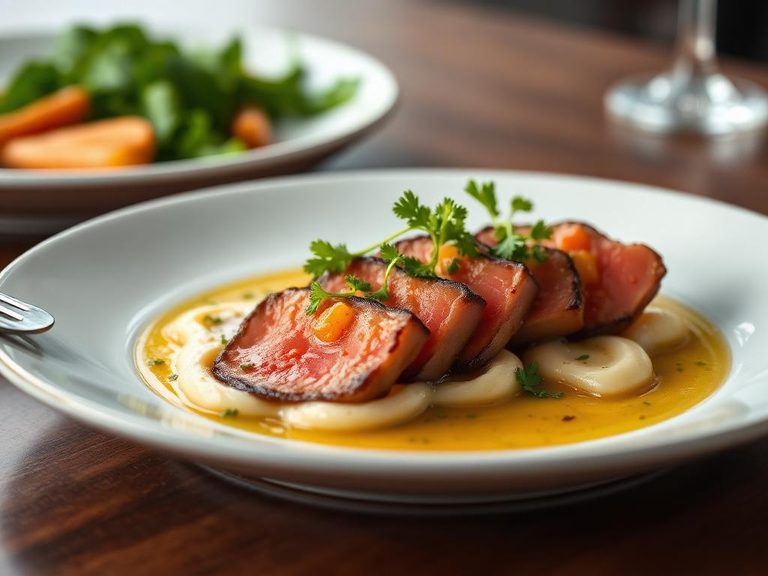
Tongue Vinaigrette is a classic French cold appetizer featuring thinly sliced, boiled beef or veal tongue marinated in a tangy vinaigrette dressing. The dish typically includes ingredients like cornichons, capers, onions, and fresh herbs, creating a savory and acidic flavor profile. It is a traditional charcuterie item often served in French bistros and as part of a cold platter.
🍽️ Nutrition at a glance
This dish is high in protein and fat, with minimal carbohydrates, making it a substantial, low-carb option. It provides key nutrients like iron, zinc, and B vitamins from the tongue, along with some sodium from the dressing and pickles.
Nutrition breakdown
| Calories | 280 kcal |
| Protein | 22 g |
| Carbs | 3 g |
| Fat | 20 g |
| Fiber | 0.5 g |
| Sugar | 1 g |
| Sodium | 650 mg |
| Iron | 3.5 mg |
| Zinc | 5.2 mg |
| Vitamin B12 | 6.5 mcg |
| Niacin (B3) | 4.8 mg |
| Phosphorus | 220 mg |
| Selenium | 18 mcg |
| Potassium | 280 mg |
| Vitamin B6 | 0.4 mg |
Per 1 cup (150 g) · estimated, varies by recipe
💡 What's interesting
Culturally, Tongue Vinaigrette is a prime example of French nose-to-tail eating, utilizing an organ meat that is prized for its tender texture when properly cooked. Nutritionally, beef tongue is surprisingly nutrient-dense, offering more iron and zinc per serving than many common cuts of meat.
🍽️ Related dishes



AI estimate may be inaccurate · Terms