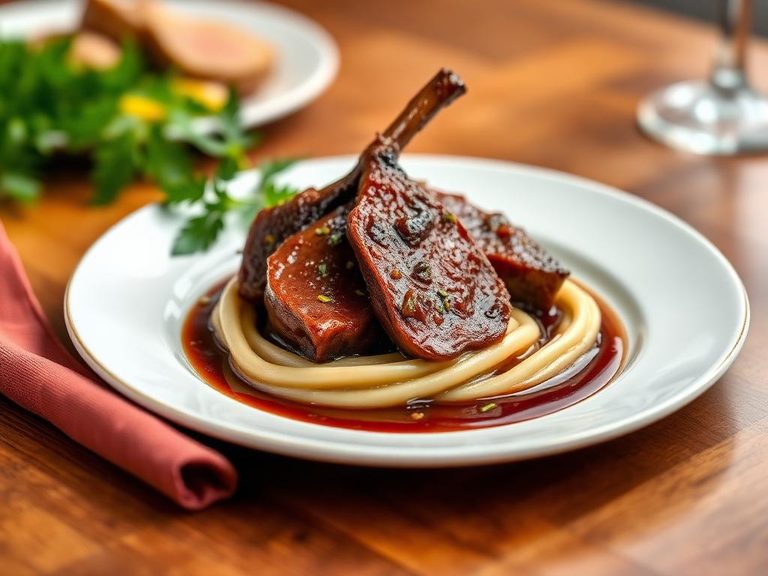
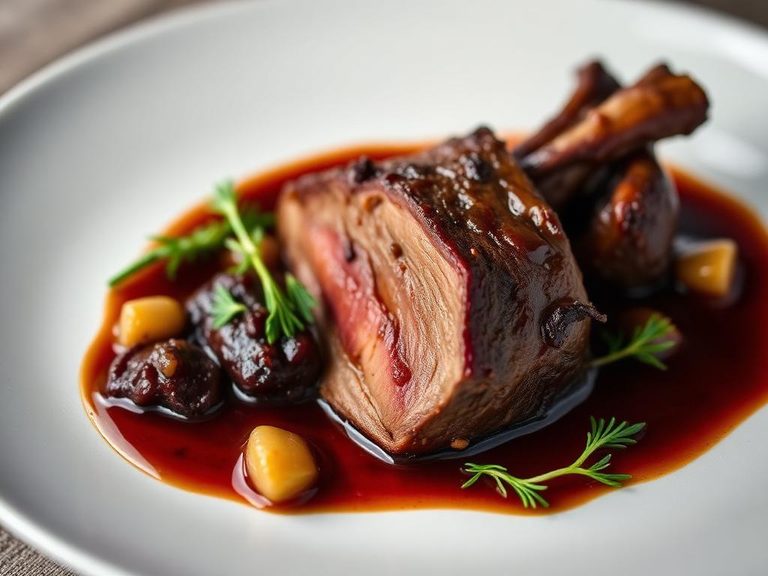
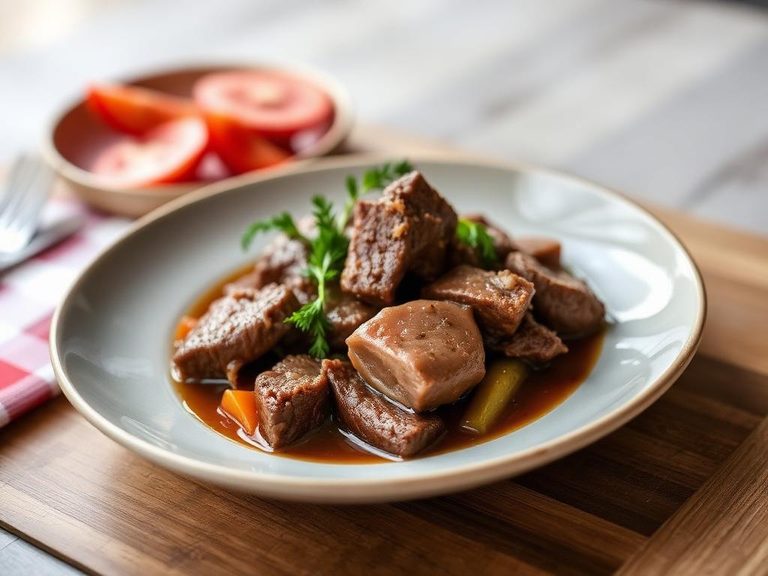
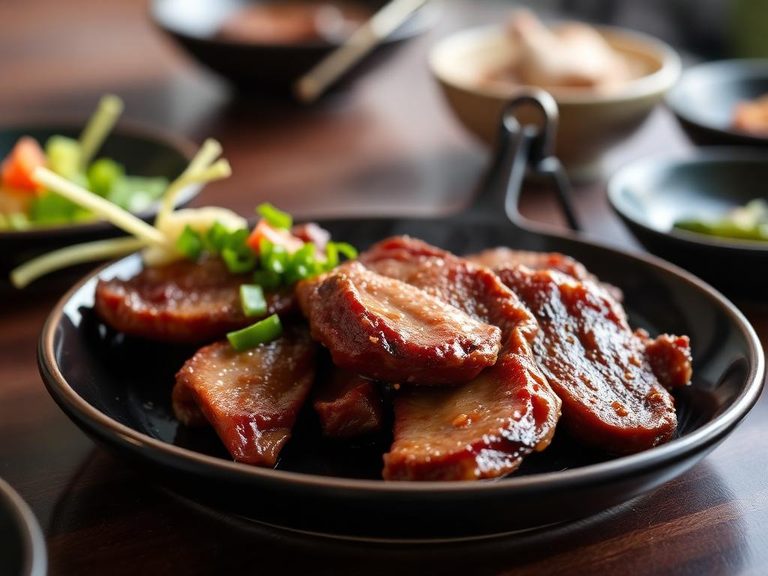
Braised Beef Tongue
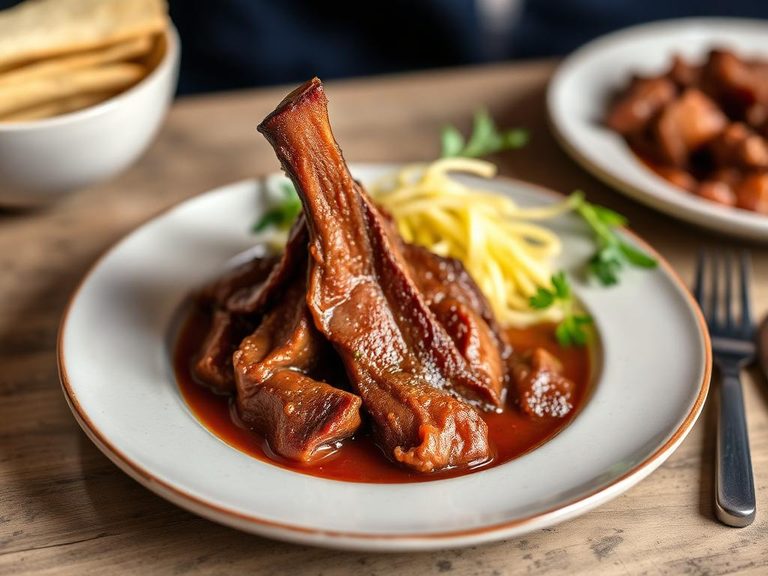
Braised beef tongue is a savory, slow-cooked dish where the tongue is simmered until tender in a flavorful liquid, often featuring aromatic vegetables, herbs, and wine. It is a traditional delicacy in both French cuisine (where it is known as 'langue de boeuf') and Ashkenazi Jewish cooking, particularly for holiday meals like Rosh Hashanah or Passover.
🍽️ Nutrition at a glance
This dish is very high in protein and provides a significant amount of healthy fats, while being essentially carbohydrate-free. It is an excellent source of iron, zinc, and B vitamins, especially B12, with a typical serving containing roughly 300-400 calories.
Nutrition breakdown
| Calories | 310 kcal |
| Protein | 32 g |
| Carbs | 0 g |
| Fat | 19 g |
| Fiber | 0 g |
| Sugar | 0 g |
| Sodium | 680 mg |
| Vitamin B12 | 5.5 mcg |
| Niacin (B3) | 7.2 mg |
| Zinc | 5.8 mg |
| Iron | 3.1 mg |
| Phosphorus | 290 mg |
| Selenium | 32 mcg |
| Riboflavin (B2) | 0.3 mg |
| Potassium | 280 mg |
Per 1 slice (120 g) · estimated, varies by recipe
💡 What's interesting
Culturally, braised beef tongue is a prime example of 'nose-to-tail' eating, a practice valued in both French culinary tradition and Jewish dietary laws to minimize waste. Nutritionally, it's a powerhouse of heme iron, which is more easily absorbed by the body than plant-based iron.