Japanese Beef Tongue (Gyutan) Yakiniku
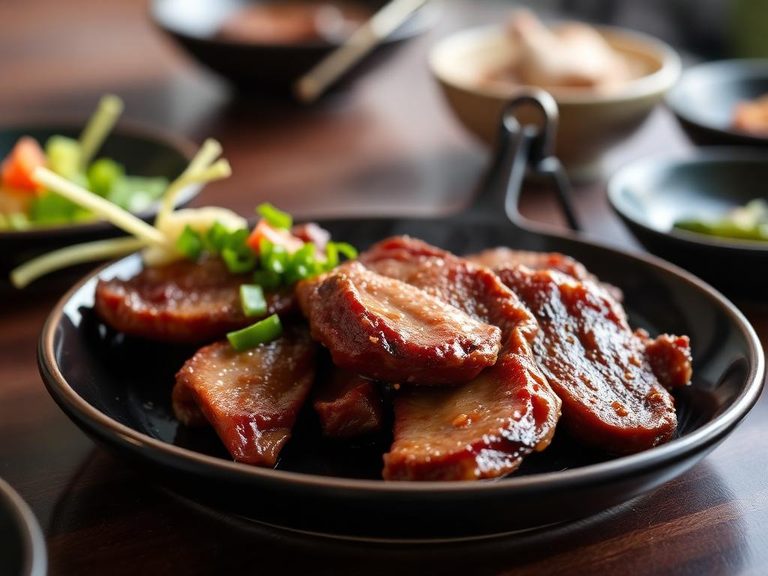
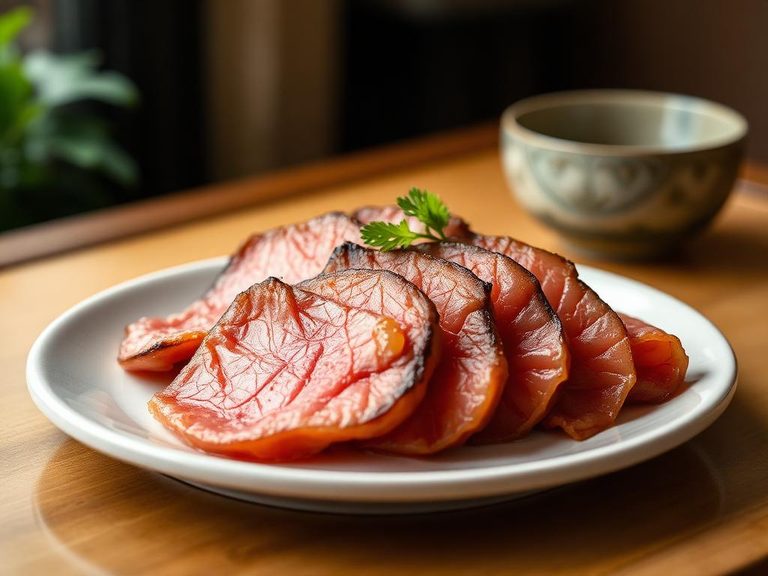
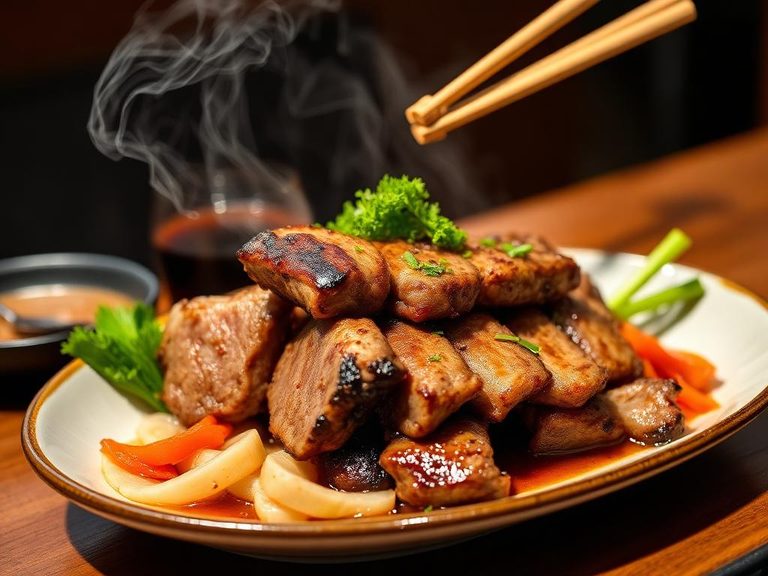
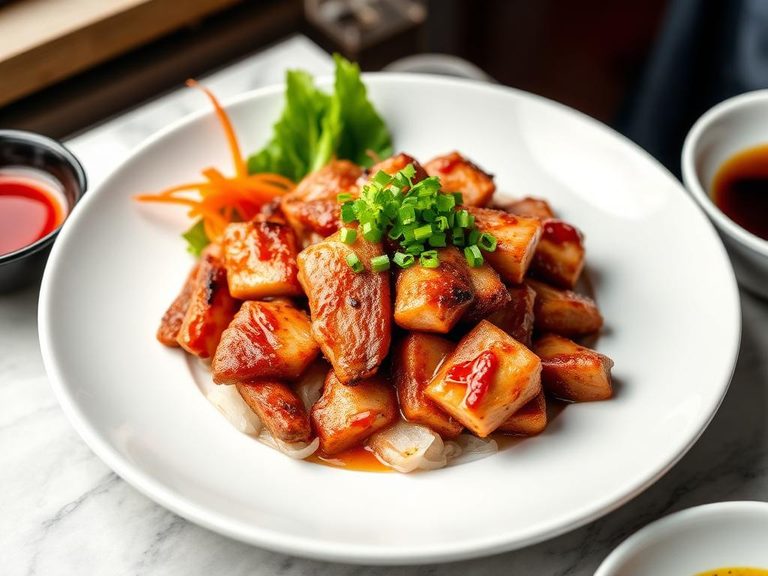
Japanese Beef Tongue Yakiniku, or Gyutan, is a popular dish featuring thinly sliced beef tongue grilled over charcoal, often seasoned with salt or a savory-sweet tare sauce. Originating in the Sendai region of Japan, it's a staple of yakiniku (Japanese BBQ) restaurants where diners grill the meat themselves at the table.
🍽️ Nutrition at a glance
Gyutan is a high-protein, low-carbohydrate dish that provides essential nutrients like iron, zinc, and B vitamins. A typical serving of around 100-120 grams of grilled beef tongue contains approximately 200-250 calories, with most calories coming from protein and healthy fats.
Nutrition breakdown
| Calories | 220 kcal |
| Protein | 22 g |
| Carbs | 0 g |
| Fat | 14 g |
| Fiber | 0 g |
| Sugar | 0 g |
| Sodium | 80 mg |
| Vitamin B12 | 4.5 µg |
| Iron | 2.5 mg |
| Zinc | 4.8 mg |
| Niacin (B3) | 5.2 mg |
| Phosphorus | 220 mg |
| Potassium | 300 mg |
| Selenium | 18 µg |
| Riboflavin (B2) | 0.3 mg |
Per 100 g (about 3.5 oz, typical grilled portion) · estimated, varies by recipe
💡 What's interesting
Culturally, gyutan is a beloved regional specialty of Sendai, often served as part of a set meal with barley rice and tail soup. Nutritionally, beef tongue is surprisingly lean and rich in vitamin B12, which is crucial for nerve function and energy production.