Beef Tongue Stew
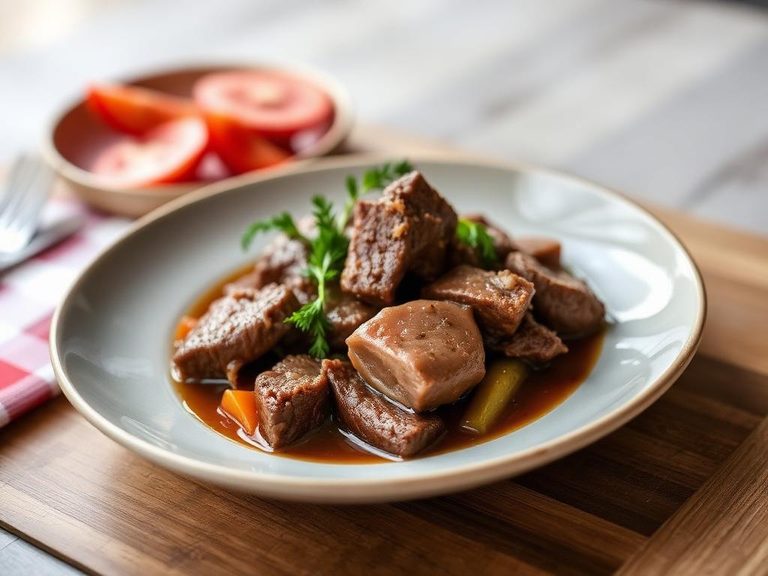
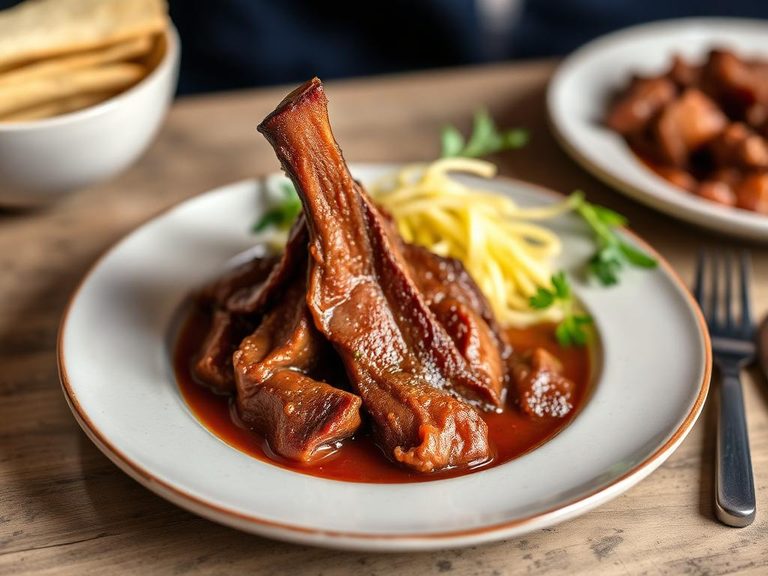
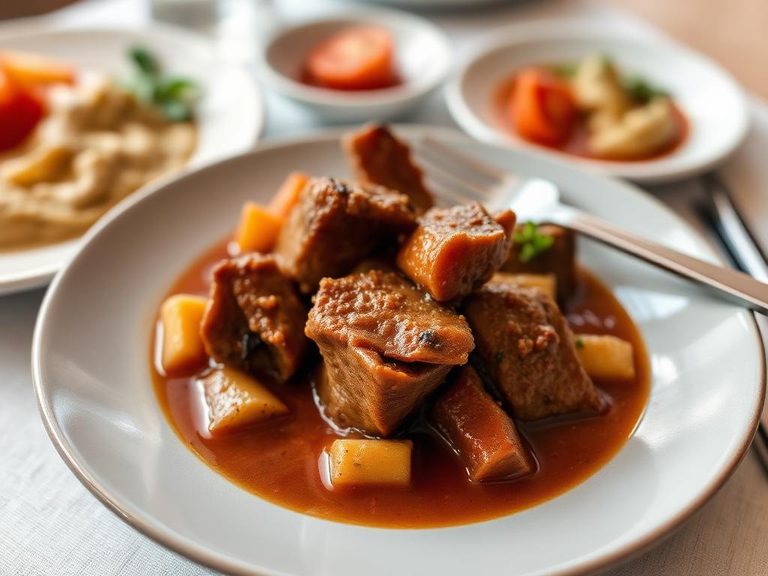
Beef tongue stew is a hearty, slow-cooked dish where the tongue is simmered until tender, then typically served in a rich gravy with vegetables like onions, carrots, and potatoes. It is a traditional comfort food found in various forms across European cuisines, from French 'langue de boeuf' to Eastern European preparations.
🍽️ Nutrition at a glance
This dish is high in protein and fat, with virtually no carbohydrates unless served with starchy sides. A typical serving provides a good source of iron, zinc, and B vitamins, especially B12, and generally ranges from 400 to 600 calories.
Nutrition breakdown
| Calories | 320 kcal |
| Protein | 28 g |
| Carbs | 8 g |
| Fat | 20 g |
| Fiber | 2 g |
| Sugar | 3 g |
| Sodium | 680 mg |
| Potassium | 420 mg |
| Iron | 4.5 mg |
| Zinc | 6.8 mg |
| Vitamin B12 | 8.2 mcg |
| Niacin (B3) | 9.1 mg |
| Phosphorus | 280 mg |
| Selenium | 24 mcg |
| Vitamin B6 | 0.6 mg |
Per 1 cup (240 g) · estimated, varies by recipe
💡 What's interesting
Culturally, it represents a 'nose-to-tail' eating philosophy that values using the whole animal, turning a less common cut into a delicacy. Nutritionally, the tongue is one of the most nutrient-dense cuts of beef, packed with essential minerals often lacking in modern diets.