

Pickles, cucumber, dill or kosher dill
Whole food · Vegetables and Vegetable Products
A crisp, brined cucumber with a tangy, garlicky, and herbaceous flavor, often featuring dill. Its signature snap and refreshing acidity make it a low-calorie powerhouse, delivering a mere 12 calories per 100g with a notable 1g of fiber.
Calorie split: 14% protein · 67% carbs · 19% fat
↓ Full nutrition💚 Why it's loved
People adore its satisfying crunch and potent, savory-sour punch that cuts through rich foods. It's a cultural staple, from the classic deli sandwich to a standalone snack, embodying comfort and zest.
⚠️ Watch-outs & how to enjoy it better
The primary concern is high sodium content from the brine, which can be an issue for those monitoring salt intake. The acidity may also aggravate heartburn or acid reflux in some individuals. To mitigate, choose low-sodium versions, rinse slices before eating, or pair with a protein like cheese or hummus to balance the meal.
Key benefits
- Extremely low in calories and fat
- Provides a small amount of dietary fiber
- Contains probiotics if traditionally fermented
- Adds flavor without significant calories
- Source of vitamin K in small amounts
🍽️ Popular dishes
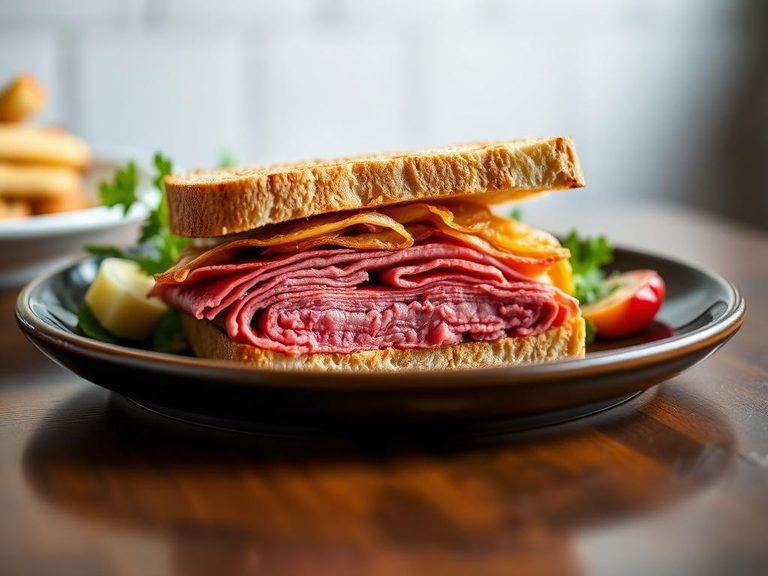
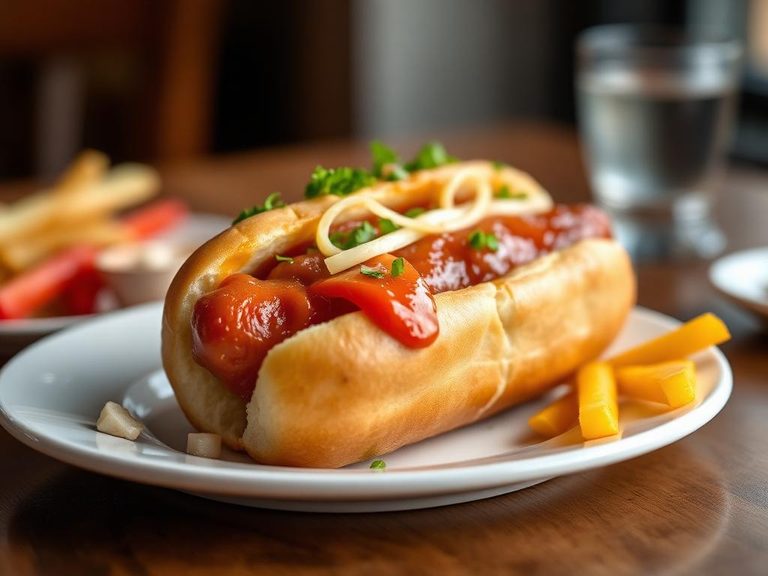
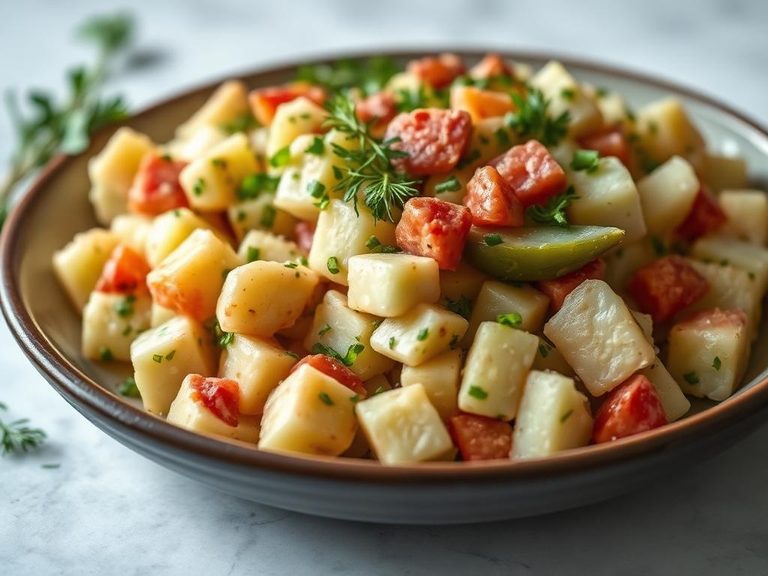
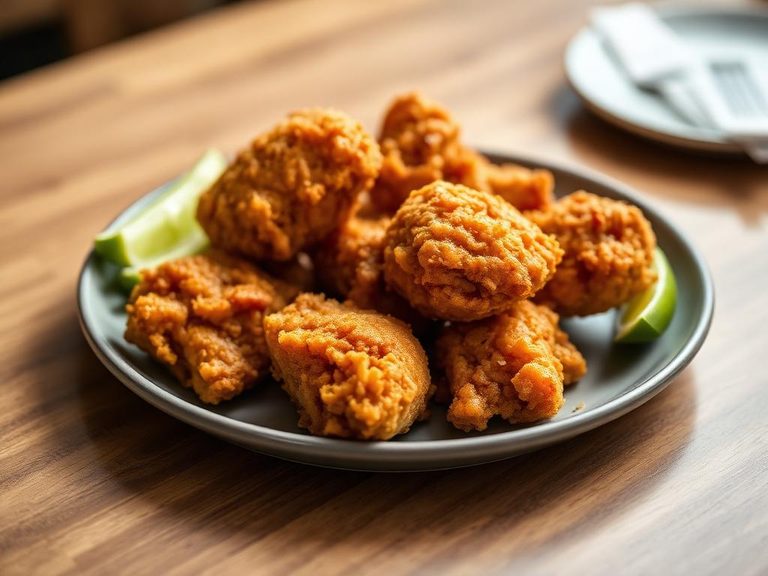
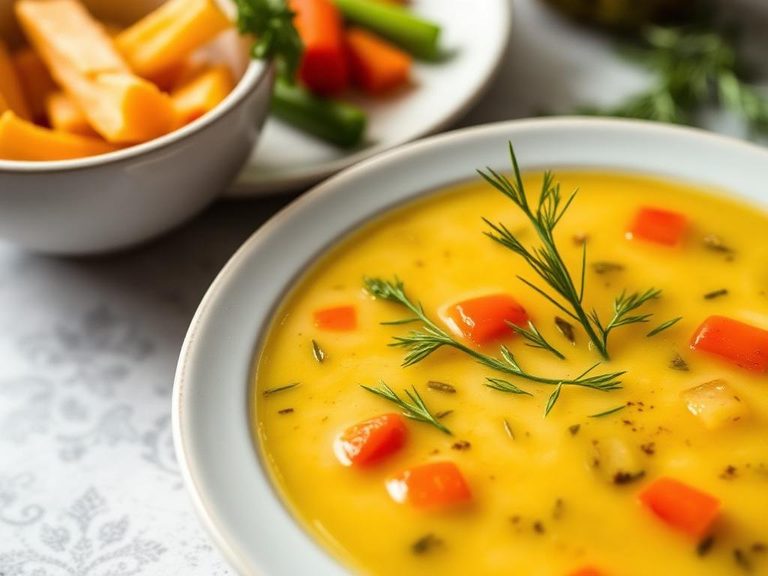
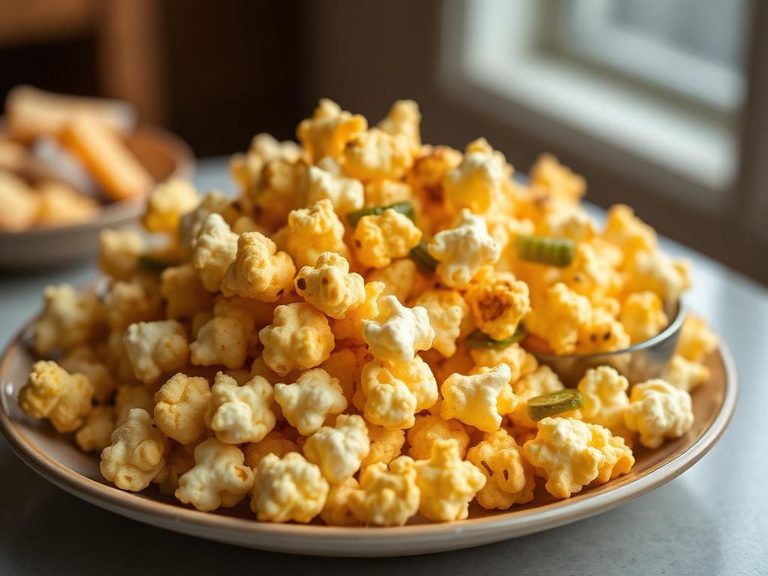
🌍 Where it's eaten
💡 Did you know?
During the 1893 Chicago World's Fair, F.W. Rueckheim introduced a new confection he called 'candied popcorn,' which he later perfected by adding a 'secret ingredient'—a small amount of sticky pickle brine—to help the coating adhere, creating the first Cracker Jack.
Full nutrition (USDA data · scales with serving)
| Water | 94.3 g |
| Energy | 12.0 kcal |
| Energy | 52.0 kj |
| Protein | 0.50 g |
| Total lipid (fat) | 0.30 g |
| Ash | 2.5 g |
| Carbohydrate, by difference | 2.4 g |
| Fiber, total dietary | 1.0 g |
| Total Sugars | 1.1 g |
| Sucrose | 0.00 g |
| Glucose | 0.52 g |
| Fructose | 0.55 g |
| Lactose | 0.00 g |
| Maltose | 0.00 g |
| Galactose | 0.00 g |
| Calcium, Ca | 57.0 mg |
| Iron, Fe | 0.26 mg |
| Magnesium, Mg | 7.0 mg |
| Phosphorus, P | 16.0 mg |
| Potassium, K | 117 mg |
| Sodium, Na | 809 mg |
| Zinc, Zn | 0.10 mg |
| Copper, Cu | 0.03 mg |
| Manganese, Mn | 0.06 mg |
| Selenium, Se | 0.00 ug |
| Fluoride, F | 30.1 ug |
| Vitamin C, total ascorbic acid | 2.3 mg |
| Thiamin | 0.04 mg |
| Riboflavin | 0.06 mg |
| Niacin | 0.11 mg |
| Pantothenic acid | 0.20 mg |
| Vitamin B-6 | 0.04 mg |
| Folate, total | 8.0 ug |
| Folic acid | 0.00 ug |
| Folate, food | 8.0 ug |
| Folate, DFE | 8.0 ug |
| Choline, total | 3.4 mg |
| Betaine | 0.00 mg |
| Vitamin B-12 | 0.00 ug |
| Vitamin B-12, added | 0.00 ug |
| Vitamin A, RAE | 6.0 ug |
| Retinol | 0.00 ug |
| Carotene, beta | 53.0 ug |
| Carotene, alpha | 13.0 ug |
| Cryptoxanthin, beta | 30.0 ug |
| Vitamin A, IU | 125 iu |
| Lycopene | 0.00 ug |
| Lutein + zeaxanthin | 28.0 ug |
| Vitamin E (alpha-tocopherol) | 0.03 mg |
| Vitamin E, added | 0.00 mg |
| Vitamin D (D2 + D3), International Units | 0.00 iu |
| Vitamin D (D2 + D3) | 0.00 ug |
| Vitamin K (phylloquinone) | 17.3 ug |
| Vitamin K (Dihydrophylloquinone) | 0.00 ug |
| Vitamin K (Menaquinone-4) | 0.00 ug |
| Alcohol, ethyl | 0.00 g |
| Caffeine | 0.00 mg |
| Theobromine | 0.00 mg |
Fat & fatty acid profile (per 100g)
| Fatty acids, total saturated | 0.08 g |
| SFA 4:0 | 0.00 g |
| SFA 6:0 | 0.00 g |
| SFA 8:0 | 0.00 g |
| SFA 10:0 | 0.00 g |
| SFA 12:0 | 0.00 g |
| SFA 14:0 | 0.00 g |
| SFA 16:0 | 0.07 g |
| SFA 18:0 | 0.01 g |
| Fatty acids, total monounsaturated | 0.01 g |
| MUFA 16:1 | 0.00 g |
| MUFA 18:1 | 0.01 g |
| MUFA 20:1 | 0.00 g |
| MUFA 22:1 | 0.00 g |
| Fatty acids, total polyunsaturated | 0.12 g |
| PUFA 18:2 | 0.05 g |
| PUFA 18:3 | 0.07 g |
| PUFA 18:4 | 0.00 g |
| PUFA 20:4 | 0.00 g |
| PUFA 20:5 n-3 (EPA) | 0.00 g |
| PUFA 22:5 n-3 (DPA) | 0.00 g |
| PUFA 22:6 n-3 (DHA) | 0.00 g |
| Fatty acids, total trans | 0.00 g |
| Cholesterol | 0.00 mg |
| Phytosterols | 14.0 mg |
Amino acid profile (per 100g)
| Tryptophan | 0.01 g |
| Threonine | 0.02 g |
| Isoleucine | 0.02 g |
| Leucine | 0.03 g |
| Lysine | 0.03 g |
| Methionine | 0.01 g |
| Cystine | 0.00 g |
| Phenylalanine | 0.02 g |
| Tyrosine | 0.01 g |
| Valine | 0.02 g |
| Arginine | 0.04 g |
| Histidine | 0.01 g |
| Alanine | 0.02 g |
| Aspartic acid | 0.04 g |
| Glutamic acid | 0.18 g |
| Glycine | 0.02 g |
| Proline | 0.01 g |
| Serine | 0.02 g |
FAQ
Are dill pickles fermented or just vinegar-pickled?
It depends. Traditional 'kosher dill' or 'half-sour' pickles are fermented in a salt brine, developing probiotics. Many commercial shelf-stable pickles are simply preserved in vinegar and salt, which lacks live cultures.
Why do pickles have so much sodium?
Salt is essential in the pickling process. It creates a brine that draws water out of the cucumber, inhibits the growth of harmful bacteria, and allows beneficial lactic acid bacteria to thrive in fermented versions, while also acting as a preservative and flavor enhancer.
Can I use pickle juice for anything?
Absolutely! It's a popular secret ingredient for brining chicken or pork for extra flavor and moisture, adding a tangy kick to Bloody Mary cocktails, or even as a post-workout drink to help replenish electrolytes.
Nutrient density (calculated · NRF9.3)
Nutrient Rich Foods index: beneficial nutrients (protein, fiber, vitamins, minerals) minus saturated fat, added sugar & sodium, per 100 kcal.
NRF9.3 index — Fulgoni, Keast & Drewnowski, 2009. Computed from USDA nutrients.
Weight-loss friendliness (composite index)
Energy density 0.12 kcal/g · 17% calories from protein · 1.0 g fiber · 1.1 g sugar per 100 g.
Composite of energy density (Rolls et al., 1999), protein & fiber satiety, minus sugar. A calculated heuristic — ranks satiety-per-calorie, not a clinical measure.
Dietary load (calculated from USDA values)
Potential renal acid load. Positive = acid-forming, negative = alkaline-forming.
Sodium-to-potassium ratio: 6.91 (lower is better — aim for ≤ 1)
Sodium:potassium per WHO potassium guidance. Computed from USDA nutrients.