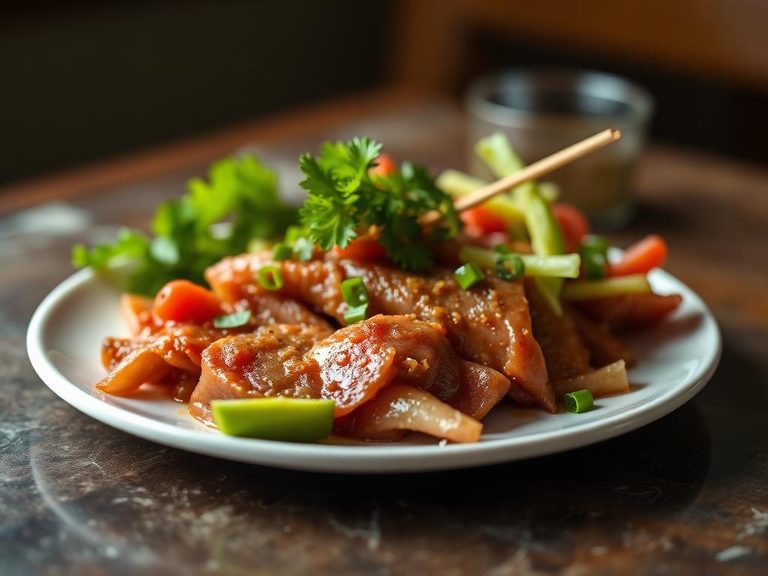
Soused Tongue
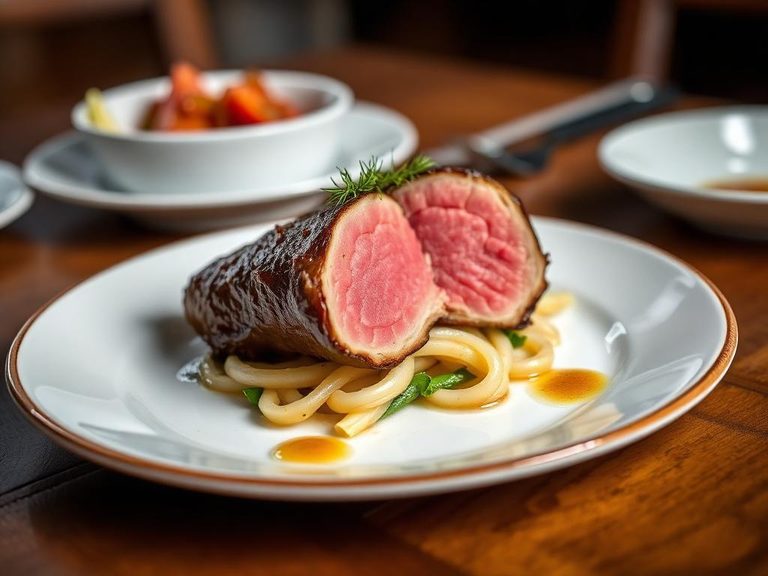
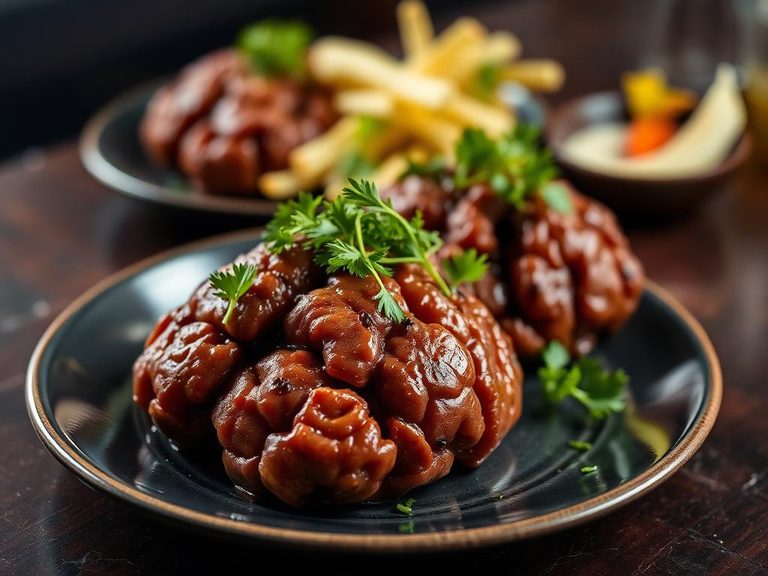
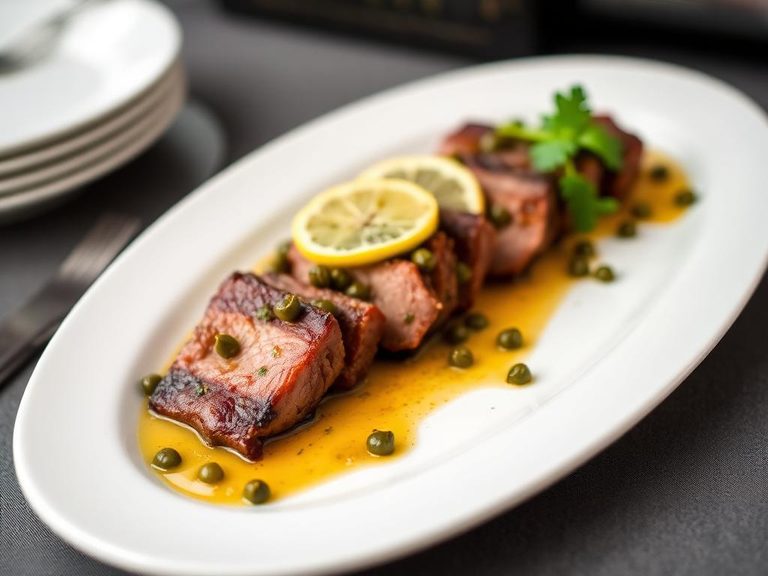
Soused Tongue is a traditional British cold dish made from beef or ox tongue that has been simmered, peeled, and then marinated in a spiced vinegar or brine solution, often with onions, bay leaves, and peppercorns. It was historically a popular way to preserve and utilize the entire animal, reflecting a 'nose-to-tail' eating philosophy. The dish is typically served sliced as part of a cold platter, buffet, or picnic spread.
🍽️ Nutrition at a glance
This dish is very high in protein and a good source of iron and B vitamins, particularly B12, but it is also high in sodium due to the pickling brine. A typical serving (about 3-4 oz / 85-115g) would be relatively low in carbohydrates and fat, with a rough calorie estimate of around 150-250 calories.
Nutrition breakdown
| Calories | 185 kcal |
| Protein | 26 g |
| Carbs | 1 g |
| Fat | 8 g |
| Fiber | 0 g |
| Sugar | 0 g |
| Sodium | 780 mg |
| Iron | 3.5 mg |
| Zinc | 5.8 mg |
| Vitamin B12 | 8.5 µg |
| Niacin (B3) | 8.2 mg |
| Phosphorus | 280 mg |
| Potassium | 310 mg |
| Selenium | 22 µg |
| Cholesterol | 85 mg |
Per 1 slice (approx. 85 g) · estimated, varies by recipe
💡 What's interesting
Culturally, it represents a historic British approach to frugal and preservation-focused cooking, turning a tough, inexpensive cut into a flavorful, shelf-stable delicacy. Nutritionally, it's a concentrated source of high-quality protein and certain micronutrients, though the high salt content means it's often enjoyed as an occasional treat rather than a daily staple.