Soused Brains
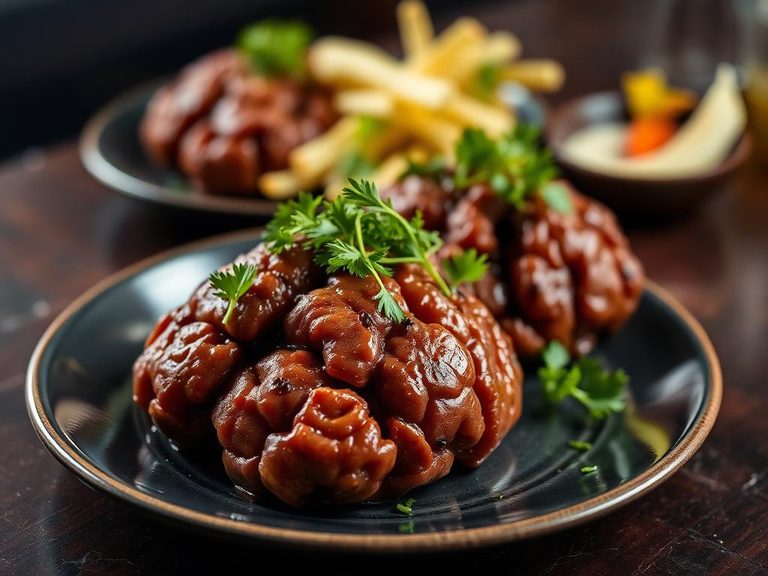
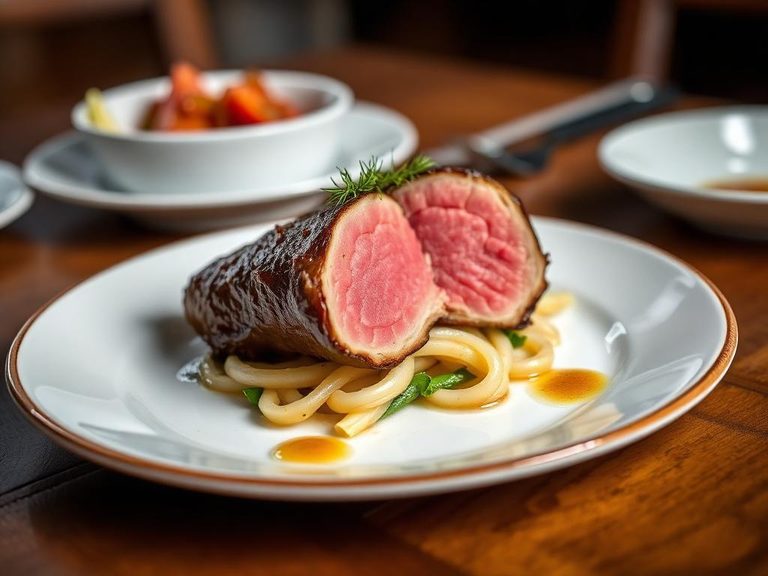
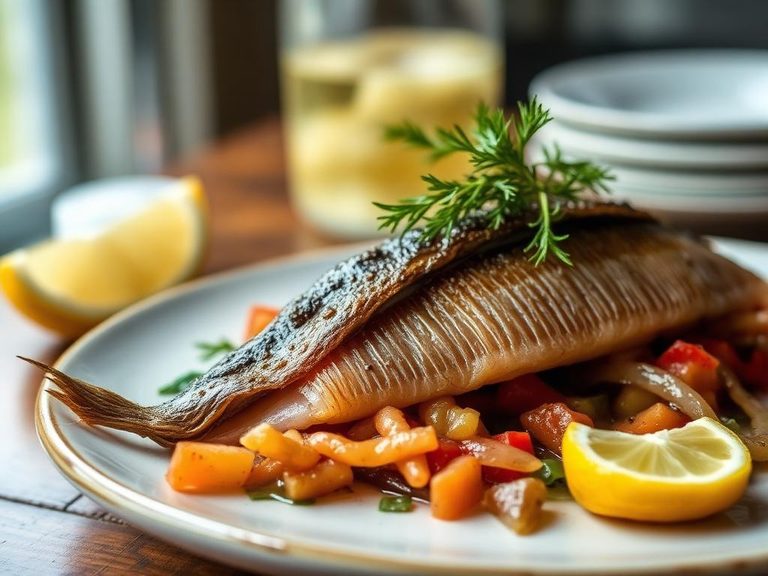
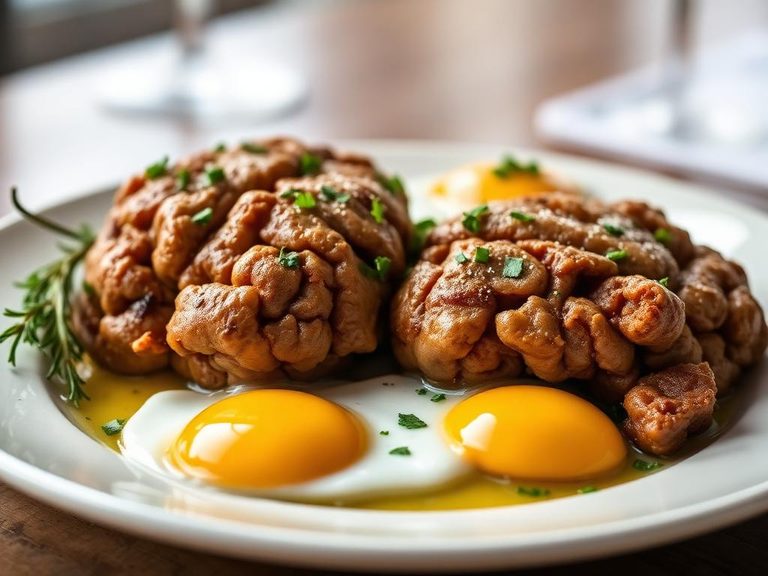
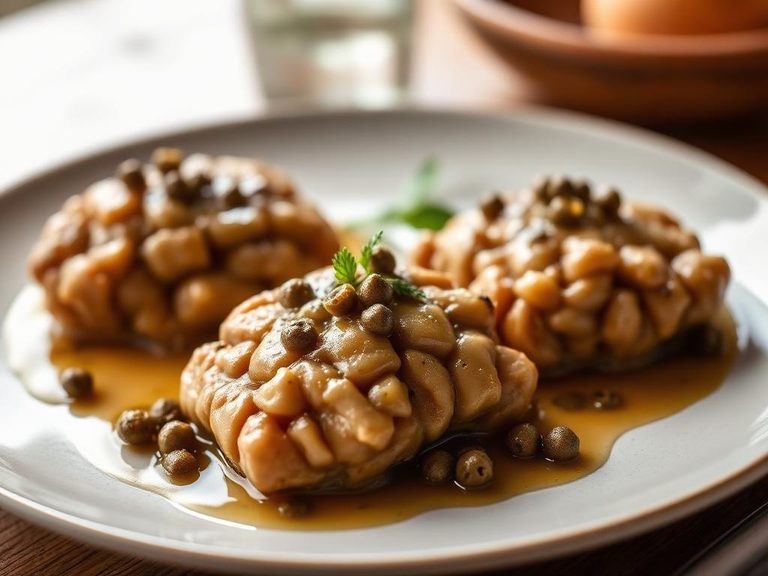
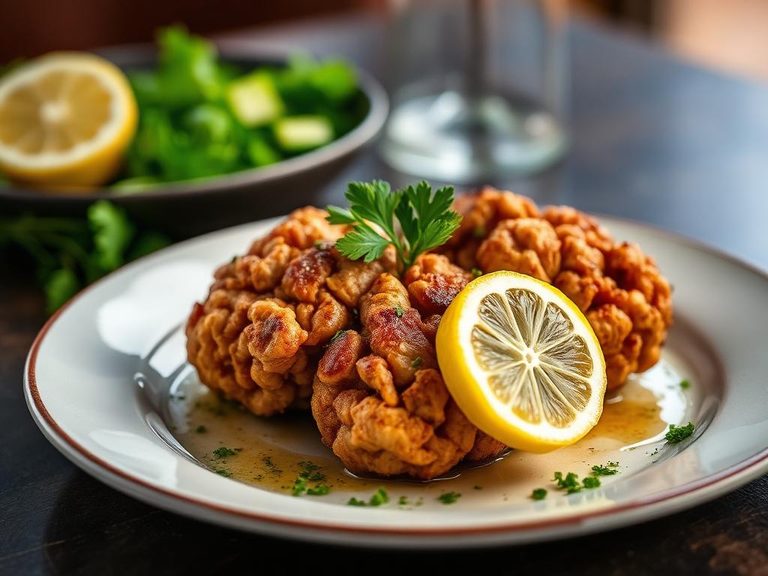
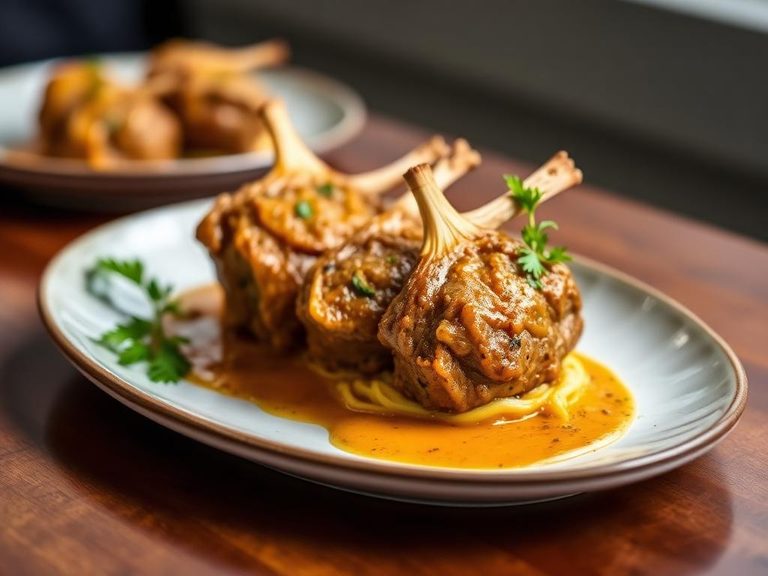
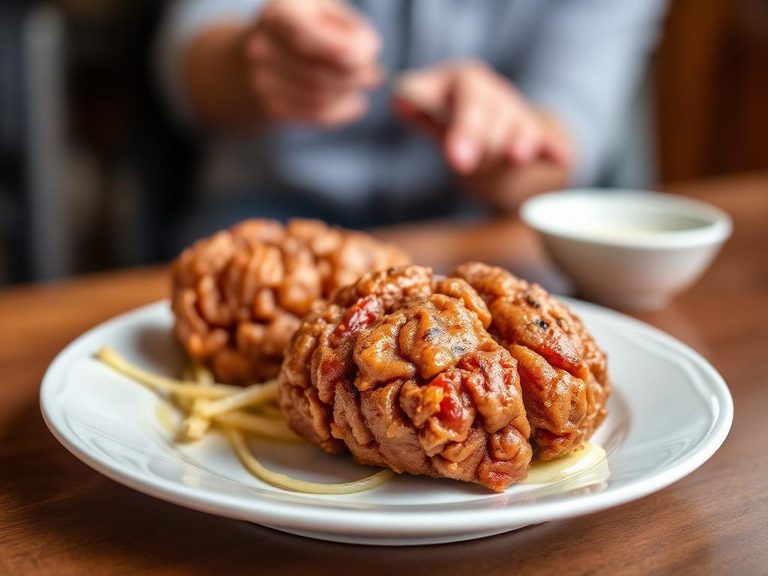
Soused brains, often made from calf or lamb brains, are a traditional dish where the organ meat is gently poached and then marinated in a vinegar-based brine, typically with onions, peppercorns, bay leaves, and sometimes herbs like parsley. This method of preservation and flavoring is common in various European cuisines, particularly in the United Kingdom and parts of Central and Eastern Europe.
🍽️ Nutrition at a glance
This dish is very high in protein and healthy fats, particularly omega-3 fatty acids, while being virtually carbohydrate-free. A typical serving provides a significant amount of vitamin B12 and choline, with a calorie count around 250-300 kcal.
Nutrition breakdown
| Calories | 280 kcal |
| Protein | 18 g |
| Carbs | 1 g |
| Fat | 22 g |
| Fiber | 0 g |
| Sugar | 0.5 g |
| Sodium | 450 mg |
| Vitamin B12 | 15 µg |
| Choline | 350 mg |
| Selenium | 40 µg |
| Phosphorus | 350 mg |
| Riboflavin (B2) | 0.4 mg |
| Niacin (B3) | 3 mg |
| Iron | 2.5 mg |
| Zinc | 2 mg |
Per 1 cup (approximately 140 g) · estimated, varies by recipe
💡 What's interesting
Culturally, soused brains are a classic example of 'nose-to-tail' eating, utilizing the entire animal. Nutritionally, they are one of the richest dietary sources of choline, a nutrient essential for brain health and function.