Fried Brains
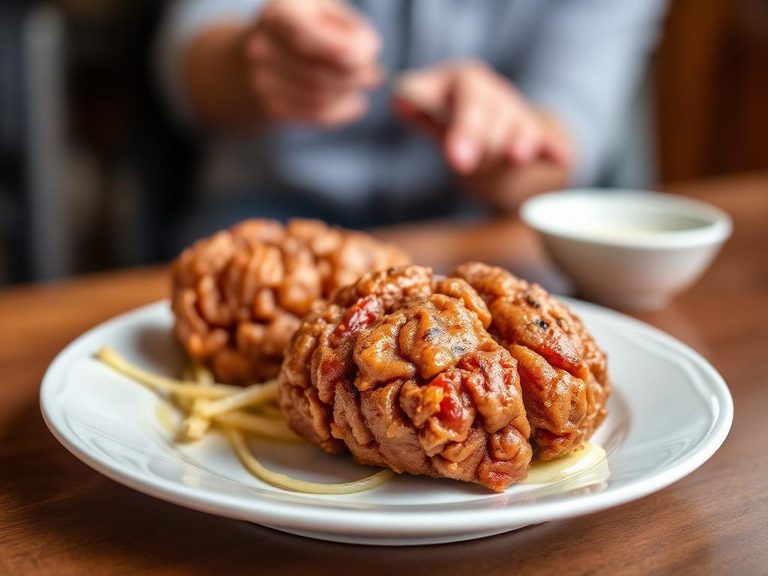
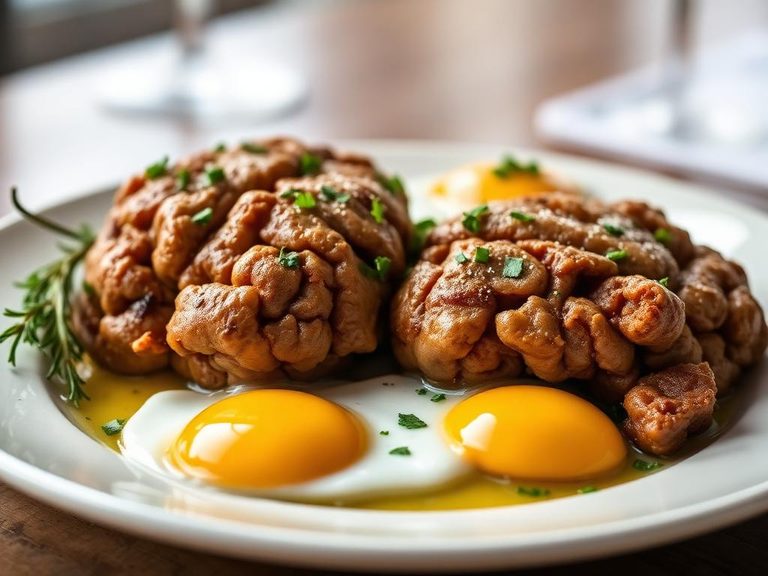
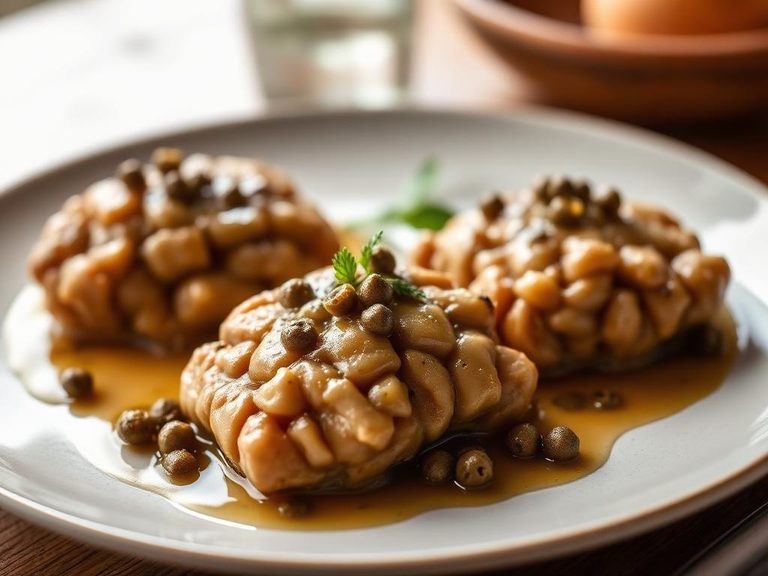
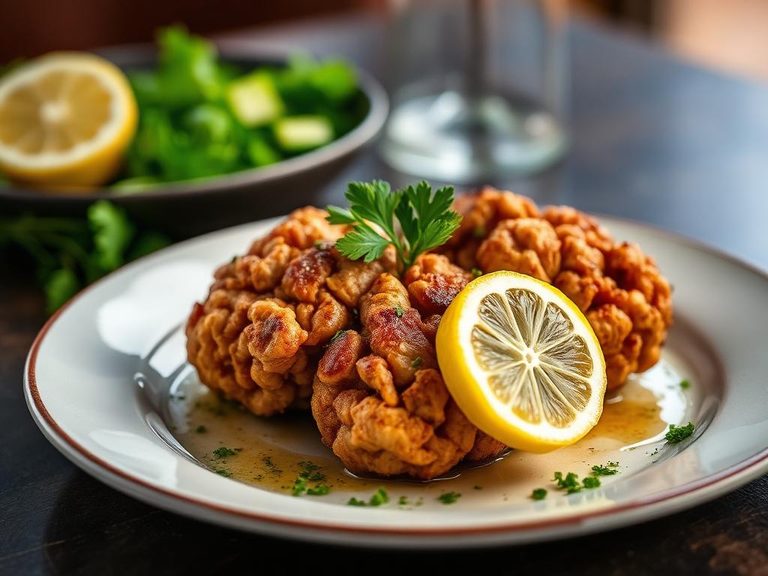
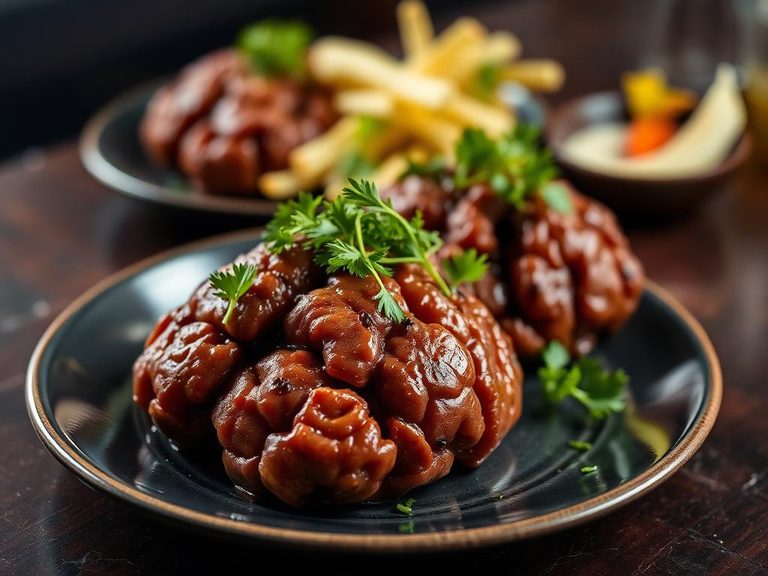
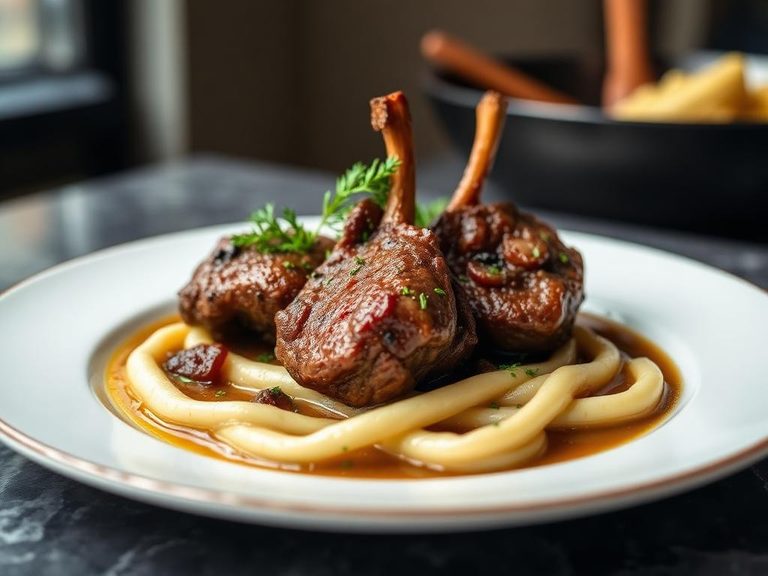
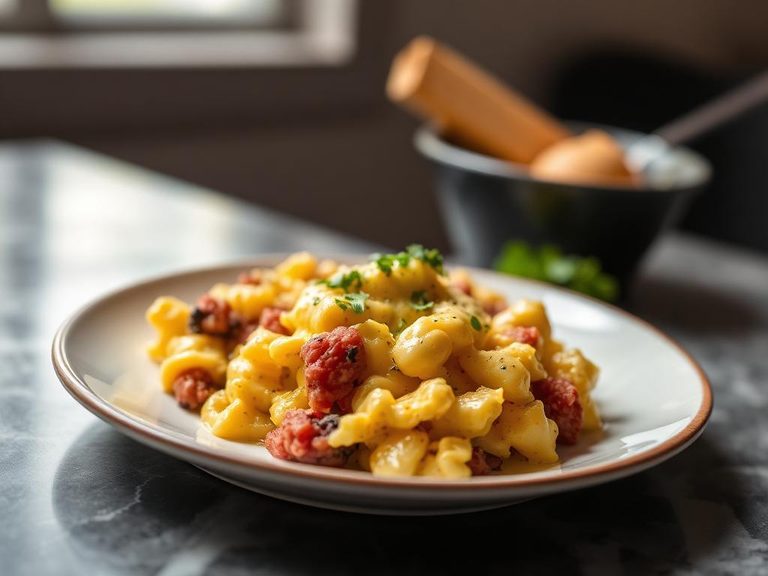
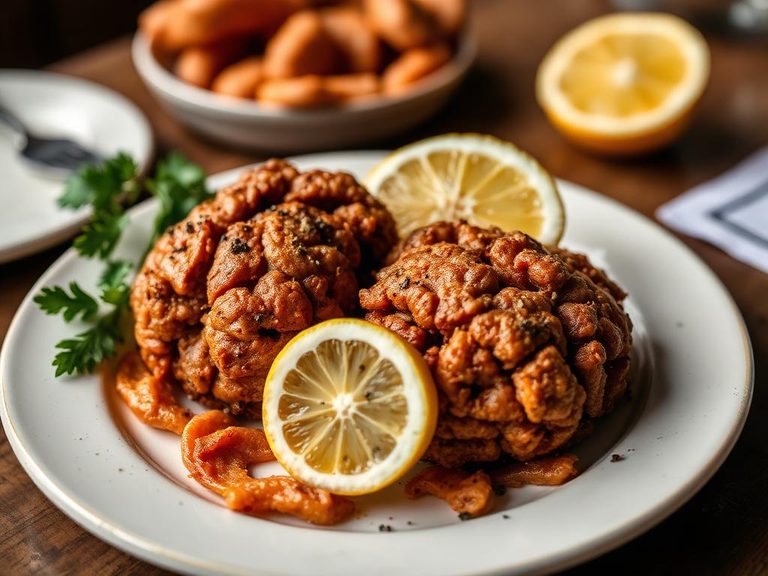
Fried Brains is a traditional dish made from the brains of animals like calves, pigs, or sheep, typically soaked in milk or water, seasoned, and then pan-fried until crispy on the outside. It's often served with simple accompaniments like toast, onions, or a light sauce, and is considered a delicacy in various culinary traditions, including parts of Europe, the American South, and Asia.
🍽️ Nutrition at a glance
This dish is high in protein and fat, with minimal carbohydrates, and is notably rich in nutrients like choline, vitamin B12, and selenium. A typical serving provides a substantial calorie count, often ranging from 200 to 300 kcal, depending on preparation and portion size.
Nutrition breakdown
| Calories | 260 kcal |
| Protein | 18 g |
| Carbs | 2 g |
| Fat | 20 g |
| Fiber | 0 g |
| Sugar | 1 g |
| Sodium | 350 mg |
| Vitamin B12 | 15 µg |
| Selenium | 30 µg |
| Choline | 350 mg |
| Phosphorus | 300 mg |
| Zinc | 2.5 mg |
| Riboflavin (B2) | 0.3 mg |
| Iron | 2.0 mg |
| Potassium | 250 mg |
Per 1 cup (about 150 g) · estimated, varies by recipe
💡 What's interesting
Culturally, fried brains are a classic example of 'nose-to-tail' eating, emphasizing the use of the whole animal to minimize waste. Nutritionally, they are one of the best dietary sources of choline, a nutrient crucial for brain health and liver function.