Soused Herring
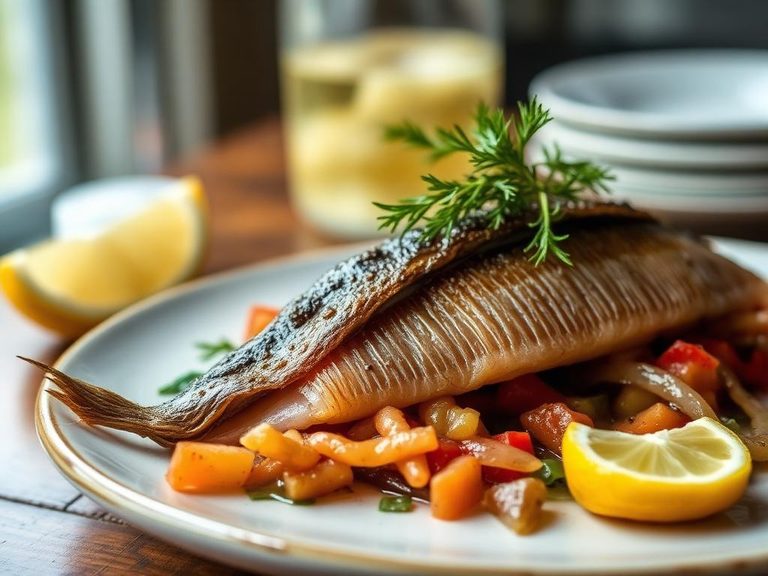
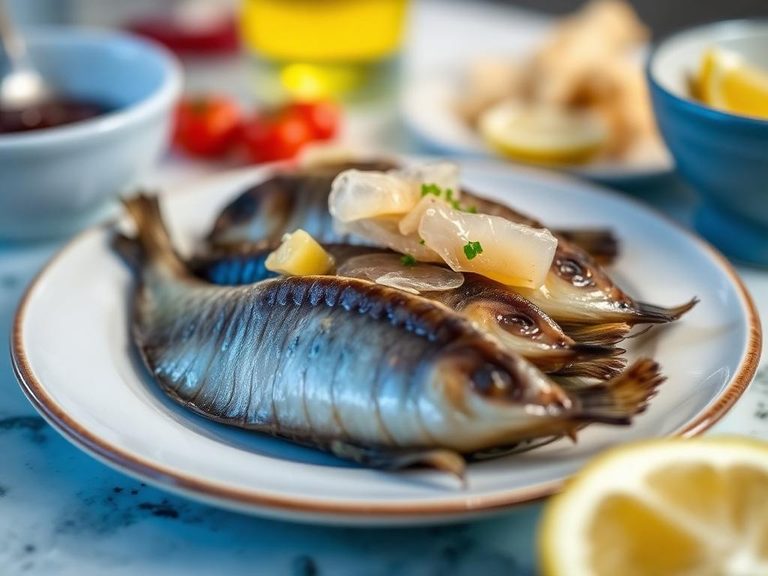
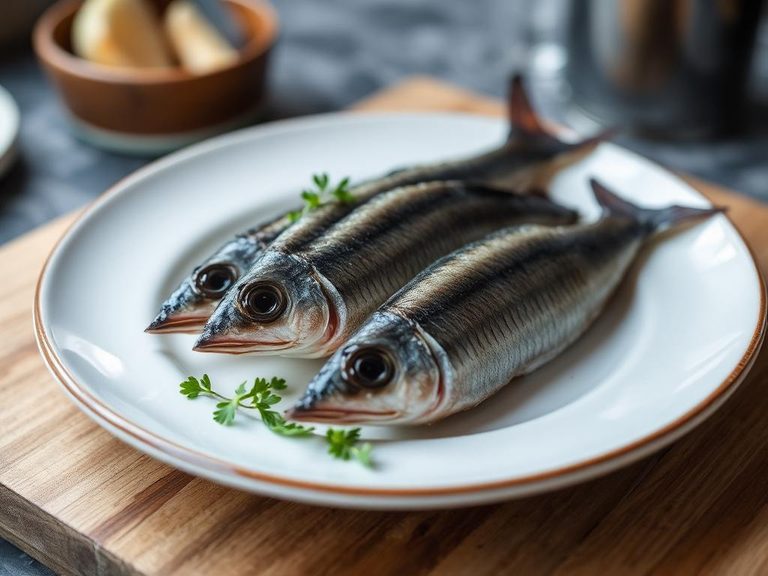
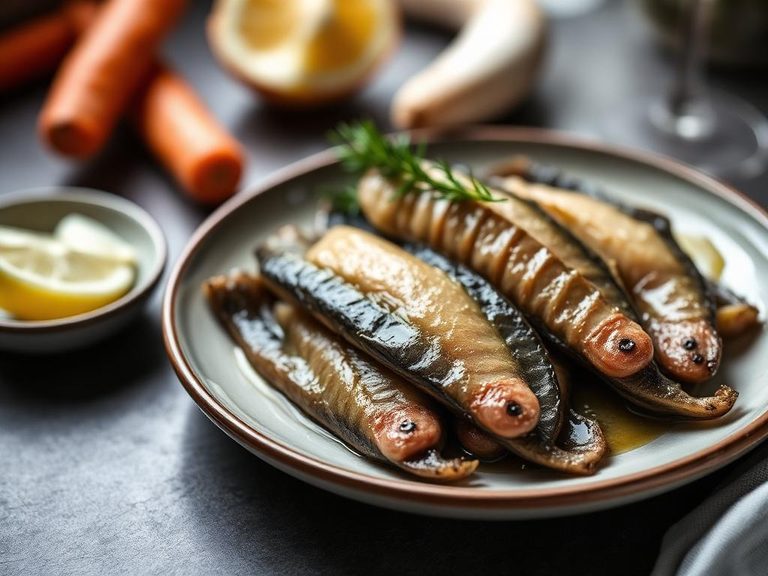
Soused Herring is a traditional Northern European dish consisting of pickled herring fillets, typically preserved in a brine of vinegar, salt, and sugar, often with onions and spices like bay leaves or peppercorns. It is a staple in Scandinavian, Dutch, German, and British cuisines, where it is enjoyed as a snack, appetizer, or part of a larger meal.
🍽️ Nutrition at a glance
This dish is high in protein and healthy fats, particularly omega-3 fatty acids, while being very low in carbohydrates. A typical serving provides a good source of vitamin D, vitamin B12, and selenium, with a calorie range of approximately 200-250 kcal per 100 grams.
Nutrition breakdown
| Calories | 220 kcal |
| Protein | 18 g |
| Carbs | 5 g |
| Fat | 14 g |
| Fiber | 0 g |
| Sugar | 4 g |
| Sodium | 800 mg |
| Vitamin D | 10 µg |
| Vitamin B12 | 8 µg |
| Selenium | 35 µg |
| Omega-3 (EPA+DHA) | 1.5 g |
| Phosphorus | 250 mg |
| Niacin (B3) | 5 mg |
| Potassium | 300 mg |
| Vitamin B6 | 0.3 mg |
Per 100 grams (about 3.5 ounces) · estimated, varies by recipe
💡 What's interesting
Culturally, Soused Herring is deeply embedded in Northern European traditions, often associated with festive occasions like the Dutch 'Haringpartij' or Swedish Midsummer celebrations. Nutritionally, its fermentation or pickling process not only preserves the fish but also enhances its probiotic potential and nutrient bioavailability.