Pickled Herring
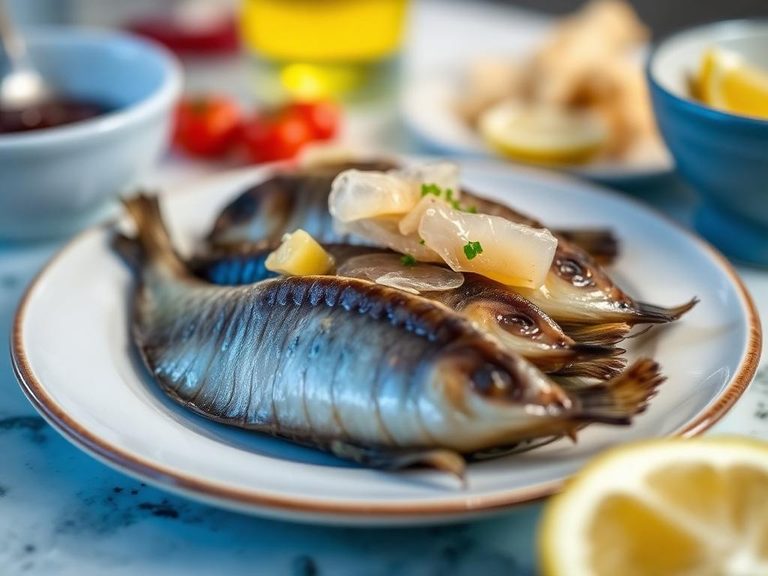
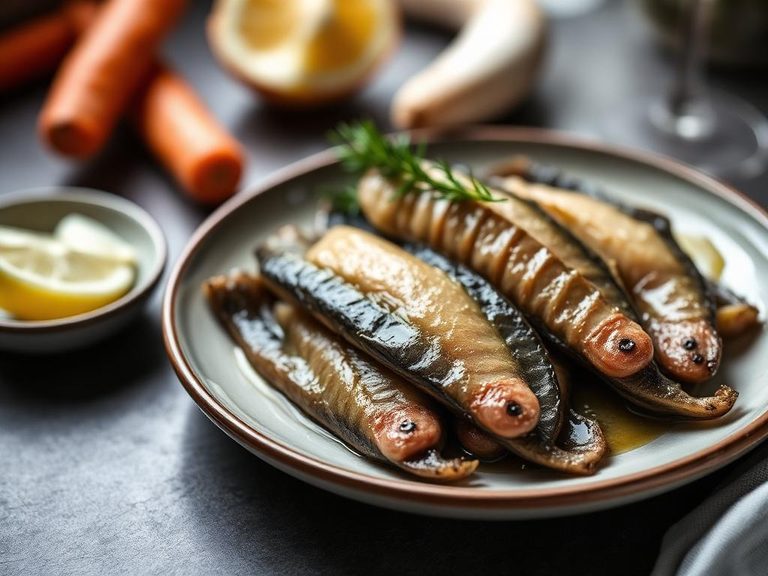
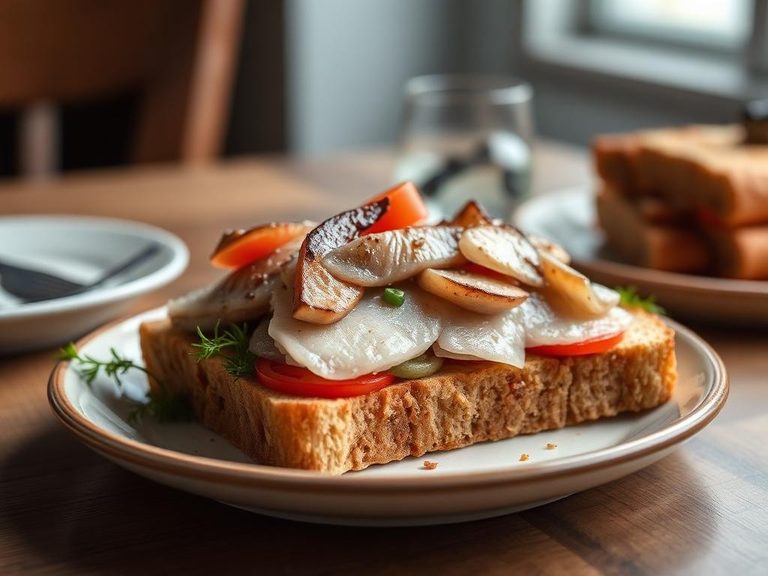
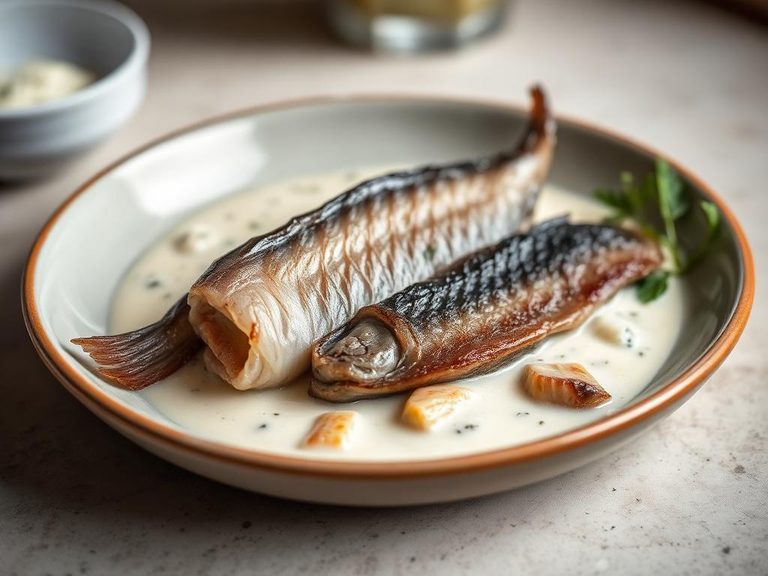
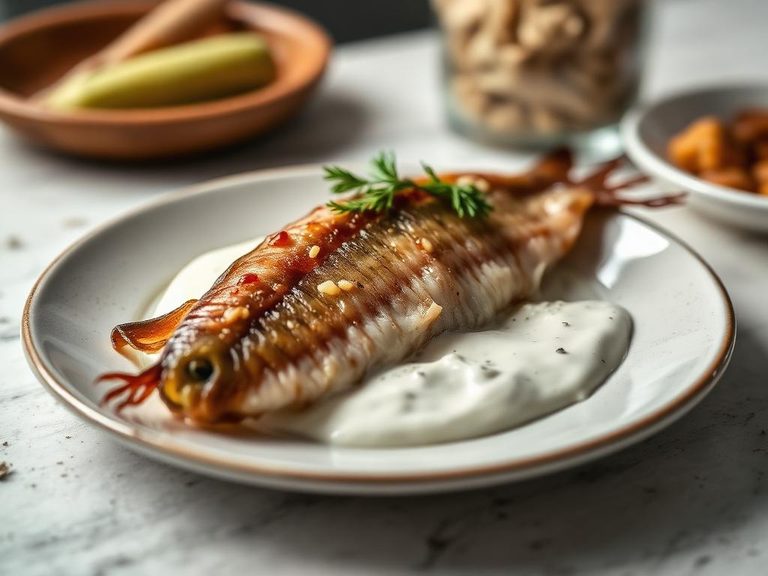
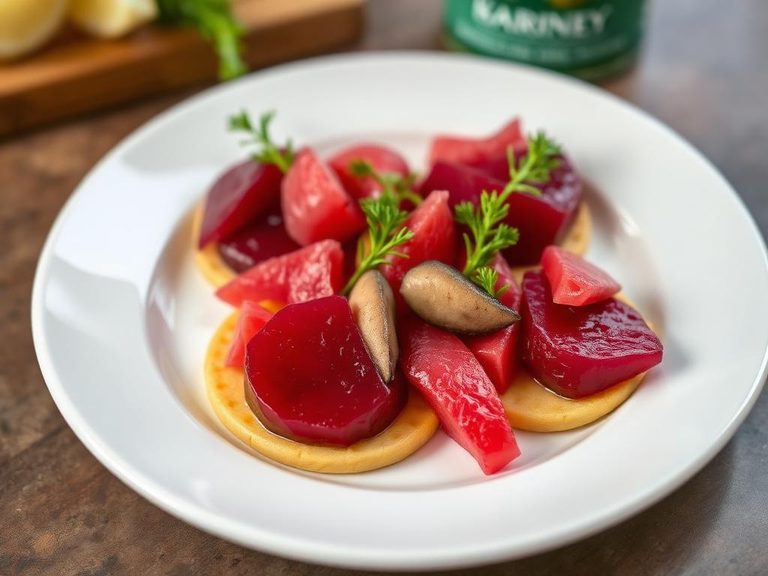
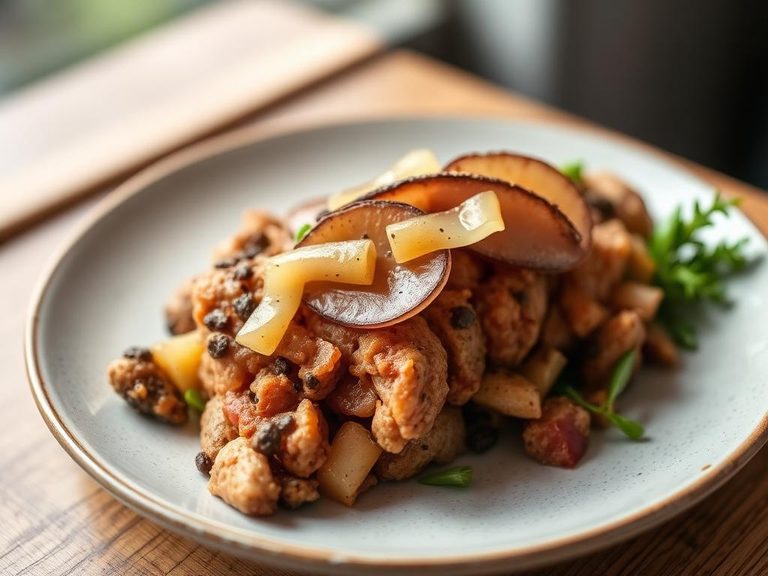
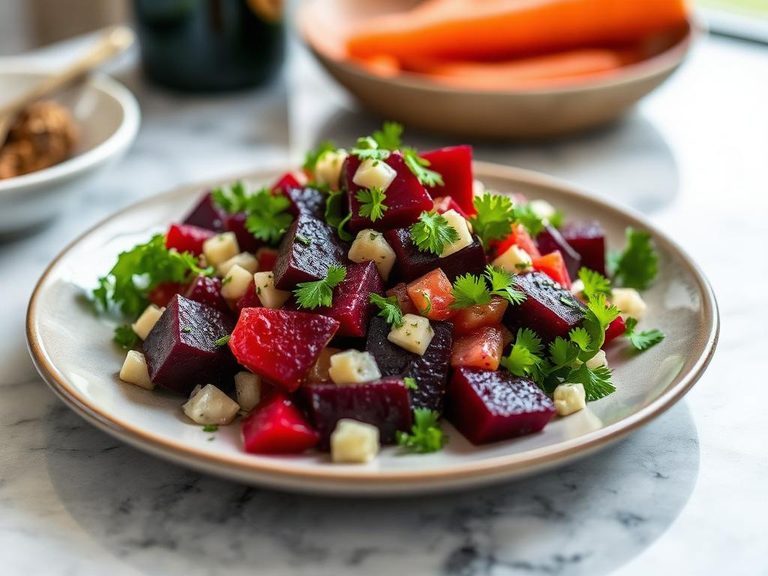
Pickled herring is a traditional dish of herring fillets preserved in a brine or vinegar-based solution, often flavored with onions, peppercorns, bay leaves, and sometimes sugar or cream. It is a staple in Northern European, Scandinavian, and Baltic cuisines, as well as in Jewish and Dutch culinary traditions.
🍽️ Nutrition at a glance
This dish is high in protein and healthy fats, particularly omega-3 fatty acids, while being very low in carbohydrates. A typical serving (about 100g) provides around 200-250 calories, along with significant amounts of vitamin D, vitamin B12, and selenium.
Nutrition breakdown
| Calories | 260 kcal |
| Protein | 20 g |
| Carbs | 10 g |
| Fat | 16 g |
| Fiber | 0 g |
| Sugar | 8 g |
| Sodium | 1200 mg |
| Vitamin B12 | 3.5 µg |
| Vitamin D | 2.5 µg |
| Selenium | 35 µg |
| Phosphorus | 250 mg |
| Vitamin A | 150 µg |
| Omega-3 (EPA+DHA) | 1.8 g |
| Iron | 1.2 mg |
| Niacin (B3) | 3.5 mg |
Per 1 cup (170 g) · estimated, varies by recipe
💡 What's interesting
Pickled herring has been a crucial source of nutrition for centuries in coastal communities, allowing fish to be preserved for long voyages and harsh winters. Its preparation varies widely by region, from the sweet 'sill' in Sweden to the creamy 'huzarensalade' in the Netherlands, showcasing its cultural adaptability.