

Beef, New Zealand, imported, variety meats and by-products, kidney, raw
Whole food · Beef Products

Photo: Wikipedia
Beef kidney is a dense, mineral-rich organ meat with a distinct, slightly gamey flavor and a firm, smooth texture when cooked properly. Its deep, savory taste is often mellowed by soaking or marinating, revealing a clean, meaty essence. Nutritionally, it's a powerhouse of protein and essential nutrients like selenium and B vitamins, with virtually no carbohydrates.
Calorie split: 73% protein · 0% carbs · 27% fat
↓ Full nutrition💚 Why it's loved
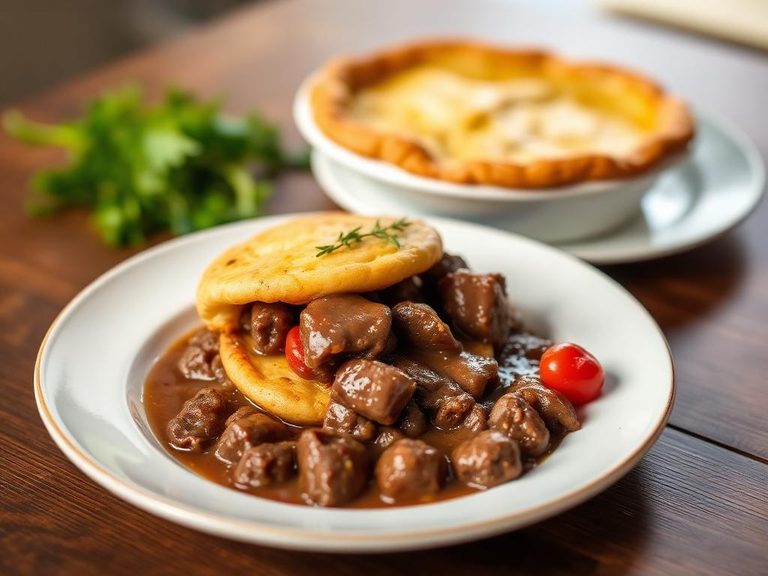
People cherish beef kidney for its robust, umami-packed flavor that forms the backbone of classic comfort dishes. Its ability to absorb marinades and sauces makes it a versatile ingredient in stews, pies, and grills.
⚠️ Watch-outs & how to enjoy it better
The strong, distinct flavor can be off-putting to some, and improper preparation can lead to a tough or overly gamey texture. Those with gout or purine-sensitive conditions should consume it in moderation. To counteract the strong taste, soak sliced kidney in cold water, milk, or a vinegar solution for 1-2 hours before cooking, and avoid overcooking to maintain tenderness.
Key benefits
- Excellent source of high-quality protein for muscle maintenance.
- Rich in essential minerals like selenium and phosphorus.
- Contains B vitamins, particularly B12, crucial for nerve function.
- Very low in carbohydrates, suitable for low-carb diets.
- Provides heme iron, which is highly bioavailable.
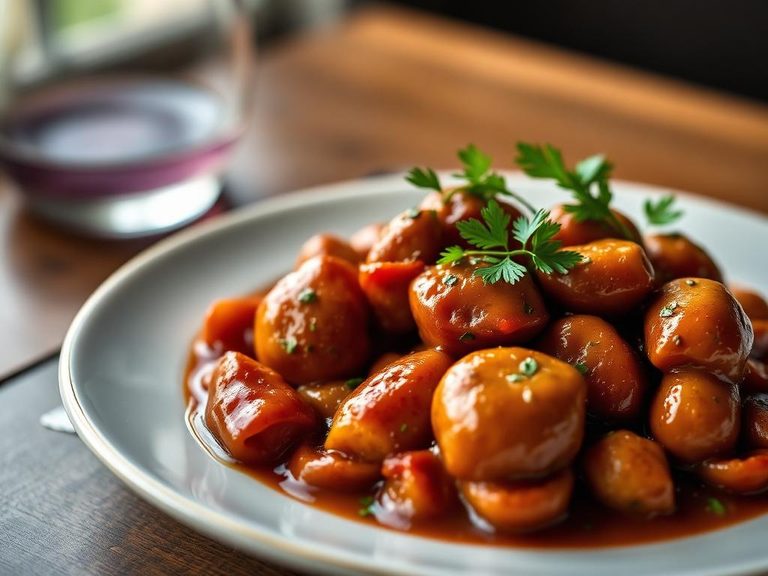
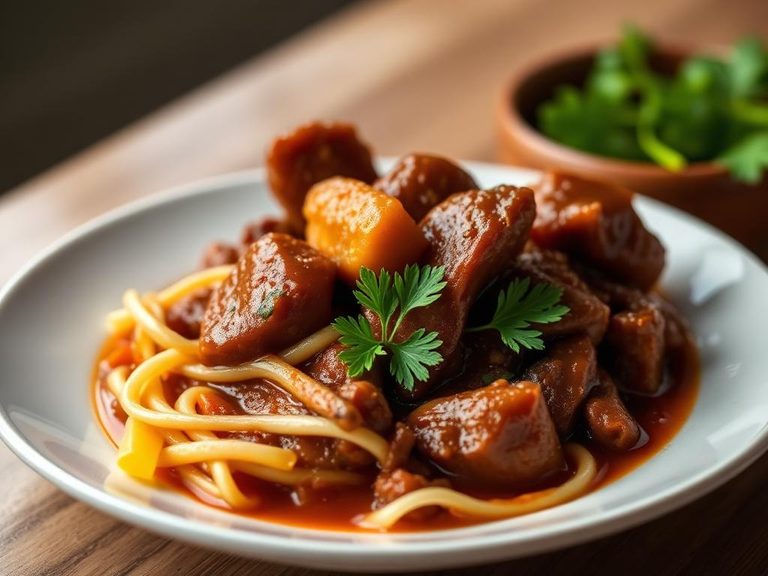
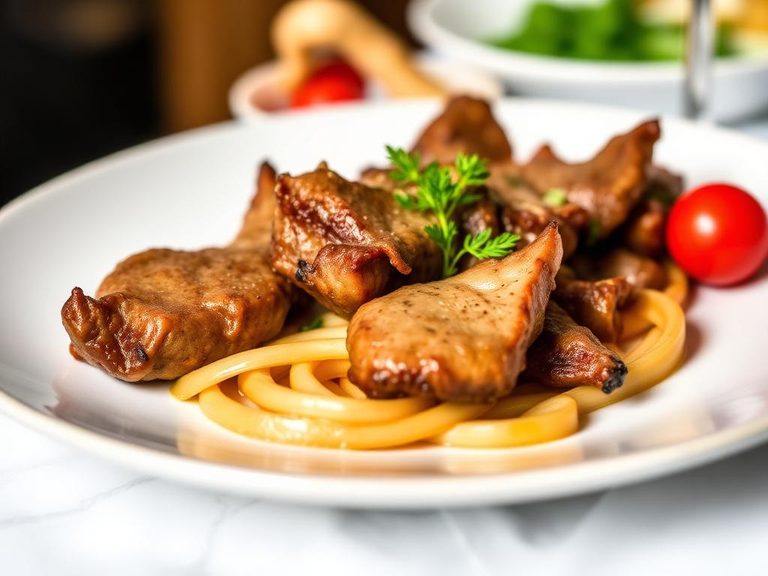
🍽️ Popular dishes
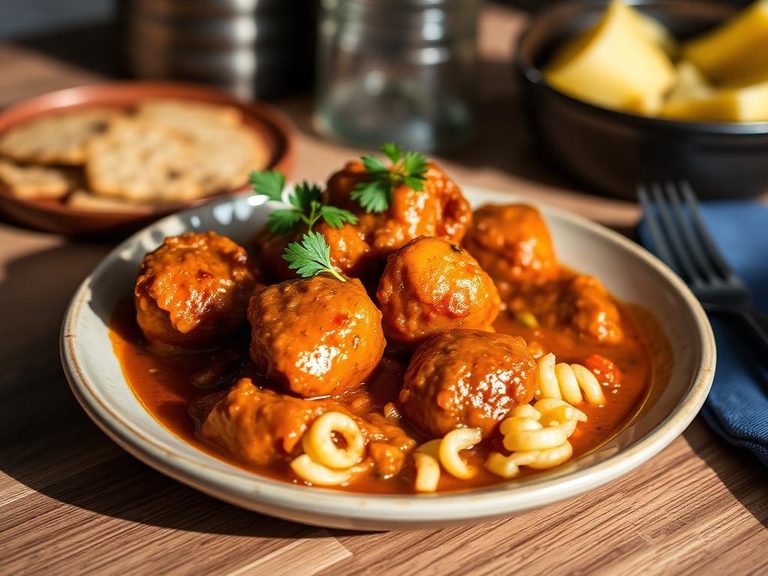
🌍 Where it's eaten
💡 Did you know?
The kidney's internal structure is divided into distinct lobes, giving it a unique, segmented appearance when sliced crosswise, often resembling a small, edible tree.
Full nutrition (USDA data · scales with serving)
| Water | 80.5 g |
| Energy | 87.0 kcal |
| Energy | 362 kj |
| Protein | 15.7 g |
| Total lipid (fat) | 2.6 g |
| Ash | 1.1 g |
| Carbohydrate, by difference | 0.00 g |
| Fiber, total dietary | 0.00 g |
| Total Sugars | 0.00 g |
| Calcium, Ca | 9.0 mg |
| Iron, Fe | 3.8 mg |
| Magnesium, Mg | 15.0 mg |
| Phosphorus, P | 234 mg |
| Potassium, K | 225 mg |
| Sodium, Na | 175 mg |
| Zinc, Zn | 1.5 mg |
| Copper, Cu | 0.41 mg |
| Manganese, Mn | 0.11 mg |
| Selenium, Se | 103 ug |
| Vitamin C, total ascorbic acid | 0.00 mg |
| Thiamin | 0.56 mg |
| Riboflavin | 2.1 mg |
| Niacin | 4.9 mg |
| Pantothenic acid | 4.0 mg |
| Vitamin B-6 | 0.32 mg |
| Vitamin B-12 | 27.7 ug |
| Vitamin B-12, added | 0.00 ug |
| Vitamin A, RAE | 89.0 ug |
| Retinol | 89.0 ug |
| Carotene, beta | 0.00 ug |
| Carotene, alpha | 0.00 ug |
| Cryptoxanthin, beta | 0.00 ug |
| Vitamin A, IU | 297 iu |
| Lycopene | 0.00 ug |
| Lutein + zeaxanthin | 0.00 ug |
| Vitamin E (alpha-tocopherol) | 0.82 mg |
| Vitamin E, added | 0.00 mg |
| Vitamin D (D2 + D3), International Units | 6.0 iu |
| Vitamin D (D2 + D3) | 0.20 ug |
| Vitamin D3 (cholecalciferol) | 0.20 ug |
| Alcohol, ethyl | 0.00 g |
| Caffeine | 0.00 mg |
| Theobromine | 0.00 mg |
Fat & fatty acid profile (per 100g)
| Fatty acids, total saturated | 0.62 g |
| SFA 4:0 | 0.00 g |
| SFA 6:0 | 0.00 g |
| SFA 8:0 | 0.00 g |
| SFA 10:0 | 0.00 g |
| SFA 12:0 | 0.00 g |
| SFA 14:0 | 0.01 g |
| SFA 16:0 | 0.29 g |
| SFA 17:0 | 0.02 g |
| SFA 18:0 | 0.26 g |
| SFA 20:0 | 0.01 g |
| SFA 22:0 | 0.02 g |
| SFA 24:0 | 0.01 g |
| Fatty acids, total monounsaturated | 0.34 g |
| MUFA 14:1 | 0.00 g |
| MUFA 15:1 | 0.01 g |
| MUFA 16:1 | 0.03 g |
| MUFA 16:1 c | 0.01 g |
| MUFA 17:1 | 0.00 g |
| MUFA 18:1 | 0.30 g |
| MUFA 18:1 c | 0.28 g |
| MUFA 20:1 | 0.01 g |
| MUFA 22:1 | 0.00 g |
| MUFA 22:1 c | 0.00 g |
| MUFA 24:1 c | 0.01 g |
| Fatty acids, total polyunsaturated | 0.61 g |
| PUFA 18:2 | 0.20 g |
| PUFA 18:2 n-6 c,c | 0.19 g |
| PUFA 18:2 CLAs | 0.01 g |
| PUFA 18:3 | 0.04 g |
| PUFA 18:3 n-3 c,c,c (ALA) | 0.04 g |
| PUFA 18:3 n-6 c,c,c | 0.00 g |
| PUFA 18:4 | 0.00 g |
| PUFA 20:2 n-6 c,c | 0.00 g |
| PUFA 20:3 | 0.04 g |
| PUFA 20:3 n-3 | 0.01 g |
| PUFA 20:3 n-6 | 0.03 g |
| PUFA 20:4 | 0.17 g |
| PUFA 20:4 n-6 | 0.17 g |
| PUFA 20:5 n-3 (EPA) | 0.08 g |
| PUFA 22:5 n-3 (DPA) | 0.05 g |
| PUFA 22:6 n-3 (DHA) | 0.01 g |
| Fatty acids, total trans | 0.03 g |
| Fatty acids, total trans-monoenoic | 0.03 g |
| TFA 16:1 t | 0.01 g |
| TFA 18:1 t | 0.02 g |
| TFA 18:2 t,t | 0.00 g |
| Fatty acids, total trans-polyenoic | 0.00 g |
| Cholesterol | 404 mg |
Amino acid profile (per 100g)
| Tryptophan | 0.16 g |
| Threonine | 0.57 g |
| Isoleucine | 0.65 g |
| Leucine | 1.2 g |
| Lysine | 1.2 g |
| Methionine | 0.52 g |
| Phenylalanine | 0.61 g |
| Tyrosine | 0.53 g |
| Valine | 0.69 g |
| Arginine | 1.0 g |
| Histidine | 0.56 g |
| Alanine | 0.82 g |
| Glutamic acid | 2.2 g |
| Glycine | 0.85 g |
| Proline | 0.50 g |
| Serine | 0.55 g |
FAQ
How do I prepare beef kidney to reduce its strong flavor?
Soak the sliced kidney in cold water, milk, or a mixture of water and vinegar for 1-2 hours, changing the liquid once. This helps draw out impurities and mellow the taste. Pat dry before cooking.
What's the best cooking method for tender kidney?
Quick, high-heat methods like sautéing, grilling, or stir-frying are ideal. Cook just until the pinkness disappears to avoid a rubbery texture. For stews, add kidney pieces in the last 20-30 minutes of cooking.
Is beef kidney nutritious?
Yes, it's highly nutritious. It's an excellent source of protein, low in fat and carbs, and packed with essential nutrients like selenium, phosphorus, and vitamin B12.
Nutrient density (calculated · NRF9.3)
Nutrient Rich Foods index: beneficial nutrients (protein, fiber, vitamins, minerals) minus saturated fat, added sugar & sodium, per 100 kcal.
NRF9.3 index — Fulgoni, Keast & Drewnowski, 2009. Computed from USDA nutrients.
Weight-loss friendliness (composite index)
Energy density 0.87 kcal/g · 72% calories from protein · 0.0 g fiber · 0.0 g sugar per 100 g.
Composite of energy density (Rolls et al., 1999), protein & fiber satiety, minus sugar. A calculated heuristic — ranks satiety-per-calorie, not a clinical measure.
Dietary load (calculated from USDA values)
Potential renal acid load. Positive = acid-forming, negative = alkaline-forming.
Sodium-to-potassium ratio: 0.78 (lower is better — aim for ≤ 1)
Sodium:potassium per WHO potassium guidance. Computed from USDA nutrients.