

Beef, New Zealand, imported, variety meats and by-products, kidney, cooked, boiled
Whole food · Beef Products

Photo: Wikipedia
Boiled New Zealand beef kidney is a dense, mineral-rich organ meat with a distinctive, slightly gamey flavor and a firm, smooth texture. It is exceptionally high in protein while being virtually carb-free, making it a powerhouse for low-carb and carnivore diets. The cooking process mellows its robust taste, resulting in a clean, savory bite that absorbs seasonings well.
Calorie split: 70% protein · 0% carbs · 30% fat
↓ Full nutrition💚 Why it's loved
People love it for its deep, umami-rich flavor that stands up to strong spices and sauces, and its satisfying, meaty chew. It's a traditional, nose-to-tail staple in many cuisines, valued for its nutritional density and economical use of the whole animal.
⚠️ Watch-outs & how to enjoy it better
The strong, distinctive taste and smell can be off-putting to those unfamiliar with organ meats. Kidney is high in purines, which can be a concern for individuals with gout or kidney issues. To mitigate the flavor, it's often soaked in milk or water before cooking; for purine concerns, moderate portion size and ensuring adequate hydration are key.
Key benefits
- Excellent source of high-quality, complete protein (27g per 100g).
- Very low in carbohydrates and sugars, ideal for ketogenic diets.
- Rich in essential B vitamins, particularly B12 and riboflavin.
- Good source of iron and selenium for metabolic support.
- Low in fat compared to many other organ meats.
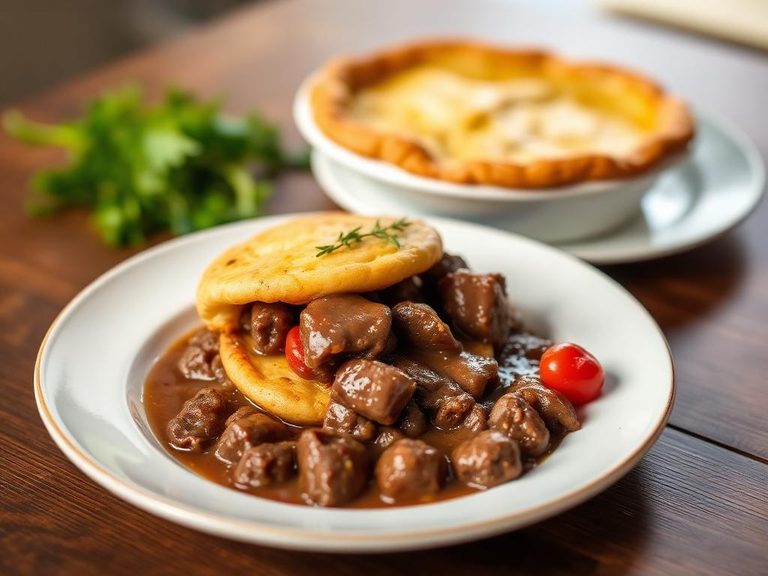
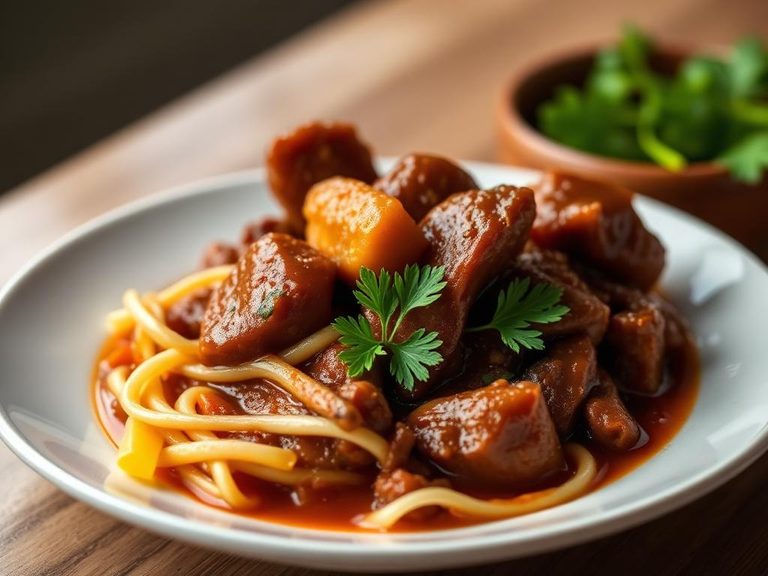
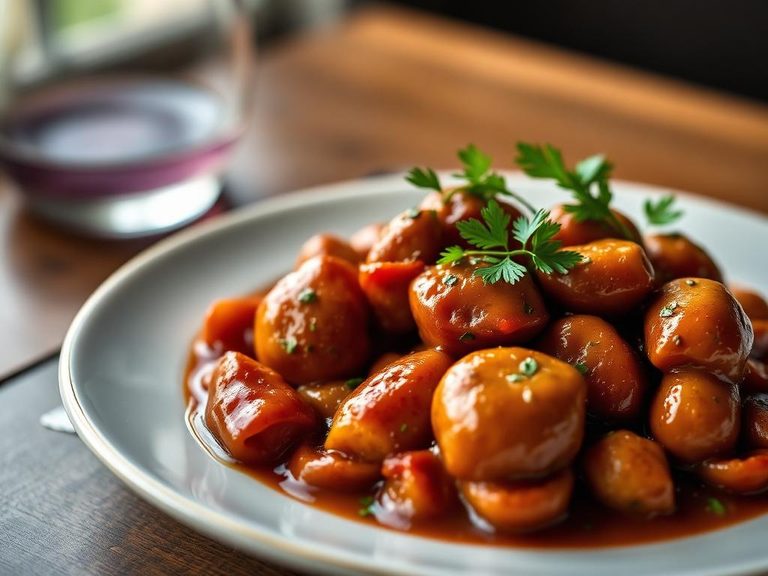
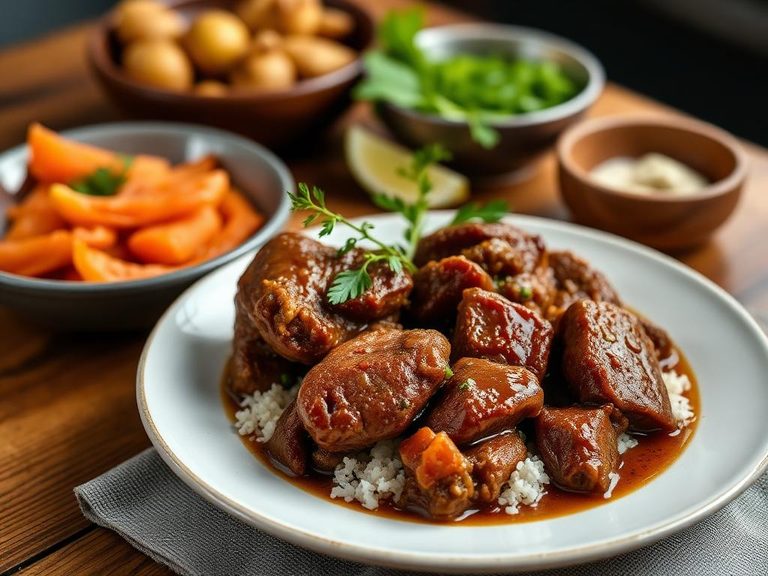
🍽️ Popular dishes
🌍 Where it's eaten
💡 Did you know?
Beef kidneys are unique among common meats as they are divided into distinct lobes, giving them a lobulated appearance when sliced, unlike the smooth interior of a heart or liver.
Full nutrition (USDA data · scales with serving)
| Water | 66.4 g |
| Energy | 157 kcal |
| Energy | 655 kj |
| Protein | 27.3 g |
| Total lipid (fat) | 5.3 g |
| Ash | 1.6 g |
| Carbohydrate, by difference | 0.00 g |
| Fiber, total dietary | 0.00 g |
| Total Sugars | 0.00 g |
| Calcium, Ca | 14.0 mg |
| Iron, Fe | 5.7 mg |
| Magnesium, Mg | 18.0 mg |
| Phosphorus, P | 338 mg |
| Potassium, K | 144 mg |
| Sodium, Na | 123 mg |
| Zinc, Zn | 2.6 mg |
| Copper, Cu | 0.56 mg |
| Manganese, Mn | 0.15 mg |
| Selenium, Se | 105 ug |
| Vitamin C, total ascorbic acid | 0.00 mg |
| Thiamin | 0.40 mg |
| Riboflavin | 2.9 mg |
| Niacin | 3.9 mg |
| Pantothenic acid | 3.1 mg |
| Vitamin B-6 | 0.25 mg |
| Vitamin B-12 | 21.4 ug |
| Vitamin B-12, added | 0.00 ug |
| Vitamin A, RAE | 104 ug |
| Retinol | 104 ug |
| Carotene, beta | 0.00 ug |
| Carotene, alpha | 0.00 ug |
| Cryptoxanthin, beta | 0.00 ug |
| Vitamin A, IU | 347 iu |
| Lycopene | 0.00 ug |
| Lutein + zeaxanthin | 0.00 ug |
| Vitamin E (alpha-tocopherol) | 1.5 mg |
| Vitamin E, added | 0.00 mg |
| Vitamin D (D2 + D3), International Units | 33.0 iu |
| Vitamin D (D2 + D3) | 0.80 ug |
| Vitamin D3 (cholecalciferol) | 0.80 ug |
| Alcohol, ethyl | 0.00 g |
| Caffeine | 0.00 mg |
| Theobromine | 0.00 mg |
Fat & fatty acid profile (per 100g)
| Fatty acids, total saturated | 1.2 g |
| SFA 4:0 | 0.00 g |
| SFA 6:0 | 0.00 g |
| SFA 8:0 | 0.00 g |
| SFA 10:0 | 0.00 g |
| SFA 12:0 | 0.00 g |
| SFA 14:0 | 0.01 g |
| SFA 16:0 | 0.55 g |
| SFA 17:0 | 0.04 g |
| SFA 18:0 | 0.49 g |
| SFA 20:0 | 0.02 g |
| SFA 22:0 | 0.04 g |
| SFA 24:0 | 0.02 g |
| Fatty acids, total monounsaturated | 0.65 g |
| MUFA 14:1 | 0.00 g |
| MUFA 15:1 | 0.01 g |
| MUFA 16:1 | 0.05 g |
| MUFA 16:1 c | 0.03 g |
| MUFA 17:1 | 0.00 g |
| MUFA 18:1 | 0.56 g |
| MUFA 18:1 c | 0.53 g |
| MUFA 20:1 | 0.01 g |
| MUFA 22:1 | 0.00 g |
| MUFA 22:1 c | 0.00 g |
| MUFA 24:1 c | 0.01 g |
| Fatty acids, total polyunsaturated | 1.2 g |
| PUFA 18:2 | 0.39 g |
| PUFA 18:2 n-6 c,c | 0.38 g |
| PUFA 18:2 CLAs | 0.01 g |
| PUFA 18:3 | 0.09 g |
| PUFA 18:3 n-3 c,c,c (ALA) | 0.08 g |
| PUFA 18:3 n-6 c,c,c | 0.01 g |
| PUFA 18:4 | 0.00 g |
| PUFA 20:2 n-6 c,c | 0.01 g |
| PUFA 20:3 | 0.08 g |
| PUFA 20:3 n-3 | 0.02 g |
| PUFA 20:3 n-6 | 0.06 g |
| PUFA 20:4 | 0.37 g |
| PUFA 20:4 n-6 | 0.37 g |
| PUFA 20:5 n-3 (EPA) | 0.15 g |
| PUFA 22:5 n-3 (DPA) | 0.10 g |
| PUFA 22:6 n-3 (DHA) | 0.03 g |
| Fatty acids, total trans | 0.06 g |
| Fatty acids, total trans-monoenoic | 0.06 g |
| TFA 16:1 t | 0.03 g |
| TFA 18:1 t | 0.03 g |
| TFA 18:2 t,t | 0.00 g |
| Fatty acids, total trans-polyenoic | 0.00 g |
| Cholesterol | 1002 mg |
Amino acid profile (per 100g)
| Tryptophan | 0.29 g |
| Threonine | 0.99 g |
| Isoleucine | 1.1 g |
| Leucine | 2.1 g |
| Lysine | 2.2 g |
| Methionine | 0.90 g |
| Phenylalanine | 1.1 g |
| Tyrosine | 0.92 g |
| Valine | 1.2 g |
| Arginine | 1.8 g |
| Histidine | 0.98 g |
| Alanine | 1.4 g |
| Glutamic acid | 3.8 g |
| Glycine | 1.5 g |
| Proline | 0.88 g |
| Serine | 0.96 g |
FAQ
How do you prepare beef kidney to reduce its strong flavor?
Soaking the kidney in cold water, milk, or a light saltwater brine for 1-2 hours before cooking helps draw out impurities and milder the taste. Trimming all visible fat and the central white core is also essential.
Is boiled beef kidney safe to eat?
Yes, when sourced from a reputable supplier and cooked thoroughly to an internal temperature of at least 160°F (71°C), it is safe. Proper handling and cooking are crucial for all organ meats.
How does the nutrition of kidney compare to muscle meat like steak?
Kidney is significantly higher in certain micronutrients like B12, B2, and selenium, and lower in fat and calories than a comparable cut of steak. However, it has a similar protein content.
Nutrient density (calculated · NRF9.3)
Nutrient Rich Foods index: beneficial nutrients (protein, fiber, vitamins, minerals) minus saturated fat, added sugar & sodium, per 100 kcal.
NRF9.3 index — Fulgoni, Keast & Drewnowski, 2009. Computed from USDA nutrients.
Weight-loss friendliness (composite index)
Energy density 1.57 kcal/g · 70% calories from protein · 0.0 g fiber · 0.0 g sugar per 100 g.
Composite of energy density (Rolls et al., 1999), protein & fiber satiety, minus sugar. A calculated heuristic — ranks satiety-per-calorie, not a clinical measure.
Dietary load (calculated from USDA values)
Potential renal acid load. Positive = acid-forming, negative = alkaline-forming.
Sodium-to-potassium ratio: 0.85 (lower is better — aim for ≤ 1)
Sodium:potassium per WHO potassium guidance. Computed from USDA nutrients.