

Beef, New Zealand, imported, flat, separable lean and fat, cooked, braised
Whole food · Beef Products

Photo: Wikipedia
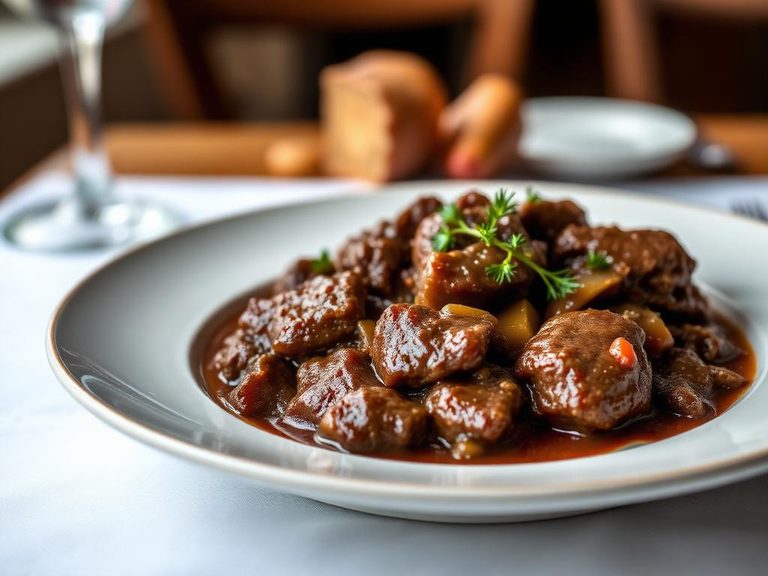
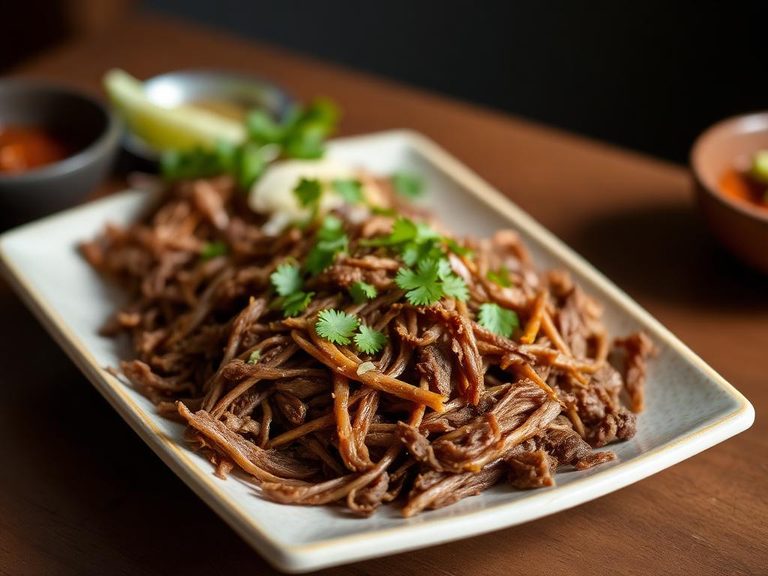
This is New Zealand beef flat iron or chuck steak, braised low and slow until the connective tissue melts into a rich, unctuous sauce. The lean meat becomes tender and shreddable, while the marbled fat renders to create a deeply savory, beefy flavor with a satisfying, velvety mouthfeel. With over 31g of protein and zero carbs per 100g, it's a powerhouse for muscle maintenance and a perfect fit for low-carb or ketogenic diets.
Calorie split: 51% protein · 0% carbs · 49% fat
↓ Full nutrition💚 Why it's loved
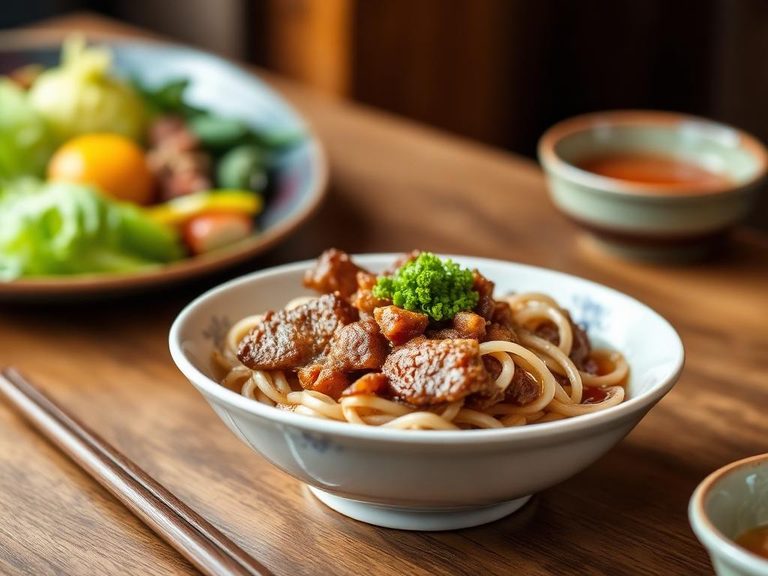
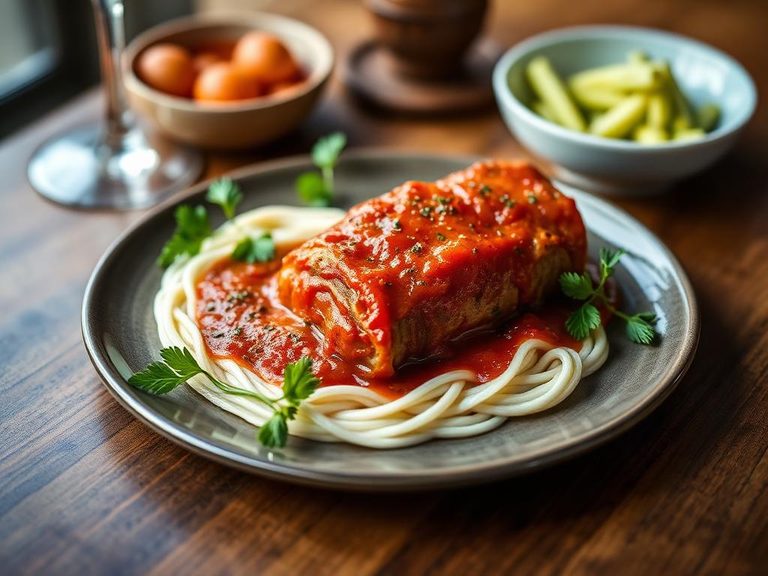
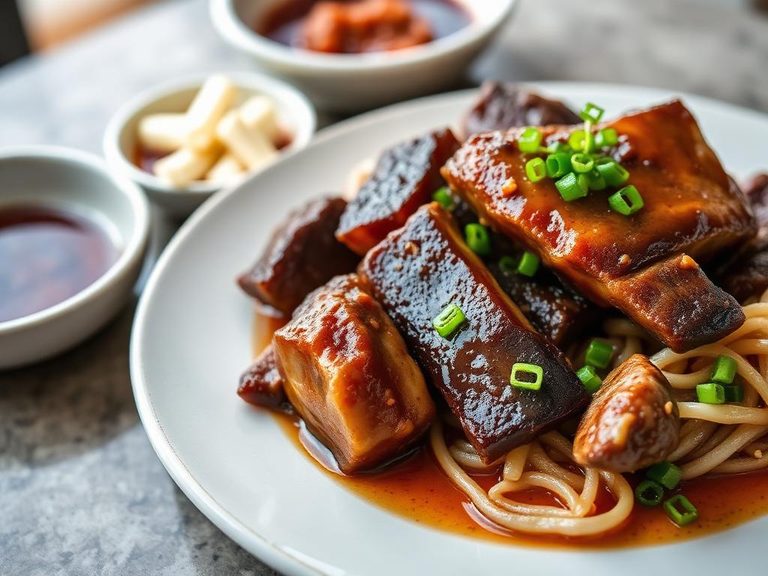
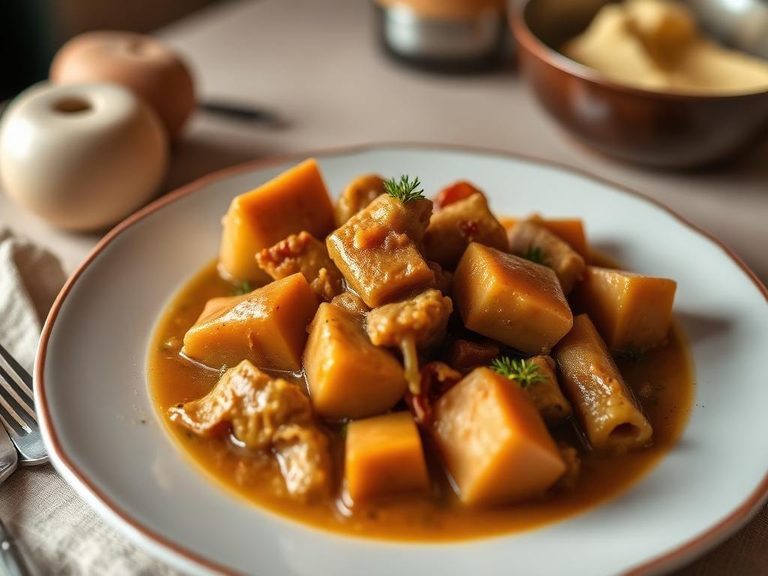
People adore it for the transformative magic of braising—turning a tough, affordable cut into fork-tender, flavor-drenched comfort food. Its rich, beefy essence forms the backbone of countless global stews and curries, making it a versatile and culturally cherished ingredient.
⚠️ Watch-outs & how to enjoy it better
The high saturated fat content means it should be consumed in moderation, especially by those managing cholesterol or heart health. The braising process often involves salty broths or sauces, which can contribute to high sodium intake. To counteract, use low-sodium stock, rinse the meat after searing, and balance the meal with potassium-rich vegetables like leafy greens or tomatoes.
Key benefits
- Excellent source of complete protein for muscle repair and satiety
- Provides essential minerals like zinc, iron (heme), and B12
- Zero carbohydrates, making it ideal for keto and low-carb diets
- Braising breaks down tough collagen into gelatin, aiding gut lining health
- High in monounsaturated fats from grass-fed New Zealand cattle
🍽️ Popular dishes
🌍 Where it's eaten
💡 Did you know?
The 'flat' in 'flat iron' refers to the steak's shape, which resembles an old-fashioned clothes iron. This specific cut from the shoulder (chuck) was only identified and named by the USDA in the 1990s, despite being a butcher's secret for tender, flavorful steaks for decades.
Full nutrition (USDA data · scales with serving)
| Water | 54.3 g |
| Energy | 252 kcal |
| Energy | 1052 kj |
| Protein | 31.9 g |
| Total lipid (fat) | 13.8 g |
| Ash | 1.0 g |
| Carbohydrate, by difference | 0.00 g |
| Fiber, total dietary | 0.00 g |
| Total Sugars | 0.00 g |
| Calcium, Ca | 6.0 mg |
| Iron, Fe | 3.1 mg |
| Magnesium, Mg | 17.0 mg |
| Phosphorus, P | 154 mg |
| Potassium, K | 170 mg |
| Sodium, Na | 30.0 mg |
| Zinc, Zn | 4.3 mg |
| Copper, Cu | 0.18 mg |
| Manganese, Mn | 0.01 mg |
| Selenium, Se | 2.0 ug |
| Vitamin C, total ascorbic acid | 0.00 mg |
| Thiamin | 0.03 mg |
| Riboflavin | 0.18 mg |
| Niacin | 2.2 mg |
| Pantothenic acid | 0.15 mg |
| Vitamin B-6 | 0.17 mg |
| Vitamin B-12 | 1.8 ug |
| Vitamin B-12, added | 0.00 ug |
| Vitamin A, RAE | 14.0 ug |
| Retinol | 14.0 ug |
| Carotene, beta | 0.00 ug |
| Carotene, alpha | 0.00 ug |
| Cryptoxanthin, beta | 0.00 ug |
| Vitamin A, IU | 47.0 iu |
| Lycopene | 0.00 ug |
| Lutein + zeaxanthin | 0.00 ug |
| Vitamin E (alpha-tocopherol) | 1.1 mg |
| Vitamin E, added | 0.00 mg |
| Vitamin D (D2 + D3), International Units | 1.0 iu |
| Vitamin D (D2 + D3) | 0.00 ug |
| Vitamin D3 (cholecalciferol) | 0.00 ug |
| Alcohol, ethyl | 0.00 g |
| Caffeine | 0.00 mg |
| Theobromine | 0.00 mg |
Fat & fatty acid profile (per 100g)
| Fatty acids, total saturated | 4.5 g |
| SFA 4:0 | 0.00 g |
| SFA 6:0 | 0.00 g |
| SFA 8:0 | 0.00 g |
| SFA 10:0 | 0.01 g |
| SFA 12:0 | 0.01 g |
| SFA 14:0 | 0.27 g |
| SFA 16:0 | 2.5 g |
| SFA 17:0 | 0.16 g |
| SFA 18:0 | 1.5 g |
| SFA 20:0 | 0.01 g |
| SFA 22:0 | 0.01 g |
| SFA 24:0 | 0.00 g |
| Fatty acids, total monounsaturated | 4.9 g |
| MUFA 14:1 | 0.09 g |
| MUFA 15:1 | 0.00 g |
| MUFA 16:1 | 0.47 g |
| MUFA 16:1 c | 0.44 g |
| MUFA 17:1 | 0.00 g |
| MUFA 18:1 | 4.3 g |
| MUFA 18:1 c | 4.0 g |
| MUFA 20:1 | 0.01 g |
| MUFA 22:1 | 0.00 g |
| MUFA 22:1 c | 0.00 g |
| MUFA 24:1 c | 0.00 g |
| Fatty acids, total polyunsaturated | 0.58 g |
| PUFA 18:2 | 0.29 g |
| PUFA 18:2 n-6 c,c | 0.18 g |
| PUFA 18:2 CLAs | 0.11 g |
| PUFA 18:3 | 0.13 g |
| PUFA 18:3 n-3 c,c,c (ALA) | 0.12 g |
| PUFA 18:3 n-6 c,c,c | 0.00 g |
| PUFA 18:4 | 0.00 g |
| PUFA 20:2 n-6 c,c | 0.01 g |
| PUFA 20:3 | 0.02 g |
| PUFA 20:3 n-3 | 0.00 g |
| PUFA 20:3 n-6 | 0.02 g |
| PUFA 20:4 | 0.05 g |
| PUFA 20:4 n-6 | 0.05 g |
| PUFA 20:5 n-3 (EPA) | 0.03 g |
| PUFA 22:5 n-3 (DPA) | 0.04 g |
| PUFA 22:6 n-3 (DHA) | 0.00 g |
| Fatty acids, total trans | 0.30 g |
| Fatty acids, total trans-monoenoic | 0.30 g |
| TFA 16:1 t | 0.04 g |
| TFA 18:1 t | 0.26 g |
| TFA 18:2 t,t | 0.00 g |
| Fatty acids, total trans-polyenoic | 0.00 g |
| Cholesterol | 92.0 mg |
Amino acid profile (per 100g)
| Tryptophan | 0.33 g |
| Threonine | 1.2 g |
| Isoleucine | 1.3 g |
| Leucine | 2.4 g |
| Lysine | 2.5 g |
| Methionine | 1.0 g |
| Phenylalanine | 1.2 g |
| Tyrosine | 1.1 g |
| Valine | 1.4 g |
| Arginine | 2.1 g |
| Histidine | 1.1 g |
| Alanine | 1.7 g |
| Glutamic acid | 4.4 g |
| Glycine | 1.7 g |
| Proline | 1.0 g |
| Serine | 1.1 g |
FAQ
What is the best way to cook this cut for tenderness?
Braising is ideal. Sear the meat on all sides, then simmer it slowly (2-3 hours) in a covered pot with liquid (broth, wine, tomatoes) until it falls apart. This breaks down the tough collagen into gelatin.
Is this the same as 'flat iron steak'?
They are closely related cuts from the shoulder (chuck). 'Flat iron' typically refers to the top blade steak, while 'separable lean and fat, cooked, braised' often uses the chuck roll or similar. Both are excellent for braising.
Why is New Zealand beef often considered premium?
New Zealand cattle are predominantly grass-fed and pasture-raised, which can result in a leaner meat with a distinct, clean flavor and a favorable fatty acid profile, including higher omega-3s compared to grain-fed beef.
Nutrient density (calculated · NRF9.3)
Nutrient Rich Foods index: beneficial nutrients (protein, fiber, vitamins, minerals) minus saturated fat, added sugar & sodium, per 100 kcal.
NRF9.3 index — Fulgoni, Keast & Drewnowski, 2009. Computed from USDA nutrients.
Weight-loss friendliness (composite index)
Energy density 2.52 kcal/g · 51% calories from protein · 0.0 g fiber · 0.0 g sugar per 100 g.
Composite of energy density (Rolls et al., 1999), protein & fiber satiety, minus sugar. A calculated heuristic — ranks satiety-per-calorie, not a clinical measure.
Dietary load (calculated from USDA values)
Potential renal acid load. Positive = acid-forming, negative = alkaline-forming.
Sodium-to-potassium ratio: 0.18 (lower is better — aim for ≤ 1)
Sodium:potassium per WHO potassium guidance. Computed from USDA nutrients.