

Beef, chuck, under blade center steak, boneless, Denver Cut, separable lean only, trimmed to 0" fat, all grades, cooked, grilled
Whole food · Beef Products

Photo: Wikipedia
This is a lean, boneless cut from the chuck shoulder, known for its deep beefy flavor and fine-grained texture that stays remarkably tender when grilled. With nearly 27 grams of protein and minimal fat per 100g, it's a powerhouse for muscle building without excessive calories. Its unique marbling within the muscle fibers allows it to remain juicy despite being a lean preparation.
Calorie split: 48% protein · 0% carbs · 52% fat
↓ Full nutrition💚 Why it's loved
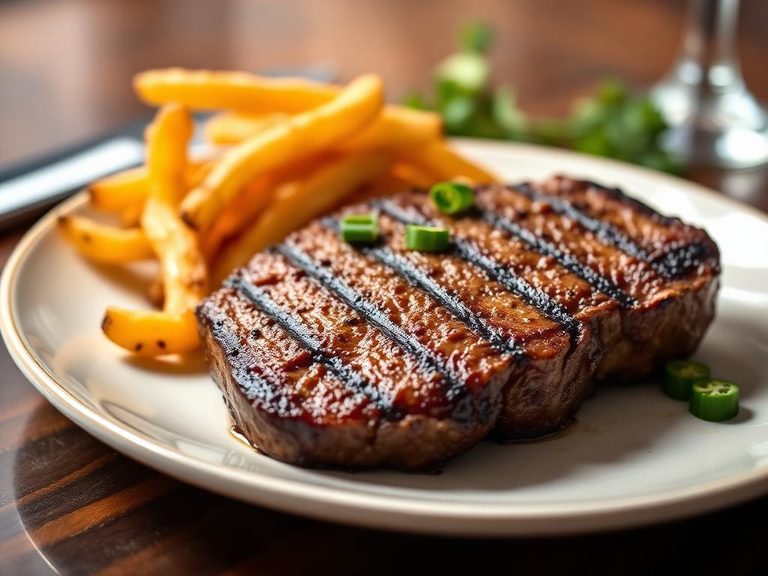
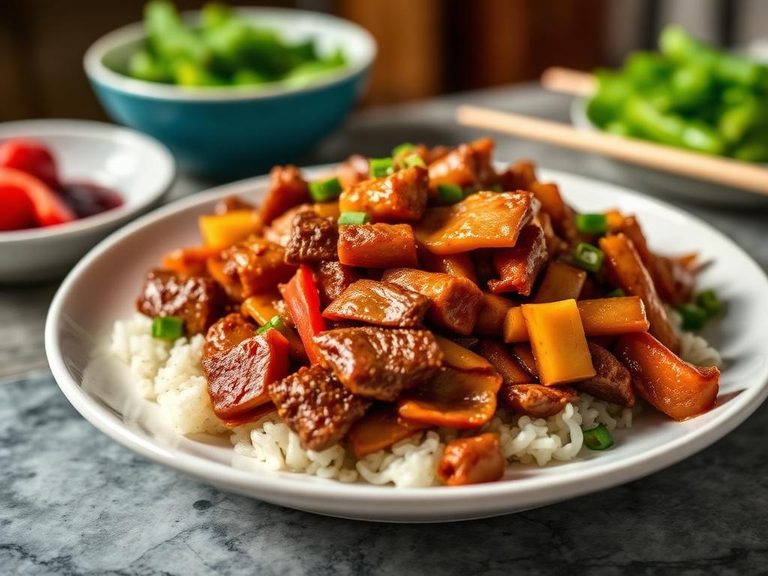
People love the Denver Cut for its robust, pure beef flavor and surprisingly tender bite when cooked properly, making it a favorite for grilling. Its versatility shines in everything from simple steaks to sliced stir-fries, offering a premium experience without the high fat of a ribeye.
⚠️ Watch-outs & how to enjoy it better
As a lean cut, it can become tough and chewy if overcooked, so precise temperature control is key. Those monitoring saturated fat intake should note it still contains some, and pairing it with fiber-rich vegetables can help balance the meal. For the best texture, avoid cooking beyond medium doneness.
Key benefits
- Excellent source of high-quality protein for muscle repair and satiety
- Very low in carbohydrates, suitable for ketogenic and low-carb diets
- Rich in essential minerals like zinc and iron for immune and blood health
- Contains B vitamins, especially B12, crucial for nerve function and energy
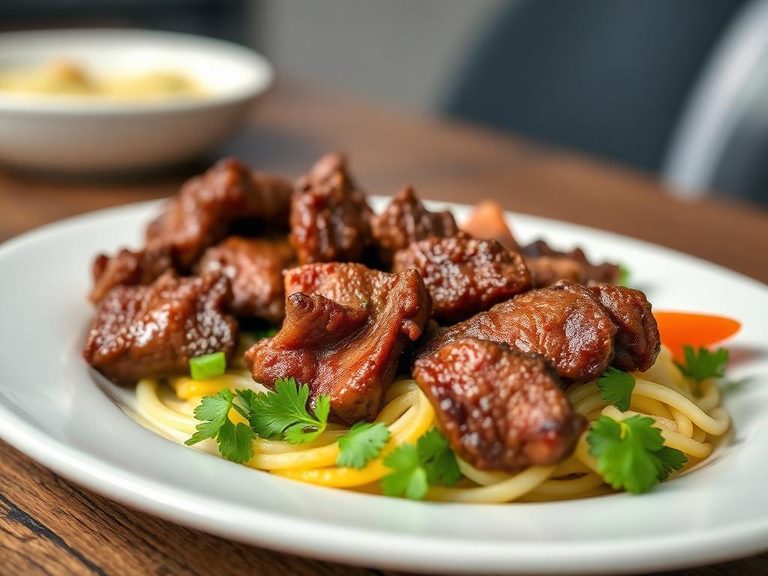
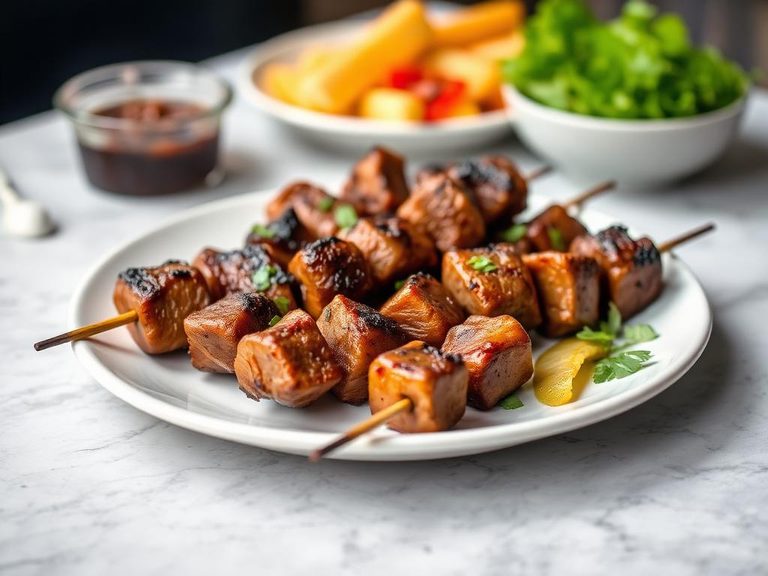
🍽️ Popular dishes
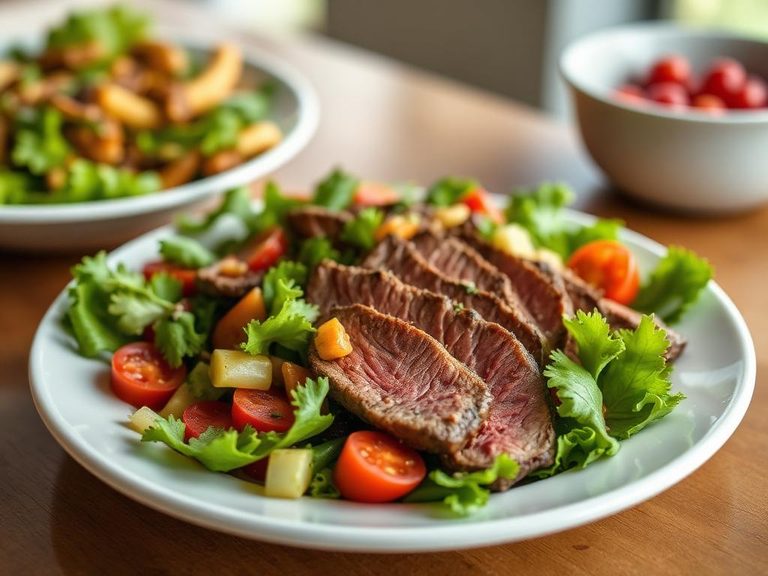
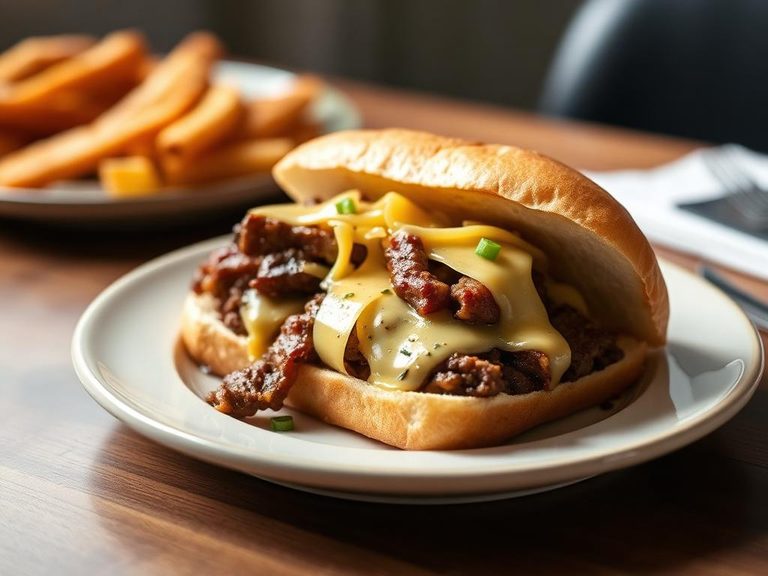
🌍 Where it's eaten
💡 Did you know?
The Denver Cut is a relatively modern 'discovery' in the American beef industry, only gaining widespread popularity in the early 2000s after butchers realized this specific muscle from the chuck could be separated for a premium steak.
Full nutrition (USDA data · scales with serving)
| Water | 59.7 g |
| Energy | 220 kcal |
| Energy | 922 kj |
| Protein | 26.5 g |
| Total lipid (fat) | 12.6 g |
| Ash | 1.0 g |
| Carbohydrate, by difference | 0.14 g |
| Fiber, total dietary | 0.00 g |
| Total Sugars | 0.00 g |
| Calcium, Ca | 14.0 mg |
| Iron, Fe | 3.3 mg |
| Magnesium, Mg | 23.0 mg |
| Phosphorus, P | 205 mg |
| Potassium, K | 314 mg |
| Sodium, Na | 73.0 mg |
| Zinc, Zn | 10.1 mg |
| Copper, Cu | 0.11 mg |
| Manganese, Mn | 0.02 mg |
| Selenium, Se | 30.2 ug |
| Vitamin C, total ascorbic acid | 0.00 mg |
| Thiamin | 0.09 mg |
| Riboflavin | 0.25 mg |
| Niacin | 3.6 mg |
| Pantothenic acid | 0.92 mg |
| Vitamin B-6 | 0.42 mg |
| Folate, total | 6.0 ug |
| Folic acid | 0.00 ug |
| Folate, food | 6.0 ug |
| Folate, DFE | 6.0 ug |
| Choline, total | 91.3 mg |
| Betaine | 20.9 mg |
| Vitamin B-12 | 3.7 ug |
| Vitamin B-12, added | 0.00 ug |
| Vitamin A, RAE | 2.0 ug |
| Retinol | 2.0 ug |
| Carotene, beta | 0.00 ug |
| Carotene, alpha | 0.00 ug |
| Cryptoxanthin, beta | 0.00 ug |
| Vitamin A, IU | 5.0 iu |
| Lycopene | 0.00 ug |
| Lutein + zeaxanthin | 0.00 ug |
| Vitamin E (alpha-tocopherol) | 0.08 mg |
| Vitamin E, added | 0.00 mg |
| Vitamin D (D2 + D3), International Units | 5.0 iu |
| Vitamin D (D2 + D3) | 0.10 ug |
| Vitamin D3 (cholecalciferol) | 0.10 ug |
| Vitamin K (phylloquinone) | 1.6 ug |
| Alcohol, ethyl | 0.00 g |
| Caffeine | 0.00 mg |
| Theobromine | 0.00 mg |
Fat & fatty acid profile (per 100g)
| Fatty acids, total saturated | 5.3 g |
| SFA 4:0 | 0.00 g |
| SFA 6:0 | 0.00 g |
| SFA 8:0 | 0.00 g |
| SFA 10:0 | 0.00 g |
| SFA 12:0 | 0.00 g |
| SFA 14:0 | 0.35 g |
| SFA 16:0 | 2.9 g |
| SFA 17:0 | 0.16 g |
| SFA 18:0 | 1.9 g |
| SFA 20:0 | 0.00 g |
| SFA 24:0 | 0.01 g |
| Fatty acids, total monounsaturated | 6.4 g |
| MUFA 14:1 | 0.07 g |
| MUFA 16:1 | 0.42 g |
| MUFA 17:1 | 0.12 g |
| MUFA 18:1 | 5.7 g |
| MUFA 18:1 c | 5.0 g |
| MUFA 18:1-11 t (18:1t n-7) | 0.56 g |
| MUFA 20:1 | 0.02 g |
| MUFA 22:1 | 0.00 g |
| Fatty acids, total polyunsaturated | 0.76 g |
| PUFA 18:2 | 0.65 g |
| PUFA 18:2 n-6 c,c | 0.59 g |
| PUFA 18:2 CLAs | 0.05 g |
| PUFA 18:3 | 0.02 g |
| PUFA 18:3 n-3 c,c,c (ALA) | 0.02 g |
| PUFA 18:4 | 0.00 g |
| PUFA 20:2 n-6 c,c | 0.00 g |
| PUFA 20:4 | 0.09 g |
| PUFA 20:5 n-3 (EPA) | 0.00 g |
| PUFA 22:5 n-3 (DPA) | 0.00 g |
| PUFA 22:6 n-3 (DHA) | 0.00 g |
| Fatty acids, total trans | 0.80 g |
| Fatty acids, total trans-monoenoic | 0.80 g |
| TFA 18:1 t | 0.80 g |
| Cholesterol | 93.0 mg |
Amino acid profile (per 100g)
| Tryptophan | 0.30 g |
| Threonine | 1.2 g |
| Isoleucine | 1.2 g |
| Leucine | 2.2 g |
| Lysine | 2.4 g |
| Methionine | 0.77 g |
| Cystine | 0.28 g |
| Phenylalanine | 1.0 g |
| Tyrosine | 0.94 g |
| Valine | 1.2 g |
| Arginine | 1.8 g |
| Histidine | 0.87 g |
| Alanine | 1.5 g |
| Aspartic acid | 2.4 g |
| Glutamic acid | 4.3 g |
| Glycine | 1.2 g |
| Proline | 1.1 g |
| Serine | 1.0 g |
| Hydroxyproline | 0.13 g |
FAQ
What is the best way to cook a Denver Cut to keep it tender?
High-heat, fast cooking methods like grilling or pan-searing are ideal. Cook to medium-rare or medium (130-145°F internal temperature) and let it rest for 5-10 minutes before slicing against the grain to maximize tenderness.
How does the Denver Cut differ from a Ribeye or Sirloin?
It has the deep flavor of a chuck roast but the tenderness of a steak. Compared to a ribeye, it's much leaner with less intramuscular fat. Compared to a sirloin, it often has a more complex, beefy taste and a finer grain.
Is this cut suitable for slow cooking or braising?
While possible, it's not the primary use. Its lean nature means it's best for dry-heat methods. For slow cooking, a chuck roast would be more forgiving and economical. If braising a Denver Cut, do so briefly in a flavorful liquid.
Nutrient density (calculated · NRF9.3)
Nutrient Rich Foods index: beneficial nutrients (protein, fiber, vitamins, minerals) minus saturated fat, added sugar & sodium, per 100 kcal.
NRF9.3 index — Fulgoni, Keast & Drewnowski, 2009. Computed from USDA nutrients.
Weight-loss friendliness (composite index)
Energy density 2.20 kcal/g · 48% calories from protein · 0.0 g fiber · 0.0 g sugar per 100 g.
Composite of energy density (Rolls et al., 1999), protein & fiber satiety, minus sugar. A calculated heuristic — ranks satiety-per-calorie, not a clinical measure.
Dietary load (calculated from USDA values)
Potential renal acid load. Positive = acid-forming, negative = alkaline-forming.
Sodium-to-potassium ratio: 0.23 (lower is better — aim for ≤ 1)
Sodium:potassium per WHO potassium guidance. Computed from USDA nutrients.