

Beef, chuck eye steak, boneless, separable lean and fat, trimmed to 0" fat, all grades, raw
Whole food · Beef Products
A versatile cut from the shoulder, the boneless chuck eye steak is prized for its rich, beefy flavor and a tender, marbled texture that yields beautifully to heat. With a robust 18.86g of protein per 100g and a significant 16.35g of fat, it delivers a satisfying, high-energy meal that's both hearty and flavorful. Its deep, savory profile makes it a favorite for grilling, pan-searing, or slow-cooking to unlock its full potential.
Calorie split: 34% protein · 0% carbs · 66% fat
↓ Full nutrition💚 Why it's loved
People adore chuck eye steak for its exceptional balance of intense beefy flavor and tenderness, often called the 'poor man's ribeye' for its similar taste at a lower cost. Its versatility allows it to shine in everything from a quick weeknight sear to a slow-braised Sunday dinner, making it a staple in home kitchens and steakhouses alike.
⚠️ Watch-outs & how to enjoy it better
The relatively high fat content (16.35g per 100g) can be a concern for those monitoring saturated fat intake or managing cholesterol levels. To mitigate this, trim any visible excess fat before cooking and pair it with fiber-rich vegetables like roasted broccoli or a fresh salad to balance the meal and promote satiety. Choosing leaner cooking methods like grilling or broiling, rather than frying, can also help reduce overall fat consumption.
Key benefits
- Excellent source of complete, high-quality protein for muscle maintenance.
- Rich in essential minerals like iron and zinc for energy and immune function.
- Provides B vitamins, particularly B12 and niacin, crucial for nerve health and metabolism.
- The natural fat content enhances flavor and helps with the absorption of fat-soluble vitamins.
🍽️ Popular dishes
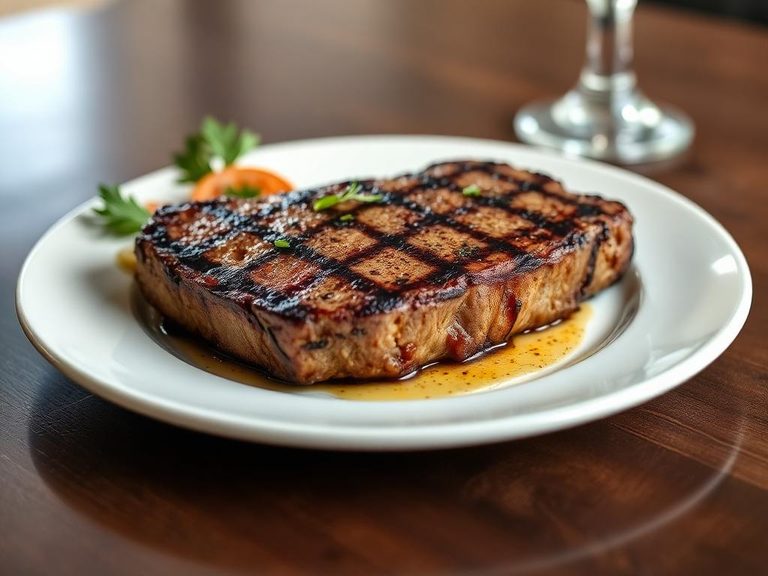
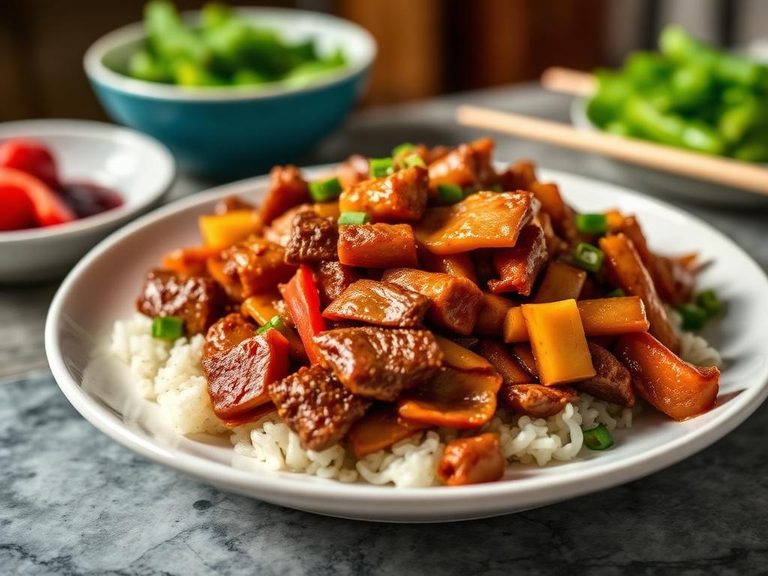
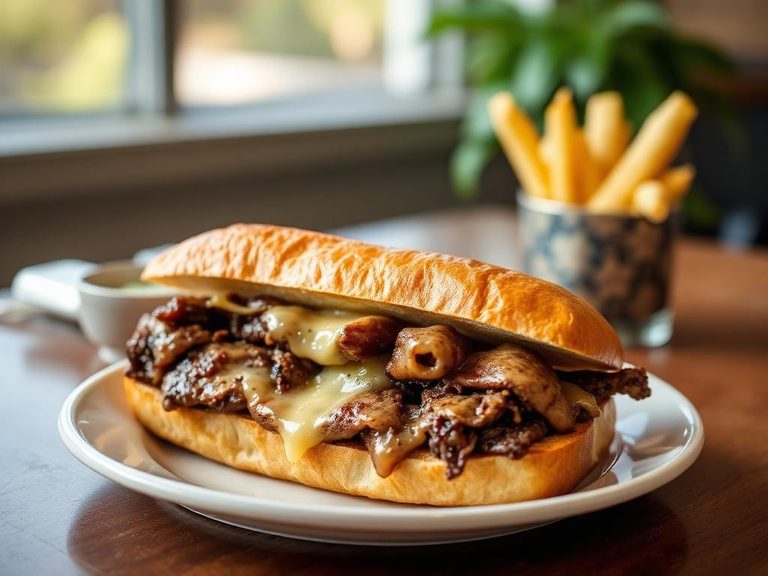
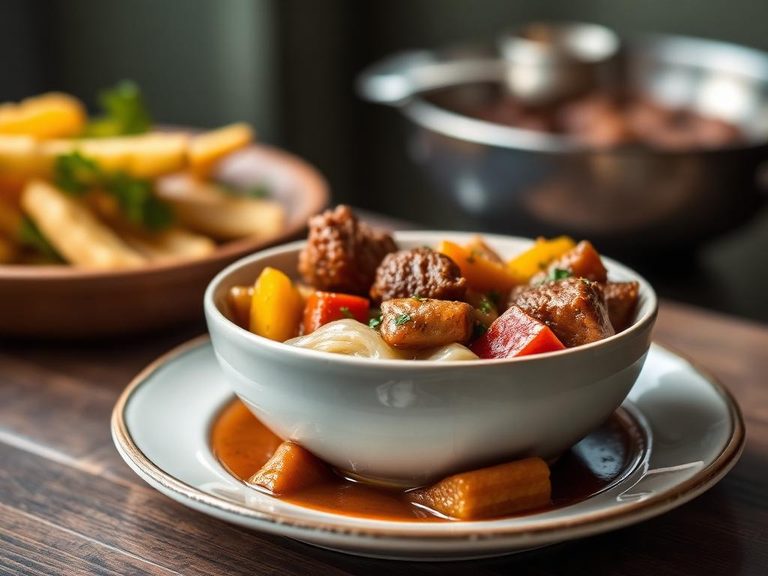
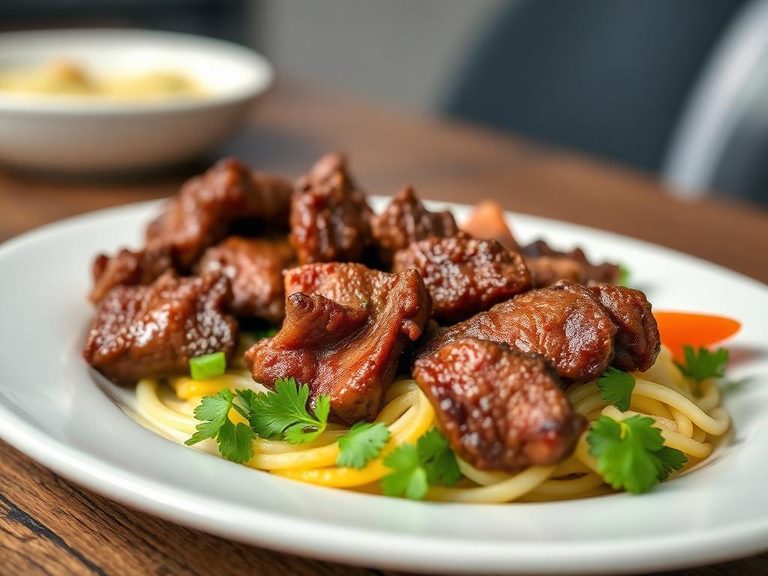
🌍 Where it's eaten
💡 Did you know?
The chuck eye steak comes from the same muscle (the longissimus dorsi) as the prized ribeye, but from a section closer to the shoulder, which is why it's often called the 'poor man's ribeye' for its similar marbling and flavor at a more affordable price.
Full nutrition (USDA data · scales with serving)
| Water | 64.5 g |
| Energy | 223 kcal |
| Energy | 931 kj |
| Protein | 18.9 g |
| Total lipid (fat) | 16.4 g |
| Ash | 0.86 g |
| Carbohydrate, by difference | 0.00 g |
| Fiber, total dietary | 0.00 g |
| Total Sugars | 0.00 g |
| Calcium, Ca | 14.0 mg |
| Iron, Fe | 2.1 mg |
| Magnesium, Mg | 19.0 mg |
| Phosphorus, P | 179 mg |
| Potassium, K | 329 mg |
| Sodium, Na | 66.0 mg |
| Zinc, Zn | 7.3 mg |
| Copper, Cu | 0.06 mg |
| Manganese, Mn | 0.01 mg |
| Selenium, Se | 19.8 ug |
| Vitamin C, total ascorbic acid | 0.00 mg |
| Thiamin | 0.07 mg |
| Riboflavin | 0.14 mg |
| Niacin | 4.4 mg |
| Pantothenic acid | 0.65 mg |
| Vitamin B-6 | 0.36 mg |
| Folate, total | 3.0 ug |
| Folic acid | 0.00 ug |
| Folate, food | 3.0 ug |
| Folate, DFE | 3.0 ug |
| Choline, total | 63.3 mg |
| Betaine | 19.0 mg |
| Vitamin B-12 | 2.7 ug |
| Vitamin B-12, added | 0.00 ug |
| Vitamin A, RAE | 4.0 ug |
| Retinol | 4.0 ug |
| Carotene, beta | 0.00 ug |
| Carotene, alpha | 0.00 ug |
| Cryptoxanthin, beta | 0.00 ug |
| Vitamin A, IU | 14.0 iu |
| Lycopene | 0.00 ug |
| Lutein + zeaxanthin | 0.00 ug |
| Vitamin E (alpha-tocopherol) | 0.15 mg |
| Vitamin E, added | 0.00 mg |
| Vitamin D (D2 + D3), International Units | 5.0 iu |
| Vitamin D (D2 + D3) | 0.10 ug |
| Vitamin D3 (cholecalciferol) | 0.10 ug |
| Vitamin K (phylloquinone) | 1.5 ug |
| Alcohol, ethyl | 0.00 g |
| Caffeine | 0.00 mg |
| Theobromine | 0.00 mg |
Fat & fatty acid profile (per 100g)
| Fatty acids, total saturated | 7.0 g |
| SFA 4:0 | 0.00 g |
| SFA 6:0 | 0.00 g |
| SFA 8:0 | 0.00 g |
| SFA 10:0 | 0.00 g |
| SFA 12:0 | 0.00 g |
| SFA 14:0 | 0.49 g |
| SFA 16:0 | 3.7 g |
| SFA 17:0 | 0.20 g |
| SFA 18:0 | 2.6 g |
| SFA 20:0 | 0.01 g |
| SFA 24:0 | 0.01 g |
| Fatty acids, total monounsaturated | 7.7 g |
| MUFA 14:1 | 0.09 g |
| MUFA 16:1 | 0.47 g |
| MUFA 16:1 c | 0.47 g |
| MUFA 17:1 | 0.12 g |
| MUFA 18:1 | 7.0 g |
| MUFA 18:1 c | 6.0 g |
| MUFA 18:1-11 t (18:1t n-7) | 0.35 g |
| MUFA 20:1 | 0.04 g |
| MUFA 22:1 | 0.00 g |
| Fatty acids, total polyunsaturated | 0.67 g |
| PUFA 18:2 | 0.59 g |
| PUFA 18:2 n-6 c,c | 0.51 g |
| PUFA 18:2 CLAs | 0.08 g |
| PUFA 18:3 | 0.03 g |
| PUFA 18:3 n-3 c,c,c (ALA) | 0.03 g |
| PUFA 18:4 | 0.00 g |
| PUFA 20:2 n-6 c,c | 0.00 g |
| PUFA 20:4 | 0.04 g |
| PUFA 20:5 n-3 (EPA) | 0.00 g |
| PUFA 22:5 n-3 (DPA) | 0.00 g |
| PUFA 22:6 n-3 (DHA) | 0.00 g |
| Fatty acids, total trans | 1.1 g |
| Fatty acids, total trans-monoenoic | 1.1 g |
| TFA 18:1 t | 1.1 g |
| Cholesterol | 68.0 mg |
Amino acid profile (per 100g)
| Tryptophan | 0.21 g |
| Threonine | 0.83 g |
| Isoleucine | 0.80 g |
| Leucine | 1.5 g |
| Lysine | 1.6 g |
| Methionine | 0.54 g |
| Cystine | 0.20 g |
| Phenylalanine | 0.72 g |
| Tyrosine | 0.65 g |
| Valine | 0.85 g |
| Arginine | 1.2 g |
| Histidine | 0.61 g |
| Alanine | 1.1 g |
| Aspartic acid | 1.7 g |
| Glutamic acid | 3.0 g |
| Glycine | 0.86 g |
| Proline | 0.78 g |
| Serine | 0.72 g |
| Hydroxyproline | 0.13 g |
FAQ
What is the best way to cook a chuck eye steak?
For the best results, sear it in a hot skillet or grill for a few minutes per side to develop a flavorful crust, then let it rest before slicing against the grain. For tougher cuts, slow-cooking or braising can break down the connective tissue and make it incredibly tender.
How does chuck eye steak differ from ribeye?
While both come from the same muscle, chuck eye is from the shoulder end of the rib section, making it slightly less tender and often more affordable, but with a very similar rich, beefy flavor and marbling.
Is chuck eye steak a healthy choice?
It's a nutritious source of protein, iron, and B vitamins, but it is also higher in fat. Enjoy it in moderation, and consider pairing it with vegetables and whole grains for a balanced meal.
Nutrient density (calculated · NRF9.3)
Nutrient Rich Foods index: beneficial nutrients (protein, fiber, vitamins, minerals) minus saturated fat, added sugar & sodium, per 100 kcal.
NRF9.3 index — Fulgoni, Keast & Drewnowski, 2009. Computed from USDA nutrients.
Weight-loss friendliness (composite index)
Energy density 2.23 kcal/g · 34% calories from protein · 0.0 g fiber · 0.0 g sugar per 100 g.
Composite of energy density (Rolls et al., 1999), protein & fiber satiety, minus sugar. A calculated heuristic — ranks satiety-per-calorie, not a clinical measure.
Dietary load (calculated from USDA values)
Potential renal acid load. Positive = acid-forming, negative = alkaline-forming.
Sodium-to-potassium ratio: 0.20 (lower is better — aim for ≤ 1)
Sodium:potassium per WHO potassium guidance. Computed from USDA nutrients.