

Babyfood, meat, turkey, strained
Whole food · Baby Foods

Photo: Wikipedia
This is a smooth, savory purée of finely ground turkey, designed as a first protein source for infants. It has a mild, meaty flavor and a uniform, spoonable texture. Nutritionally, it's a concentrated source of high-quality protein with minimal carbohydrates.
Calorie split: 43% protein · 5% carbs · 52% fat
↓ Full nutrition💚 Why it's loved
Parents value it as a straightforward, nutrient-dense option for introducing meat. Its neutral taste pairs easily with vegetable or grain purées, making mealtime versatile.
⚠️ Watch-outs & how to enjoy it better
The texture can be unappealing to babies used to sweeter fruit purées. As a processed meat, it may contain added sodium; check labels and balance with low-sodium foods. For babies with turkey allergies, introduce only after consulting a pediatrician.
Key benefits
- Excellent source of complete protein for growth and development
- Naturally low in carbohydrates and sugar
- Provides iron in a form easily absorbed by infants
- Simple, single-ingredient food for early allergen introduction
🍽️ Popular dishes
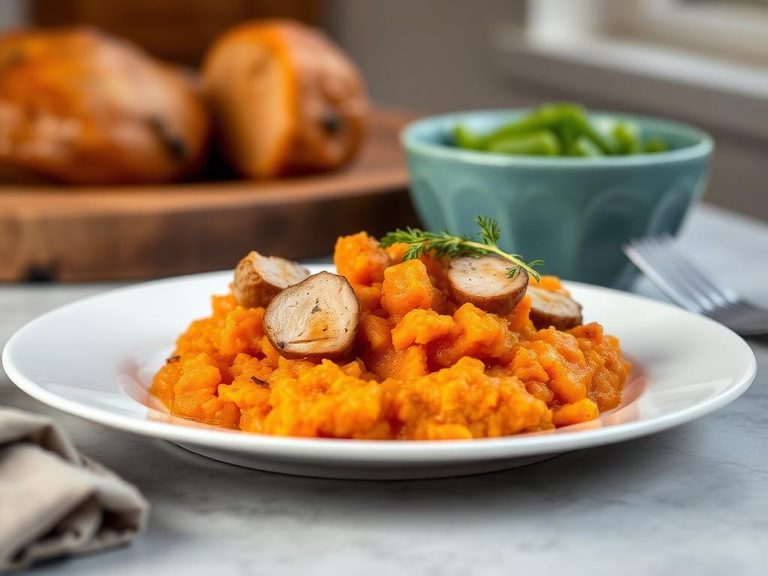
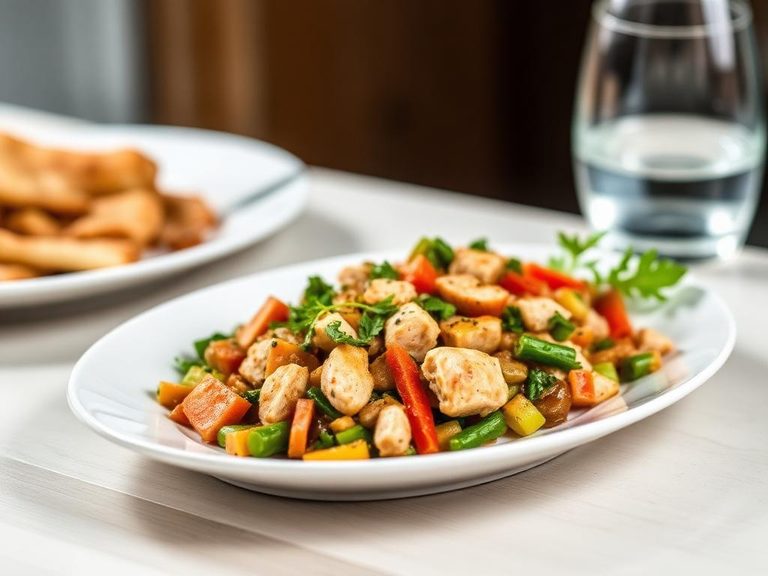
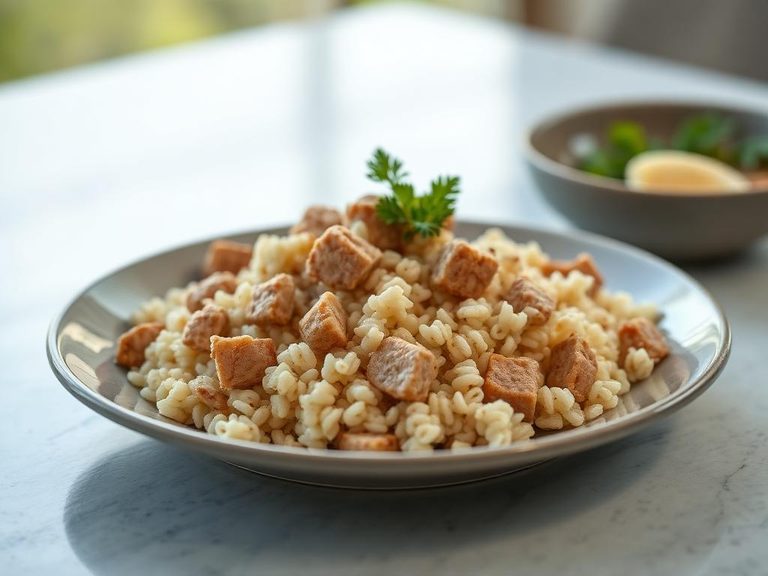
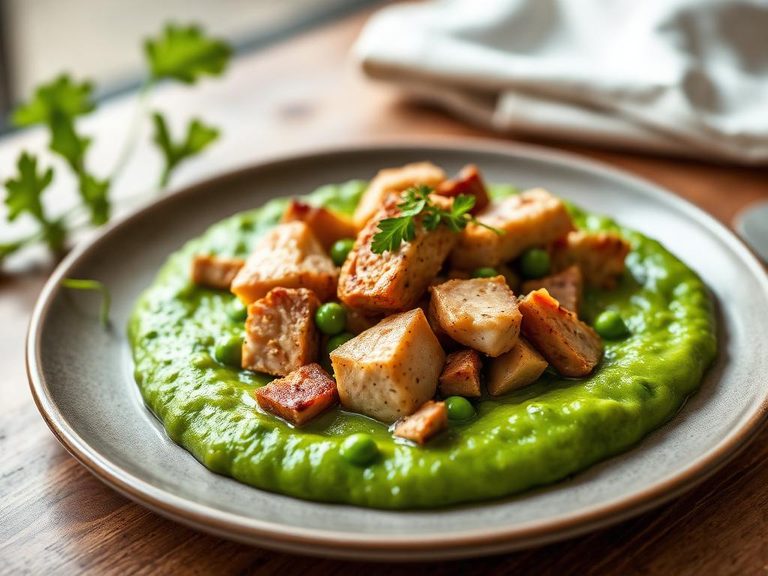
🌍 Where it's eaten
💡 Did you know?
Commercial baby food meat was pioneered in the early 20th century, with strained chicken and turkey becoming popular as 'first meats' due to their mild flavor and fine texture.
Full nutrition (USDA data · scales with serving)
| Water | 80.3 g |
| Energy | 111 kcal |
| Energy | 463 kj |
| Protein | 11.5 g |
| Total lipid (fat) | 6.2 g |
| Ash | 0.58 g |
| Carbohydrate, by difference | 1.4 g |
| Fiber, total dietary | 0.00 g |
| Total Sugars | 0.00 g |
| Calcium, Ca | 41.0 mg |
| Iron, Fe | 0.70 mg |
| Magnesium, Mg | 12.0 mg |
| Phosphorus, P | 117 mg |
| Potassium, K | 135 mg |
| Sodium, Na | 49.0 mg |
| Zinc, Zn | 1.8 mg |
| Copper, Cu | 0.15 mg |
| Manganese, Mn | 0.04 mg |
| Selenium, Se | 12.0 ug |
| Vitamin C, total ascorbic acid | 2.2 mg |
| Thiamin | 0.01 mg |
| Riboflavin | 0.16 mg |
| Niacin | 2.6 mg |
| Pantothenic acid | 0.41 mg |
| Vitamin B-6 | 0.03 mg |
| Folate, total | 8.0 ug |
| Folic acid | 0.00 ug |
| Folate, food | 8.0 ug |
| Folate, DFE | 8.0 ug |
| Choline, total | 39.8 mg |
| Betaine | 4.7 mg |
| Vitamin B-12 | 1.1 ug |
| Vitamin B-12, added | 0.00 ug |
| Vitamin A, RAE | 0.00 ug |
| Retinol | 0.00 ug |
| Carotene, beta | 0.00 ug |
| Carotene, alpha | 0.00 ug |
| Cryptoxanthin, beta | 0.00 ug |
| Vitamin A, IU | 0.00 iu |
| Lycopene | 0.00 ug |
| Lutein + zeaxanthin | 0.00 ug |
| Vitamin E (alpha-tocopherol) | 0.08 mg |
| Vitamin E, added | 0.00 mg |
| Tocopherol, beta | 0.00 mg |
| Tocopherol, gamma | 0.03 mg |
| Tocopherol, delta | 0.00 mg |
| Tocotrienol, alpha | 0.04 mg |
| Tocotrienol, beta | 0.00 mg |
| Tocotrienol, gamma | 0.00 mg |
| Tocotrienol, delta | 0.00 mg |
| Vitamin D (D2 + D3), International Units | 34.0 iu |
| Vitamin D (D2 + D3) | 0.80 ug |
| Vitamin K (phylloquinone) | 0.00 ug |
| Vitamin K (Dihydrophylloquinone) | 0.00 ug |
| Vitamin K (Menaquinone-4) | 18.7 ug |
| Alcohol, ethyl | 0.00 g |
| Caffeine | 0.00 mg |
| Theobromine | 0.00 mg |
Fat & fatty acid profile (per 100g)
| Fatty acids, total saturated | 1.6 g |
| SFA 4:0 | 0.00 g |
| SFA 6:0 | 0.00 g |
| SFA 8:0 | 0.00 g |
| SFA 10:0 | 0.00 g |
| SFA 12:0 | 0.00 g |
| SFA 14:0 | 0.04 g |
| SFA 15:0 | 0.00 g |
| SFA 16:0 | 0.77 g |
| SFA 17:0 | 0.01 g |
| SFA 18:0 | 0.33 g |
| SFA 20:0 | 0.00 g |
| SFA 22:0 | 0.00 g |
| SFA 24:0 | 0.00 g |
| Fatty acids, total monounsaturated | 2.4 g |
| MUFA 14:1 | 0.00 g |
| MUFA 16:1 | 0.14 g |
| MUFA 17:1 | 0.00 g |
| MUFA 18:1 | 1.5 g |
| MUFA 20:1 | 0.01 g |
| MUFA 22:1 | 0.00 g |
| MUFA 24:1 c | 0.00 g |
| Fatty acids, total polyunsaturated | 1.7 g |
| PUFA 18:2 | 1.0 g |
| PUFA 18:3 | 0.06 g |
| PUFA 18:4 | 0.02 g |
| PUFA 20:2 n-6 c,c | 0.00 g |
| PUFA 20:3 | 0.00 g |
| PUFA 20:4 | 0.05 g |
| PUFA 20:5 n-3 (EPA) | 0.00 g |
| PUFA 21:5 | 0.00 g |
| PUFA 22:4 | 0.01 g |
| PUFA 22:5 n-3 (DPA) | 0.04 g |
| PUFA 22:6 n-3 (DHA) | 0.00 g |
| Cholesterol | 58.0 mg |
Amino acid profile (per 100g)
| Tryptophan | 0.15 g |
| Threonine | 0.63 g |
| Isoleucine | 0.72 g |
| Leucine | 1.1 g |
| Lysine | 1.2 g |
| Methionine | 0.44 g |
| Cystine | 0.17 g |
| Phenylalanine | 0.59 g |
| Tyrosine | 0.50 g |
| Valine | 0.73 g |
| Arginine | 0.91 g |
| Histidine | 0.37 g |
| Alanine | 0.91 g |
| Aspartic acid | 1.4 g |
| Glutamic acid | 2.3 g |
| Glycine | 0.94 g |
| Proline | 0.70 g |
| Serine | 0.56 g |
FAQ
What age can my baby start eating this?
Strained turkey is typically introduced around 6-8 months, after single-grain cereals and some vegetables. Always introduce one new food at a time.
Is this a complete meal for my baby?
No, it's a protein component. Pair it with a carbohydrate (like baby cereal) and a vegetable or fruit purée for a balanced meal.
How should I store leftovers from an opened jar?
Transfer unused portion to a sealed container, refrigerate, and use within 24-48 hours. Do not save food from the baby's spoon.
Nutrient density (calculated · NRF9.3)
Nutrient Rich Foods index: beneficial nutrients (protein, fiber, vitamins, minerals) minus saturated fat, added sugar & sodium, per 100 kcal.
NRF9.3 index — Fulgoni, Keast & Drewnowski, 2009. Computed from USDA nutrients.
Weight-loss friendliness (composite index)
Energy density 1.11 kcal/g · 41% calories from protein · 0.0 g fiber · 0.0 g sugar per 100 g.
Composite of energy density (Rolls et al., 1999), protein & fiber satiety, minus sugar. A calculated heuristic — ranks satiety-per-calorie, not a clinical measure.
Dietary load (calculated from USDA values)
Potential renal acid load. Positive = acid-forming, negative = alkaline-forming.
Sodium-to-potassium ratio: 0.36 (lower is better — aim for ≤ 1)
Sodium:potassium per WHO potassium guidance. Computed from USDA nutrients.