Roast beef, deli style, prepackaged, sliced
Whole food · Sausages and Luncheon Meats

Photo: Wikipedia
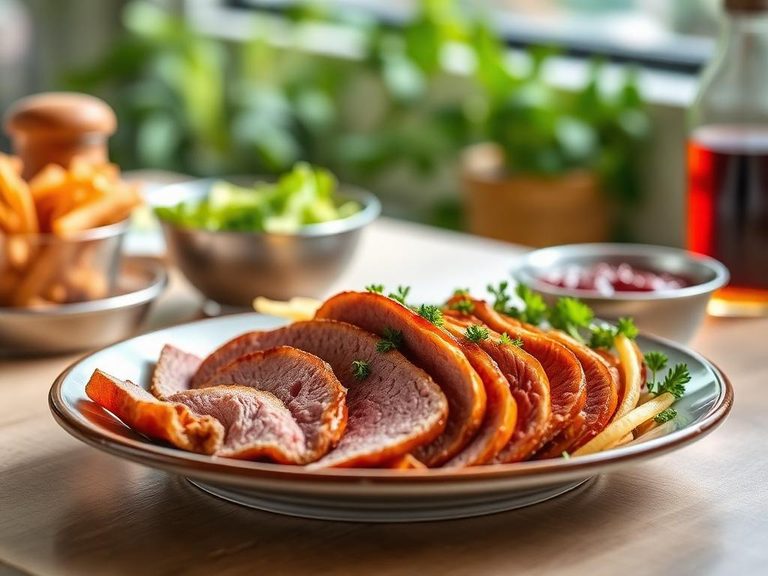
This is lean, pre-cooked beef, typically from the round or sirloin, sliced thin for sandwiches and salads. Its texture is tender yet firm, with a savory, beefy flavor that's often enhanced by a light brine or cure. Nutritionally, it's a protein powerhouse, delivering over 18 grams of protein per 100 grams with minimal fat and virtually no carbohydrates.
💚 Why it's loved
People love it for its savory umami flavor and incredible versatility—it's the classic, reliable star of a hearty sandwich, a crisp salad, or a quick protein-packed snack. Its convenience and satisfying chew make it a staple in American deli culture.
⚠️ Watch-outs & how to enjoy it better
The primary concern is often high sodium content from the curing and brining process, which can be an issue for those monitoring blood pressure. To counteract this, pair it with potassium-rich foods like leafy greens or avocado, and be mindful of portion sizes. Some varieties may also contain nitrates/nitrites; look for 'uncured' labels if this is a concern.
Key benefits
- Excellent source of high-quality protein for muscle maintenance
- Very low in carbohydrates and sugars
- Provides essential nutrients like iron, zinc, and B vitamins
- Convenient, ready-to-eat protein source
🍽️ Popular dishes
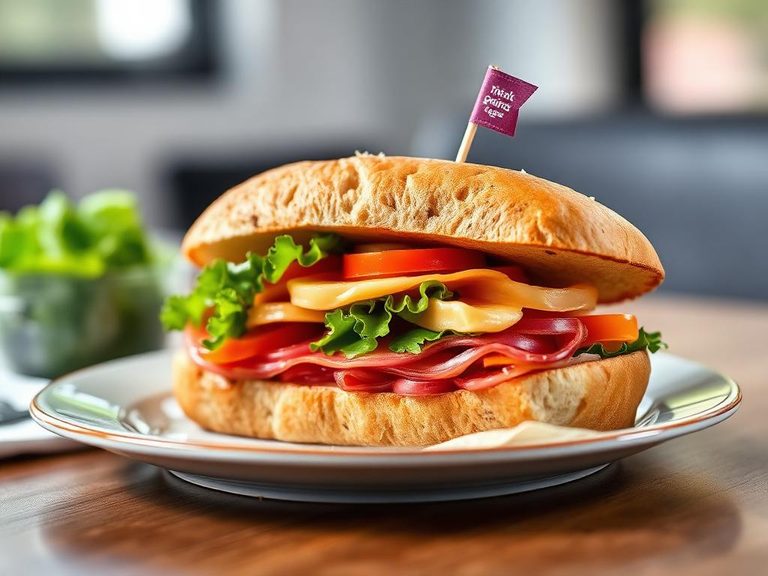
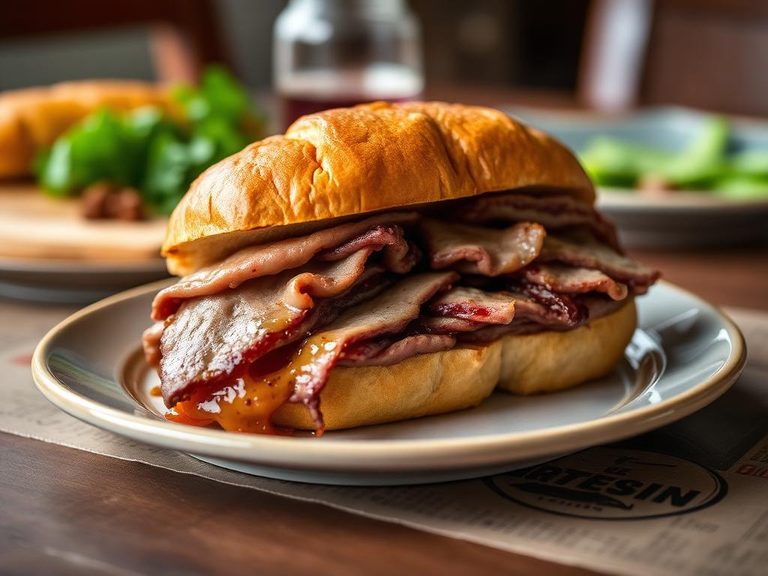
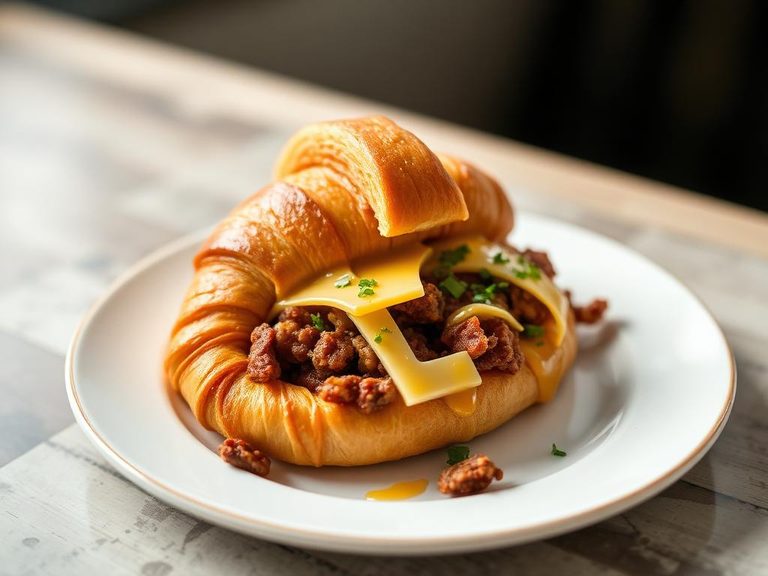
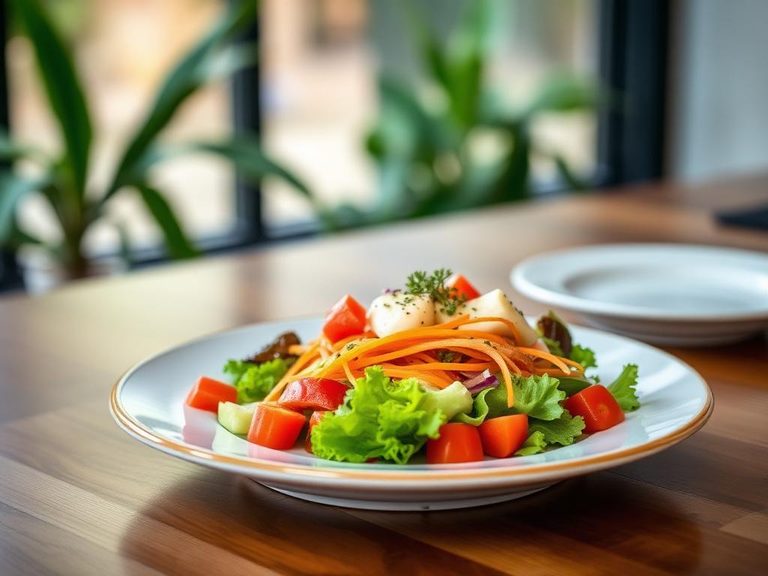
🌍 Where it's eaten
💡 Did you know?
The 'deli style' preparation often involves brining the beef in a solution of salt, sugar, and spices before roasting, which not only adds flavor but also helps the meat retain moisture during cooking and slicing.
Full nutrition (scales with serving)
| Water | 73.7 g |
| Energy | 115 kcal |
| Energy | 482 kj |
| Protein | 18.6 g |
| Total lipid (fat) | 3.7 g |
| Ash | 3.3 g |
| Carbohydrate, by difference | 0.64 g |
| Fiber, total dietary | 0.00 g |
| Total Sugars | 0.29 g |
| Sucrose | 0.00 g |
| Glucose | 0.29 g |
| Fructose | 0.00 g |
| Lactose | 0.00 g |
| Maltose | 0.00 g |
| Galactose | 0.00 g |
| Calcium, Ca | 5.0 mg |
| Iron, Fe | 2.0 mg |
| Magnesium, Mg | 20.0 mg |
| Phosphorus, P | 242 mg |
| Potassium, K | 647 mg |
| Sodium, Na | 853 mg |
| Zinc, Zn | 3.2 mg |
| Copper, Cu | 0.09 mg |
| Manganese, Mn | 0.01 mg |
| Selenium, Se | 14.7 ug |
| Vitamin C, total ascorbic acid | 0.00 mg |
| Thiamin | 0.04 mg |
| Riboflavin | 0.21 mg |
| Niacin | 5.6 mg |
| Pantothenic acid | 0.57 mg |
| Vitamin B-6 | 0.46 mg |
| Folate, total | 5.0 ug |
| Folic acid | 0.00 ug |
| Folate, food | 5.0 ug |
| Folate, DFE | 5.0 ug |
| Choline, total | 43.9 mg |
| Vitamin B-12 | 2.0 ug |
| Vitamin B-12, added | 0.00 ug |
| Vitamin A, RAE | 3.0 ug |
| Retinol | 3.0 ug |
| Carotene, beta | 0.00 ug |
| Carotene, alpha | 0.00 ug |
| Cryptoxanthin, beta | 0.00 ug |
| Vitamin A, IU | 11.0 iu |
| Lycopene | 0.00 ug |
| Lutein + zeaxanthin | 0.00 ug |
| Vitamin E (alpha-tocopherol) | 0.49 mg |
| Vitamin E, added | 0.00 mg |
| Tocopherol, beta | 0.00 mg |
| Tocopherol, gamma | 0.00 mg |
| Tocopherol, delta | 0.00 mg |
| Tocotrienol, alpha | 0.00 mg |
| Tocotrienol, beta | 0.00 mg |
| Tocotrienol, gamma | 0.00 mg |
| Tocotrienol, delta | 0.00 mg |
| Vitamin D (D2 + D3), International Units | 1.0 iu |
| Vitamin D (D2 + D3) | 0.00 ug |
| Vitamin D3 (cholecalciferol) | 0.00 ug |
| Vitamin K (phylloquinone) | 1.6 ug |
| Alcohol, ethyl | 0.00 g |
| Caffeine | 0.00 mg |
| Theobromine | 0.00 mg |
Fat & fatty acid profile (per 100g)
| Fatty acids, total saturated | 1.3 g |
| SFA 4:0 | 0.00 g |
| SFA 6:0 | 0.00 g |
| SFA 8:0 | 0.00 g |
| SFA 10:0 | 0.00 g |
| SFA 12:0 | 0.00 g |
| SFA 14:0 | 0.09 g |
| SFA 15:0 | 0.01 g |
| SFA 16:0 | 0.75 g |
| SFA 17:0 | 0.04 g |
| SFA 18:0 | 0.43 g |
| SFA 20:0 | 0.00 g |
| SFA 22:0 | 0.00 g |
| SFA 24:0 | 0.00 g |
| Fatty acids, total monounsaturated | 1.5 g |
| MUFA 14:1 | 0.03 g |
| MUFA 15:1 | 0.00 g |
| MUFA 16:1 | 0.12 g |
| MUFA 16:1 c | 0.11 g |
| MUFA 17:1 | 0.03 g |
| MUFA 18:1 | 1.3 g |
| MUFA 18:1 c | 1.2 g |
| MUFA 20:1 | 0.01 g |
| MUFA 22:1 | 0.00 g |
| MUFA 22:1 c | 0.00 g |
| MUFA 24:1 c | 0.00 g |
| Fatty acids, total polyunsaturated | 0.27 g |
| PUFA 18:2 | 0.18 g |
| PUFA 18:2 n-6 c,c | 0.14 g |
| PUFA 18:2 CLAs | 0.02 g |
| PUFA 18:3 | 0.02 g |
| PUFA 18:3 n-3 c,c,c (ALA) | 0.02 g |
| PUFA 18:3 n-6 c,c,c | 0.00 g |
| PUFA 18:3i | 0.00 g |
| PUFA 18:4 | 0.00 g |
| PUFA 20:2 n-6 c,c | 0.00 g |
| PUFA 20:3 | 0.01 g |
| PUFA 20:3 n-3 | 0.00 g |
| PUFA 20:3 n-6 | 0.01 g |
| PUFA 20:4 | 0.04 g |
| PUFA 20:5 n-3 (EPA) | 0.01 g |
| PUFA 22:4 | 0.00 g |
| PUFA 22:5 n-3 (DPA) | 0.01 g |
| PUFA 22:6 n-3 (DHA) | 0.00 g |
| Fatty acids, total trans | 0.15 g |
| Fatty acids, total trans-monoenoic | 0.13 g |
| TFA 16:1 t | 0.01 g |
| TFA 18:1 t | 0.12 g |
| TFA 22:1 t | 0.00 g |
| TFA 18:2 t not further defined | 0.02 g |
| Fatty acids, total trans-polyenoic | 0.02 g |
| Cholesterol | 51.0 mg |
Amino acid profile (per 100g)
| Hydroxyproline | 0.13 g |
FAQ
Is deli roast beef considered processed meat?
Yes, prepackaged deli meats are generally classified as processed meats because they are cured, seasoned, and preserved. For a less processed option, you could roast and slice your own beef at home.
How does the nutrition compare to freshly cooked roast beef?
Prepackaged deli beef often has higher sodium due to brining and may have added sugars or preservatives. Freshly cooked roast beef allows you to control salt and ingredients completely.
What's the best way to store it after opening?
Keep it tightly sealed in its original packaging or an airtight container in the refrigerator. It's best consumed within 3-5 days of opening for optimal freshness and safety.