Cereals, corn grits, white, regular and quick, enriched, dry
Whole food · Breakfast Cereals

Photo: Wikipedia
White corn grits are a coarse, hearty porridge made from ground dried corn kernels, known for their distinct, slightly sweet corn flavor and a texture that can range from creamy to pleasantly gritty. Nutritionally, they are a significant source of energy, providing nearly 80 grams of carbohydrates per 100g dry, and are often enriched with B vitamins and iron. When cooked, they transform into a comforting, versatile base that can be savory or sweet, making them a staple in many households.
💚 Why it's loved
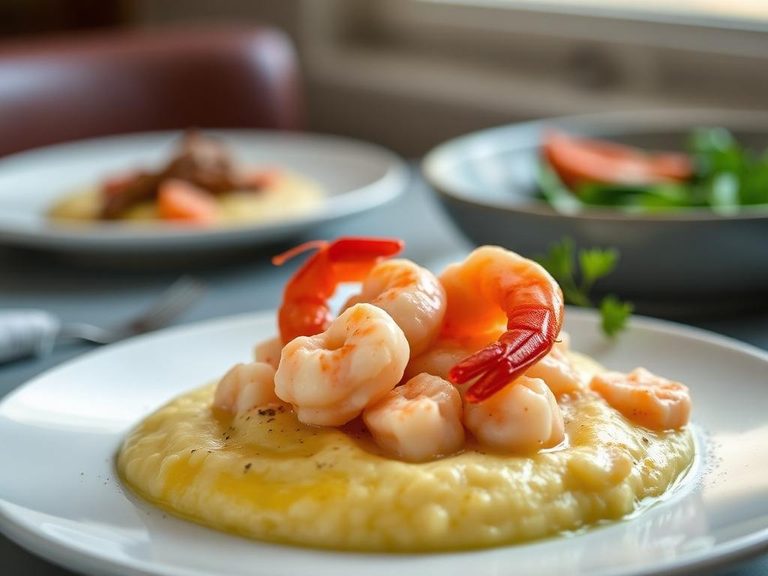
People love grits for their comforting, hearty texture and ability to absorb flavors, making them a beloved canvas for everything from butter and cheese to shrimp and spices. They hold deep cultural significance, especially in the American South, where they are a cherished staple often tied to family meals and tradition.
⚠️ Watch-outs & how to enjoy it better
Grits are high in carbohydrates and can cause rapid blood-sugar spikes, making them a concern for individuals managing diabetes or insulin resistance. To counteract this, pair them with a source of protein (like eggs or cheese) and healthy fat (like avocado or olive oil) to slow digestion, and opt for smaller portions or choose stone-ground varieties with more fiber.
Key benefits
- Rich in complex carbohydrates for sustained energy
- Good source of dietary fiber, supporting digestive health
- Often enriched with essential B vitamins like niacin and iron
- Low in fat and naturally cholesterol-free
- Versatile base for both sweet and savory dishes
🍽️ Popular dishes
🌍 Where it's eaten
💡 Did you know?
Grits were a staple food for Native Americans long before European settlers arrived, and the word 'grits' comes from the Old English 'grytt,' meaning coarse meal.
Full nutrition (scales with serving)
| Water | 10.9 g |
| Energy | 370 kcal |
| Energy | 1549 kj |
| Protein | 7.7 g |
| Total lipid (fat) | 1.8 g |
| Ash | 0.60 g |
| Carbohydrate, by difference | 79.1 g |
| Fiber, total dietary | 4.6 g |
| Total Sugars | 0.57 g |
| Sucrose | 0.57 g |
| Glucose | 0.00 g |
| Fructose | 0.00 g |
| Lactose | 0.00 g |
| Maltose | 0.00 g |
| Galactose | 0.00 g |
| Starch | 68.2 g |
| Calcium, Ca | 4.0 mg |
| Iron, Fe | 3.0 mg |
| Magnesium, Mg | 36.0 mg |
| Phosphorus, P | 111 mg |
| Potassium, K | 141 mg |
| Sodium, Na | 1.0 mg |
| Zinc, Zn | 0.72 mg |
| Copper, Cu | 0.03 mg |
| Manganese, Mn | 0.14 mg |
| Selenium, Se | 17.0 ug |
| Vitamin C, total ascorbic acid | 0.00 mg |
| Thiamin | 1.3 mg |
| Riboflavin | 0.34 mg |
| Niacin | 4.5 mg |
| Pantothenic acid | 0.25 mg |
| Vitamin B-6 | 0.23 mg |
| Folate, total | 171 ug |
| Folic acid | 132 ug |
| Folate, food | 39.0 ug |
| Folate, DFE | 263 ug |
| Choline, total | 14.4 mg |
| Betaine | 1.1 mg |
| Vitamin B-12 | 0.00 ug |
| Vitamin B-12, added | 0.00 ug |
| Vitamin A, RAE | 0.00 ug |
| Retinol | 0.00 ug |
| Carotene, beta | 1.0 ug |
| Carotene, alpha | 0.00 ug |
| Cryptoxanthin, beta | 1.0 ug |
| Vitamin A, IU | 3.0 iu |
| Lycopene | 0.00 ug |
| Lutein + zeaxanthin | 5.0 ug |
| Vitamin E (alpha-tocopherol) | 0.21 mg |
| Vitamin E, added | 0.00 mg |
| Tocopherol, beta | 0.01 mg |
| Tocopherol, gamma | 0.70 mg |
| Tocopherol, delta | 0.04 mg |
| Tocotrienol, alpha | 0.35 mg |
| Tocotrienol, beta | 0.00 mg |
| Tocotrienol, gamma | 0.97 mg |
| Tocotrienol, delta | 0.00 mg |
| Vitamin D (D2 + D3), International Units | 0.00 iu |
| Vitamin D (D2 + D3) | 0.00 ug |
| Vitamin K (phylloquinone) | 0.00 ug |
| Vitamin K (Dihydrophylloquinone) | 0.00 ug |
| Vitamin K (Menaquinone-4) | 0.00 ug |
| Alcohol, ethyl | 0.00 g |
| Caffeine | 0.00 mg |
| Theobromine | 0.00 mg |
Fat & fatty acid profile (per 100g)
| Fatty acids, total saturated | 0.34 g |
| SFA 4:0 | 0.00 g |
| SFA 6:0 | 0.00 g |
| SFA 8:0 | 0.00 g |
| SFA 10:0 | 0.00 g |
| SFA 12:0 | 0.00 g |
| SFA 14:0 | 0.00 g |
| SFA 15:0 | 0.00 g |
| SFA 16:0 | 0.31 g |
| SFA 17:0 | 0.00 g |
| SFA 18:0 | 0.03 g |
| SFA 20:0 | 0.00 g |
| SFA 22:0 | 0.00 g |
| SFA 24:0 | 0.00 g |
| Fatty acids, total monounsaturated | 0.32 g |
| MUFA 14:1 | 0.00 g |
| MUFA 15:1 | 0.00 g |
| MUFA 16:1 | 0.00 g |
| MUFA 17:1 | 0.00 g |
| MUFA 18:1 | 0.32 g |
| MUFA 20:1 | 0.00 g |
| MUFA 22:1 | 0.00 g |
| MUFA 24:1 c | 0.00 g |
| Fatty acids, total polyunsaturated | 0.88 g |
| PUFA 18:2 | 0.85 g |
| PUFA 18:3 | 0.03 g |
| PUFA 18:4 | 0.00 g |
| PUFA 20:2 n-6 c,c | 0.00 g |
| PUFA 20:3 | 0.00 g |
| PUFA 20:4 | 0.00 g |
| PUFA 20:5 n-3 (EPA) | 0.00 g |
| PUFA 22:5 n-3 (DPA) | 0.00 g |
| PUFA 22:6 n-3 (DHA) | 0.00 g |
| Cholesterol | 0.00 mg |
Amino acid profile (per 100g)
| Tryptophan | 0.06 g |
| Threonine | 0.28 g |
| Isoleucine | 0.29 g |
| Leucine | 1.2 g |
| Lysine | 0.16 g |
| Methionine | 0.18 g |
| Cystine | 0.17 g |
| Phenylalanine | 0.44 g |
| Tyrosine | 0.17 g |
| Valine | 0.38 g |
| Arginine | 0.28 g |
| Histidine | 0.23 g |
| Alanine | 0.67 g |
| Aspartic acid | 0.51 g |
| Glutamic acid | 1.7 g |
| Glycine | 0.26 g |
| Proline | 0.88 g |
| Serine | 0.38 g |
FAQ
What is the difference between quick grits and regular grits?
Quick grits are ground finer and cook faster (about 5-7 minutes), while regular grits are coarser and take longer to cook (about 20-30 minutes). Both are made from the same corn, but the grind size affects texture and cooking time.
Are grits gluten-free?
Yes, grits are naturally gluten-free as they are made from corn. However, always check labels for potential cross-contamination if you have celiac disease or severe gluten sensitivity.
How can I make grits creamier?
To achieve a creamier texture, use a higher liquid-to-grits ratio (like 4:1), stir frequently while cooking, and add a splash of milk, cream, or a pat of butter at the end. Some cooks also use a slow cooker for a smoother result.
Can I eat grits for breakfast?
Absolutely! Grits are a popular breakfast dish, often served with butter, cheese, or eggs. They provide a warm, filling start to the day and can be customized with sweet or savory toppings.