

Pork, Leg sirloin tip roast, boneless, separable lean and fat, cooked, braised
Whole food · Pork Products
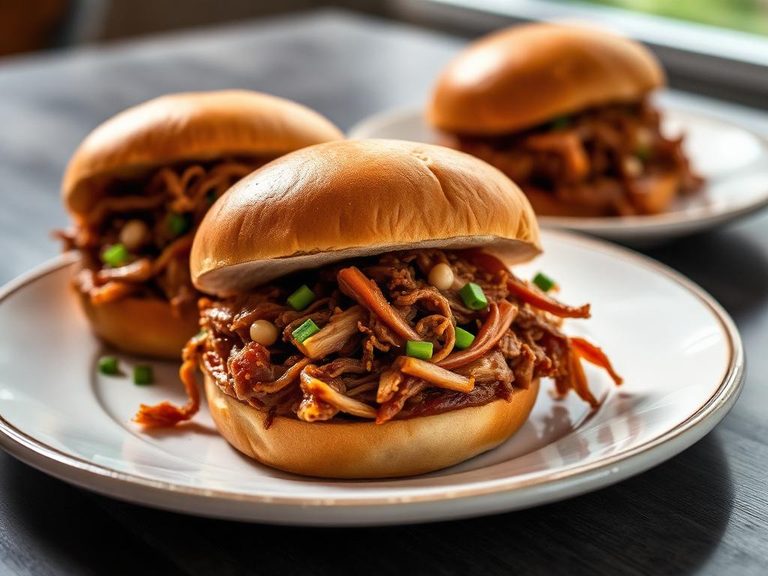
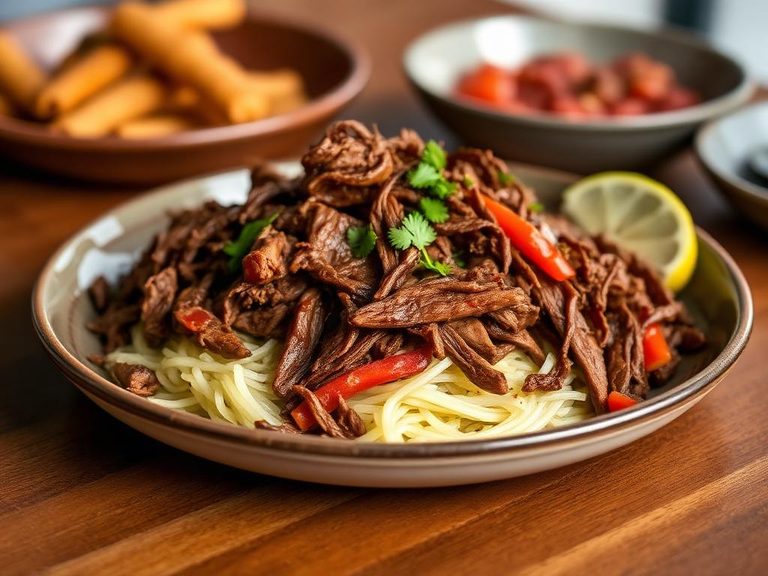
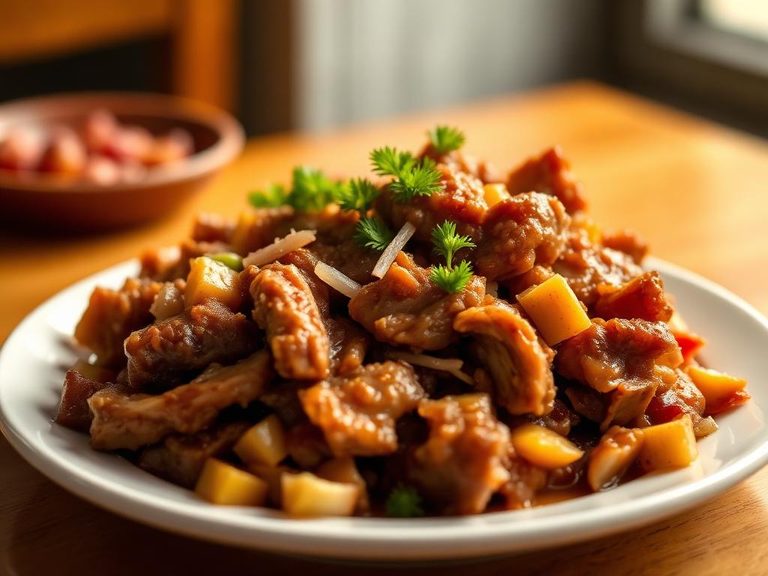
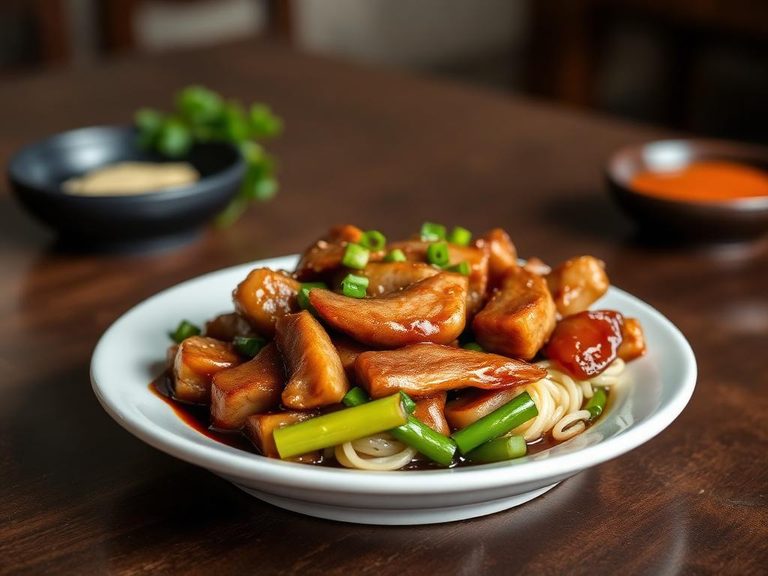
This is a lean, boneless cut from the upper rear leg of the pig, braised low and slow until it transforms into a tender, shreddable, and deeply savory protein. The braising process renders the minimal fat, resulting in a moist, pull-apart texture that's rich in meaty flavor without being greasy. It's a nutritional powerhouse, delivering over 31 grams of high-quality protein per 100 grams with virtually no carbohydrates.
Calorie split: 84% protein · 0% carbs · 16% fat
↓ Full nutrition💚 Why it's loved
People adore it for its incredible versatility and the way it absorbs the flavors of its braising liquid, becoming a savory canvas for herbs, spices, and sauces. It's a comforting, hearty staple in home cooking, perfect for feeding a crowd with minimal fuss.
⚠️ Watch-outs & how to enjoy it better
The lean nature of the cut means it can become dry and tough if overcooked or braised at too high a temperature. To counteract this, always braise it low and slow (in a covered pot at a gentle simmer) until it's fork-tender, and consider using a flavorful liquid like broth or wine to keep it moist.
Key benefits
- Excellent source of complete protein for muscle maintenance.
- Very low in fat, especially saturated fat.
- Zero carbohydrates, making it suitable for keto and low-carb diets.
- Rich in B vitamins like thiamine and niacin for energy metabolism.
🍽️ Popular dishes

🌍 Where it's eaten
💡 Did you know?
The 'sirloin tip' in its name is a misnomer borrowed from beef butchery; in pork, this cut is actually from the leg, near the rump.
Full nutrition (USDA data · scales with serving)
| Water | 67.0 g |
| Energy | 156 kcal |
| Energy | 652 kj |
| Protein | 31.1 g |
| Total lipid (fat) | 2.6 g |
| Ash | 1.1 g |
| Carbohydrate, by difference | 0.00 g |
| Fiber, total dietary | 0.00 g |
| Total Sugars | 0.00 g |
| Calcium, Ca | 5.0 mg |
| Iron, Fe | 1.1 mg |
| Magnesium, Mg | 25.0 mg |
| Phosphorus, P | 237 mg |
| Potassium, K | 363 mg |
| Sodium, Na | 43.0 mg |
| Zinc, Zn | 2.9 mg |
| Copper, Cu | 0.07 mg |
| Manganese, Mn | 0.01 mg |
| Selenium, Se | 37.7 ug |
| Vitamin C, total ascorbic acid | 0.00 mg |
| Thiamin | 0.60 mg |
| Riboflavin | 0.51 mg |
| Niacin | 7.7 mg |
| Pantothenic acid | 0.80 mg |
| Vitamin B-6 | 0.49 mg |
| Folate, total | 1.0 ug |
| Folic acid | 0.00 ug |
| Folate, food | 1.0 ug |
| Folate, DFE | 1.0 ug |
| Choline, total | 107 mg |
| Betaine | 6.3 mg |
| Vitamin B-12 | 0.58 ug |
| Vitamin B-12, added | 0.00 ug |
| Vitamin A, RAE | 0.00 ug |
| Retinol | 0.00 ug |
| Carotene, beta | 0.00 ug |
| Carotene, alpha | 0.00 ug |
| Cryptoxanthin, beta | 0.00 ug |
| Vitamin A, IU | 0.00 iu |
| Lycopene | 0.00 ug |
| Lutein + zeaxanthin | 0.00 ug |
| Vitamin E (alpha-tocopherol) | 0.11 mg |
| Vitamin E, added | 0.00 mg |
| Vitamin K (phylloquinone) | 0.00 ug |
| Vitamin K (Dihydrophylloquinone) | 0.00 ug |
| Alcohol, ethyl | 0.00 g |
| Caffeine | 0.00 mg |
| Theobromine | 0.00 mg |
Fat & fatty acid profile (per 100g)
| Fatty acids, total saturated | 0.79 g |
| SFA 4:0 | 0.00 g |
| SFA 6:0 | 0.00 g |
| SFA 8:0 | 0.00 g |
| SFA 10:0 | 0.00 g |
| SFA 12:0 | 0.00 g |
| SFA 14:0 | 0.02 g |
| SFA 15:0 | 0.00 g |
| SFA 16:0 | 0.50 g |
| SFA 17:0 | 0.01 g |
| SFA 18:0 | 0.26 g |
| SFA 20:0 | 0.00 g |
| SFA 22:0 | 0.00 g |
| SFA 24:0 | 0.00 g |
| Fatty acids, total monounsaturated | 1.0 g |
| MUFA 14:1 | 0.00 g |
| MUFA 15:1 | 0.00 g |
| MUFA 16:1 | 0.07 g |
| MUFA 17:1 | 0.00 g |
| MUFA 18:1 | 0.94 g |
| MUFA 18:1 c | 0.93 g |
| MUFA 20:1 | 0.01 g |
| MUFA 22:1 | 0.00 g |
| MUFA 22:1 c | 0.00 g |
| Fatty acids, total polyunsaturated | 0.47 g |
| PUFA 18:2 | 0.38 g |
| PUFA 18:2 n-6 c,c | 0.38 g |
| PUFA 18:3 | 0.01 g |
| PUFA 18:3 n-3 c,c,c (ALA) | 0.01 g |
| PUFA 18:3 n-6 c,c,c | 0.00 g |
| PUFA 18:4 | 0.00 g |
| PUFA 20:2 n-6 c,c | 0.01 g |
| PUFA 20:3 | 0.00 g |
| PUFA 20:4 | 0.07 g |
| PUFA 20:5 n-3 (EPA) | 0.00 g |
| PUFA 22:5 n-3 (DPA) | 0.00 g |
| PUFA 22:6 n-3 (DHA) | 0.00 g |
| Fatty acids, total trans | 0.01 g |
| Fatty acids, total trans-monoenoic | 0.01 g |
| TFA 18:1 t | 0.01 g |
| TFA 18:2 t,t | 0.00 g |
| Fatty acids, total trans-polyenoic | 0.00 g |
| Cholesterol | 84.0 mg |
Amino acid profile (per 100g)
| Tryptophan | 0.37 g |
| Threonine | 1.4 g |
| Isoleucine | 1.5 g |
| Leucine | 2.6 g |
| Lysine | 2.8 g |
| Methionine | 0.85 g |
| Cystine | 0.35 g |
| Phenylalanine | 1.3 g |
| Tyrosine | 1.2 g |
| Valine | 1.6 g |
| Arginine | 2.0 g |
| Histidine | 1.3 g |
| Alanine | 1.8 g |
| Aspartic acid | 2.9 g |
| Glutamic acid | 4.8 g |
| Glycine | 1.4 g |
| Proline | 1.3 g |
| Serine | 1.3 g |
| Hydroxyproline | 0.11 g |
FAQ
How is this different from a pork loin roast?
A pork loin comes from the back, is typically leaner and more uniform, and is often roasted or grilled. The sirloin tip roast comes from the leg, has more connective tissue, and is best suited for slow, moist-heat cooking methods like braising to break down that tissue into gelatin.
Can I grill this cut?
It's not ideal for direct grilling due to its leanness and connective tissue. It would likely dry out and become chewy. If you want to grill pork, a boneless pork chop or a fattier cut like pork shoulder would be better choices.
What's the best way to store leftovers?
Let the cooked roast cool completely, then store it in an airtight container in the refrigerator for up to 4 days. For longer storage, shred the meat and freeze it in its braising liquid for up to 3 months.
Nutrient density (calculated · NRF9.3)
Nutrient Rich Foods index: beneficial nutrients (protein, fiber, vitamins, minerals) minus saturated fat, added sugar & sodium, per 100 kcal.
NRF9.3 index — Fulgoni, Keast & Drewnowski, 2009. Computed from USDA nutrients.
Weight-loss friendliness (composite index)
Energy density 1.56 kcal/g · 80% calories from protein · 0.0 g fiber · 0.0 g sugar per 100 g.
Composite of energy density (Rolls et al., 1999), protein & fiber satiety, minus sugar. A calculated heuristic — ranks satiety-per-calorie, not a clinical measure.
Dietary load (calculated from USDA values)
Potential renal acid load. Positive = acid-forming, negative = alkaline-forming.
Sodium-to-potassium ratio: 0.12 (lower is better — aim for ≤ 1)
Sodium:potassium per WHO potassium guidance. Computed from USDA nutrients.